Bikepacking Packing List: The Complete Checklist
20+ years testing gear in Colorado backcountry
Everything You Need, Nothing You Don't
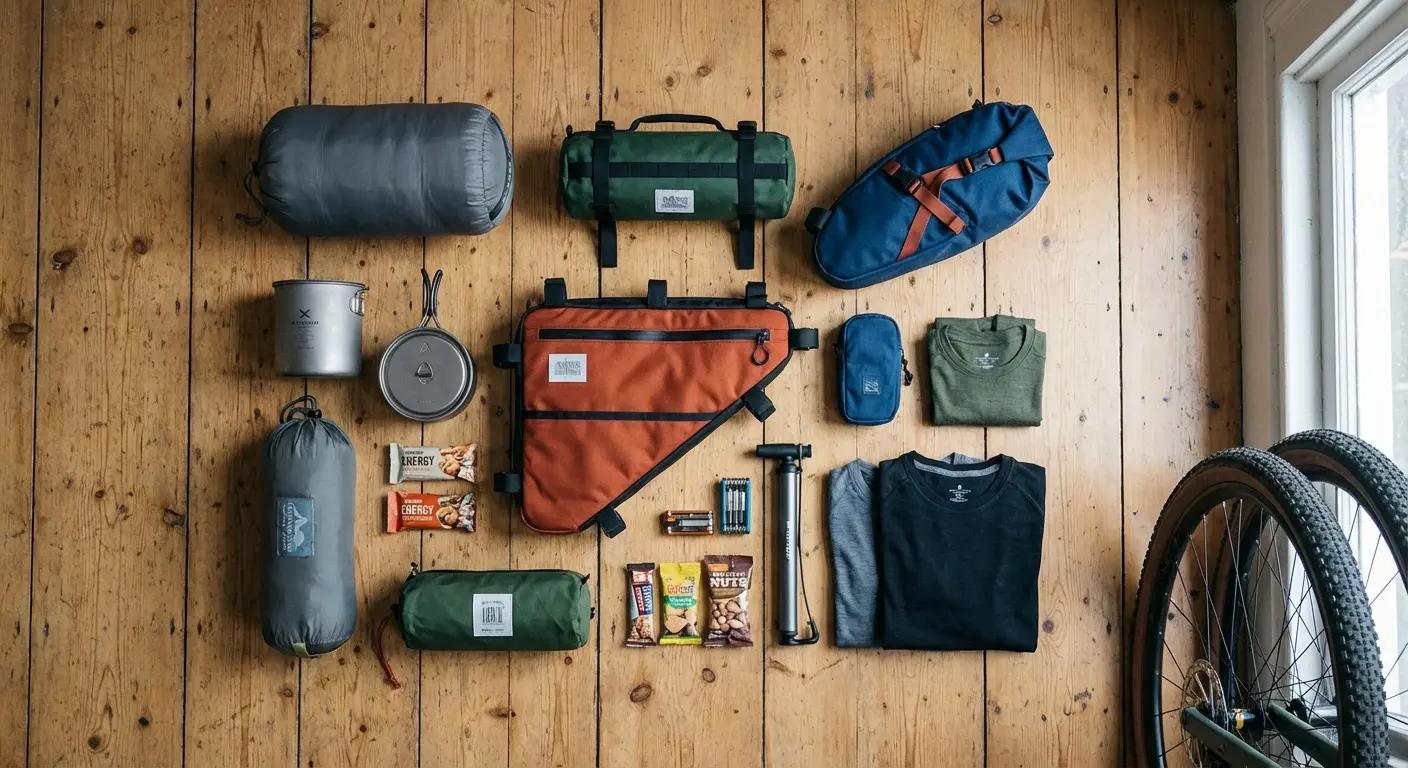
Packing for bikepacking is an exercise in optimization. Every item earns its place through genuine usefulness—there's no room for "just in case" thinking when you're carrying everything on your bike.
This comprehensive checklist covers every category of bikepacking gear. Use it as a master reference, then customize based on your trip length, conditions, and personal preferences. The goal isn't bringing everything listed—it's ensuring you don't forget what you actually need. As REI's bikepacking experts note, the key is "essential gear—and not much more."
For gear recommendations in each category, see our Complete Bikepacking Gear Guide.
Bags and Storage
Your bag system determines how you organize everything else. Get this right first.
Essential Bags
- Frame bag - Main storage for heavy items (Best Frame Bags)
- Saddle bag - Bulky lightweight items like sleeping gear (Best Saddle Bags)
- Handlebar bag/roll - Tent, sleeping pad, quick-access items (Best Handlebar Packs)
Optional Bags
- Top tube bag - Phone, snacks, small essentials (Top Tube Bags Guide)
- Feed bag/stem bag - Easy-access food and drinks
- Fork bags or cargo cages - Extra capacity for food/water (Fork Bags Guide)
- Gas tank bag - Bolt-on top tube storage
- Pocket/accessory bags - Small items organization
Bag Accessories
- Dry bags - Waterproof liners for saddle/handlebar bags (Sea to Summit Ultra-Sil are ultralight and reliable)
- Stuff sacks - Organization within larger bags
- Compression sacks - Reduce sleeping bag/clothes volume
- Waterproof phone case - Protection for electronics (Topeak Smartphone Drybag)
Sleep System
Your sleep system is the heaviest category after the bike itself. Choose carefully.
Shelter
- Tent or bivy - Primary shelter (Best One-Person Tents, Bivys Guide, Hammock Guide)
- Tent footprint - Ground protection (optional, saves tent floor)
- Stakes - Verify count matches tent requirements
- Guylines - Pre-attached or carry spares
- Repair kit - Pole splint, spare stakes, tape
Sleep Comfort
- Sleeping bag - Temperature rated for conditions (Best Sleeping Bags)
- Sleeping pad - Insulation and comfort (Best Sleeping Pads)
- Pillow - Inflatable, stuffable, or stuff sack with clothes
- Sleeping bag liner - Added warmth, keeps bag clean (optional)
Sleep Accessories
- Earplugs - Essential for light sleepers (Mack's silicone are reusable and effective)
- Eye mask - Early morning light blocking
- Pad repair kit - Patches for inflatable pads (usually included with pad, keep accessible)
Cooking and Food
Decide your cooking style before packing. Hot meals require more gear; no-cook saves weight. For complete food planning guidance, see our Bikepacking Food Guide.
Cooking Gear (If Using)
- Stove - Canister, alcohol, or wood-burning (Stoves Guide)
- Fuel - Canister, alcohol bottle, or rely on wood
- Pot - 500-750ml sufficient for solo (Cookware Guide)
- Lid - Speeds boiling, saves fuel
- Pot cozy - Insulated sleeve for fuel efficiency (optional)
- Mug/cup - Or use pot as mug
- Utensil - Spork or long spoon
- Lighter - Primary ignition (carry two)
- Windscreen - Improves stove efficiency
Food Storage
- Food bag - Odor-proof bag for bear country
- Bear canister - Required in some wilderness areas
- Bear hang kit - Rope and carabiner for hanging food
Water
- Water bottles - Standard cycling bottles (2-3)
- Hydration bladder - Optional additional capacity
- Water filter or purifier - For backcountry water sources (Water Filtration Guide)
- Water treatment tablets - Backup purification
- Collapsible water container - Extra capacity for dry camps
Clothing
Pack less than you think. Bikepacking clothing works hard and gets washed rarely.
Riding Clothes
- Cycling shorts/bibs - Padded for comfort
- Cycling jersey or tech shirt - Moisture-wicking
- Arm warmers - Packable temperature regulation
- Leg warmers or knee warmers - Morning/evening chill
- Cycling socks - Moisture-wicking (1-2 pairs)
- Cycling gloves - Padding and grip
Off-Bike Clothes
- Camp shirt - Lightweight, doubles as sleep layer
- Camp pants or shorts - Comfortable, not cycling-specific
- Sleep socks - Warm, dry socks for tent
- Underwear - If not wearing cycling shorts (1-2)
- Camp shoes - Lightweight sandals or slip-ons (optional)
Insulation Layers
- Puffy jacket - Down or synthetic insulation
- Fleece or midlayer - Active warmth (conditions dependent)
- Warm hat/beanie - Evening and sleep warmth
- Buff/neck gaiter - Versatile warmth and sun protection
Rain Gear
- Rain jacket - Waterproof, packable (Clothing Guide)
- Rain pants - For sustained rain (optional for short trips)
- Waterproof gloves - Cold rain riding (conditions dependent)
- Shoe covers - Keep feet dry (optional)
Sun Protection
- Sunglasses - Eye protection
- Sunscreen - SPF 30+ minimum
- Lip balm with SPF - Prevents cracked lips
- Sun hat or cap - Under helmet or for camp
See our complete Clothing Guide for recommendations.
Bike Repair and Tools
Mechanical issues happen. Be prepared to fix common problems. For a detailed guide to building your repair kit and understanding what each tool is for, see our Complete Bikepacking Maintenance Guide and Building Your Tool Kit.
Essential Tools
- Multi-tool - With hex keys, screwdrivers, chain tool (Best Multi-Tools)
- Tire levers - At least 2, preferably 3
- Pump or CO2 inflator - Air source for flats (Pumps Guide)
- CO2 cartridges - If using CO2 (carry 2-3)
- Spare tube(s) - 1-2 depending on trip length
- Patch kit - Backup for tube repair (Patch Kits Guide)
- Tire boot - Fix sidewall cuts (dollar bill works)
Tubeless Specific
- Tubeless plugs - Bacon strips or Dynaplug
- Sealant - Small bottle for refresh
- Valve core tool - Often on multi-tool
- Spare valve cores - Cheap insurance
Extended Trip Additions
- Spare derailleur hanger - Bike-specific, easy to break
- Spare brake pads - Long trips with wet conditions
- Chain quick links - 2-3 for chain repair
- Spare spokes - Taped to frame or in bag
- Spoke wrench - True wheels in field
- Duct tape - Wrapped around pump or lighter
- Zip ties - Various sizes, multiple uses
- Small wire - Emergency repairs
Electronics
Modern bikepacking relies on electronics. Manage power carefully.
Navigation
- GPS cycling computer - Primary navigation (GPS Guide)
- Phone - Backup navigation, communication, camera
- Charging cables - For all devices
- Power bank - Capacity based on trip length (Portable Chargers)
Lighting
- Headlight - Primary front light (Bike Lights Guide)
- Taillight - Visibility for traffic
- Headlamp - Camp light, hands-free
- Spare batteries - If using battery lights
Optional Electronics
- Camera - If phone camera isn't sufficient
- Satellite communicator - Remote area safety (inReach, etc.)
- E-reader - Lightweight entertainment
- Solar panel - Extended trips, weight penalty
Safety and Navigation
Beyond electronics, carry backup navigation and safety gear.
Navigation Backup
- Paper maps - Relevant sections of route
- Compass - Basic orientation if electronics fail
- Route description - Printed notes for complex sections
Safety Gear
- First aid kit - Appropriate for trip length (First Aid Guide)
- Emergency shelter - Bivy or space blanket
- Whistle - Signaling device
- Fire starter - Waterproof matches or lighter
- Knife or multi-tool blade - Cutting utility
Visibility
- Reflective vest or bands - Low-light visibility
- Helmet light or blinky - Additional visibility
Personal Items
The small stuff that makes trips comfortable.
Hygiene
- Toothbrush - Cut handle to save weight
- Toothpaste - Small tube or tablets
- Biodegradable soap - Multi-use (body, dishes, clothes)
- Hand sanitizer - Small bottle
- Toilet paper - In waterproof bag
- Trowel - Cat hole digging (plastic works)
- Wet wipes - Quick cleanup (pack out)
- Microfiber towel - Quick-dry, compact
- Deodorant - Travel size (optional)
- Medications - Personal prescriptions
Documents and Money
- ID - Driver's license or passport
- Credit/debit cards - For town stops
- Cash - Small bills for campgrounds, emergencies
- Health insurance card - Emergency medical
- Emergency contacts - Written backup
Miscellaneous
- Sunscreen - Listed in clothing too, but essential
- Insect repellent - Bug season necessity
- Reading glasses - If needed
- Watch - If not relying on phone
- Small notebook and pen - Notes, journaling
- Entertainment - Book, cards, small game
Pre-Ride Checklist
Before rolling out, verify:
Bike
- Tires inflated to loaded pressure
- Brakes working properly
- Drivetrain clean and lubricated
- Quick releases/thru-axles tight
- All bags mounted securely
- Nothing rubbing or interfering
Route
- Route loaded on GPS device
- Offline maps downloaded to phone
- Water sources identified
- Camp locations confirmed
- Bail-out options noted
Logistics
- Someone knows your itinerary
- Check-in protocol established
- Weather forecast reviewed
- Emergency numbers saved
Physical Preparation
- Fitness training for trip demands
- Test rides completed with loaded bike
- Know your daily distance capacity
Packing by Trip Length
Adjust your list based on how long you'll be out.
Overnight (1 Night)
Core focus: Sleep system, minimal repair, weather-appropriate clothing
- Minimal food—can carry everything
- Single change of clothes
- Basic repair kit
- Smaller power bank (5,000-10,000 mAh)
Weekend (2-3 Nights)
Core focus: Full sleep system, moderate repair, layering options
See our dedicated Weekend Bikepacking: 2-Day Trip Essentials guide for detailed weekend trip planning.
- Food for duration or resupply planned
- One riding outfit, one camp outfit
- Complete repair kit
- Medium power bank (10,000-15,000 mAh)
Week-Long (4-7 Nights)
Core focus: Durability, resupply strategy, comprehensive repair
- Resupply stops required
- May need extra socks/underwear
- Extended repair kit (spare hanger, brake pads)
- Larger power bank or solar panel
Extended (1+ Week)
Core focus: Reliability, replacement capability, town strategy
- Regular resupply required
- Laundry at town stops
- Comprehensive repair kit
- Multiple charging options
- Mail-drop or replacement strategy for worn items
Weight Optimization Tips
Heavy Items to Reconsider
- Extra clothing beyond what's listed
- Full-size toiletries (decant to small containers)
- Heavy entertainment (books, games)
- Excessive tools (home workshop vs. field kit)
- Duplicate items where one works
Light Swaps That Matter
| Heavy Option | Light Alternative | Savings |
|---|---|---|
| Paperback book | E-reader or phone | 6-12 oz |
| Full toiletry kit | Travel sizes | 4-8 oz |
| Heavy flashlight | Ultralight headlamp | 3-5 oz |
| Cotton clothes | Merino/synthetic | 4-8 oz |
| Multiple tools | Quality multi-tool | 6-10 oz |
The Two-Week Rule
If you haven't used an item in your last two trips, consider dropping it. Carry what you use, not what you might use.
The Shake Test
Before rolling out, lift your loaded bike by the handlebars and give it a firm shake. Listen and feel:
- Rattling? Something's loose inside a bag or your tools are banging together
- Shifting weight? Bags aren't packed tightly enough
- Rubbing sounds? Straps or bags contacting frame or wheels
Fix these issues at home, not five miles into your ride. A few zip ties and some repacking solve most shake-test failures.
The "Walk Away, Come Back" Method
After packing, leave your gear for an hour. Come back with fresh eyes and ask:
- What did I forget that I'll definitely need?
- What did I pack that I definitely won't use?
- Is there anything I'd regret not having at 2am in the rain?
This simple reset catches more packing errors than any checklist.
Printable Checklist
Copy this condensed version for pre-trip packing:
BAGS
□ Frame bag  □ Saddle bag  □ Handlebar bag
□ Top tube bag  □ Dry bags  □ Stuff sacks

SLEEP
□ Tent/shelter  □ Stakes  □ Sleeping bag
□ Sleeping pad  □ Pillow  □ Pad repair

COOKING
□ Stove  □ Fuel  □ Pot  □ Utensil
□ Lighter (x2)  □ Water bottles  □ Filter

CLOTHING - RIDING
□ Shorts/bibs  □ Jersey  □ Socks
□ Gloves  □ Arm/leg warmers

CLOTHING - CAMP
□ Camp shirt  □ Camp pants  □ Sleep socks

CLOTHING - WEATHER
□ Rain jacket  □ Puffy jacket  □ Warm hat
□ Sunglasses  □ Sunscreen

REPAIR
□ Multi-tool  □ Tire levers  □ Pump/CO2
□ Spare tube  □ Patch kit  □ Tire boot

ELECTRONICS
□ GPS device  □ Phone  □ Cables
□ Power bank  □ Headlight  □ Taillight
□ Headlamp

SAFETY
□ First aid kit  □ Emergency shelter
□ Whistle  □ Fire starter

PERSONAL
□ Toothbrush  □ Toothpaste  □ Soap
□ TP  □ Trowel  □ ID  □ Cash  □ Cards
FAQ
How much should my packed kit weigh?
A reasonable target is 15-25 pounds of gear (not including water and food). Ultralight setups can hit 10-12 pounds; comfortable setups may reach 30 pounds. Your bike and bags add another 5-10 pounds.
What's the most commonly forgotten item?
Lighters (or running out of fuel), spare tubes, and phone charging cables top the list. Also: remembering to actually pack the food you bought.
Should I bring a repair item I don't know how to use?
Only if you'll learn before the trip. Carrying a spare derailleur hanger helps nothing if you can't install it. Practice repairs at home.
How do I fit everything?
If it doesn't fit, you're bringing too much. Bikepacking forces efficiency. Re-evaluate what's actually essential versus comfortable versus unnecessary.
Start Packing
This list represents the complete picture—not a requirement to bring everything. Your trip length, conditions, and personal preferences determine what actually goes in your bags.
Start with the essentials from each category. Add items as experience shows you need them. Remove items that consistently go unused.
For detailed gear recommendations, see our Complete Bikepacking Gear Guide and Beginner's Guide.
Pack smart. Ride far.