The 5 Best One Person Tents for Bikepacking
20+ years testing gear in Colorado backcountry
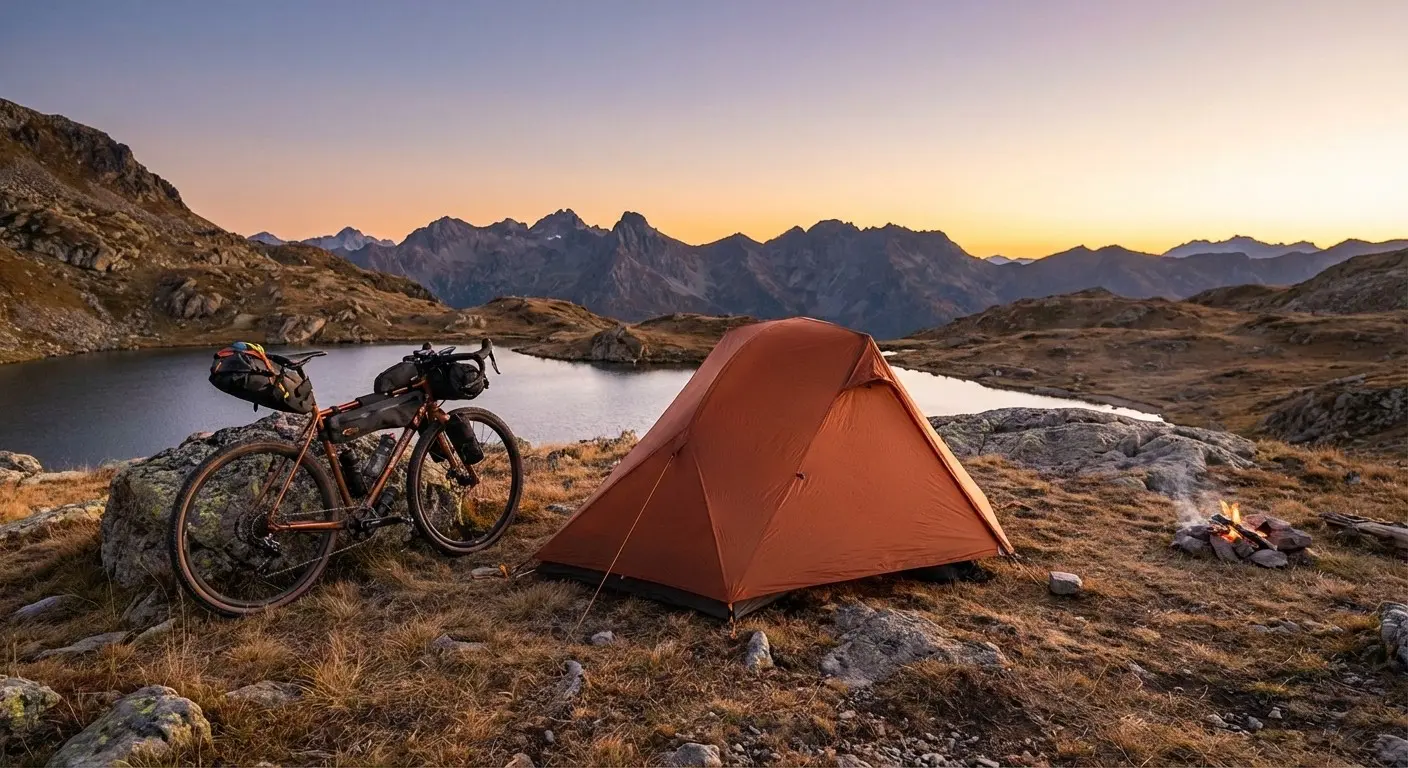
Your Tent Choice Matters More Than You Think
Every ounce counts when you're pedaling uphill with all your gear strapped to your bike. That extra pound in your shelter system? You'll feel it on every climb. As Outdoor Gear Lab's tent testing demonstrates, the best ultralight tents balance protection with weight savings that genuinely matter on the trail.
Go too light and you'll spend sleepless nights in a cramped, poorly ventilated coffin. Go too heavy and you'll curse your tent choice every time the road tilts upward.
We spent months testing one-person tents across varied terrain—from desert singletrack to alpine passes—to find shelters that nail the sweet spot between packability, protection, and livability. The best bikepacking tents share a few common traits: they pack small enough to fit in a handlebar bag or frame bag, weigh under 3 pounds, and still offer enough room to wait out a storm comfortably.
Here are our top picks for 2025.
For alternative shelter options, see our guides on bivys and hammock camping. Complete sleep system recommendations are in our Camp Gear Guide.
What to Look For in a Bikepacking Tent
Before diving into specific recommendations, understand the five factors that separate great bikepacking tents from mediocre ones:
1. Packed Size (Not Just Weight)
Weight matters, but packed dimensions matter more for bikepackers. A 2-pound tent that packs to 20 inches won't fit in your handlebar bag. Look for tents with packed lengths under 15 inches—ideally under 12 inches for handlebar carry.
2. Total Weight
Aim for under 2.5 pounds for solo shelters. Premium ultralight options hit 1.5-2 pounds, while budget options hover around 2.5-3 pounds. Remember: trail weight (what you actually carry) differs from packed weight (includes stuff sacks and stakes).
3. Setup Simplicity
After 60 miles in the saddle, the last thing you want is a complicated pitch. Freestanding designs offer the most flexibility—you can set up on rock slabs or hard-packed ground. Semi-freestanding and trekking pole shelters require stakes but often save weight. For a deep dive into these differences, see our Freestanding vs Non-Freestanding Tent Comparison.
4. Weather Protection
Three-season tents handle most bikepacking conditions. Look for full-coverage rainflies, bathtub floors with sealed seams, and adequate vestibule space to store muddy shoes and wet gear outside your sleeping area.
5. Ventilation
Single-wall tents save weight but often suffer from condensation. Double-wall designs with mesh inner tents and adjustable vents keep you dry from both rain and your own breath.
The Pre-Trip Tent Test (Do This Before Every Adventure)
Don't discover problems 40 miles from the trailhead. Before every multi-day trip:
The Complete Setup Test (15 minutes at home):
- Unpack completely. Verify all poles, stakes, and guylines are present—not still in your other backpack from last trip
- Pitch the tent. Time yourself. If it takes more than 5 minutes at home, it'll take 15 when you're exhausted
- Check for damage. Inspect seams, zippers, and pole sections for wear. UV-degraded fabric tears easily
- Test the rainfly. If you haven't used it recently, verify attachment points still align
- Get inside. Lie down, sit up, check headroom. Confirm it still feels right
What Experienced Bikepackers Discover:
- Stakes left at the last campsite (carry 2 extras)
- Missing pole sections (they fall out of bags)
- Zippers that stick after long storage
- Seam tape that's started peeling
- Tent footprint that's somehow in your car, not your pack
The "First Night" Reality: Your first night in a new tent—or even an old tent in new conditions—reveals things setup at home doesn't. Consider your first overnight on a new trip a "test night." Camp somewhere with bailout options. If the tent doesn't work, you'll want alternatives nearby.
Featured Tents
NEMO Dragonfly OSMO 1P
The Dragonfly OSMO 1P hits the rare trifecta bikepacking demands: genuinely light, impressively packable, and surprisingly livable. At just over 2 pounds with a packed size that slides easily into a frame bag, this tent eliminates the compromises most ultralight shelters force you to make. The OSMO fabric is PFAS-free and handles wet conditions better than standard silnylon—it won't sag or stretch when rain hits. Pre-bent DAC Featherlite poles create vertical walls that maximize interior space, while the 'Landing Zone' gear storage area beneath the vestibule keeps muddy shoes out of your sleeping space. Ventilation is excellent thanks to strategic mesh placement and adjustable fly vents. This is the tent we reach for most often.
- OSMO fabric stays taut in wet conditions
- Packs to 19.5 x 5.5 inches—fits frame bags
- Landing Zone vestibule gear storage
- Pre-bent poles maximize headroom
- PFAS-free waterproof coating
Big Agnes Tiger Wall UL1
When every gram matters, the Tiger Wall UL1 delivers. At just 1 pound 14 ounces, it's the lightest fully-featured tent in our lineup—and it doesn't sacrifice usability to hit that number. The semi-freestanding design needs just two stakes at the foot end, giving you flexibility on varied terrain. Big Agnes packed thoughtful details throughout: double-slider vestibule zippers let you vent without fully opening the door, mini slats at the foot-end corners create extra toe room, and ceiling pockets keep headlamps and phones within reach. The solution-dyed fabric reduces environmental impact while maintaining durability. Yes, it's pricey—but for weight-obsessed bikepackers who log serious miles, this tent justifies its premium.
- Lightest fully-featured option at 1 lb 14 oz
- Semi-freestanding—only 2 stakes required
- Double-slider vestibule zippers for ventilation
- Solution-dyed fabric for sustainability
- Ceiling pockets and interior loops
Six Moon Designs Lunar Solo
Minimalist bikepackers have made the Lunar Solo a cult favorite, and for good reason. At 1 pound 10 ounces with an impossibly small 11 x 4.5 inch packed size, nothing else comes close for sheer packability. The single-pole design uses your trekking pole (or an optional 2-ounce carbon fiber pole from Six Moon Designs) to create a surprisingly spacious shelter with 49 inches of peak height and 26 square feet of floor space. Silicone-coated polyester shrugs off rain while keeping weight minimal. The tradeoff? Single-wall designs can suffer condensation in humid conditions, and you'll need to master the pitch to get the tent taut. But for bikepackers who prioritize the smallest possible packed size and don't mind a learning curve, the Lunar Solo is unmatched.
- Ultralight at just 1 lb 10 oz
- Tiny 11 x 4.5 inch packed size
- 49-inch peak height—no cramped feeling
- Silicone-coated polyester construction
- Works with trekking pole or optional carbon pole
Naturehike Cloud Up 1
Not ready to drop $300+ on a tent? The Naturehike Cloud Up 1 proves you don't have to. At just $80, this double-wall tent punches well above its price point. The 20D silicone-coated nylon fly and floor handle rain without leaking, while the full mesh inner tent keeps condensation at bay. Aluminum poles keep the weight reasonable at around 3.5 pounds—not ultralight, but acceptable for budget-conscious bikepackers. Setup takes under five minutes once you've done it a few times. With over 1,600 Amazon reviews and a 4.2-star rating, thousands of backpackers and bikepackers have validated this tent's quality. If you're new to bikepacking or only get out a few times per year, start here before investing in premium options.
- Outstanding value at $80
- Double-wall design prevents condensation
- 20D silicone-coated nylon construction
- 4.2 stars with 1,600+ reviews
- Quick 5-minute setup
How We Chose These Tents
Our testing prioritized real-world bikepacking scenarios. We evaluated packed dimensions by actually fitting tents into popular handlebar bags and frame bags. We pitched each tent after long riding days to test setup simplicity when fatigued. We weathered storms to assess waterproofing and ventilation. And we slept in each tent multiple nights to evaluate livability.
We also cross-referenced our findings with reviews from Outdoor Gear Lab, Treeline Review, and the bikepacking community on Reddit's r/bikepacking. The tents that made this list consistently performed well across testing conditions and earned praise from experienced bikepackers.
FAQ
What's the ideal weight for a one-person bikepacking tent?
Aim for under 2.5 pounds for most trips. If you're doing multi-day races or prioritizing speed, sub-2-pound options like the Tiger Wall UL1 or Lunar Solo make sense. For casual weekend trips, the weight difference between a 2-pound and 3-pound tent matters less than price and features.
Can I use a trekking pole tent if I don't carry trekking poles?
Yes. Most trekking pole shelters like the Lunar Solo offer optional dedicated tent poles. Six Moon Designs sells a 2-ounce carbon fiber pole specifically designed for their tents. Some bikepackers also use their bike as a support by pitching the tent next to it and using the frame as an anchor point.
Single-wall or double-wall tent for bikepacking?
Double-wall tents (separate rainfly and mesh inner) handle condensation better and offer more versatility. Single-wall tents save weight but can get clammy in humid conditions. If you primarily bikepack in dry climates or don't mind wiping down condensation occasionally, single-wall designs like the Lunar Solo work great. For varied conditions, stick with double-wall.
How important is freestanding vs. semi-freestanding?
Freestanding tents pitch without stakes—useful on rock slabs, platforms, or hard ground. Semi-freestanding designs need a few stakes but often weigh less. For most bikepacking, semi-freestanding works fine since you'll usually find soft ground. If you frequently camp on rocky alpine terrain, prioritize freestanding designs. For a detailed comparison, see our Freestanding vs Non-Freestanding Tent Guide.
Should I prioritize packed length or weight?
For bikepacking specifically, packed length often matters more than weight. A tent that won't fit in your bags creates packing headaches regardless of how light it is. Look for packed lengths under 15 inches for handlebar bags, under 20 inches for frame bags. Many ultralight tents designed for backpackers pack long and skinny—great for a pack, awkward for bike bags.
To complete your sleep system, see our Best Sleeping Bags and Best Sleeping Pads guides. For complete gear lists, check our Bikepacking Packing List Checklist.