Bikepacking Bivys: Ultralight Shelter Alternatives
20+ years testing gear in Colorado backcountry
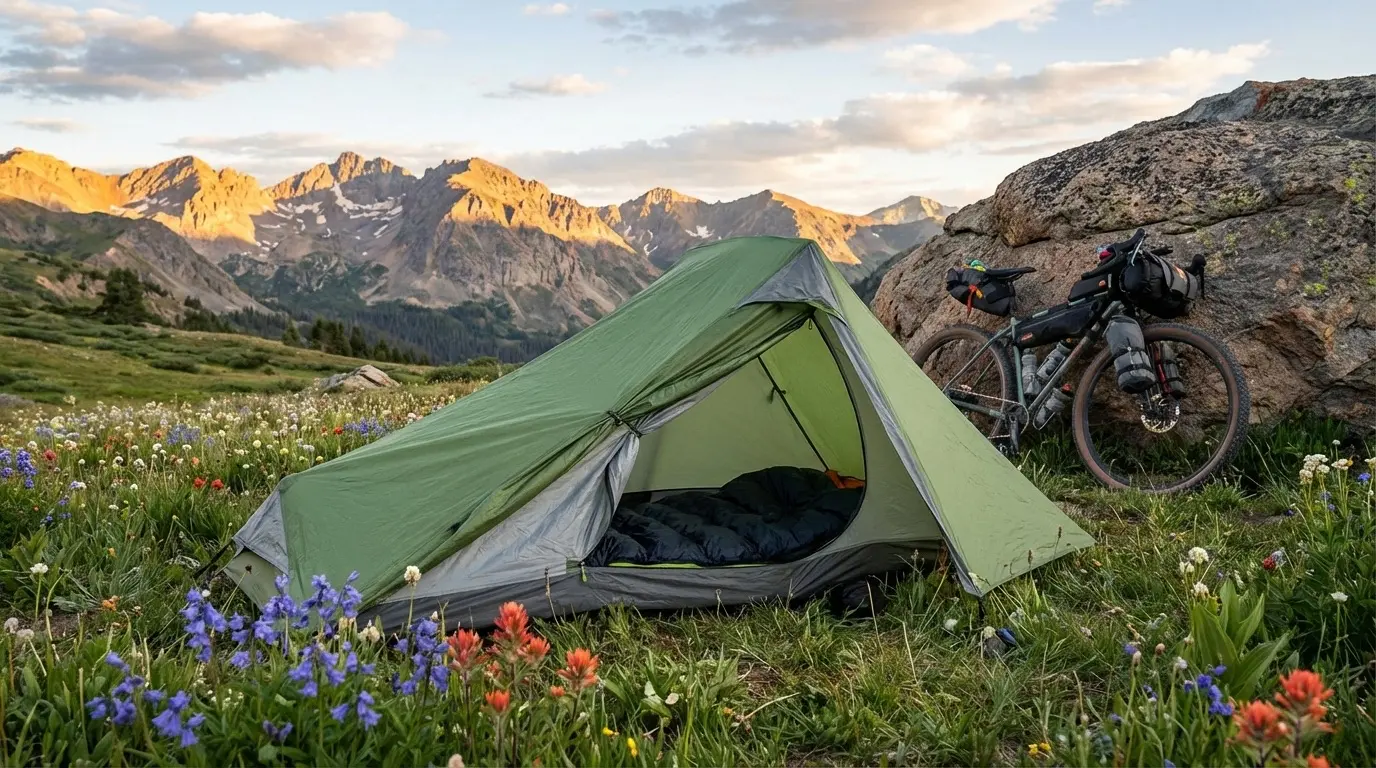
When Less Shelter Is More
Bivy sacks represent minimalist shelter at its most extreme—just enough protection to survive the night. For weight-conscious bikepackers, the appeal is obvious: sub-pound shelter that packs smaller than a water bottle. As BIKEPACKING.com's shelter guides explain, bivys occupy a unique niche in the ultralight shelter spectrum.
But bivys aren't for everyone or every situation. They trade comfort and livability for weight savings. Understanding when bivys work brilliantly versus when they're miserable helps you decide if this approach fits your riding style.
This guide covers bivy types, honest assessments of their limitations, and recommendations for bikepackers considering the minimalist shelter path.
For complete camp gear guidance, see our Bikepacking Camp Gear Guide.
What Is a Bivy?
A bivy (short for bivouac) sack is a waterproof shell that goes over your sleeping bag. Think of it as a personal-sized rain cover rather than a tent. You slide inside, zip or cinch it closed, and sleep protected from rain and wind.
Basic Bivy Types
Emergency bivys are lightweight mylar or coated nylon tubes—minimal protection for unexpected overnights. They weigh ounces and pack tiny but offer marginal comfort.
Breathable bivys use waterproof-breathable fabrics to reduce condensation. They're heavier (8-16 oz typically) but more livable for planned use.
Hooped bivys add a pole or hoop near the head for face clearance and improved ventilation. The Outdoor Research Helium Bivy exemplifies this category—genuine shelter capability at around 1 pound.
When Bivys Work
Fair-Weather Riding
Bivys shine when conditions stay dry and temperatures remain mild. Clear nights with no rain forecast? A bivy provides wind protection and dew resistance at minimal weight.
Weight-Critical Trips
When every ounce matters—bikepacking races, fast-and-light missions, carrying extra food for remote routes—bivys offer meaningful weight savings over tents. For packing strategies, see our Weight Distribution Guide.
Stealth Camping
Bivys are less visually intrusive than tents. For discreet camping in gray-area locations, the low profile attracts less attention.
Backup Shelter
Even tent users sometimes carry emergency bivys as backup. They add minimal weight and provide genuine protection if your primary shelter fails.
Stars and Simplicity
Some riders simply prefer sleeping with minimal barrier between themselves and the environment. Bivys enable watching stars while still having rain protection available.
Your First Bivy Night: What to Actually Expect
If you've never slept in a bivy, here's the honest reality:
The First Hour:
- Getting in feels awkward—practice at home first
- You'll immediately wonder "Is this really enough space?"
- Finding the right position for your head takes experimentation
- The urge to unzip "just a little more" is constant
The Middle of the Night:
- Condensation appears. It will. Accept this
- You may wake up to wipe moisture from the fabric
- Temperature regulation is trickier—you're either in or out
- Bathroom breaks mean fully exiting your shelter (no vestibule to crouch in)
Morning Reality:
- Your sleeping bag may feel damp at the outer layer
- Pack out quickly before sun makes condensation worse
- The simplicity payoff: you're packed in 5 minutes flat
The Test That Matters: Before committing to a bivy for a multi-day trip, do a backyard test night. Pick a night with weather similar to your planned trip. Sleep in the bivy from 9pm until morning. No cheating—stay in it all night.
If you wake up thinking "that wasn't bad," bivys might work for you. If you wake up thinking "never again," you've saved yourself a miserable trip.
When Bivys Fail
Sustained Rain
Waterproof-breathable fabrics have limits. In prolonged rain, moisture accumulates inside even quality bivys. You won't stay dry through an all-night downpour the way you would in a tent.
Condensation Issues
Even the best bivys generate internal condensation. Your breath and body moisture need somewhere to go—and in enclosed spaces, that's onto your sleeping bag. Ventilation helps but doesn't eliminate the problem.
Bug Pressure
Most bivys lack bug protection or offer only mesh panels. In mosquito-heavy areas, you'll be miserable without additional netting.
Extended Use
Bivys work for a night or two. Multiple consecutive nights in a bivy becomes wearing—the tight quarters, condensation management, and lack of sit-up space take a toll.
Bad Weather
When storms roll in, bivys offer minimal protection for gear, no space to wait out weather, and limited ability to manage wet clothing and equipment.
Featured Products
Outdoor Research Helium Bivy
The Helium Bivy represents the category's best balance of protection and weight. The hooped design creates genuine headroom—you can read, adjust gear, and breathe without fabric pressing against your face. Waterproof-breathable construction handles rain far better than emergency bivys. The bug netting provides essential insect protection. At around 1 pound packed, it's heavier than emergency options but vastly more livable. Setup takes seconds—stake out the corners, deploy the hoop, and you're done. For bikepackers who want real bivy capability rather than emergency-only protection, the Helium delivers.
- Hooped design for headroom
- Waterproof-breathable construction
- Bug netting included
- ~1 lb packed weight
- Full seam-taped protection
SOL Escape Bivvy
The SOL Escape takes emergency bivys to the next level. Unlike crinkly mylar emergency blankets, the Escape uses breathable fabric that reduces condensation buildup—a significant improvement for overnight use. The aluminized coating reflects body heat back to you. At 8.5 ounces, it's light enough to always carry as backup. It won't match a true hooped bivy for comfort, but for emergency shelter or ultralight minimalists, it exceeds expectations. Many bikepackers carry one even when using a tent—the weight penalty is trivial, the insurance is real.
- 8.5 oz ultralight weight
- Breathable design reduces condensation
- Reflects 70% body heat
- Packs extremely small
- Works as emergency or primary shelter
SOL Escape Lite Bivvy
The Escape Lite strips the concept to essentials—5.5 ounces of genuine emergency protection. It's not a primary shelter, but it's a legitimate safety tool for unexpected overnights. The orange visibility aids rescue scenarios. Pack one in your frame bag for insurance and forget about it until needed. At this weight and price, there's no reason not to carry emergency shelter capability.
- 5.5 oz featherweight
- High-visibility orange
- Reflects body heat
- Waterproof protection
- Affordable price
Bivy vs. Ultralight Tent
Modern ultralight tents have closed the weight gap with bivys. A quality single-wall tent like the Big Agnes Fly Creek weighs under 2 pounds—only about a pound more than a hooped bivy.
Choose Bivy When:
- Every ounce genuinely matters (races, fast missions)
- You expect mostly clear weather
- You value simplicity over comfort
- Stealth camping is planned
- You need emergency backup shelter
Choose Ultralight Tent When:
- Variable weather is likely
- You'll use shelter for multiple consecutive nights
- Bug pressure is significant
- You want space to sit up and manage gear
- You prefer psychological comfort of enclosed shelter
The Honest Assessment
For most bikepackers, an ultralight tent provides better value. The weight difference (often 12-20 oz) buys significantly more comfort and weather capability. Bivys excel for specific use cases—not as default shelter choices.
Making Bivys Work Better
Site Selection
Choose protected spots out of wind. Trees and terrain features reduce exposure. Avoid low areas where cold air pools and condensation is worst.
Ventilation Management
Keep the bivy opening as ventilated as possible given conditions. More airflow means less condensation. Zip fully only when rain forces it.
Ground Insulation
Your sleeping pad provides ground insulation. Don't skip it thinking the bivy floor protects you—it doesn't insulate meaningfully. Pair your bivy with a quality sleeping bag for complete warmth.
Moisture Management
Wipe down interior condensation before it soaks your bag. Some bikepackers use a small pack towel for this purpose.
Keep Essentials Inside
In a bivy, anything outside your shelter is exposed. Keep clothing, electronics, and critical items inside with you.
FAQ
Are bivys waterproof?
Quality bivys like the Outdoor Research Helium are waterproof. However, they don't handle sustained heavy rain as well as tents—condensation builds up inside even waterproof bivys.
Will I wake up wet?
Possibly. Condensation is the bivy's biggest limitation. Breathable fabrics reduce but don't eliminate the issue. Good ventilation helps most.
Can I use a bivy in winter?
Yes, but condensation becomes ice inside the bivy. This is a genuine cold-weather technique, but it requires experience managing moisture in freezing conditions.
Should I carry an emergency bivy even with a tent?
Many experienced bikepackers do. The SOL Escape Lite weighs 5.5 oz—trivial insurance for unexpected overnights or tent failures.
Quick Recommendations
Best full-featured bivy: Outdoor Research Helium Bivy—hooped design with genuine livability.
Best emergency/backup: SOL Escape Bivvy—breathable design that works for planned use.
Lightest option: SOL Escape Lite—5.5 oz emergency shelter.
Our honest recommendation: Unless you're racing or aggressively ultralight, consider an ultralight tent instead. The comfort difference exceeds the weight difference for most riders.
For complete shelter options, see our Best One-Person Tents for Bikepacking. For the full camp system, return to our Camp Gear Guide.
For budget setup options including shelter choices, see our Budget Bikepacking Setup Under $500.
Sleep under the stars. Or under a thin layer of protection. Your choice.