Best Sleeping Bags for Bikepacking: Ultralight Options for Every Budget
20+ years testing gear in Colorado backcountry
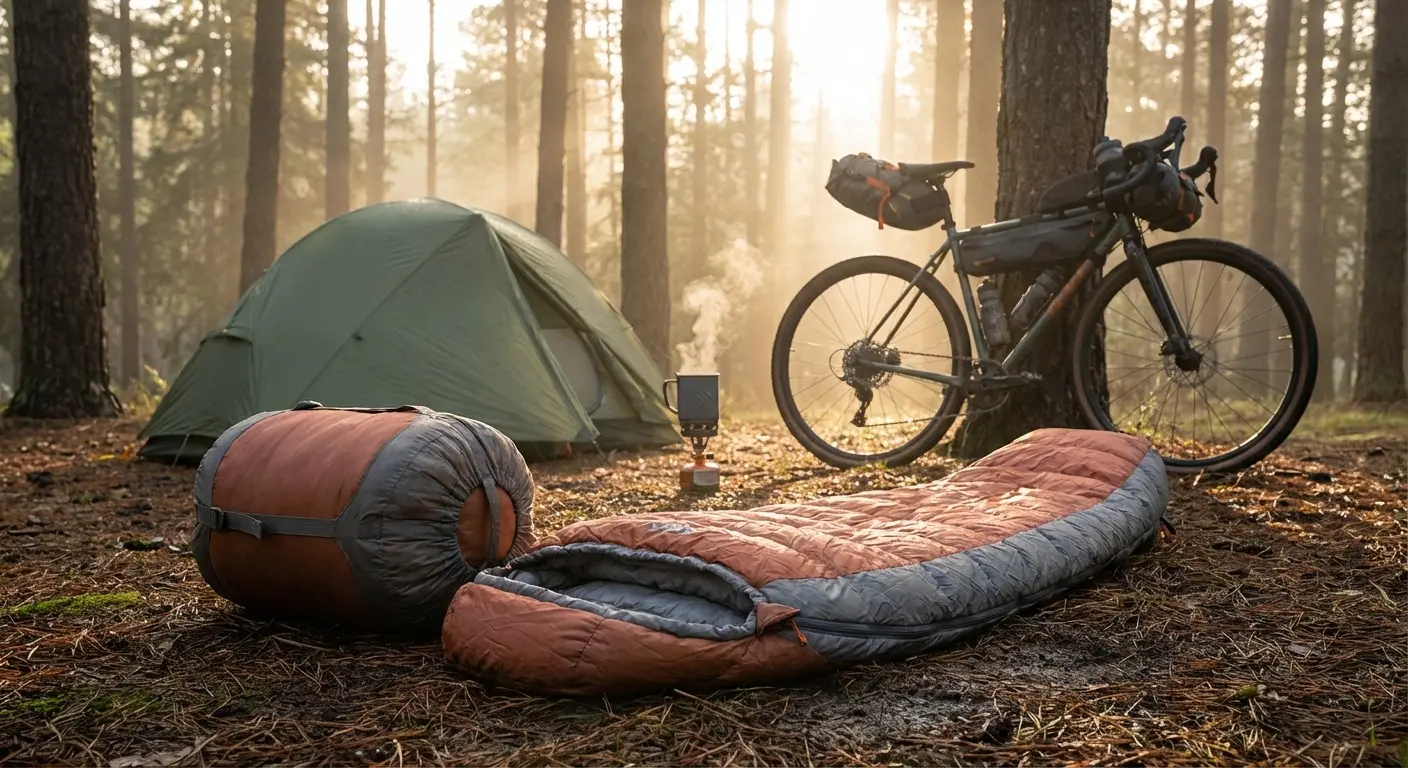
The Most Important Gear You'll Never Think About (Until It Fails You)
Your sleeping bag determines whether you wake refreshed and ready to ride, or stumble through the next day exhausted and miserable. It's easy to obsess over bikes and bags while treating sleep gear as an afterthought—until that first cold night reminds you why it matters.
As Outdoor Gear Lab's sleeping bag testing demonstrates, quality sleep systems separate successful adventures from miserable ones.
Bikepacking demands specific sleeping bag qualities that differ from backpacking or car camping. Pack size matters enormously—your bag needs to compress small enough to fit in a saddle bag alongside clothing and shelter. Weight adds up over long days in the saddle. And warmth must match the coldest conditions you'll encounter, because there's no backup plan when you're 40 miles from the nearest town.
The eternal debate between down and synthetic insulation gets more nuanced for bikepackers. Each has genuine advantages depending on your climate, budget, and maintenance preferences. Temperature ratings add another layer of complexity—the numbers on the bag don't always mean what you think.
This guide cuts through the confusion. We cover the down-versus-synthetic decision, explain what temperature ratings actually mean, and recommend the best sleeping bags at every price point for bikepacking adventures.
For complete gear guidance, see our Complete Bikepacking Gear Guide.
Down vs. Synthetic: The Real Trade-Offs
The insulation choice affects weight, packability, performance, and cost. Neither option is universally superior.
Down Sleeping Bags
Down insulation—typically goose or duck—remains the gold standard for warmth-to-weight ratio. Premium down bags weigh half as much as equivalent synthetic options and compress to a fraction of the size.
Advantages:
- Lightest option for any given temperature rating
- Most compressible—critical for saddle bag packing
- Longest lifespan (10+ years with proper care)
- Best warmth-to-weight ratio available
Disadvantages:
- Loses nearly all insulation value when wet
- Takes hours to dry if soaked
- More expensive than synthetic
- Requires more careful maintenance
Best for: Dry climates, weight-conscious bikepackers, those willing to invest in premium gear and maintain it properly. The Sea to Summit Spark represents the best of what down offers.
Synthetic Sleeping Bags
Synthetic insulation uses polyester fibers that trap air similar to down. Modern synthetics have closed the gap significantly, though they still can't match down's performance.
Advantages:
- Retains insulation even when wet
- Dries much faster than down
- More affordable at entry level
- Less maintenance required
Disadvantages:
- Heavier than equivalent down bags
- Bulkier and harder to compress
- Shorter lifespan (3-5 years typically)
- Never quite matches down's warmth-to-weight
Best for: Wet climates, budget-conscious riders, those who don't want to fuss with specialized care. The Marmot Trestles 15 is our top synthetic pick.
Which Should You Choose?
Choose down if: You ride primarily in dry conditions, prioritize weight savings, plan to invest in quality gear you'll keep for years, and will store it properly.
Choose synthetic if: You frequently encounter rain or high humidity, want to spend less upfront, prefer simpler maintenance, or need a bag that performs reliably even if it gets wet.
Most experienced bikepackers lean toward down for weight savings but protect it carefully with waterproof stuff sacks or saddle bag liners.
Understanding Temperature Ratings
That "20-degree" label on a sleeping bag doesn't mean you'll be comfortable at 20°F. Understanding the rating system prevents cold, miserable nights.
The EN/ISO Testing Standard
Reputable bags use EN (European Norm) or ISO testing to generate standardized ratings. These tests produce three numbers:
- Comfort rating: Temperature at which a "standard woman" sleeps comfortably
- Lower limit: Temperature at which a "standard man" sleeps in a curled position
- Extreme: Survival rating—you won't die, but you won't sleep either
Most bags advertise their lower limit rating. If you're a cold sleeper, buy based on comfort rating instead.
How to Choose Your Rating
For three-season bikepacking (spring through fall, avoiding winter), a 20-30°F rated bag handles most conditions. For cold-weather adventures, see our Winter Bikepacking Guide. Add these adjustments:
- Cold sleeper? Subtract 10-15 degrees from your expected lows
- Warm sleeper? You might get away with a warmer-rated bag
- Using a sleeping pad? Pad R-value matters as much as bag rating
The Pad Factor
Your sleeping pad insulates from ground cold. A 20°F bag on a thin foam pad won't perform like the same bag on an insulated inflatable like the Therm-a-Rest NeoAir XLite. Match your pad's R-value to your conditions—R-3 or higher for three-season use. See our Best Sleeping Pads for Bikepacking guide for recommendations.
The Loft Test: Is Your Bag Still Performing?
Down bags lose loft over time—and with it, warmth. Here's how to know if your bag is still doing its job:
The Visual Test (Before Every Trip):
- Unpack your sleeping bag 24 hours before your trip
- Shake it out and let it expand fully
- Measure the loft (thickness) at the chest area
- Compare to manufacturer specs (usually 4-6 inches for a 20°F down bag)
Warning Signs Your Bag Needs Attention:
- Loft below manufacturer spec (even after 24 hours)
- Visible "cold spots" where down has shifted
- Fabric feels clammy or musty (oils affecting down)
- You're cold at temperatures that used to feel fine
The Fix: Most loft problems come from dirty down clumping together. A proper wash with down-specific soap (Nikwax Down Wash) often restores 90% of original loft. If washing doesn't help, the down may be worn out—time for a new bag.
Prevention:
- Air out your bag after every trip (don't immediately stuff it)
- Store loosely, never compressed
- Use a liner to reduce washing frequency
- Keep body oils off the shell (sleep in clean clothes)
Featured Products
Sea to Summit Spark 28°F
When weight and packability are paramount, the Spark delivers. Sea to Summit uses 850+ fill power RDS-certified down that compresses impossibly small while providing genuine warmth. At approximately 1.1 pounds (490g) and packing smaller than a water bottle, this bag practically disappears into your saddle bag. The 10-denier shell fabric is impressively light yet surprisingly durable, and the updated vertical baffles prevent down shifting during use. The PFAS-free DWR coating adds water resistance without environmental compromise. Yes, it costs more than budget options—but for weight-conscious bikepackers who refuse to sacrifice warmth, the Spark represents the state of the art.
- 850+ fill power premium down
- ~1.1 lbs (490g) ultralight weight
- Compresses smaller than a water bottle
- PFAS-free DWR treatment
- Vertical baffles prevent down shifting
Kelty Cosmic 20 Down
The Cosmic 20 proves you don't need to spend $400+ on a capable down bag. Kelty uses 550 fill power DriDown insulation—lower than premium options but still offering down's weight and compression advantages over synthetic. The bag weighs around 2.5 pounds and packs to about 10.7 liters—not ultralight, but manageable for bikepacking. PFAS-free DWR and recycled shell fabrics add environmental responsibility. The roomy cut provides comfort for side sleepers who feel claustrophobic in mummy bags. For bikepackers wanting down's benefits without premium pricing, the Cosmic delivers genuine value.
- 550 fill power DriDown insulation
- PFAS-free, recycled materials
- Excellent warmth-to-price ratio
- Roomy comfortable cut
- Compression stuff sack included
Marmot Trestles 15 Synthetic
For wet-climate bikepackers, the Trestles 15 offers peace of mind that down can't match. Marmot's SpiraFil insulation uses a blend of spiral hollow fibers that maintain loft and warmth even when damp. The EN-rated 15°F comfort handles genuinely cold conditions. The roomy cut with room to move appeals to those who feel trapped in tight mummy bags. Wave construction and a 3D footbox add comfort touches. Heavier and bulkier than down alternatives—but when your route includes persistent rain or stream crossings, synthetic reliability becomes invaluable.
- SpiraFil synthetic insulation
- Performs even when wet
- EN-rated 15°F comfort
- Roomy cut for comfort
- Dries faster than down
ECOOPRO Down Sleeping Bag 32°F
ECOOPRO defies expectations at this price point. The 800 fill power down provides genuine warmth and compression typically found in bags costing twice as much. Weight comes in ultralight at approximately 1.8 pounds with a packed size that fits easily in bikepacking setups. The 32°F rating limits it to warmer conditions—spring through fall in mild climates—but for summer bikepacking, this bag offers remarkable value. Waterproof shell fabric adds protection against condensation and light moisture. Some quality compromises exist at this price (zippers, stitching details), but for warm-weather adventures on a budget, the performance surprises.
- 800 fill power down at budget price
- Ultralight ~1.8 lb weight
- Highly compressible
- Waterproof shell fabric
- Compression sack included
ECOOPRO Warm Weather Sleeping Bag
When conditions stay mild and budget is tight, this ultra-affordable option gets the job done. At approximately 1.7 pounds and compressing to just 11 inches, it fits bikepacking setups without difficulty. The 55-60°F comfort rating limits use to genuine warm weather—summer camping or desert conditions. Waterproof nylon outer fabric and polyester lining provide basic protection. Quality compromises exist (the zipper can catch, stitching isn't perfect), but for warm-weather bikepacking where you need something lightweight and affordable, this bag works. Think of it as entry-level gear for testing bikepacking before investing in premium equipment.
- Ultra-affordable price point
- 1.7 lbs lightweight
- Very compact when compressed
- Waterproof nylon shell
- Compression sack included
Packing Your Sleeping Bag for Bikepacking
How you pack your sleeping bag affects both its longevity and your riding experience.
Use Compression Sacks
Compression sacks squeeze your bag to minimum volume—critical for saddle bag space. Look for waterproof compression sacks that add moisture protection and volume reduction in one.
Position in Your Saddle Bag
Your sleeping bag typically goes at the bottom of your saddle bag, forming a stable base for other gear. Its soft, conforming shape helps the bag sit properly without creating hard pressure points.
Stuff, Don't Roll
Despite old advice about rolling sleeping bags, stuffing is actually better for down bags. Rolling creates creases in the same places repeatedly, wearing insulation faster. Stuffing distributes compression randomly, extending bag life.
Keeping It Dry
Even waterproof saddle bags can leak in sustained rain or stream crossings. Use a waterproof stuff sack or dry bag inside your saddle bag for insurance. A wet down bag is a useless down bag—redundant protection is worthwhile.
Caring for Your Sleeping Bag
Proper care dramatically extends sleeping bag lifespan—especially for down bags.
Storage Rules
Never store your bag compressed. Keeping insulation compressed for months kills loft permanently. Store sleeping bags loosely in a large cotton or mesh storage sack, or hanging in a closet.
Washing Down Bags
Down bags need occasional washing but require specific care:
- Use down-specific detergent (Nikwax Down Wash, Granger's Down Wash)
- Front-loading washer only—agitators damage baffles
- Gentle cycle, cold water
- Multiple rinse cycles to remove all soap
Drying Properly
Drying takes hours but matters enormously:
- Tumble dry low heat with clean tennis balls or dryer balls
- Balls break up down clumps as they dry
- Continue until completely dry—trapped moisture causes mildew
- Check baffles for remaining clumps
DWR Maintenance
The water-repellent coating on your bag's shell fabric eventually wears off. Reapply DWR treatment (Nikwax TX.Direct, Granger's Performance Repel) periodically to restore water beading and reduce moisture absorption.
FAQ
What temperature rating do I need for bikepacking?
For three-season use, a 20-30°F rated bag handles most conditions. If you sleep cold, go with a 15-20°F bag. For summer-only riding in mild climates, a 40°F bag saves weight. Always consider the coldest conditions you might encounter—not the average.
Down or synthetic—which is better for bikepacking?
Down offers better weight and packability. Synthetic offers better wet-weather performance. Most bikepackers choose down and protect it carefully with waterproof stuff sacks. If you frequently encounter rain, consider synthetic or be religious about moisture protection.
How small will a sleeping bag pack for bikepacking?
Premium down bags (like the Sea to Summit Spark) compress to roughly 4-5 liters—smaller than a Nalgene bottle. Budget down bags typically compress to 8-10 liters. Synthetic bags compress to 10-15 liters for equivalent warmth. Check packed dimensions before buying.
How do I keep my sleeping bag dry while bikepacking?
Use a waterproof stuff sack inside your saddle bag. Even if your saddle bag claims waterproofing, redundant protection prevents disaster. Pack the sleeping bag first (at the bottom) where it's most protected.
Choose Based on Your Priorities
Weight is paramount: Sea to Summit Spark—ultralight premium performance.
Best value down: Kelty Cosmic 20—genuine down performance at accessible pricing.
Wet climate reliability: Marmot Trestles 15—synthetic that performs when damp.
Budget summer riding: ECOOPRO Down 32F—surprising quality at entry-level price.
For complete gear recommendations, see our Complete Bikepacking Gear Guide. Building a complete budget setup? Our Budget Bikepacking: Complete Setup Under $500 covers affordable options across all categories.
For shelter options to pair with your bag, see our Best One-Person Tents and Bivy Guide.
Rest well. Tomorrow's ride is waiting.