Best Frame Bags for Bikepacking: Full vs Half Frame Options
20+ years testing gear in Colorado backcountry
The Foundation of Every Bikepacking Setup
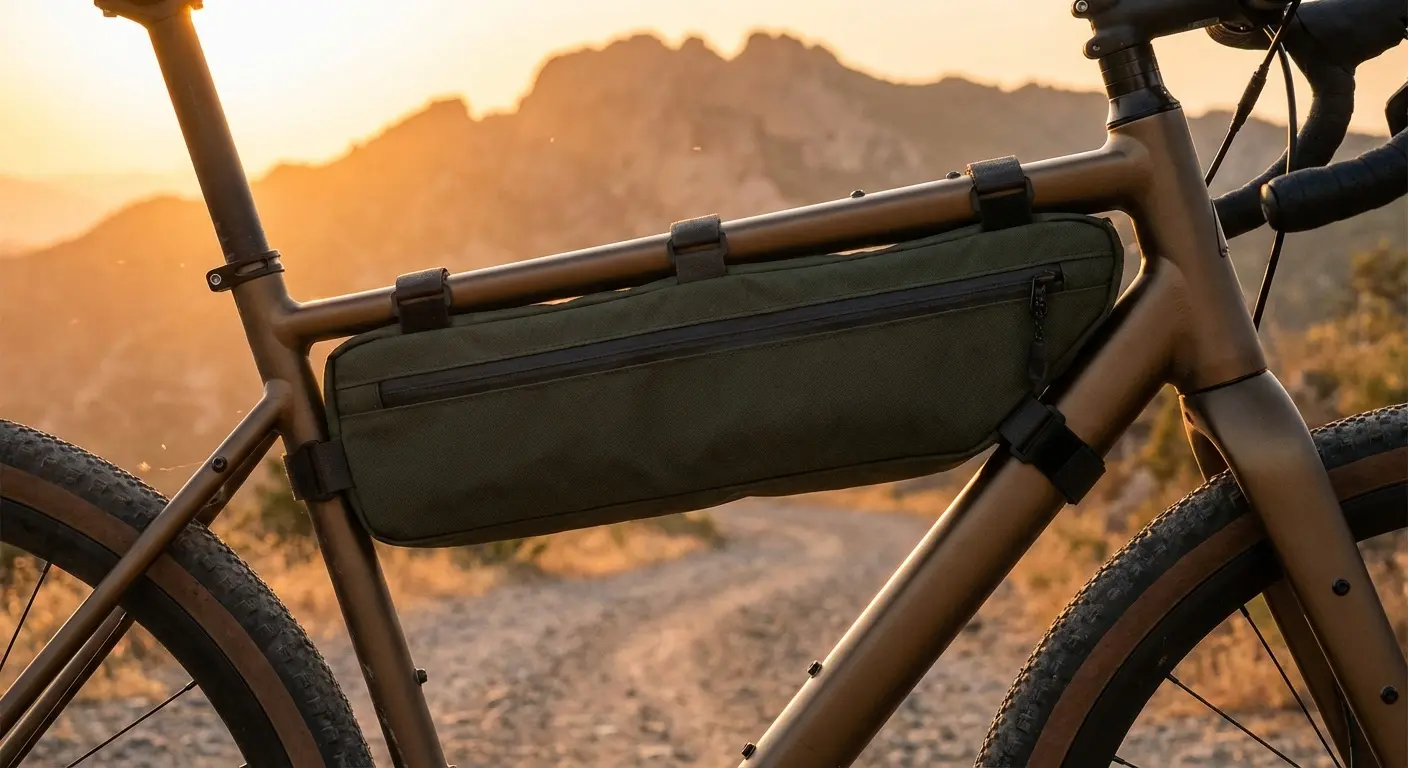
Your frame bag occupies prime real estate—the main triangle between your top tube, seat tube, and down tube. This position is bikepacking gold: low, centered, and protected from impacts. Weight here affects handling less than anywhere else on your bike.
That's why experienced bikepackers put their heaviest gear in the frame bag, as BIKEPACKING.com's gear guides consistently recommend. Tools, electronics, food, spare parts—the dense stuff that would throw off your balance if mounted higher. A well-packed frame bag can carry 5-10 pounds without noticeably changing how your bike rides.
The big decision comes down to full-frame versus half-frame designs. Full-frame bags maximize capacity by filling the entire triangle—but they block water bottle mounts. Half-frame bags preserve bottle access while offering less total volume. Neither is objectively better; the right choice depends on your riding style and hydration needs.
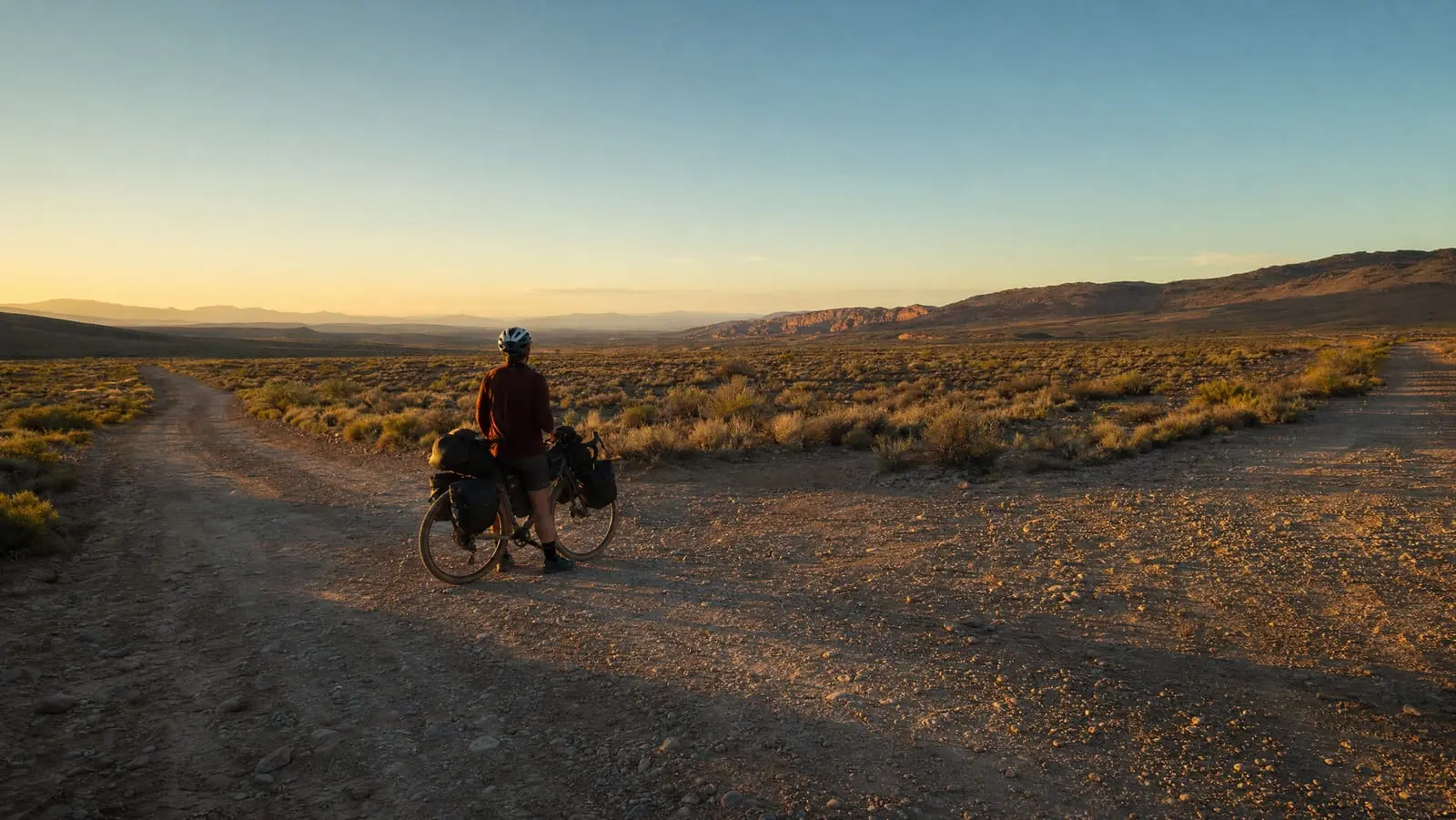
This guide breaks down the differences, covers what features matter most, and recommends the best frame bags at every price point. Whether you're tackling desert routes requiring maximum water capacity or forest trails with streams everywhere, you'll find the right frame bag here.
For complete bag system guidance, see our Complete Bikepacking Bag & Storage Guide.
Full-Frame vs. Half-Frame Bags
The first decision shapes everything else about your bag choice.
Full-Frame Bags
Full-frame bags fill your entire main triangle, maximizing the low-centered storage position. Capacity typically runs 6-12 liters depending on your frame size—significantly more than half-frame options.
The trade-off: They block water bottle cage mounts inside the frame. You'll need alternative hydration: stem-mounted bottles, fork cages, hydration bladders, or handlebar-mounted bottles.
Best for:
- Expedition and multi-week trips requiring maximum capacity
- Winter riding (more gear, reliable water sources from snow)
- Riders comfortable with alternative hydration solutions
- Routes with frequent water resupply points
Half-Frame Bags
Half-frame bags occupy the upper portion of the triangle, leaving space for at least one water bottle cage on the seat tube. This is the most popular configuration for most bikepackers.
Capacity: Typically 3-6 liters. Enough for tools, electronics, heavy food, and miscellaneous dense items.
Best for:
- Most bikepackers (the default recommendation)
- Hot-weather riding requiring constant hydration access
- Routes with limited water resupply
- Riders who prefer simple bottle-based hydration
Which Should You Choose?
Choose full-frame if:
- You need maximum capacity and can solve hydration alternatively
- You're doing expedition-length trips
- Water resupply is reliable and frequent
- You already own fork cages or hydration bladders
Choose half-frame if:
- You want the simplest hydration solution (bottles)
- Hot weather riding is common
- You're doing overnighters to multi-day trips
- You prefer quick water access without stopping
When in doubt, start with a half-frame bag. You can always add fork-mounted water later. Losing easy hydration access is harder to work around than slightly less frame storage.
The Decision Framework in Practice
Scenario 1: Desert Southwest route, July Water sources 30+ miles apart. Temperatures above 100°F. You need 4+ liters of carrying capacity minimum. → Half-frame bag + fork cages for extra bottles. Easy hydration access matters more than extra frame storage in extreme heat.
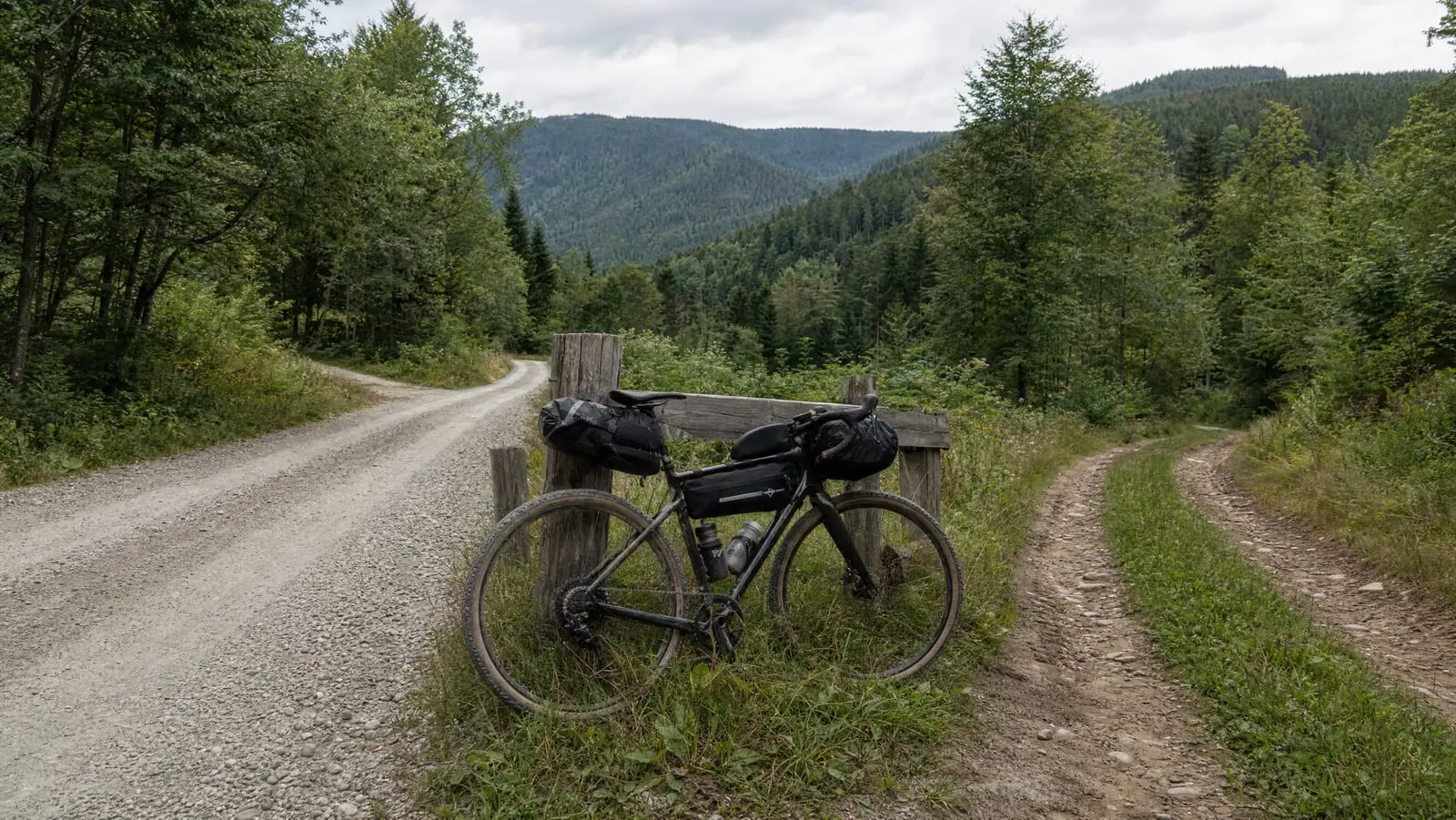
Scenario 2: Pacific Northwest, October Water everywhere—streams, campgrounds, towns every 15 miles. Rain likely. → Full-frame bag works well. You'll never need more than 2 liters carrying capacity. Maximize storage for rain gear.
Scenario 3: Weekend overnighter, familiar route Known water at camp, 25 miles each day, moderate weather. → Half-frame bag is plenty. You don't need expedition capacity for a night out.
Scenario 4: Two-week tour, remote terrain Variable water access, long days, need maximum self-sufficiency. → Full-frame bag + fork cages + hydration bladder. You need both capacity and water options.
What to Look For in a Frame Bag
Mounting System
Velcro straps: The most common approach. Wide straps wrap around your frame tubes, secured with hook-and-loop fasteners. Works universally but requires periodic re-tensioning.
Bolt-on options: Some frames include dedicated bag mounting bolts. Bags designed for these mounts are more secure but less universal.
Frame protection: Look for soft backing material where the bag contacts your frame. Cheap bags with rough backing can wear through paint over time. Quality bags include protective pads or soft materials at contact points.
Waterproofing
Welded seams: Premium bags use RF-welded or heat-welded construction for true waterproof protection. Worth the premium for wet climates. Learn more about bikepacking bag materials and durability to make an informed choice.
Water-resistant fabric: Mid-range bags use coated fabrics that handle rain and splashes. They'll eventually leak in sustained downpours—pair with dry bags inside for critical items.
Zipper protection: Water-resistant zippers with storm flaps add protection. Full waterproof zippers cost more but provide better sealing.
Access
Dual-side zippers: Access from either side of your bike—no awkward reaching or repositioning. Essential for frame bags since you'll access them frequently while riding.
Single-side zippers: Cheaper but limiting. You'll need to lean your bike on a specific side or reach awkwardly to access contents.
Internal organization: Some bags include internal pockets or dividers. Helpful for keeping small items organized, though adds weight and complexity.
Featured Products
Topeak Midloader 4.5L
The Midloader hits the sweet spot that most bikepackers need: enough capacity for tools, food, and electronics without completely blocking your frame. Topeak's dual-side zipper access means you can grab what you need from either side of the bike—no awkward reaching or repositioning required. The water-resistant construction handles splashes and light rain, while the hook-and-loop mounting fits most frame geometries with top tube diameters from 45-66mm. Internal pockets add organization for small items, and reinforced contact points protect your frame's finish. Available in 3L, 4.5L, and 6L sizes—the 4.5L balances capacity and frame compatibility for most riders.
- Dual-side zipper access
- Water-resistant construction
- Hook-and-loop fits most frames
- Internal organization pockets
- Reinforced contact points
Topeak Midloader 6L
Need more capacity without going full-frame? The 6L Midloader uses the same proven design as its smaller sibling with expanded volume for longer trips. The larger size still preserves water bottle access on most frames while carrying tools, electronics, heavy food, and spare layers. Same quality construction, dual-side access, and secure mounting—just more space. Ideal for multi-day adventures where you need a bit more storage without sacrificing hydration convenience.
- 6L expanded capacity
- Dual-side zipper access
- Same proven Midloader design
- Preserves bottle access on most frames
- Lightweight construction
Apidura Expedition Frame Pack 3L
When you want premium quality and true waterproofing, Apidura delivers. The Expedition Frame Pack uses welded construction that laughs at rain—your gear stays dry in conditions that soak through cheaper bags. The light-colored interior brightens the inside for easier item location, while reflective details add visibility for low-light riding. Apidura's lifetime warranty and repair service mean this bag can last decades with proper care. The 3L size fits compact frames while the design philosophy prioritizes durability over weight savings. For serious bikepackers who want buy-it-for-life quality, this is the bag.
- Fully waterproof welded construction
- Light interior for visibility
- Reflective details for safety
- Lifetime warranty and repair service
- Premium materials throughout
ROCKBROS 4L Triangle Frame Bag
ROCKBROS proves you don't need to spend $100+ on a capable frame bag. The seamless heat-press construction delivers 95% water resistance—not fully waterproof, but adequate for fair-weather riding with a dry bag liner for electronics. The triangular shape maximizes use of your frame's space while maintaining water bottle clearance. Dual-side zippers provide access from either direction. At this price point, some compromises exist—mounting straps aren't as refined as premium options, and long-term durability remains unproven—but for budget bikepackers or those testing the waters, this bag punches far above its weight class.
- 95% water resistance
- Seamless heat-press construction
- Dual-side zipper access
- Triangular design maximizes space
- 840D nylon durability
ROCKBROS 5-8L Expandable Frame Bag
When you need budget-friendly capacity that approaches full-frame territory, the ROCKBROS expandable bag delivers. The quick-release mounting system makes installation and removal faster than strap-based alternatives. ROCKBROS claims 100% waterproof construction—real-world performance suggests excellent water resistance, though perhaps not true submersion protection. The expandable design adjusts from 5L for lighter loads up to 8L for longer trips. For budget-conscious riders tackling multi-day adventures, this bag provides serious capacity without serious spending.
- Expandable 5-8L capacity
- Quick-release mounting system
- Waterproof construction
- Large capacity for budget price
- Reflective elements for visibility
What to Pack in Your Frame Bag
The frame bag carries your heaviest and densest gear. This isn't arbitrary—it's physics. Weight low and centered minimizes impact on handling. For detailed guidance on packing all your bags effectively, see our weight distribution guide.
Pack these items in your frame bag:
- Tools: Multi-tool, tire levers, chain tool, spare parts
- Spare tubes and patch kit: Dense and heavy, perfect for frame bag
- Electronics: Portable charger, cables, GPS backup batteries
- Heavy food: Energy bars, nuts, dense nutrition
- Pump: Mini pump or CO2 inflators
- Valuables: Wallet, phone (when not in use), keys—kept close to your body
Avoid packing these:
- Lightweight bulky items (sleeping bag, clothing)—these belong in your saddle bag
- Anything you need quick access to while riding—use top tube bags instead
- Tent poles or long items that don't fit the triangular space
Organization tip: Use small stuff sacks or zip-lock bags to group items. "Electronics" sack, "tools" sack, "food" sack. Finding what you need becomes much faster.
Measuring Your Frame
Not all frame bags fit all frames. Before buying, measure your main triangle.
How to Measure
- Top tube length: Measure from head tube to seat tube along the top tube
- Seat tube length: Measure from top tube to bottom bracket
- Down tube clearance: Note cable routing that might interfere
- Available depth: Measure perpendicular from top tube to the closest point on down tube
Create a paper template by cutting cardboard to your measurements. Hold it in the frame to visualize what fits.
Custom vs. Off-the-Shelf
Off-the-shelf bags use adjustable mounting to fit various frames. They're more affordable and immediately available—adequate for most standard geometries.
Custom bags are manufactured to your exact dimensions, filling every available space. Worth considering when:
- Your frame has unusual geometry
- You want maximum possible capacity
- Off-the-shelf options don't quite fit
Custom bags typically cost $150-300 and require 2-6 weeks for manufacturing. Most riders do fine with quality off-the-shelf options.
FAQ
Will a frame bag fit my bike?
Most half-frame bags fit most bikes with adjustable straps. Full-frame bags require more careful sizing. Measure your triangle and compare to bag dimensions before buying. Full-suspension bikes have the most limitations—rear shocks and linkages often occupy frame space.
Are frame bags compatible with full-suspension bikes?
Sometimes, but with restrictions. Rear shocks and suspension linkages occupy frame space. Look for bags specifically designed for your frame, or choose small half-frame options that fit above the shock. Custom bags often work best here.
Custom or commercial frame bag?
Start with commercial unless you have unusual frame geometry. Quality commercial bags like the Topeak Midloader fit most bikes well. Custom makes sense after you've bikepacked enough to know exactly what you need and find commercial options limiting.
What capacity do I need?
For most bikepackers: 3-6 liters (half-frame). This handles tools, electronics, and heavy food with room to spare. Only go larger if you're doing expedition riding or have specific capacity needs that half-frame can't meet.
The Right Frame Bag for Your Budget
Premium choice: The Apidura Expedition Frame Pack for buy-it-for-life quality and true waterproofing.
Best value: The Topeak Midloader 4.5L for excellent quality at a reasonable price.
Budget-friendly: The ROCKBROS 4L for capable performance without significant investment.
For complete bag system guidance, return to our Complete Bikepacking Bag & Storage Guide. For saddle bag options, see our Best Saddle Bags for Bikepacking review. Complete your bar setup with our Best Handlebar Packs and Top Tube Bags guides.