Top Tube Bags and Feed Bags for Bikepacking: Easy Access Storage
20+ years testing gear in Colorado backcountry
The Storage You'll Use Most
Frame bags carry your heavy gear. Saddle bags handle the bulky stuff. But top tube bags and feed bags? Those carry what you need right now—snacks mid-climb, phone for navigation checks, sunglasses at sunset.
These small bags might seem trivial compared to your main carrying capacity, but they affect your riding experience more than their size suggests. Easy access eliminates stopping. Visible storage means you actually eat those energy bars instead of "saving them for later." And a secure phone pocket beats fishing through a frame bag every time you need directions.
This guide covers both top tube bags (mounted along your top tube) and feed bags (mounted on your stem and handlebars). We'll help you find the right quick-access storage for your setup.
For complete bag system guidance, see our Bikepacking Bag & Storage Guide. Once you've chosen your bags, learn how to pack them properly for optimal weight distribution.
Top Tube Bags: The Basics
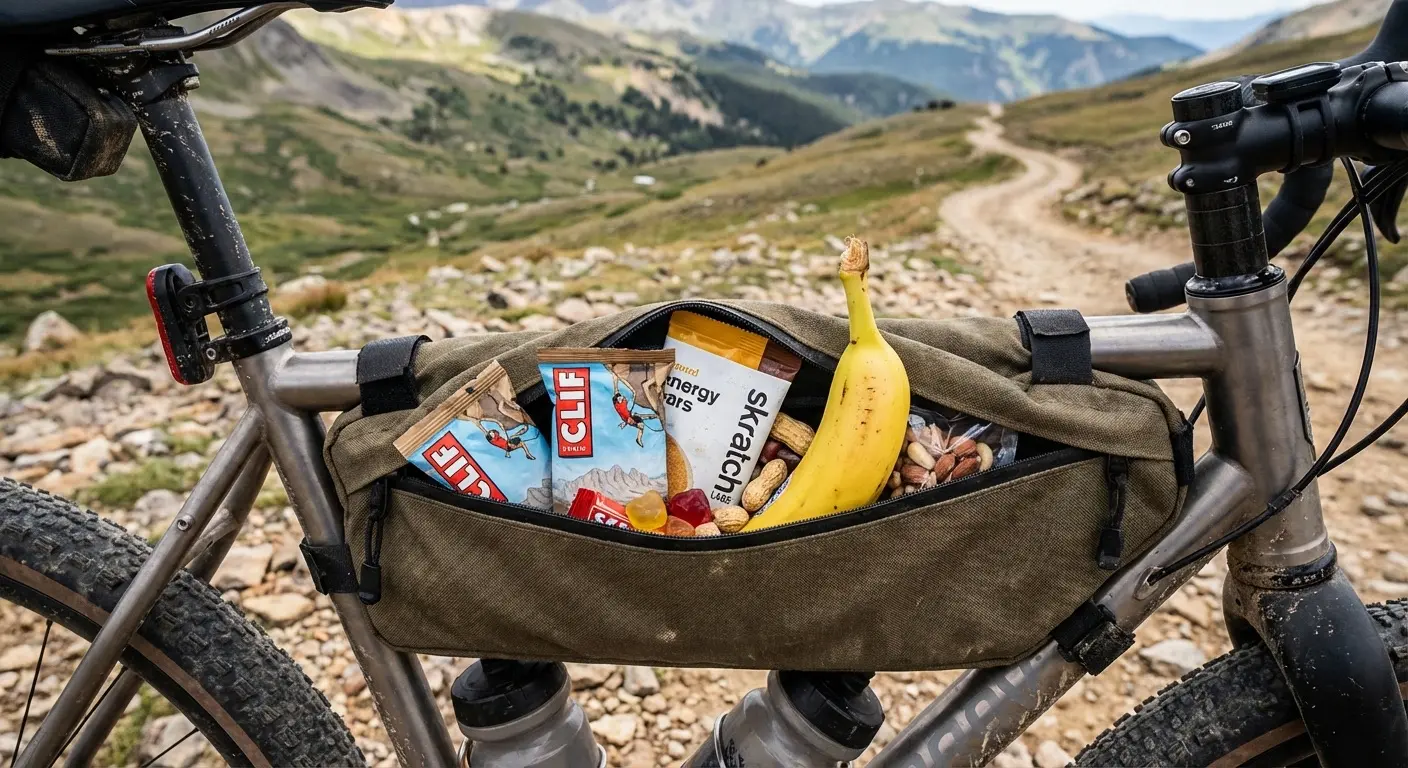
Top tube bags attach along your top tube, usually between stem and saddle. The classic "gas tank" shape—teardrop profile reminiscent of motorcycle fuel tanks—maximizes capacity while staying clear of your knees.
Why Use a Top Tube Bag
Quick access without stopping: Unzip while riding, grab a bar or check your phone, zip closed. No pulling over, no fumbling in jersey pockets.
Visual reminder to eat: Food in a top tube bag stays visible. Food buried in a frame bag gets forgotten until you bonk.
The Bonk Prevention Strategy
Experienced bikepackers use top tube bags specifically to prevent bonking. Here's the system:
- Morning prep: Put your planned snacks for the day's first half directly in your top tube bag—don't bury them
- Visual accountability: If you can see the food, you're more likely to eat it
- The 45-minute rule: Set a timer. Every 45 minutes, grab something from the top tube bag
- The empty bag check: If your top tube bag empties before lunch, you're eating right
This sounds simple, but it transforms bikepacking nutrition. Most bonking happens because food is inaccessible, not because you don't have enough.
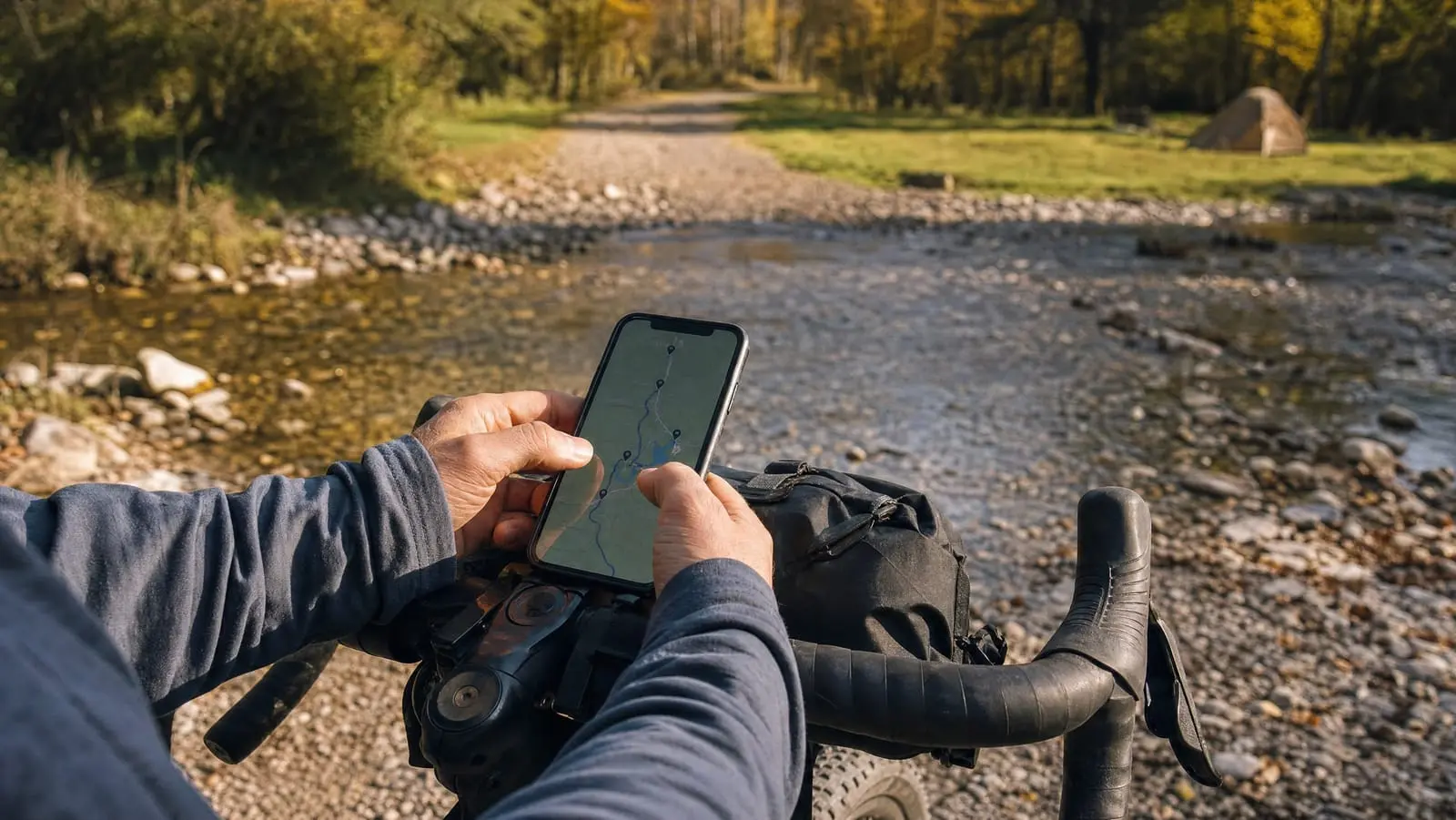
Phone navigation: Many top tube bags hold phones facing up for GPS visibility without handlebar mounts.
Compatibility: Top tube bags work on virtually any bike with minimal setup.
What to Look For
Capacity: 0.5-1.5 liters is standard. Smaller bags handle phones and a few snacks; larger bags fit power banks, cameras, and substantial food.
Opening mechanism: Zippers work well when stopped but can be fiddly while riding. Magnetic closures (like Revelate's Mag-Tank) offer one-handed access at speed. Velcro is simple but wears out.
Mounting: Most bags use velcro straps around the top tube and head tube. Bolt-on options attach to braze-ons for more secure mounting. Either works—bolt-on is more secure but limits placement options.
Knee clearance: Test with your riding position. Many riders find bags that taper near the stem work better than constant-width designs.
Feed Bags: Handlebar Access
Feed bags (also called stem bags) mount on your stem and handlebars, putting storage directly in front of you. They're the ultimate easy-access solution—grab and eat without looking down.
Why Add a Feed Bag
Zero-effort access: Reach forward, grab food, eat. The most accessible storage position on any bike.
Water bottle alternative: Large feed bags fit water bottles—useful when frame bottle cages are occupied or inaccessible.
Supplement top tube storage: Run both for maximum quick-access capacity.
What to Look For
Size: Feed bags range from tiny stem pouches to substantial handlebar-mounted bags. Match size to intended contents—phones and bars need different bags than water bottles.
Insulation: Some feed bags include insulation to keep water cool. Nice-to-have in hot conditions, adds weight and bulk otherwise.
Opening style: Drawstring closures stay open for repeated access. Zippers seal better for rain protection. Decide based on your conditions and use patterns.
Featured Products
ROCKBROS Top Tube Bag (Large)
ROCKBROS brings surprising quality at budget-friendly pricing. This rigid top tube bag maintains its shape even when stuffed full—no collapsing or bulging. The 840D nylon construction handles abrasion well, and IPX4 water resistance protects contents in rain. Dual zippers allow access from either side, and the slim profile maintains knee clearance. At this price point, some compromises exist (straps aren't premium quality, zipper pulls are basic), but the core bag performs well above its price class.
- Rigid design maintains shape
- IPX4 water resistant
- Dual zipper access
- 840D nylon durability
- Budget-friendly pricing
ROCKBROS Bikepacking Top Tube Bag
A newer design from ROCKBROS with improved aesthetics and waterproofing. The welded seam construction provides better water protection than the standard version, while maintaining the same rigid internal structure that prevents bag collapse. The mounting system includes additional stability straps, and the overall fit and finish feels a step up. If you want budget pricing with closer-to-premium feel, this version delivers.
- Welded seam waterproofing
- Improved mounting system
- Rigid internal structure
- Updated design aesthetics
- Enhanced durability
Moosetreks Bike Handlebar Stem Bag
Moosetreks designed this bag specifically for bikepacking access needs. The insulated construction keeps drinks cool on hot days—fitting up to 32oz Nalgene bottles or standard bike bottles. The water-resistant ripstop nylon handles weather well, and the drawstring closure allows one-handed operation while riding. Beyond bottles, it carries snacks, phones, cameras, and base layers with easy reach-forward access. The mounting system works across handlebar/stem combinations without obstructing controls.
- Fits 32oz bottles plus snacks
- Insulated construction
- Water-resistant ripstop nylon
- Drawstring closure for easy access
- Universal handlebar mounting
THRLEGBIRD Stem Bag
A straightforward stem bag at entry-level pricing. The insulated pouch holds water bottles and snacks within easy reach. Construction is adequate—not premium, but functional for the price. The mounting straps work on most stem/handlebar combinations. For riders testing feed bag utility before investing more, or those who need basic quick-access storage without fuss, this bag handles the essentials.
- Budget-friendly price
- Insulated construction
- Holds bottles and snacks
- Simple strap mounting
- Adequate durability
Premium Options Worth Considering
Revelate Designs Gas Tank
The bag that started the top tube bag category for bikepacking. Made in the USA from VX-42 X-pac (ultralight, weatherproof, abrasion-resistant), the Gas Tank weighs just 3.5 oz while offering 1 liter of storage. The tapered design maintains knee clearance. Revelate's quality justifies the premium price—these bags last for years of hard use.
Best for: Riders wanting proven reliability and "buy it for life" quality.
Revelate Designs Mag-Tank
The Mag-Tank's magnetic closure system sets it apart. Instead of fumbling with zippers while riding, magnetic buckles snap closed with one hand. The security is excellent—the closure stays shut over rough terrain—while access couldn't be easier. The streamlined design works on everything from bikepacking to daily trail rides.
Best for: Riders who prioritize while-riding access over maximum capacity.
Apidura Expedition Top Tube Pack
Apidura's expedition line uses welded construction and waterproof zippers—truly waterproof, not just water-resistant. The 1L version fits phones and battery packs with a cable port for charging while riding. A lifetime warranty through Apidura's Revive program adds long-term value.
Best for: Wet-climate riders wanting guaranteed waterproofing.
Mounting and Placement
Top Tube Bag Positioning
Standard position: Bag ends near the stem, tapers toward the saddle. Provides best access while maintaining knee clearance.
Bolt-on mounting: If your frame has top tube braze-ons, bolt-on bags eliminate strap slippage entirely. The trade-off: less adjustability in positioning.
Test before committing: Mount your bag, then ride your normal position. Check for knee contact during pedaling, especially when out of the saddle on climbs.
Feed Bag Positioning
Feed bags attach to stem and handlebars. Ensure the bag doesn't:
- Interfere with brake/shift lever access
- Block cables or hydraulic lines
- Contact your hands in normal riding position
Compatibility Considerations
Cable routing: External cables can complicate top tube bag mounting. Route straps carefully to avoid pinching cables.
Frame shape: Heavily sloped or curved top tubes may not work with all bags. Check bag compatibility with your specific frame geometry.
Bike fit: Aggressive positions (low stem, long reach) may put top tube bags too close to your torso for comfortable access.
What to Pack Where
In Your Top Tube Bag
Always:
- Snacks for riding (bars, chews, gels)
- Phone (if using for navigation)
- Sunglasses when not wearing
Consider:
- Small camera
- Power bank (if charging phone while riding)
- Emergency cash/cards
- Chapstick/sunscreen
In Your Feed Bag
Primary use: Food and drink for easy access
- Water bottle (if no cage access)
- Snacks you'll eat soon
- Items you grab frequently
Avoid: Heavy or bulky items that affect steering feel
For a complete list of what to pack across all your bags, see our bikepacking packing list checklist.
Buying Strategy
Start Simple
For most bikepackers, a basic ROCKBROS top tube bag provides excellent value. Add a Moosetreks feed bag if you want maximum quick-access capacity.
Upgrade When Justified
If your basic bag shows limitations (water leaks, zipper failures, mounting issues), premium options like Revelate Designs or Apidura justify their price through durability and refined design.
Match Your Riding
- Casual bikepacking: Budget options work fine
- Wet climates: Consider waterproof premium options
- Ultralight focus: Revelate's weight-optimized designs
- Maximum access: Magnetic-closure bags for while-riding use
FAQ
Top tube bag or feed bag—which should I get first?
Top tube bag first for most riders. It offers more capacity, works with more bikes, and handles the most common quick-access needs (phone, snacks). Add a feed bag if you want even easier access or need to supplement capacity.
Will a top tube bag interfere with standing climbs?
It can, depending on bag size and your riding style. Tapered designs (smaller near the stem, larger toward the saddle) maintain clearance best. Test before any trip—standing climbing with knee contact is miserable.
Can I use both a top tube bag and a feed bag?
The combination provides maximum quick-access storage. Many bikepackers run both—top tube for phones and organized items, feed bag for grab-and-eat snacks and drinks.
How waterproof are these bags?
Most budget bags are water-resistant—fine for splashes and light rain. Prolonged downpour will eventually wet contents. Premium bags (Apidura Expedition) with welded construction provide true waterproofing.
Quick Recommendations
Best value: ROCKBROS Top Tube Bag—rigid design, dual access, budget pricing.
Best feed bag: Moosetreks Stem Bag—insulated, fits bottles, easy access.
Premium choice: Revelate Designs Mag-Tank—magnetic closure for best while-riding access.
Waterproof priority: Apidura Expedition Top Tube Pack—welded construction with lifetime warranty.
For complete bag system guidance, return to our Bikepacking Bag & Storage Guide. Need to understand the full storage picture? See our Best Frame Bags and Best Saddle Bags guides.
Easy access changes everything. Grab and go.