Bikepacking Bag Materials: What Makes a Bag Durable?
20+ years testing gear in Colorado backcountry
What Your Bags Are Made Of
Bikepacking bags take serious abuse. Frame bags rub against cables and frames. Handlebar bags get rained on. Saddle bags see constant flex. The materials and construction determine whether your bags survive years of use or fall apart mid-trip.
Understanding bag materials helps you choose wisely—and set realistic expectations. No bag material is perfect. Each involves trade-offs between weight, durability, water resistance, and cost.
This guide explains the fabrics, coatings, and construction methods used in bikepacking bags, so you can evaluate what you're buying.
For bag recommendations, see our Complete Bag Guide, Saddle Bags, and Frame Bags.
Fabric Fundamentals
Denier (D)
Denier measures thread thickness. Higher denier = thicker thread = more durable fabric.
Common ranges:
- 70D: Ultralight, less durable
- 210D: Balanced weight and durability
- 420D: Heavy-duty, heavier weight
- 500D+: Very durable, significant weight
- 1000D: Maximum durability, quite heavy
What it means:
- Low denier: Light, but wears faster
- High denier: Heavy, but resists abrasion and puncture
Thread Count
Threads per inch affects fabric density. Higher thread count = denser weave = more water resistant and durable.
Weave Patterns
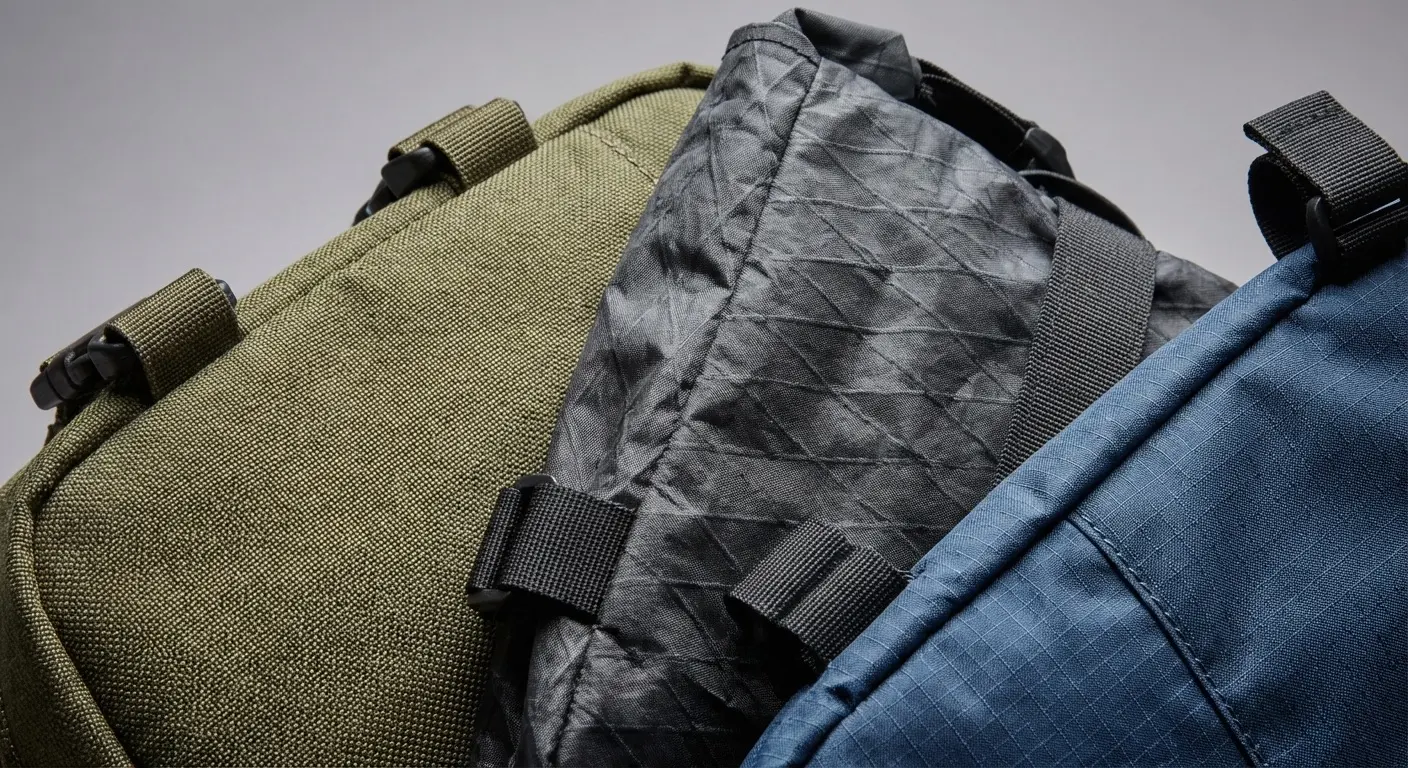
Ripstop: Grid pattern with reinforced threads prevents tears from spreading. Standard for quality bags. Light with good durability.
Oxford: Simple over-under weave. Dense and strong but heavier. Common in budget bags.
Ballistic: Basket weave originally developed for military use. Extremely durable, quite heavy. Used in high-wear applications.
Diamond ripstop: Variant with diagonal reinforcement pattern. Often used in ultralight applications.
Common Fabric Types
Nylon
Most common bikepacking bag material. Versatile, durable, and well-understood.
Pros:
- Strong for its weight
- Abrasion resistant
- Accepts coatings well
- Relatively affordable
Cons:
- Absorbs some water
- Can stretch when wet
- Degrades in UV over time
Common forms:
- Cordura nylon: Texturized for abrasion resistance
- Ballistic nylon: Basket weave for maximum strength
- Ripstop nylon: Lightweight with tear resistance
Polyester
Alternative to nylon with different properties.
Pros:
- Better UV resistance than nylon
- Doesn't absorb water
- Maintains shape when wet
- Often less expensive
Cons:
- Less abrasion resistant than nylon
- Can feel less premium
- Some versions tear more easily
Dyneema Composite Fabric (DCF)
Formerly called Cuben Fiber. Ultralight and waterproof, but expensive.
Pros:
- Extremely light for strength
- Inherently waterproof
- Doesn't absorb water
- Very high strength-to-weight
Cons:
- Very expensive
- Can crinkle/crease
- Punctures easier than coated nylon
- Harder to repair
Common in: Premium ultralight bags from specialty makers.
X-Pac
Laminated fabric with X-shaped reinforcement pattern. Popular in premium bags.
Pros:
- Very water resistant
- Dimensionally stable
- Good abrasion resistance
- Distinctive look
Cons:
- More expensive
- Can delaminate over time
- Heavier than DCF
Variants:
- VX07: Lighter weight
- VX21: Balanced durability
- VX42: Maximum durability
Canvas/Waxed Cotton
Traditional material still used by some makers.
Pros:
- Natural water resistance (waxed)
- Ages attractively
- Repairable
- Breathable
Cons:
- Heavy
- Requires rewaxing
- Not waterproof
- Can mildew if stored wet
Waterproofing Methods
For specific waterproof bag recommendations, see our Waterproof Bags for Your Gear guide.
Polyurethane (PU) Coating
Most common waterproof coating. Applied to fabric interior.
Pros:
- Affordable
- Effective
- Widely available
Cons:
- Degrades over time (hydrolysis)
- Can crack and peel
- Typically 2-5 year lifespan with heavy use
Silicone (SIL) Coating
Lighter and longer-lasting than PU.
Pros:
- Very lightweight
- UV resistant
- Longer lifespan
- Slippery (water beads off)
Cons:
- More expensive
- Harder to tape (for seam sealing)
- Some flex but not stretch
Silnylon/Silpoly
Silicone-coated nylon or polyester. Common in ultralight gear.
Pros:
- Light and water resistant
- Durable coating
- Good value for ultralight
Cons:
- Not fully waterproof at seams
- Can sag when wet (silnylon)
- Requires seam sealing
DWR (Durable Water Repellent)
Surface treatment that makes water bead up. Not waterproofing—water resistance.
Pros:
- Adds water resistance
- Easy to reapply
- Works with most fabrics
Cons:
- Wears off over time
- Only surface treatment
- Not waterproof
Refreshing DWR: Wash, then tumble dry on low heat, or use spray-on DWR products.
Construction Quality
Seams
How fabric pieces connect determines waterproofing and durability.
Sealed seams: Taped over to prevent water entry. Essential for waterproof claims.
Welded seams: Fabric bonded together with heat/pressure. Strongest waterproofing but limited to certain materials.
Stitched seams: Traditional sewing. Creates needle holes that can leak unless sealed.
Double-stitched: Two rows of stitching for strength. More durable than single-stitched.
Zippers
Major failure point in many bags.
YKK zippers: Industry standard for quality. Smooth, durable, repairable.
Water-resistant zippers: Coated or reverse-coil designs that resist water. Not waterproof.
Waterproof zippers: Rubber-backed or sealed construction. Truly waterproof but expensive and stiffer.
Aquaguard: YKK's water-resistant line. Good balance of protection and function.
Zipper gauge: Higher numbers = larger zipper = more durable. #5 and #8 common in bags.
Bartack Stitching
Reinforced stitching at stress points. Look for bartacks where straps meet bags, at corners, and anchor points.
Hardware
Buckles, D-rings, and adjusters affect durability.
Materials:
- Plastic/Delrin: Light, adequate for most use
- Aluminum: Light and strong, can corrode
- Steel: Heaviest, most durable
Common brands:
- Duraflex: Industry standard plastic hardware
- ITW/Nexus: High-quality buckles
- Woojin: Budget alternative
Material Trade-Offs
Weight vs. Durability
Lighter fabrics wear faster. This is physics, not marketing.
| Priority | Material Choice | Trade-Off |
|---|---|---|
| Ultralight | DCF, 70D ripstop | Shorter lifespan |
| Balanced | 210-420D nylon | Moderate weight |
| Maximum durability | 500D+, X-Pac VX42 | Heavy |
Waterproof vs. Weight
True waterproofing adds weight through coatings, seam sealing, and waterproof zippers.
Options:
- Water-resistant: Light, handles most conditions
- Waterproof: Heavier, handles submersion
- Dry bag inside: Heaviest, foolproof
Cost vs. Quality
Premium materials cost more. Often worth it for items that see daily abuse.
Where to spend:
- Frame bags (constant friction)
- Main saddle bag (high stress)
- Anything touching rough surfaces
Where to save:
- Top tube bags (low stress)
- Accessory pouches
- Items with limited exposure
Durability Factors
Use Patterns
How you ride matters more than material specs for some wear patterns.
High wear activities:
- Gravel and dust (abrasion)
- Bushwhacking (puncture risk)
- Rain-heavy routes (waterproof demands)
- Long tours (cumulative wear)
Storage and Care
Extend bag life by:
- Cleaning mud and grit regularly
- Storing dry and loosely
- Applying DWR when water stops beading
- Avoiding long-term UV exposure
- Addressing repairs promptly
Signs of Wear
Check for:
- Coating flaking or peeling
- Seam separation
- Zipper sticking or failing
- Strap fraying
- Hardware cracking
Field Repairs by Material Type
Damage happens mid-trip. Here's how to handle it:
Coated Nylon/Cordura:
- Small tears: Tenacious Tape or Gorilla Tape patches (carry a few pre-cut squares)
- Seam failures: Seam Grip sealant for temporary waterproofing
- Works well with standard repair approaches
X-Pac:
- Small punctures: DCF tape patches (standard tape may peel)
- Seam issues: Seam Grip works but surface prep matters
- More challenging than standard nylon
Dyneema/DCF:
- Punctures: DCF repair tape is essential (standard tape doesn't adhere well)
- Seam issues: Challenging in field—tape and hope until proper repair
- Carry dedicated DCF patches if your bags use this material
Zipper Problems:
- Stuck zippers: Lip balm or candle wax for lubrication
- Broken slider: Carry a spare slider in your repair kit
- Completely failed: Safety pins to close bag temporarily
Universal tip: Tenacious Tape handles most emergency repairs across material types. Keep a 6" square folded in your repair kit.
By Bag Type
Frame Bags
Priority: Abrasion resistance (rubs on frame and cables constantly)
Recommended: 210-420D Cordura, X-Pac with reinforced contact points
Features to look for:
- Reinforced frame-side panels
- Protected cable routing
- Quality zipper placement (away from abrasion)
See our Frame Bag Guide for recommendations.
Saddle Bags
Priority: Tear strength, water resistance, strap system
Recommended: Laminated fabrics (X-Pac, DCF) or coated nylon 400D+
Features to look for:
- Reinforced strap attachment points
- Roll-top or waterproof closure
- Stable mounting system
See our Saddle Bag Guide for recommendations.
Handlebar Bags
Priority: Weather resistance (front exposure), shape retention
Recommended: Water-resistant outer, dry bag liner or full waterproof
Features to look for:
- Waterproof main compartment
- Accessible pockets
- Stable mounting that doesn't shift
See our Handlebar Pack Guide for recommendations.
Top Tube Bags
Priority: Durability at knee contact, easy access
Recommended: Light but abrasion-resistant (400D or reinforced panels)
Features to look for:
- Reinforced top panel
- Easy-open closures
- Profile that avoids knee strikes
Reading Bag Specs
What Brands Tell You
"210D ripstop nylon with PU coating"
- 210D: Medium-light weight thread
- Ripstop: Tear-resistant weave
- PU coating: Interior waterproof layer
"X-Pac VX21"
- X-Pac: Brand name laminated fabric
- VX21: Specific weight/durability variant
"DCF/Dyneema hybrid"
- DCF panels where waterproofing matters
- Other fabrics where abrasion matters
What They Don't Tell You
- Seam sealing quality
- Hardware brand/quality
- Long-term coating durability
- Real-world performance
FAQ
What's the most durable bag material?
1000D ballistic nylon is nearly indestructible but heavy. For practical bikepacking, 500D Cordura or X-Pac VX42 balance durability and weight well.
Do expensive materials last longer?
Often yes, but not always proportionally. A $300 DCF bag may last 3-5 years; a $150 Cordura bag may last 10+. Price doesn't perfectly predict lifespan.
How long should bikepacking bags last?
Quality bags: 5-10+ years with proper care. Budget bags: 1-3 years with heavy use. Seams and zippers usually fail before fabric.
Can I repair damaged bags?
Most damage is repairable. Fabric patches, seam re-stitching, zipper replacement, and new straps are all possible. Many brands offer repair services.
Is waterproof worth the weight?
Depends on your conditions. Dry climates: water-resistant is fine. Wet climates: waterproof or dry bag liners are worth the weight. Most riders use a hybrid approach—water-resistant bags with dry bags for critical items.
Making Material Choices
Understanding materials helps, but ultimately bags succeed or fail based on overall design and construction quality. A well-made bag from average materials outperforms a poorly-made bag from premium materials.
Prioritize:
- Appropriate material for the bag's position
- Quality construction (seams, zippers, hardware)
- Proven brand track record
- Weight appropriate for your needs
For specific recommendations, see our Complete Bag Guide. For buying guidance, check our Budget Setup.
Buy well, ride far.