Waterproof Bags for Your Gear: 3 Great Options
20+ years testing gear in Colorado backcountry
Wet Gear Ruins Trips
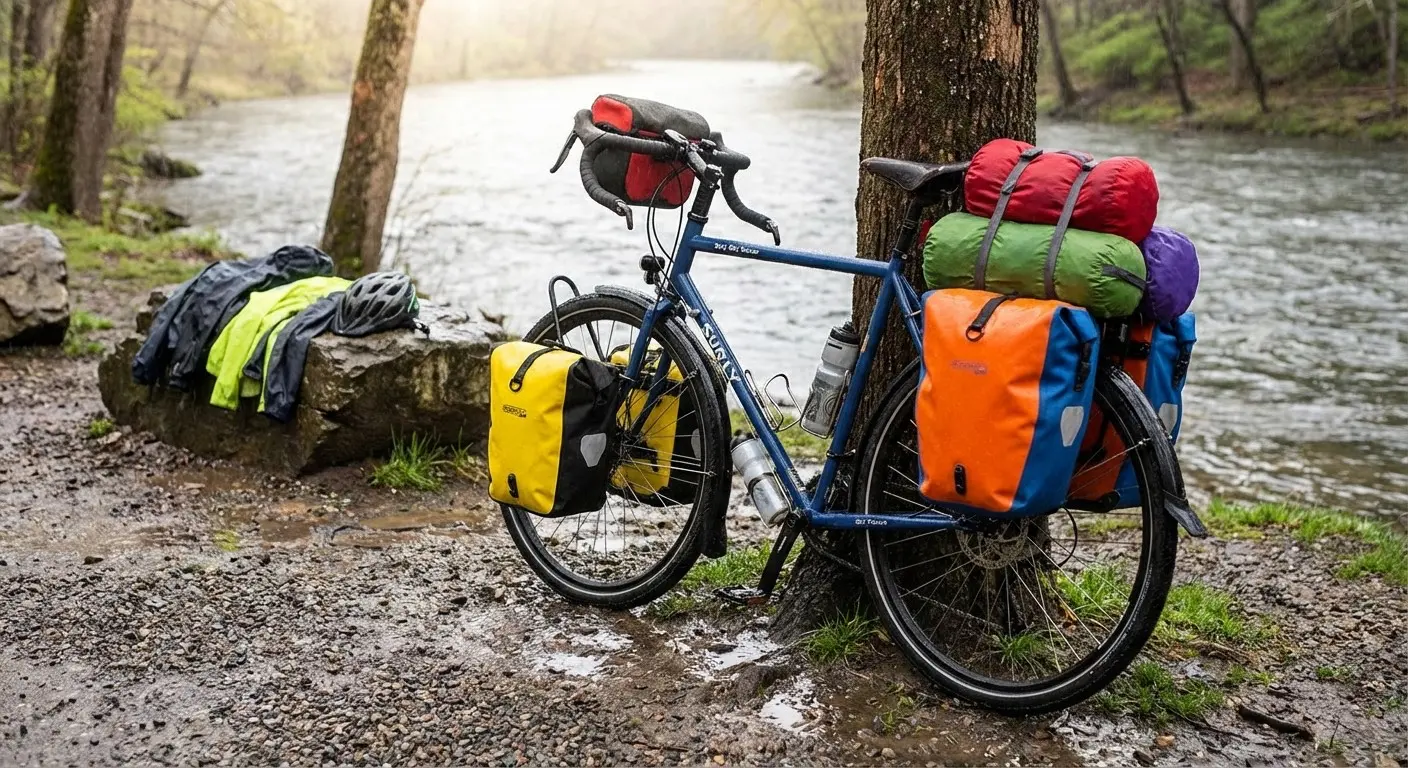
There's a specific kind of misery that comes from pulling a soaking sleeping bag out of your pack at the end of a cold, wet day. No amount of layering compensates for damp insulation.
Dry bags solve this problem simply: they keep water out. Period. As REI's gear experts explain, whether you're crossing streams, riding through downpours, or just protecting against condensation inside your bikepacking bags, a few lightweight dry sacks can save your trip.
The best dry bags for bikepacking balance waterproofing with weight and packability. Premium ultralight options weigh mere ounces while providing genuine submersible protection. Budget options trade some weight savings for durability. Either way, dry bags are cheap insurance for expensive gear.
For bikepacking bag selection, see our guides on handlebar bags, frame bags, and saddle bags. Also see our guide on bag materials and durability.
How Dry Bags Work
All roll-top dry bags share the same basic design: fold the opening over itself three times, then buckle it closed. This creates an air-tight seal that keeps water out even when fully submerged.
Seam construction matters. Welded seams (heat-sealed) provide better waterproofing than sewn seams. Look for taped or welded construction for maximum protection.
Fabric weight creates tradeoffs. Lighter fabrics (15-30 denier) save weight but puncture more easily. Heavier fabrics (70-420 denier) resist abrasion but add ounces.
Air-release valves help compression. Some dry bags include one-way valves that let you squeeze air out without letting water in—useful for minimizing packed volume.
Sizing for Bikepacking
5-8L bags fit sleeping bags, sleeping pads, or clothing layers. This is the bikepacking sweet spot—big enough to be useful, small enough to stuff into handlebar harnesses or strap to cargo cages.
10-13L bags work for bulkier items or grouping multiple smaller items together.
20L+ bags suit touring with panniers or carrying camp gear that doesn't need to fit in tight spaces.
For most bikepackers, two or three 5-8L dry bags cover nearly every need.
Featured Products
Sea to Summit Ultra-Sil Dry Sack
The Ultra-Sil Dry Sack has been the gold standard for ultralight dry storage for nearly two decades—and for good reason. At just 0.9 oz for the 4L version, it's lighter than a granola bar yet provides genuine waterproof protection. The 30D Ultra-Sil CORDURA nylon resists punctures better than you'd expect from something this light, and double-stitched, taped seams keep water out even when submerged. The translucent fabric lets you see contents without opening. Available in seven sizes from 1L to 20L, with a lifetime warranty. This is the dry bag ultralight bikepackers reach for first.
- Ultra-light at 0.9 oz (4L size)
- 30D Ultra-Sil CORDURA nylon
- Double-stitched taped seams
- Translucent for content visibility
- Lifetime warranty
Sea to Summit Big River Dry Bag
When durability matters more than gram-counting, the Big River delivers. The 420-denier nylon laughs at abrasion that would shred ultralight fabrics—perfect for strapping to fork cages, mounting under downtubes, or any high-wear position on your bike. Hydrostatic head rating of 10,000mm means this bag handles full submersion without leaking. The same roll-top closure and welded seams as the ultralight version, just built tougher. Yes, it weighs more (2.8 oz for the 5L), but for exposed mounting positions where fabric takes abuse, this is the right choice.
- 420D nylon for maximum durability
- 10,000mm hydrostatic head rating
- Welded seam construction
- Ideal for high-abrasion mounting
- Available 5L-65L
Sea to Summit Ultra-Sil Compression Dry Sack
The Compression Dry Sack adds four compression straps to the Ultra-Sil formula, letting you squeeze bulky items like sleeping bags down to minimal volume. The eVent waterproof base panel is the clever bit: it's air-permeable but waterproof, so air escapes when you compress but water can't get in. Pull the straps tight after rolling the top, and your puffy sleeping bag shrinks to half its packed size. At 3.2 oz for the 13L version, the weight penalty for compression is minimal. Perfect for handlebar bags where volume matters more than weight.
- Four-strap compression system
- eVent air-permeable base
- Squeezes bulky gear compact
- 30D recycled fabric
- PFC-free DWR finish
MARCHWAY Floating Waterproof Dry Bag
Not ready to invest in premium dry bags? The MARCHWAY delivers genuine waterproofing at a fraction of the cost. The 500D tarpaulin construction is heavier than ultralight alternatives but effectively indestructible—it'll outlast your bike. The roll-top closure keeps water out reliably, and the floating design means accidentally dropped bags don't sink. Available in sizes from 5L to 40L, often in multi-packs at prices that make them disposable. For occasional use or as backup bags, the value is hard to beat.
- Ultra-tough 500D tarpaulin
- Floats when dropped in water
- Roll-top waterproof closure
- Available 5L-40L sizes
- Budget-friendly pricing
Dry Bag Organization Tips
Color-code by category. Use different colored bags for different gear types—blue for clothing, orange for sleep system, green for food. Find what you need without opening every bag.
Pack heavy bags low. Put denser items in dry bags that sit lower on your bike (frame bag, saddle pack bottom) to keep weight centered.
Leave air in for floating. If you're crossing water, leave some air in your dry bags before sealing. They'll float if they fall off your bike.
Nest empty bags inside full ones. Carry a spare dry bag nested inside another—adds zero volume but provides a backup if one develops a leak.
FAQ
Are all dry bags actually waterproof?
Most quality dry bags with proper roll-top closures are genuinely waterproof when closed correctly—meaning they'll survive full submersion without leaking. "Water-resistant" bags may only handle splashes. Check the manufacturer's claims: submersible vs. splash-proof makes a real difference.
How many rolls does the closure need?
Three rolls minimum. Four or five rolls provides extra security. Under-rolling is the most common cause of wet gear—when in doubt, add another fold.
Can I use trash bags instead of dry bags?
In a pinch, yes. Trash bags work as emergency liners inside non-waterproof stuff sacks. But they puncture easily, can't be properly sealed, and don't last. For reliable protection, invest in actual dry bags.
How do I dry out a wet dry bag?
Turn it inside out and air dry completely before storage. Packing away wet dry bags leads to mildew and degraded waterproof coatings. If it smells, wipe the interior with a mild soap solution and dry thoroughly.
Will dry bags protect electronics?
For phones and electronics, use dedicated waterproof cases with gasket seals rather than dry bags. Dry bags protect against water intrusion but don't provide impact protection or the secure seal electronics require.
For complete gear protection strategies, see our Complete Bikepacking Bag & Storage Guide. Protect your sleeping bag with dry bags—wet down insulation loses all warmth.