Navigating with Power: The Best Portable Charger for Your Phone and GPS
20+ years testing gear in Colorado backcountry
Your Navigation Dies When Your Battery Does
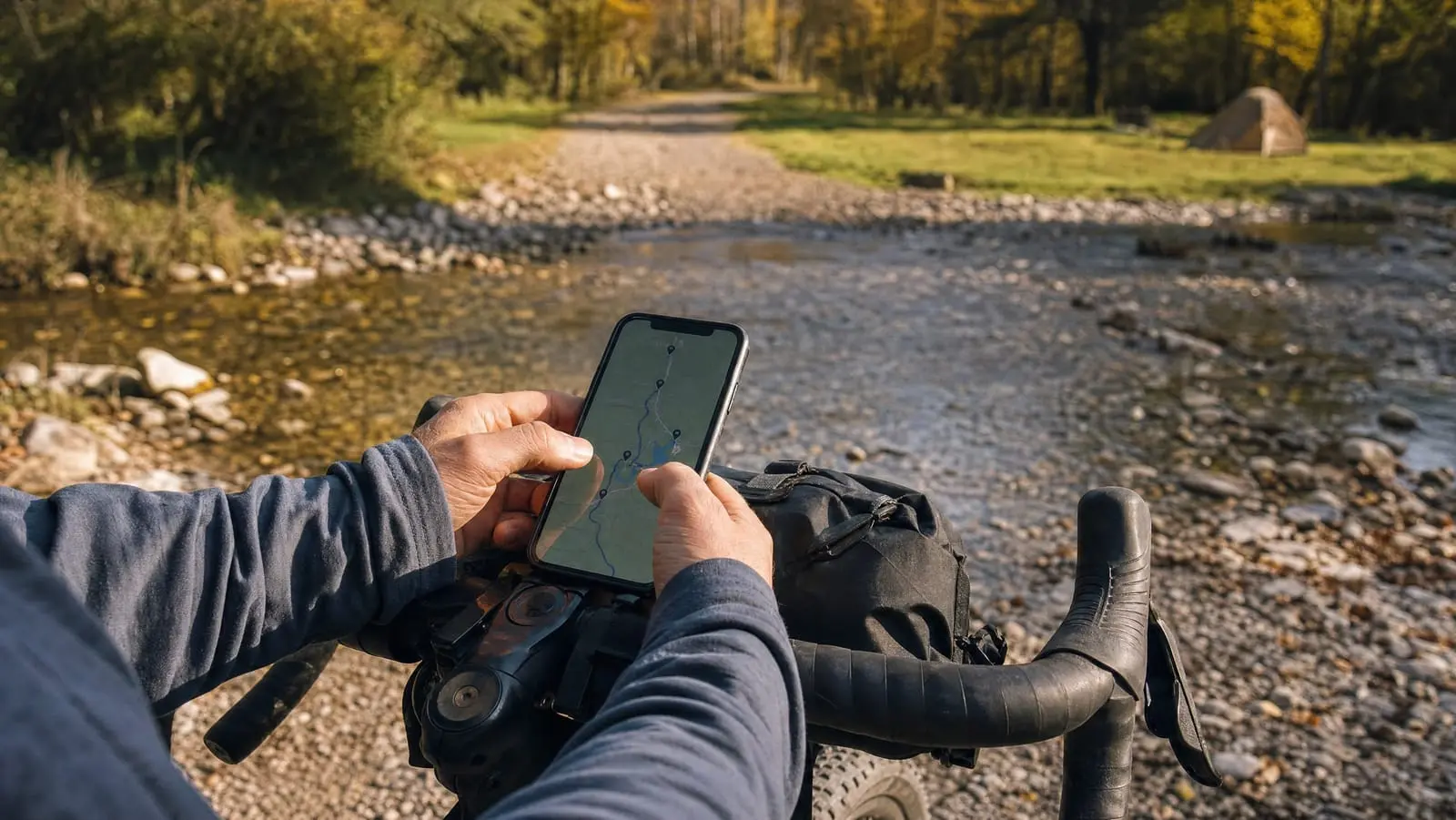
Forty miles from the nearest road, your phone battery hits 5%. Your GPS track disappears. That planned resupply stop? Good luck finding it without navigation. As REI's electronics guide notes, power management is one of the most overlooked aspects of modern adventure travel.
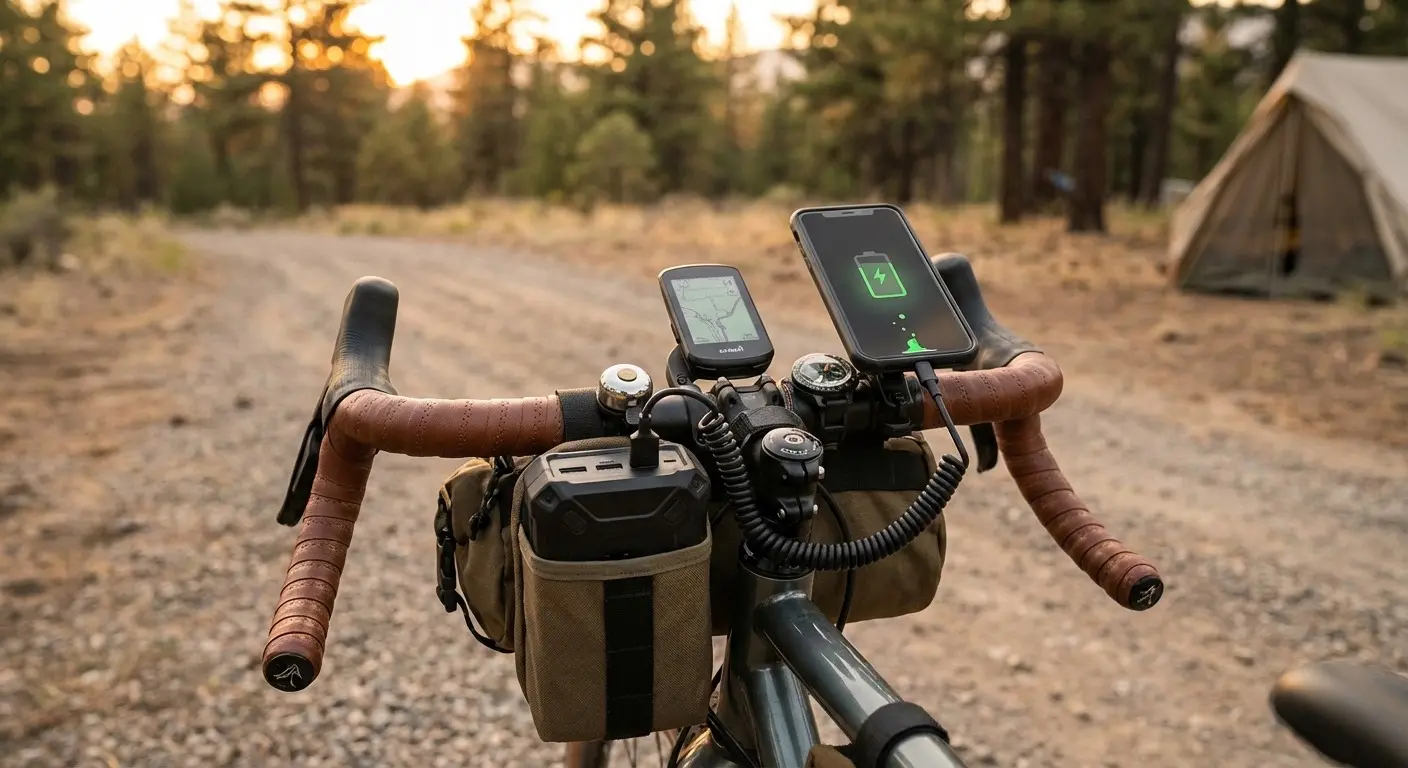
Modern bikepacking depends on electronics—phones for navigation and emergency contact, GPS units for route tracking, lights for night riding. Yet most cyclists pack power banks as an afterthought, grabbing whatever's cheapest at the airport.
The right power bank keeps your devices alive for days without weighing you down. The wrong one adds unnecessary grams, dies in cold weather, or fails when you need it most.
Here's what actually works for bikepacking in 2025.
For GPS device recommendations, see our GPS Navigation Devices and Best Cycling Computers guides.
The Power Budget: Know Your Numbers Before You Leave
Most bikepackers guess at power needs—and run out of battery three days into a five-day trip. Calculate your actual power budget before departure:
Step 1: Audit Your Devices (15 minutes at home)
| Device | Battery (mAh) | Usage Pattern | Est. Daily Drain |
|---|---|---|---|
| Phone | 4,000 | Airplane mode, 2hrs navigation | ~30% = 1,200mAh |
| GPS | 2,000 | 8hrs navigation | ~80% = 1,600mAh |
| Headlight | 2,500 | 2hrs medium | ~40% = 1,000mAh |
| Taillight | 500 | 4hrs flash | ~30% = 150mAh |
| Total | ~4,000mAh/day |
Step 2: Calculate Required Capacity
Daily consumption × trip days × 1.4 (efficiency loss + margin) = required power bank capacity
Example: 4,000mAh/day × 4 days × 1.4 = 22,400mAh needed
Step 3: Match to Reality
- Two 10,000mAh banks = ~14,000mAh usable
- Gap = 8,400mAh short
- Solution: Plan one town recharge on day 2
Common Discoveries:
- Phone GPS kills batteries—switch to dedicated GPS if possible
- Screen brightness is the killer—minimum brightness saves 30-40%
- Cold weather cuts everything by 20-30%—budget extra for alpine/shoulder seasons
- You charge more than expected—devices rarely reach 100%, reducing efficiency
The Pre-Trip Test: One week before your trip, use your devices as you plan to use them on the trail:
- Put phone in airplane mode with GPS navigation only
- Run your cycling computer through a full day
- Use your lights for planned duration
- Note exact battery consumption
Multiply by trip length. Add 40% margin. Now you have a real power budget—not a guess.
How to Size Your Power Bank
The Math:
- Modern smartphones: ~3,500mAh battery
- GPS units: ~1,500-2,500mAh battery
- Real-world efficiency: ~65-70% (you lose capacity to heat and voltage conversion)
A 10,000mAh power bank delivers roughly 6,500mAh of usable power—enough for about 1.5 full phone charges or 2-3 GPS charges. For most bikepackers, that covers 2-3 days of moderate use.
Sizing Guidelines:
- Weekend trips (2-3 days): 10,000mAh
- Week-long adventures: 20,000mAh or two 10,000mAh units
- Extended expeditions: Consider solar charging to supplement batteries
What Makes a Power Bank Bikepacking-Worthy
Weight-to-capacity ratio matters most. Premium ultralight banks hit 180-200mAh per gram. Budget options often deliver 120-150mAh per gram—meaning you carry 30%+ more weight for the same power.
Water resistance is essential. Look for IPX4 (splash-proof) minimum. IPX5+ handles genuine rain. Fully sealed construction survives stream crossings.
Cold weather performance varies wildly. Lithium-ion batteries lose capacity in cold. Carbon fiber cases and insulated designs maintain output when temperatures drop.
Fast charging saves time. USB-C Power Delivery (PD) and Quick Charge (QC) protocols charge devices 3-4x faster than standard USB-A. Worth it when you're racing daylight.
Featured Products
Nitecore NB10000 Gen 3
The NB10000 Gen 3 sets the standard for ultralight power banks. At just 5.3 ounces for 10,000mAh, it delivers the best weight-to-capacity ratio in the industry. The carbon fiber shell resists cold weather better than plastic, maintaining output when temperatures drop—critical for alpine and shoulder-season riding. Dual USB-C ports enable fast charging in both directions, and IPX5 water resistance handles genuine rain. Rubberized corner bumpers protect against drops. This is the power bank serious ultralight bikepackers reach for.
- Ultra-light at 5.3 oz (150g)
- Carbon fiber cold-weather performance
- IPX5 water resistance
- Dual USB-C fast charging
- 257mWh/g energy density
Anker PowerCore 10000
Anker built its reputation on reliable, affordable power banks—and the PowerCore 10000 shows why. At roughly half the price of premium ultralight options, it delivers consistent performance trip after trip. PowerIQ and VoltageBoost technologies automatically detect connected devices and optimize charging speed. The compact design fits in jersey pockets. No, it's not as light as the Nitecore, and it lacks water resistance, but for bikepackers who want proven reliability without premium pricing, this is the go-to choice.
- Proven Anker reliability
- PowerIQ device detection
- Compact pocket-friendly size
- 30W fast charging
- Budget-friendly price point
INIU 45W Slim Power Bank with Built-in Cable
Forgetting your charging cable three days into a bikepacking trip is a special kind of frustrating. The INIU 45W solves this with a built-in USB-C cable that doubles as a lanyard. At 45W, it's one of the fastest-charging 10,000mAh banks available—your iPhone hits 60% in 25 minutes. The TinyCell technology packs 27% smaller than standard cells, keeping the package slim. Pass-through charging lets you charge both the bank and your phone simultaneously when you find an outlet. Not quite as rugged as dedicated outdoor banks, but the convenience factor is hard to beat.
- Built-in USB-C cable/lanyard
- 45W ultra-fast charging
- 27% smaller than standard 10K banks
- Pass-through charging supported
- Phone to 60% in 25 minutes
INIU Portable Charger 22.5W
Need reliable power without breaking the bank? The INIU 22.5W delivers 10,000mAh capacity at a price point that's hard to argue with. PD 3.0 and QC 4+ support means it charges modern devices at near-maximum speeds. The built-in phone holder stands your device upright while charging—surprisingly useful for checking maps at camp. Three outputs let you charge multiple devices simultaneously. It's slightly heavier than premium options and lacks water resistance, but for occasional bikepackers or as a backup unit, the value is exceptional.
- Outstanding value pricing
- 22.5W PD 3.0 + QC 4+ fast charging
- Built-in phone stand
- Three simultaneous outputs
- TSA-approved capacity
One 20K or Two 10K?
Here's a counterintuitive finding from our testing: two 10,000mAh power banks often weigh the same or less than a single 20,000mAh unit. Beyond weight, carrying two provides redundancy—lose one, and you still have backup power.
The two-bank strategy also lets you keep one in your frame bag (for daily charging) and one in your saddle pack (as reserve). No digging through bags when you need a quick top-up.
Extending Battery Life in the Field
Airplane mode is your friend. Disable cellular and Bluetooth when not needed. Your phone searching for signal drains battery faster than anything else.
Lower screen brightness. GPS apps with the screen on constantly murder batteries. Many GPS units offer always-on displays that sip power.
Charge opportunistically. Top off devices whenever you pass a cafe or campsite with power. Partial charges don't harm modern lithium batteries.
Consider offline maps. Downloaded maps reduce data usage and battery drain. Load your route before leaving cell coverage. See our first bikepacking trip guide for complete pre-trip planning.
FAQ
Can I bring power banks on flights?
Yes, but with limits. TSA allows power banks up to 100Wh (~27,000mAh) in carry-on luggage only—not checked bags. All the power banks in this article are TSA-approved. Larger capacity banks (100-160Wh) require airline approval.
How many charges will I actually get?
Take the power bank capacity, multiply by 0.65-0.70 (accounting for conversion losses), then divide by your device's battery size. A 10,000mAh bank provides roughly 6,500mAh of usable power—about 1.8 charges for a 3,500mAh phone.
Should I get a solar charger instead?
Solar works as a supplement, not a replacement. Panels need direct sunlight and time—challenging when you're riding all day. Pack a power bank for reliable base power; add a compact solar panel for extended expeditions where you can charge during breaks.
Does fast charging damage batteries?
Modern devices manage charging speed automatically based on battery temperature and health. Fast charging is safe for occasional use. If you're concerned, use standard charging overnight and save fast charging for when you need quick top-ups.
What about wireless charging power banks?
Avoid them for bikepacking. Wireless charging adds weight, reduces efficiency (more power lost to heat), and requires precise positioning—impractical on a vibrating bicycle. Stick with wired charging.
For more on electronics and bikepacking, see our bike lights guide and night riding safety gear. Pack your power bank in a frame bag where weight is centered and protected.