GPS and Navigation Devices for Bikepacking Routes
20+ years testing gear in Colorado backcountry
Finding Your Way When There's No Way
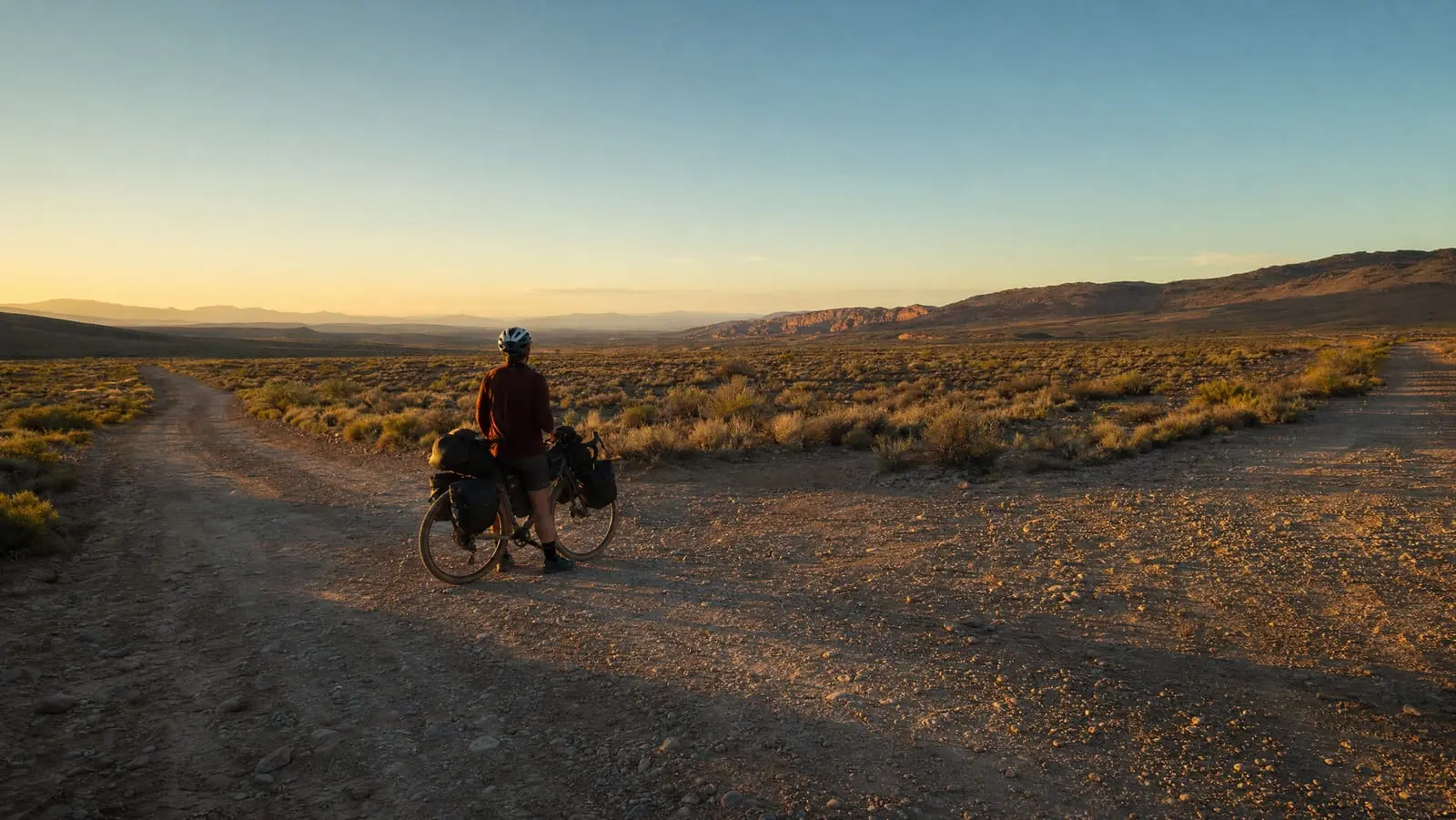
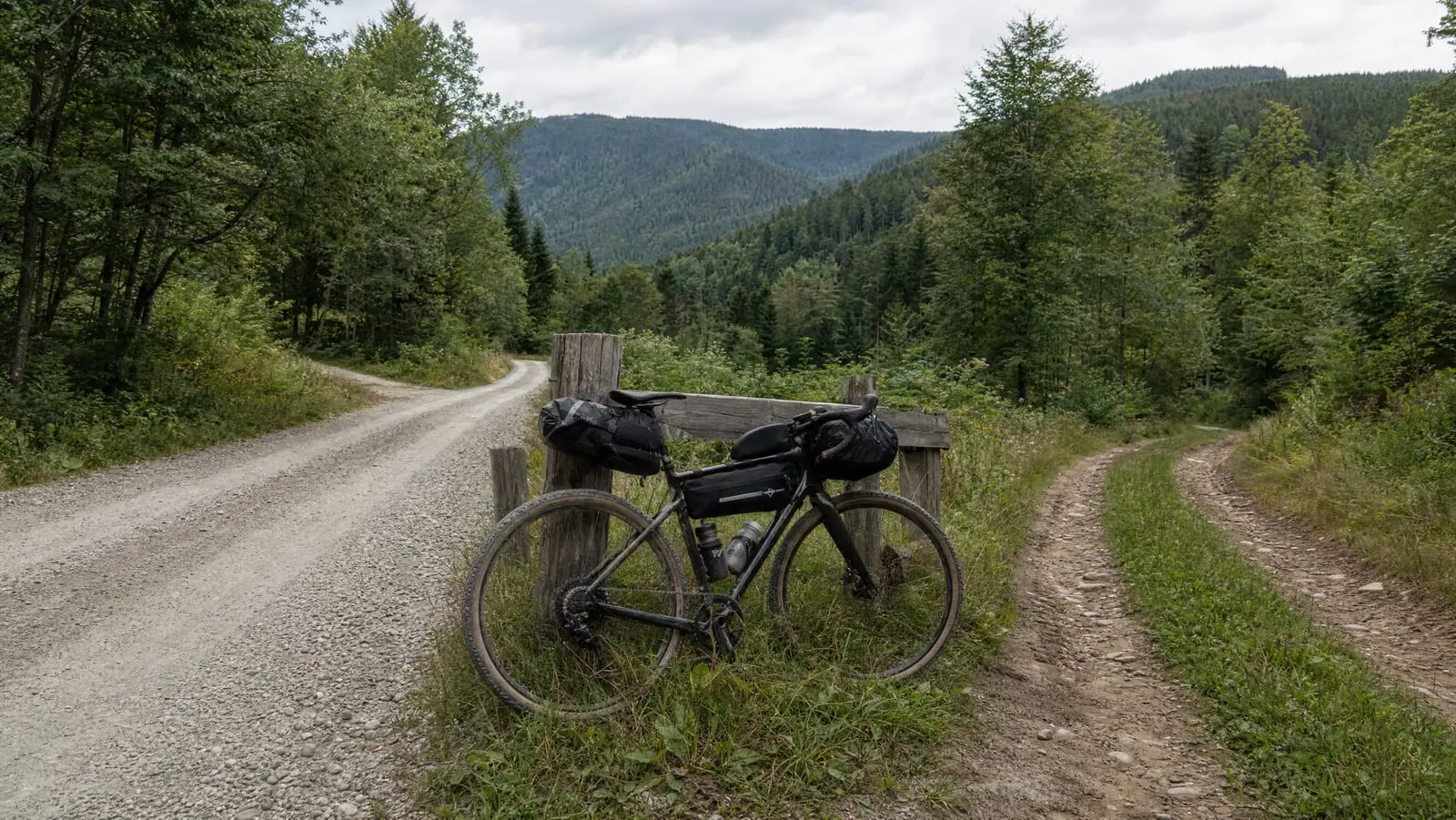
Bikepacking routes rarely follow well-marked trails. You'll find yourself on unmarked forest roads, faint doubletracks, and obscure paths that don't appear on typical maps. Reliable navigation isn't optional—it's the difference between staying on route and hours of frustrating backtracking. Resources like Ride with GPS and Komoot make route planning easier, but you still need reliable hardware to follow those routes in the field.
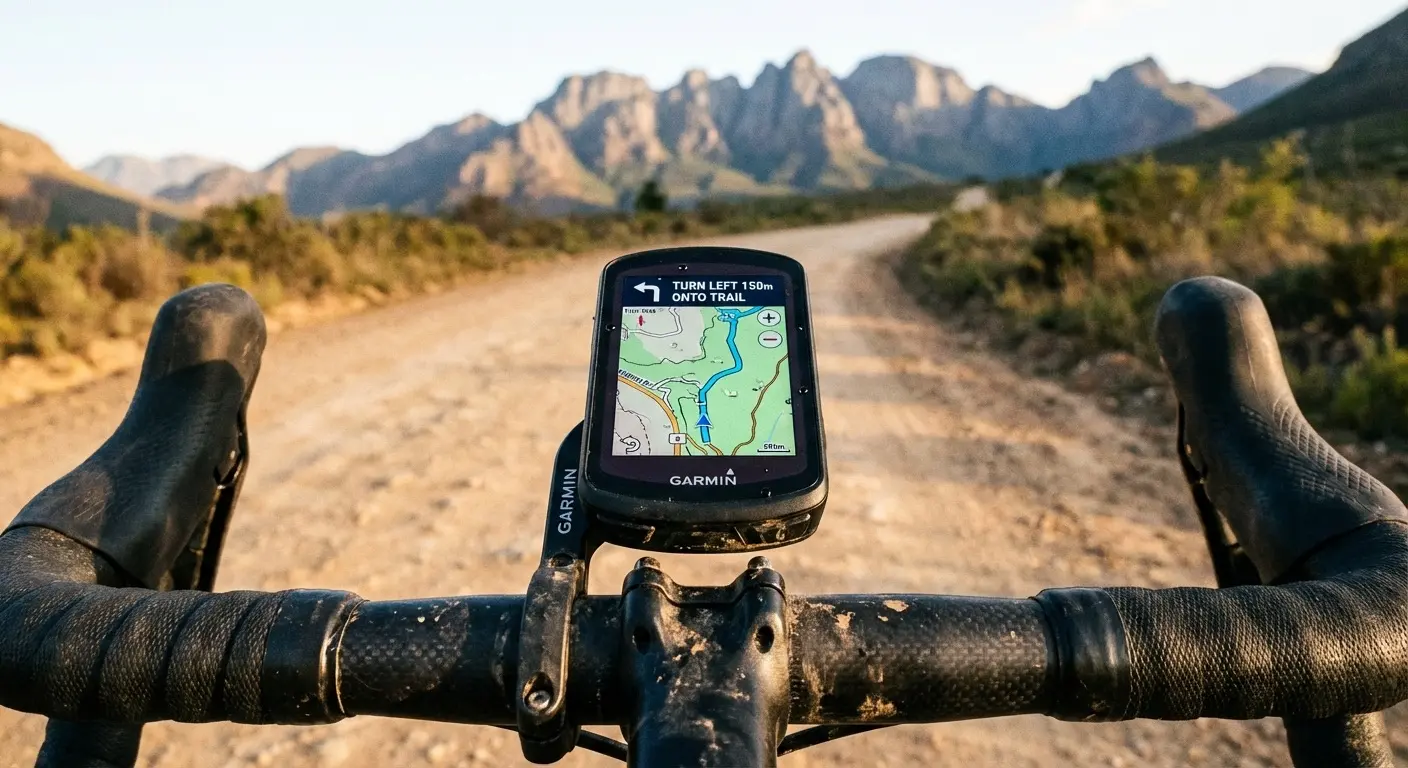
Dedicated cycling GPS devices have become the standard for serious bikepackers. They offer offline maps, turn-by-turn navigation, battery life measured in days, and displays readable in full sunlight. Smartphones work as backup but struggle with the specific demands of all-day bike navigation.
This guide covers the best GPS cycling computers for bikepacking, explains what features actually matter for off-road navigation, and helps you choose between dedicated devices and phone-based solutions.
For complete gear guidance, see our Complete Bikepacking Gear Guide.
What Makes a Good Bikepacking GPS
Battery Life
Battery life matters more for bikepacking than any other cycling discipline. You need all-day navigation with margin for extended days, unexpected detours, and limited charging opportunities.
Guidelines:
- Minimum viable: 10-12 hours (enough for one long day)
- Comfortable: 20-30 hours (covers most multi-day needs)
- Expedition-ready: 40+ hours (days between charges)
Solar charging options like the Garmin Edge 1040 Solar and Coros Dura extend runtime significantly—worth considering for remote routes.
Mapping and Navigation
Offline maps are essential. Cell coverage disappears on many bikepacking routes, and you can't rely on data for map downloads.
Turn-by-turn navigation provides audio and visual alerts for upcoming turns—helpful when you're focused on riding, not staring at a screen.
Re-routing capability gets you back on track after wrong turns or intentional detours. The device should calculate new routes to your destination, not just show where the original route was.
Display Visibility
Sunlight readability separates cycling GPS devices from smartphones. Transflective displays (used by Garmin, Wahoo, and Coros) remain visible in direct sunlight without draining battery.
Color versus monochrome: Color maps are easier to read but use more power. Monochrome displays extend battery life. Modern color displays (like the Garmin Edge 840) have closed the efficiency gap.
Durability
Bikepacking exposes devices to dust, rain, mud, and vibration. Look for IPX7 or better water resistance and solid mount security. Cracked screens happen—some riders apply screen protectors as preventive measure.
The Navigation Confidence Test: Build Trust Before You Need It
GPS devices fail at the worst moments—not because they break, but because users haven't learned their quirks. Build navigation confidence with this progression:
Test 1: The Known Route (1-2 hours) Load a route you already know by heart—your local riding loop or commute. Follow the GPS directions as if you'd never ridden it before.
What you'll learn:
- How far in advance turn alerts appear
- Whether visual cues match your expectations
- How the device handles complex intersections
- What "you're off route" looks and sounds like
Test 2: The Detour Test (During Test 1) Intentionally miss a turn. Observe:
- How quickly does the device recognize you're off-route?
- Does it reroute automatically or require manual intervention?
- How does the rerouted path compare to logical alternatives?
- Can you reject the reroute and return to original path?
Test 3: The Unknown Route (Half-day) Load a route you've never ridden—somewhere within easy bailout distance of home. Follow it completely.
What you'll learn:
- Your trust level in device guidance
- How well the maps match reality (road names, trail existence)
- Your tendency to second-guess the device
- Where map detail gets thin
The Critical Questions: After these tests, you should be able to answer:
- If my device says "turn left" but I don't see a turn, do I trust it? (Usually yes—it sees the turn before you do)
- If I'm 0.5 miles off route, can I navigate back without panic?
- If my battery hits 15%, how much riding time do I have?
- If my device dies completely, what's my backup plan?
Trust, But Verify: Experienced bikepackers develop a mental map alongside their GPS. Every few hours, zoom out and understand your position relative to major landmarks. If your device failed right now, could you navigate to the next town? Being prepared for technology failures is part of good trip planning—see our Emergency Gear Guide for more on backup strategies.
Featured Products
Garmin Edge 840
The Edge 840 hits the sweet spot for most bikepackers—powerful navigation, excellent battery life, and proven reliability without the premium price of the 1040 series. The 26-hour battery handles long days comfortably, and the combination of touchscreen plus buttons means you can operate it with wet or gloved hands. ClimbPro shows upcoming climbs with grade and distance remaining—invaluable for pacing on loaded ascents. The mapping is Garmin's best, with clear visualization even on complex route networks. It lacks the 1040's solar charging, but most bikepackers find 26 hours adequate between charges.
- 26-hour battery life
- Touchscreen + button controls
- ClimbPro climbing guidance
- Turn-by-turn navigation
- Offline maps included
Coros Dura
If battery life is your primary concern, the Coros Dura delivers unmatched endurance. The solar panel extends already-impressive 70-hour runtime to potentially 120+ hours in good conditions—measured in days, not hours. The 2.7-inch color touchscreen provides clear maps, and turn-by-turn navigation works smoothly. At roughly half the price of flagship Garmin units, it offers exceptional value. The trade-off: Coros's ecosystem is younger than Garmin's, with fewer third-party integrations and less refined software. For pure navigation on extended trips, those limitations rarely matter.
- 70-120 hour battery with solar
- 2.7 inch color touchscreen
- Turn-by-turn navigation
- Dual-frequency GPS
- Excellent value pricing
Wahoo Elemnt Bolt V2
Wahoo built the Bolt around a philosophy of simplicity—easy setup, intuitive operation, and no complexity that doesn't serve the ride. The companion app handles configuration, route syncing, and map downloads seamlessly. Navigation uses clear turn prompts and straightforward map display. The compact aero design mounts cleanly, and 15-hour battery covers most riding days. The trade-off: less customization than Garmin, and the smaller screen limits map visibility on complex routes. For riders who want reliable navigation without fiddling with settings, the Bolt delivers.
- 15-hour battery life
- Simple app-based setup
- Turn-by-turn navigation
- Compact aero design
- Intuitive operation
Phone-Based Navigation
Smartphones offer an alternative to dedicated GPS devices. The approach has real advantages—and significant limitations.
When Phones Work
- Short trips with charging access: Weekend overnighters where you can recharge nightly
- Budget constraints: You already own a phone; GPS devices are additional expense
- Backup navigation: Secondary option if primary device fails
- Urban/semi-urban routes: Where cell coverage exists for live maps
When Phones Fail
- Extended backcountry: Battery drain, no charging, no cell coverage
- Harsh conditions: Rain, extreme temperatures, and constant vibration challenge phones
- Sunlight visibility: Phone screens wash out in direct sun
- Distraction risk: Notifications and the urge to check email
Making Phones Work Better
If you use a phone for navigation:
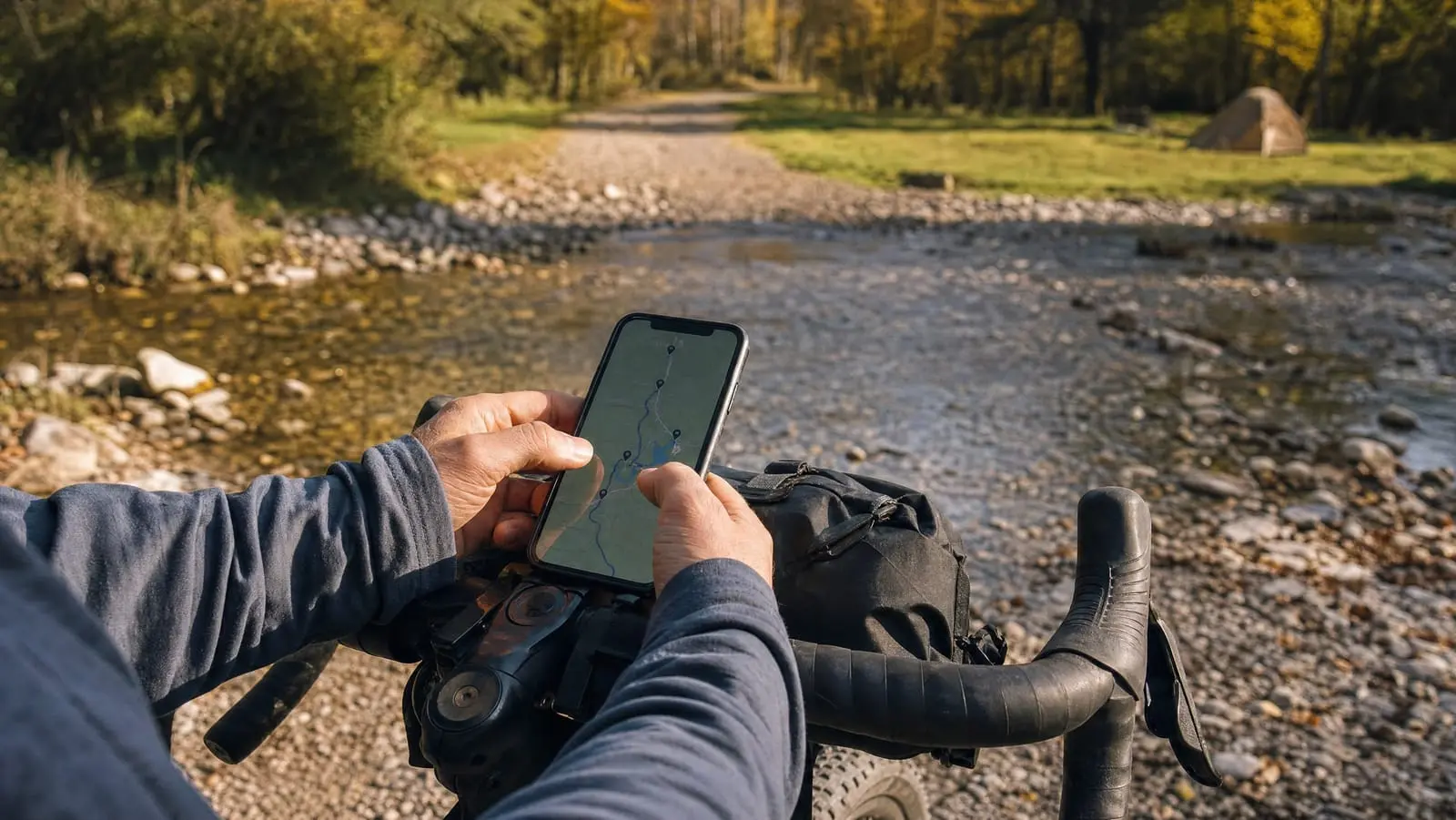
Offline maps are mandatory. Apps like Gaia GPS, Komoot, and Ride with GPS allow offline map downloads. Test before your trip.
Airplane mode extends battery. Disable cellular, Bluetooth, and WiFi—just enable GPS for navigation.
External battery is required. Plan for significant power bank capacity if phone is primary navigation.
Waterproof case or mount. Your phone will see rain. Protect it.
Screen brightness kills battery. Use minimum readable brightness and enable auto-dim.
Route Planning Resources
Your GPS device displays routes—but you need to create those routes first. These platforms help:
Ride with GPS
The most popular route planning tool for bikepackers. Extensive library of user-created routes, powerful planning tools, and seamless sync to Garmin, Wahoo, and Coros devices.
Komoot
Strong navigation with voice guidance. Popular in Europe. Excellent for discovering routes and planning multi-day adventures.
Bikepacking.com Routes
Curated collection of tested bikepacking routes with detailed descriptions. Many include downloadable GPX files ready for your device.
Gaia GPS
Comprehensive mapping with multiple basemap options (topo, satellite, hybrid). Strong offline capabilities. Pairs well with phones as primary or backup navigation.
Mounting and Accessories
Out-Front Mounts
Handlebar mounts position your GPS in clear view without neck craning. Most devices include basic mounts; aftermarket options (K-Edge, Quadlock) add durability and adjustability.
Charging While Riding
Connect your GPS to a dynamo system or power bank for extended runtime. Verify your device can charge and navigate simultaneously—some don't handle this well. For power bank recommendations and charging strategies, see our guide on Portable Chargers for Your Phone and GPS.
Screen Protection
Apply screen protectors before your trip. Field replacement is difficult, and scratched screens reduce readability. Tempered glass protectors add minimal weight with significant protection.
Garmin vs Wahoo vs Coros
Garmin
Strengths: Most features, best mapping, largest ecosystem, proven reliability Weaknesses: Most expensive, complexity can overwhelm, some features add little value
Best for: Riders who want maximum capability and don't mind learning the interface
Wahoo
Strengths: Simplest setup and operation, clean design, phone app handles complexity Weaknesses: Less customization, smaller screens, shorter battery life than competitors
Best for: Riders who want reliable navigation without fiddling
Coros
Strengths: Best battery life (especially with solar), excellent value, solid navigation Weaknesses: Youngest ecosystem, fewer integrations, less refined software
Best for: Budget-conscious riders and those prioritizing battery life
Power Management Strategy
Pre-Trip
- Full charge before departure
- Download offline maps for entire route
- Load route files and verify display
On-Trip
- Battery save mode when navigation isn't needed
- Reduce screen brightness to minimum readable
- Turn off unnecessary features (heart rate display if not using, etc.)
- Charge during breaks when possible
Extended Trips
- Carry backup charging (power bank or dynamo)
- Plan charging windows (towns, rest stops)
- Consider solar models for remote routes
FAQ
Do I need a dedicated GPS or can I use my phone?
For serious bikepacking, dedicated GPS devices are worth the investment. They offer all-day battery life, sunlight-readable displays, and purpose-built navigation. Phones work for short trips or as backup but struggle with extended off-grid use.
What's the best GPS for bikepacking on a budget?
The Coros Dura offers excellent navigation with industry-leading battery life at roughly half the cost of flagship Garmin units.
How important is solar charging?
Solar significantly extends battery life for extended trips. For weekend overnighters with nightly charging, standard battery is fine. For week-long expeditions or routes with limited charging, solar models provide meaningful advantage.
Can I use routes from Strava or other apps?
Yes. Most GPS devices accept GPX files from any source. Create routes in your preferred planning tool, export as GPX, and load onto your device. Ride with GPS and Komoot offer direct sync with major GPS brands.
Quick Recommendations
Best overall: Garmin Edge 840—excellent navigation, proven reliability, button+touchscreen controls.
Best battery life: Coros Dura—70-120 hours with solar at excellent value.
Best simplicity: Wahoo Elemnt Bolt—intuitive operation, phone-based setup.
Best premium: Garmin Edge 1040 Solar—maximum features with solar charging.
For complete gear recommendations, see our Complete Bikepacking Gear Guide. Pair your navigation with the right lights using our Best Bike Lights for Bikepacking guide.
Find your way. The route awaits.