Night Riding on Bikepacking Trips: Safety and Gear Guide
20+ years testing gear in Colorado backcountry
When Darkness Comes Early
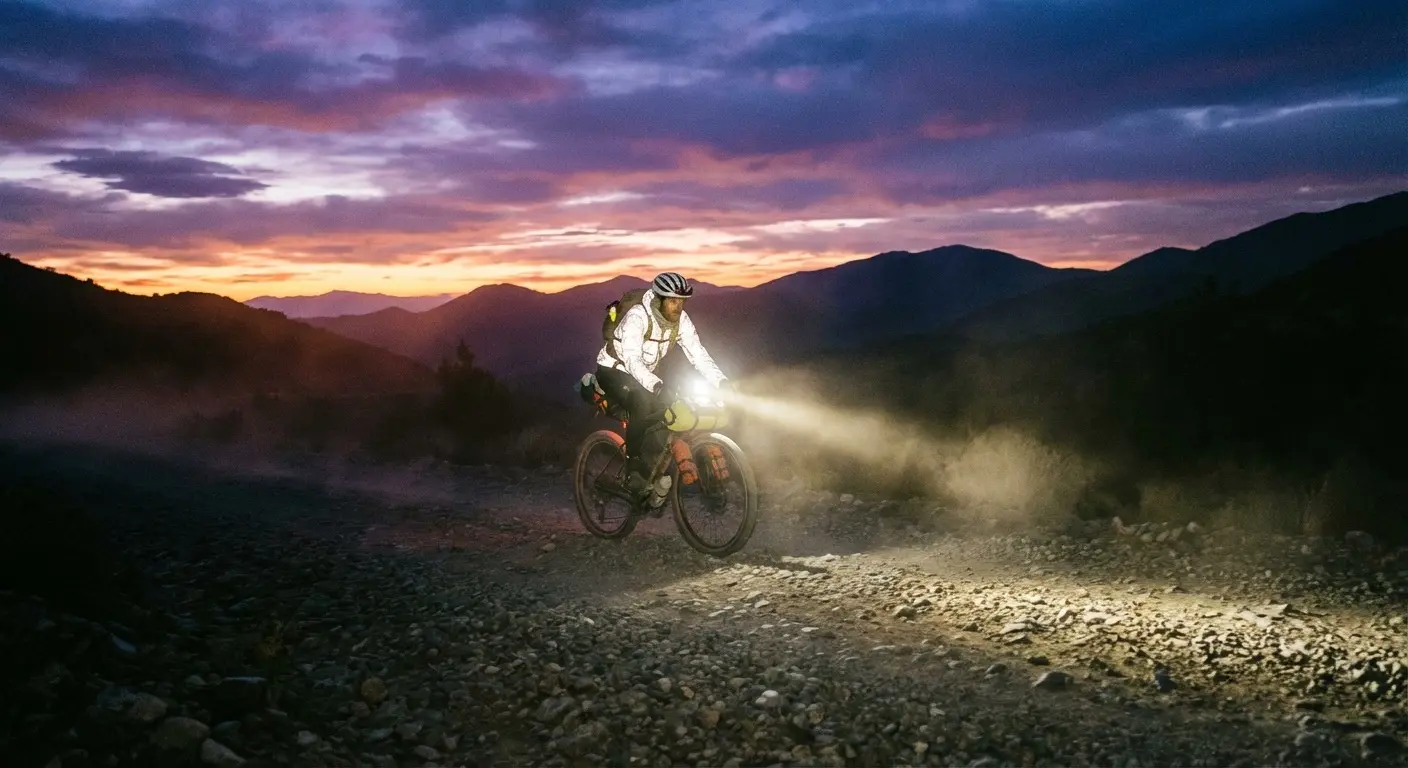
Sometimes you ride in the dark. Maybe you started late, underestimated the distance, or simply prefer traveling when temperatures drop. On longer bikepacking trips, pre-dawn starts and after-sunset finishes become normal. Bicycling magazine's night riding tips offer foundational guidance for safe after-dark travel.
Night riding changes everything—navigation, hazard recognition, visibility to others, and your own comfort level. With proper preparation, it's manageable and sometimes magical. Without it, darkness can turn minor problems into emergencies.
This guide covers lighting systems, visibility strategies, and techniques that make night riding safer and more enjoyable.
For complete lighting recommendations, see our Best Bike Lights Guide.
Why Night Riding Happens
Planned Night Riding
Pre-dawn starts: Beat the heat in summer or maximize daylight distance.
Time zone riding: Bikepacking races and fast-packing often involve pushing through darkness.
Scenic timing: Catch sunset from a destination, ride back in twilight.
Weather avoidance: Cooler temperatures make riding comfortable in hot climates.
Unplanned Night Riding
Distance underestimation: The most common cause. Those last 10 miles take longer than expected.
Mechanical issues: Flat tires, broken components delay arrival.
Navigation mistakes: Wrong turns add unexpected miles.
Physical limits: Slowing down means arriving later.
Weather delays: Waiting out storms eats time.
Both planned and unplanned night riding require the same preparation. Always carry lights capable of genuine night navigation.
Your First Night Ride: What to Expect
Before committing to night riding on a remote bikepacking route, build confidence with a controlled test:
The Neighborhood Night Ride (1-2 hours):
- Choose a familiar route you could ride blindfolded—a local loop or commute path
- Start at dusk so you experience the transition from twilight to full dark
- Ride your full bikepacking setup—loaded bags change handling, and lights mount differently on loaded bars
- Practice switching between brightness modes while riding—you'll need this skill on real trips
- Note how your eyes adjust—it takes 20-30 minutes to develop full night vision
What Most Riders Discover:
- Speed feels faster in the dark—the same 12 mph pace feels like 20
- Depth perception changes—what looks like a puddle might be a pothole
- You hear more—suddenly your drivetrain, breathing, and surrounding sounds become vivid
- Your beam is your world—you quickly learn to trust the illuminated zone and ignore the darkness beyond
- Fatigue hits differently—mental focus drains faster at night
The 80% Rule: Plan to ride 80% of your comfortable daylight speed at night. If you cruise at 15 mph on gravel in daylight, budget for 12 mph after dark. This accounts for reduced reaction time, more cautious cornering, and the mental load of constant vigilance.
Building Comfort:
- Ride 1: Neighborhood loop at dusk
- Ride 2: Local trail you know well, starting after full dark
- Ride 3: Pre-dawn start on a planned bikepacking route (easier than ending in dark)
- Ride 4: Intentional night arrival at camp
By ride 4, you'll know your lights' capabilities, your personal comfort level, and what speed feels safe.
Lighting System Strategy
The Two-Light Minimum
Every bikepacker needs at least two lights:
Front light (headlight): Illuminates your path. Must be bright enough to see obstacles at riding speed.
Rear light (taillight): Makes you visible to vehicles. Essential on any road.
This is the absolute minimum. Most serious night riders carry backup lights for both positions.
Front Light Considerations
Brightness (lumens): Higher isn't always better, but you need enough.
- 200-400 lumens: Sufficient for slow urban riding
- 500-800 lumens: Adequate for moderate trail/road speeds
- 1000+ lumens: Recommended for fast descents, technical terrain
See our headlight recommendations for specific products.
Beam pattern: Trail/MTB lights throw wider beams. Road lights focus more forward. For bikepacking's mixed terrain, wider beams work better.
Runtime: Match light runtime to your expected night riding. 3-hour runtime means 3 hours of light—plan accordingly.
Mounting: Bar-mounted for road/gravel. Consider helmet-mount addition for technical trails (looks where you look).
Rear Light Considerations
Visibility: Brightness matters, but so does attention-grabbing patterns. Flashing modes visible for longer distances but steady may be required by local laws.
Battery life: Taillights run longer than headlights. 10+ hour runtime is common.
Mounting: Seatpost, saddle bag, or helmet. Multiple positions increase visibility angles.
The Cygolite Hotshot Pro 150 offers excellent visibility with long runtime.
Visibility Beyond Lights
Reflective Elements
Reflectives work only when light hits them—but that light can come from vehicle headlights, making you visible from much greater distances.
Reflective clothing: Vests, ankle bands, jacket details
Reflective tape: Applied to frame, bags, helmet
Reflective bag accents: Many bikepacking bags include reflective elements
Wheel reflectives: Spoke reflectors or reflective tire sidewalls
Clothing Color
Light-colored clothing is more visible than dark in low light, even before full darkness. White, yellow, and fluorescent colors stand out against evening backgrounds.
Bike Position
On roads, ride where drivers expect to see you. Too far to the right may make you invisible until it's too late. Take enough lane that vehicles must consciously pass you.
Night Navigation
GPS Considerations
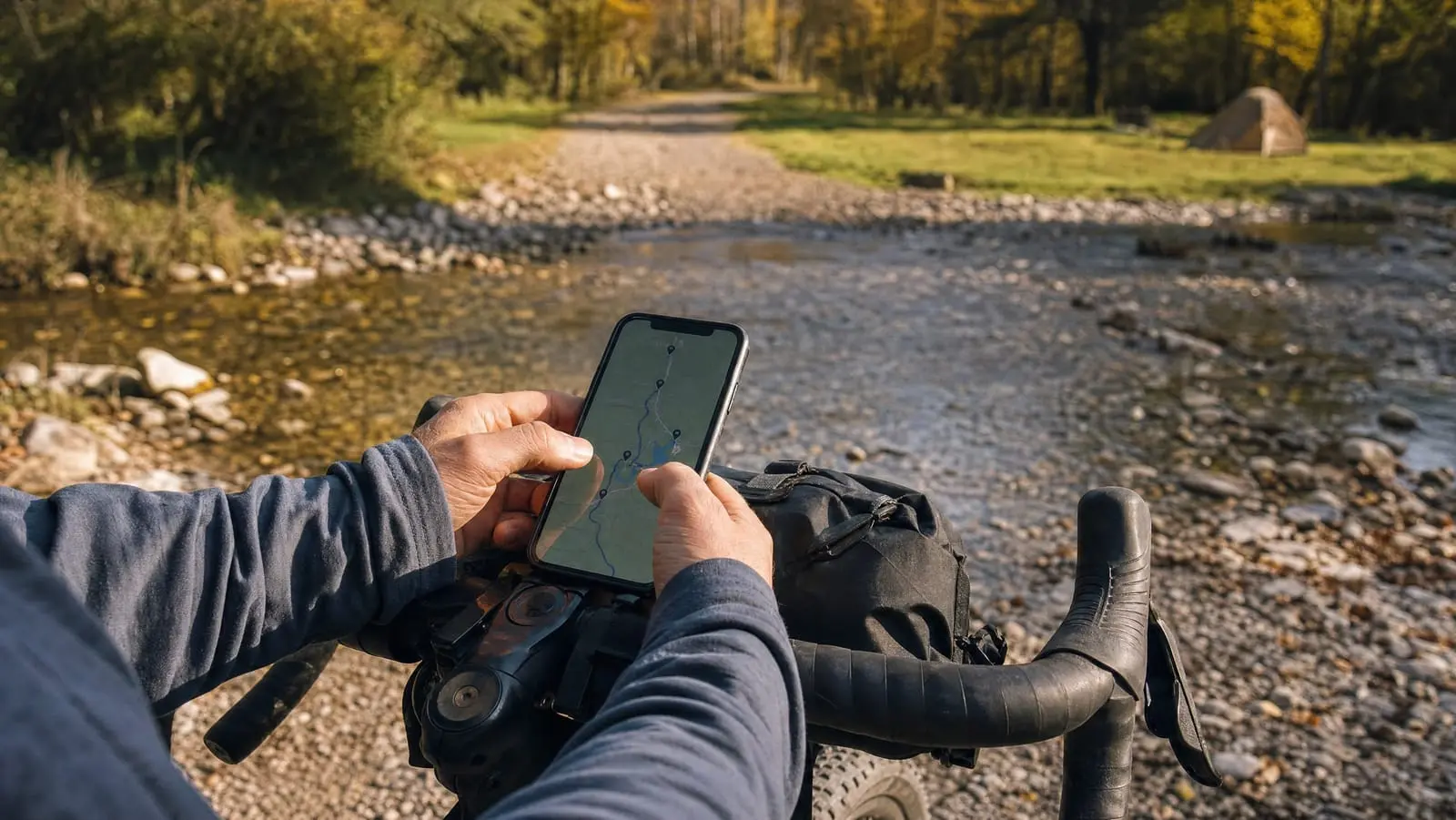
Screen brightness: Increase brightness for night visibility, but this drains battery faster.
Backlight timeout: Set longer timeout so screen remains visible when you need it.
Audio alerts: Turn-by-turn beeps become more important when you can't easily check the screen.
See our GPS navigation guide and cycling computers guide for device recommendations.
Route Familiarity
Riding unknown routes at night adds significant difficulty. If possible:
- Ride new sections in daylight first
- Use well-marked trails with clear navigation
- Save exploratory riding for daylight hours
- Have backup routes if primary becomes confusing
Landmarks and Cues
In darkness, familiar landmarks disappear. Pay attention to:
- Distance remaining (GPS/computer)
- Elevation changes (climbing/descending tells you where you are)
- Road surfaces (transitions often indicate route changes)
- Sounds (rivers, traffic, other distinctive audio cues)
Hazard Management
What You Can't See
Night riding conceals hazards visible in daylight:
Road surface: Potholes, gravel patches, debris appear suddenly in your light beam.
Animals: Wildlife often more active at night. Deer, raccoons, and other animals cross roads unpredictably.
Pedestrians: People walking dogs, runners without lights—often poorly visible.
Other cyclists: Bikes without lights are nearly invisible.
Terrain features: Drop-offs, washouts, trail damage harder to assess.
Speed Adjustment
The fundamental night riding rule: Ride only as fast as your light allows you to see and react.
Your headlight beam has finite range. At 20 mph, you cover significant distance quickly. If obstacles appear at the edge of your beam, you may not have time to stop or avoid them.
Practical guidance:
- Smooth roads: Ride at comfortable pace if light is adequate
- Rough roads: Slow significantly—surface hazards less visible
- Technical trails: Very slow, or walk difficult sections
- Descents: Much slower than daylight—you can't see what's coming
Stopping Distance
Remember that braking on loaded bikes takes longer. Factor this into your speed calculations. If you can't stop within your visible distance, you're riding too fast.
Wildlife Encounters
Animals at Night
Many animals are more active after dark:
Deer: Common road-crossers. Often travel in groups—if one crosses, expect more.
Raccoons, opossums, skunks: Slower-moving, often freeze in lights.
Owls and bats: Fly low across roads hunting.
Snakes: May bask on warm road surfaces after sunset.
Bears: In bear country, night riding requires extra caution.
Encountering Animals
- Slow down when you see one—there are often more
- Make noise to alert animals to your presence
- Don't swerve unpredictably—maintain control
- Give animals escape routes—don't chase them down the road
Mental Aspects
Fear Management
Darkness triggers primal anxiety in many people. This is normal. Strategies that help:
Familiarity: Night riding on known routes feels less scary than unknown terrain.
Companion riding: Partners provide psychological comfort (and practical safety).
Incremental exposure: Build night riding comfort with short sessions before long ones.
Focus on the light: Pay attention to what you can see, not the darkness beyond.
Fatigue Considerations
Night riding often coincides with end-of-day fatigue. Tired riders:
- React more slowly
- Make poorer decisions
- Overestimate their capabilities
- Underestimate distances and time
If you're exhausted and it's getting dark, sometimes the safest choice is stopping early rather than pushing on.
Positive Aspects
Night riding isn't all anxiety. Many bikepackers love it:
- Cooler temperatures in summer
- Less traffic on roads
- Unique atmosphere and sounds
- Stars and moonlight
- Dawn arrivals at camp destinations
Practical Night Riding Tips
Before Darkness Falls
Check lights: Fresh batteries or full charge. Test both on and flash modes.
Position lights: Ensure secure mounting. Vibration loosens mounts.
Know your route: Study upcoming navigation so you're not surprised.
Set up camp backup: Identify potential camping spots in case you need to stop.
During Night Riding
Protect night vision: Avoid looking at bright phone screens. Let eyes adjust.
Stay alert: Fatigue is your enemy. If you're nodding off, stop.
Communicate: Tell riding partners about hazards you spot.
Trust your instincts: If something feels wrong, slow down or stop.
Extended Night Sections
For longer night riding (several hours):
Carry spare batteries or lights: One light failure shouldn't end your ride.
Plan light recharging: Know when and where you can recharge.
Take breaks: Short stops help maintain alertness.
Consider stopping: If conditions deteriorate, camp and resume in daylight.
Light Recommendations for Bikepacking
Budget Setup (~$50-80)
| Light | Purpose | Runtime |
|---|---|---|
| Ovetour 1000 Lumen | Front | ~5 hours |
| Cygolite Hotshot 100 | Rear | 8+ hours |
Standard Setup (~$100-150)
| Light | Purpose | Runtime |
|---|---|---|
| NiteRider Lumina 1200 | Front | ~6 hours |
| Cygolite Hotshot Pro 150 | Rear | 8+ hours |
| Spare headlamp | Backup | Variable |
Extended Night Setup
| Light | Purpose | Notes |
|---|---|---|
| Bar-mounted main | Front | 1000+ lumens |
| Helmet-mounted backup | Front | 500+ lumens |
| Seatpost taillight | Rear | Flash mode |
| Saddle bag taillight | Rear backup | Steady mode |
| Headlamp | Camp/emergency | Multi-use |
For complete light recommendations, see our Best Bike Lights Guide.
FAQ
How many lumens do I need for bikepacking?
800-1200 lumens for confident night riding on mixed terrain. 500 lumens minimum for cautious road riding. More is helpful for technical trails or fast descents.
Can I ride with just a headlamp?
Headlamps alone provide inadequate road illumination and make steering difficult. Use bar-mounted lights as primary, headlamp as backup.
How do I preserve battery for unexpected night riding?
Keep lights in power-save mode until needed. Lower brightness settings extend runtime. Carry spare batteries or power bank capable of recharging lights.
Should I stop if my lights fail?
If both front lights fail on roads without moonlight, stopping may be safest. Walk to a safe spot or wait for dawn. This is why backup lights matter.
Is night riding dangerous?
More dangerous than daylight, but manageable with proper preparation. Many bikepackers night ride regularly without incident. Good lights, appropriate speed, and awareness are key.
Quick Checklist
Before night riding:
Lights:
- Front light charged/fresh batteries
- Rear light charged/fresh batteries
- Backup light available
- Mounts secure
Visibility:
- Reflective elements on bike/person
- Light-colored clothing if possible
- Lights tested in both modes
Navigation:
- Route reviewed
- GPS/computer charged
- Audio alerts enabled
Mindset:
- Not too fatigued
- Speed appropriate for visibility
- Backup camping plan if needed
Embrace the Dark
Night riding is a skill. Like any skill, it improves with practice. Start with short sessions on familiar routes. Build comfort gradually. Invest in reliable lighting.
Eventually, darkness becomes just another condition to manage—not a barrier to progress. Some of the most memorable bikepacking moments happen under stars.
For complete lighting recommendations, see our Best Bike Lights Guide. For navigation help, check our GPS Navigation Guide.
Ride bright. Ride safe.