Bikepacking Cookware: Pots, Pans, and Utensils Guide
20+ years testing gear in Colorado backcountry
The Minimalist Kitchen
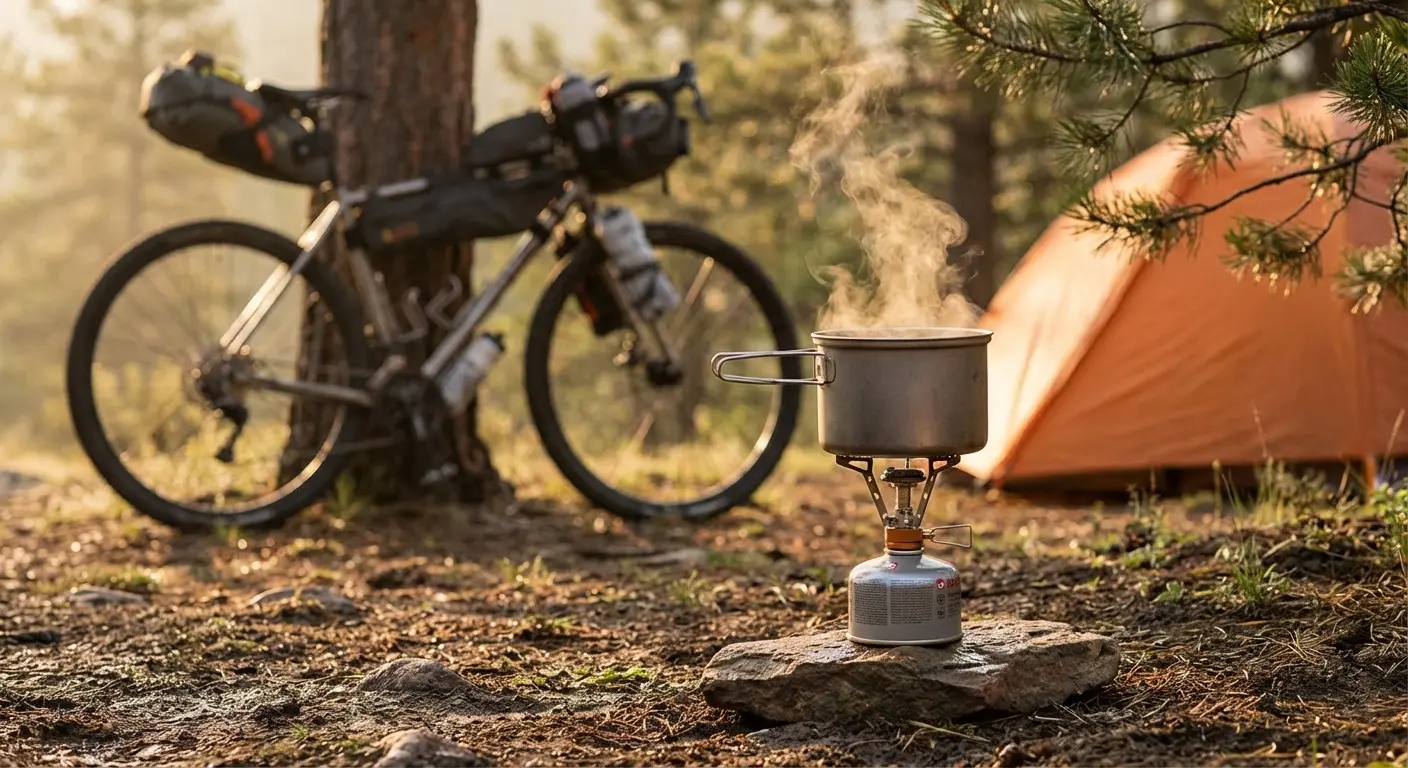
Bikepacking cookware serves one primary function: boiling water efficiently. Everything else is optional complexity. Most bikepackers eat rehydrated meals, make coffee, and occasionally heat soup—none of which requires chef-grade equipment. BIKEPACKING.com's kitchen guides reinforce this minimalist philosophy—simplicity wins on the trail.
This guide focuses on what actually matters for bike-based adventures: weight, packability, durability, and practical capacity. Forget the elaborate camp kitchen setups; we're carrying everything on our bikes.
For stove recommendations, see our Bikepacking Stoves Guide. For complete camp setup, check our Camp Gear Guide. For what to cook, see our Complete Bikepacking Food Guide.
What You Actually Need
The Minimalist Setup (Most Bikepackers)
One pot + one utensil. That's genuinely sufficient for 90% of bikepacking trips.
Your pot boils water for:
- Coffee and tea
- Freeze-dried meals
- Instant oatmeal
- Ramen and soup
- Hot drinks in cold weather
Your utensil stirs, scoops, and delivers food to your mouth. One spork or long spoon handles everything.
Total weight: 4-5 ounces for quality titanium
The Expanded Setup (Occasional Cooking)
Add a lid and mug if you want to:
- Simmer actual food (not just boil water)
- Drink coffee while food rehydrates in pot
- Make two-course meals
Additional weight: 2-4 ounces
What You Don't Need
- Frying pan: Too heavy, requires real cooking (bikepacking is about eating, not cooking)
- Multiple pots: You're feeding yourself, not a group
- Full utensil set: One spork covers fork, spoon, and (arguably) knife duties
- Plates or bowls: Eat from the pot
- Specialty tools: Leave the camp kitchen gadgets home
The One-Pot Reality: What Cooking Actually Looks Like
Before buying cookware, understand what bikepacking "cooking" really involves:
Typical Bikepacking Meals:
- Morning: Boil water → pour into instant coffee and oatmeal
- Evening: Boil water → pour into freeze-dried meal pouch → wait 10 minutes → eat from pouch
- Alternative evening: Boil water in pot → add ramen → stir → eat from pot
What You'll Actually Cook (Probably):
- 90% of meals: Boiled water poured into something
- 8% of meals: Food heated in pot (soup, ramen)
- 2% of meals: Actual cooking (rare, usually in town)
The Revelation: Most bikepackers start with elaborate cooking plans and end up eating almost everything from pouches or heated in a single pot. The fantasy: "I'll make gourmet trail meals!" The reality: "I'm tired, just boil water."
This is why a 750ml pot and spork handle nearly everything. The elaborate cookware set you imagine using sits unused while you pour hot water into a Mountain House bag.
When You Actually Want More:
- Extended trips (2+ weeks) where food fatigue sets in
- Base camp trips where you stay multiple days
- Routes with food resupply that includes real ingredients
- Personal preference—some riders genuinely enjoy cooking
If any of these apply, the GSI Pinnacle Soloist provides actual cooking capability. Otherwise, one titanium pot is all you need. Pair your cookware with the right heat source from our Bikepacking Stoves Guide.
Pot Materials Compared
Titanium: The Bikepacker's Choice
Titanium pots dominate bikepacking for good reasons:
Advantages:
- Lightest material for equivalent strength
- Extremely durable (nearly indestructible)
- Corrosion-resistant
- Doesn't impart flavors
- Lasts essentially forever
Disadvantages:
- Creates hot spots (food can scorch)
- Most expensive option
- Poor heat distribution
Best for: Bikepackers who primarily boil water. The hot spot issue matters less when you're just heating liquid.
Weight example: TOAKS 750ml Titanium Pot weighs 3.6 ounces.
Aluminum: The Budget Alternative
Aluminum pots cost less while remaining reasonably light:
Advantages:
- Much cheaper than titanium
- Better heat distribution (less scorching)
- Still quite light
- Good for actual cooking beyond boiling
Disadvantages:
- Heavier than titanium
- Can dent more easily
- Some concerns about aluminum and food (mostly unfounded at these exposures)
Best for: Budget-conscious bikepackers or those who actually cook meals.
Hard-Anodized Aluminum
Hard-anodized aluminum improves on basic aluminum:
Advantages:
- Harder surface resists scratches
- Often includes non-stick coating
- Better durability than plain aluminum
Disadvantages:
- Non-stick coatings wear out
- Still heavier than titanium
- More expensive than plain aluminum
Best for: Those who want cooking capability with moderate weight.
Stainless Steel: Skip It
Stainless steel is too heavy for bikepacking. The durability advantage doesn't offset carrying an extra half-pound or more.
Capacity Sizing
Solo Bikepacking
500-750ml covers most needs:
- 500ml: Minimum for rehydrating one freeze-dried meal with coffee
- 650ml: Comfortable margin for larger appetites
- 750ml: Room for two servings or sharing with a partner occasionally
The TOAKS 750ml represents the sweet spot—enough capacity without unnecessary size.
Practical Considerations
- Fits a fuel canister inside: 750ml pots nest with standard 110g canisters, creating efficient packing
- Boiling time: Larger pots take longer to boil; don't oversize
- Weight penalty: Every 100ml of capacity adds roughly half an ounce
Two-Person Cooking
If sharing a cook kit with a partner, size up to 1000-1100ml. This allows boiling water for two meals simultaneously rather than sequential cooking.
Featured Products
TOAKS Titanium 750ml Pot
The TOAKS 750ml has become the default bikepacking pot for good reason. At just 3.6 ounces with lid, it's among the lightest full-featured pots available. The capacity handles standard freeze-dried meals with room to spare. Internal gradation marks show fill levels in ml and oz. The foldable handles lock securely, and the fitted lid accelerates boiling while saving fuel. It nests perfectly with TOAKS cups, 110g fuel canisters, or 32oz Nalgene bottles. Quality titanium construction means this pot outlasts your bikepacking career—it's a lifetime purchase at a reasonable price.
- 3.6 oz with lid
- 750ml capacity
- Nests with fuel canisters
- Gradation marks inside
- Foldable locking handles
Snow Peak Trek 700 Titanium
Snow Peak's Trek 700 represents Japanese precision in titanium cookware. The 700ml capacity suits solo bikepackers, and the pot's renowned quality justifies the premium price. Handles fold flat for packing, and the included lid fits securely. Snow Peak's titanium is exceptionally thin yet durable, keeping weight minimal. The slightly smaller capacity than the TOAKS 750 works fine for most meals but feels tight with larger appetites. If you appreciate premium craftsmanship and don't mind paying for it, Snow Peak delivers.
- Premium Japanese quality
- 700ml capacity
- Ultra-thin titanium
- Folding handles
- Includes fitted lid
GSI Outdoors Pinnacle Soloist
If you cook beyond boiling water, the Pinnacle Soloist offers real capability. The 1.1-liter pot includes a non-stick interior that handles eggs, oatmeal, and foods that would scorch in titanium. The insulated mug doubles as a measuring cup and drinking vessel. The complete system nests efficiently. The trade-off: at 12.2 ounces, it's significantly heavier than titanium options. For bikepackers who enjoy trailside cooking rather than just rehydrating, this weight makes sense.
- Non-stick coating
- 1.1L pot capacity
- Includes insulated mug
- Complete nesting system
- Better heat distribution
Sea to Summit Titanium Spork
The Sea to Summit Titanium Spork handles all eating duties at just 0.4 ounces. The polished titanium bowl won't retain food odors, and the material is strong enough to scrape pot bottoms without bending. The compact size fits anywhere—jersey pocket, top tube bag, inside your pot. Some prefer long-handled versions for reaching freeze-dried meal pouches, but the standard length works for pot-based eating. A lifetime utensil purchase.
- 0.4 oz ultralight
- Titanium construction
- Won't bend or break
- Compact size
- Lifetime durability
Lids: Worth the Weight?
Why Use a Lid
- Faster boiling: Trapped heat reduces boil time significantly
- Fuel savings: Faster boiling means less fuel burned
- Heat retention: Keeps food warm while eating
- Splatter control: Especially for simmering
When to Skip the Lid
- Ultralight purists counting every gram
- No-cook or cold-soak meal strategies
- Using pot as mug (lid interferes with drinking)
Lid Options
Most pots include fitted lids. If yours doesn't:
- Aluminum foil: Zero weight, works fine for boiling
- Universal lids: Silicone lids fit various pot sizes
- Custom cut: Some ultralight hikers cut lids from aluminum
Mugs and Cups
Do You Need a Separate Mug?
Arguments for:
- Drink coffee while food rehydrates in pot
- Separate vessels for eating and drinking
- Measure water without dirtying cooking pot
Arguments against:
- Additional weight and bulk
- The pot works as a mug
- Most bikepackers find one vessel sufficient
If You Want a Mug
Titanium cups from TOAKS or Snow Peak nest inside matching pots. A 450ml cup fits inside a 750ml pot, adding roughly 2 ounces to your kit weight.
Utensil Strategies
The Case for Titanium Spork
- Lightest option that handles all eating
- Nearly indestructible
- Won't melt on hot pot edges
- Easy to clean
The Sea to Summit Titanium Spork at 0.4 ounces is the standard recommendation.
Long-Handled Options
Advantages:
- Reaches bottom of freeze-dried meal pouches
- Keeps hands away from hot pot
- More comfortable for large pots
Disadvantages:
- Longer = harder to pack
- Not necessary if eating from pot
Long-handled spoons from Sea to Summit and TOAKS run 0.5-0.7 ounces.
Budget Alternatives
Plastic sporks work fine and cost almost nothing. The weight penalty is minimal (maybe 0.1 oz), and if you lose one, replacement is trivial.
Nesting and Packing
The Nesting System
Efficient packing means items fit inside each other:
Example setup (fits inside 750ml pot):
- 110g fuel canister
- Folded stove
- Lighter
- Salt/pepper packets
OR
- 450ml titanium cup
- Lighter and tea bags
- Folded spork
Protecting Your Kit
- Mesh stuff sack: Keeps pot from blackening other gear
- Pot cozy: Insulated sleeve for fuel efficiency (doubles as protection)
- Rubber bands: Secure lid during transport
Cleaning in the Field
Minimal Water Method
- Eat everything (leave no food residue)
- Add small amount of water
- Swirl and drink (or pour on ground away from camp)
- Wipe with bandana or paper
- Let air dry
When Soap Matters
- After cooking actual food (not just boiling)
- Before long storage
- If leaving food residue
Use biodegradable camp soap, rinse 200+ feet from water sources.
Dealing with Scorched Food
Titanium pots scorch food into the surface. Prevention is easier than cure:
- Keep heat low
- Stir constantly
- Add more water than recipes suggest
- Accept some discoloration (doesn't affect function)
For guidance on what to cook with your new kit, see our Complete Bikepacking Food Guide. If you're looking for plant-based options, our Vegan Bikepacking Food Guide has you covered.
Building Your Cook Kit
Ultralight Setup (~4 oz)
| Item | Weight |
|---|---|
| TOAKS 750ml pot with lid | 3.6 oz |
| Titanium spork | 0.4 oz |
| Total | 4.0 oz |
Standard Setup (~6 oz)
| Item | Weight |
|---|---|
| TOAKS 750ml pot with lid | 3.6 oz |
| TOAKS 450ml cup | 2.0 oz |
| Titanium spork | 0.4 oz |
| Total | 6.0 oz |
Cooking-Capable Setup (~14 oz)
| Item | Weight |
|---|---|
| GSI Pinnacle Soloist | 12.2 oz |
| Titanium spork | 0.4 oz |
| Spatula | 1.0 oz |
| Total | ~14 oz |
FAQ
What size pot for bikepacking?
750ml for solo, 1000-1100ml for two people. The TOAKS 750ml is the most popular choice for solo bikepackers.
Titanium vs aluminum for bikepacking?
Titanium if you primarily boil water and want minimum weight. Aluminum if you actually cook food and want better heat distribution.
Do I really only need one pot?
Yes. Most bikepackers use a single pot for years without needing more. Add a mug only if you specifically want separate drinking vessel.
Why is titanium cookware so expensive?
Raw material costs and specialized manufacturing. The price is worth it for durability—titanium pots last indefinitely with normal use.
Quick Recommendations
Best overall pot: TOAKS Titanium 750ml—ideal capacity, minimal weight, excellent value.
Premium option: Snow Peak Trek 700—Japanese quality for those who appreciate craftsmanship.
For actual cooking: GSI Pinnacle Soloist—non-stick capability in complete system.
Best utensil: Sea to Summit Titanium Spork—0.4 ounces, lifetime durability.
For stove pairings, see our Stoves and Cooking Guide. For complete camp setup, check the Camp Gear Guide.
Eat well. Pack light.