Vegan Bikepacking Food: Complete Plant-Based Guide
20+ years testing gear in Colorado backcountry
Plant-Powered Adventures
Vegan bikepackers face unique challenges—but also surprising advantages. While convenience store resupply gets harder, many of the best bikepacking foods are already plant-based: nut butters, nuts, dried fruit, oats, and tortillas form the backbone of any rider's food bag regardless of diet.
The key is planning. With forethought, vegan bikepackers eat just as well as omnivores—sometimes better, since plant foods tend toward the calorie-dense, shelf-stable profile that bikepacking demands.
This guide covers everything plant-based riders need: the best vegan trail foods, protein strategies that actually work, meal planning for trips of any length, and how to handle the inevitable small-town resupply challenges.
For complete nutrition strategy, see our Complete Bikepacking Food Guide. For calorie-efficient options, check Calorie-Dense Foods for Bikepacking.
The Vegan Advantage
Before addressing challenges, recognize the strengths:
Many Top Bikepacking Foods Are Already Vegan
| Food | Calories/oz | Vegan? |
|---|---|---|
| Nut butters | 170-190 | ✓ Yes |
| Nuts and seeds | 160-180 | ✓ Yes |
| Olive oil | 250 | ✓ Yes |
| Dried fruit | 80-95 | ✓ Yes |
| Oatmeal | 110 | ✓ Yes |
| Tortillas (most) | 140-150 | ✓ Usually |
| Couscous | 100 | ✓ Yes |
| Dark chocolate | 155-165 | ✓ Often |
The calorie-dense champions of bikepacking are predominantly plant-based.
Shelf Stability
Plant foods generally last longer than animal products:
- No refrigeration concerns for cheese or meat
- Longer shelf life overall
- Less worry about food safety in heat
Lighter Weight (Sometimes)
Dried plant proteins (beans, lentils) can be lighter than equivalent meat proteins for the same nutrition—though preparation may require more water and time.
The Vegan Challenge: Protein
The main nutritional challenge for vegan bikepackers is adequate protein intake. You need roughly 1.2-1.6g per kilogram of body weight daily for recovery—that's 85-115g for a 70kg rider.
Plant Protein Sources Ranked
| Food | Protein/oz | Calories/oz | Notes |
|---|---|---|---|
| Peanuts | 7g | 165 | Best protein-calorie ratio |
| Almonds | 6g | 165 | Complete amino acids |
| Pumpkin seeds | 8g | 150 | High protein seeds |
| Sunflower seeds | 6g | 165 | Affordable option |
| Peanut butter | 7g (2 tbsp) | 170 | Versatile staple |
| Dried lentils | 7g | 95 | Requires cooking |
| TVP (textured veg protein) | 12g | 80 | Lightweight, needs rehydrating |
| Tempeh (shelf-stable) | 6g | 55 | Dense, satisfying |
Daily Protein Strategy
Target: 85-115g protein
Sample distribution:
- Breakfast oatmeal + 2 tbsp nut butter: 12g
- Trail snacks (nuts, seeds, 4 bars): 30-40g
- Lunch (hummus + crackers + PB): 15g
- Dinner (lentils or TVP + rice): 25-30g
- Evening snacks (more nuts): 10g
Total: 90-105g ✓
Complete Protein Combinations
Plant proteins are often "incomplete"—missing some essential amino acids. Combine foods throughout the day:
- Grains + legumes: Rice and beans, peanut butter on bread
- Nuts + grains: Trail mix with oats, almond butter on tortilla
- Seeds + legumes: Hummus with pumpkin seeds
You don't need to combine at every meal—just eat variety throughout the day.
Best Vegan Bikepacking Foods
Breakfast
Hot options: (See our Bikepacking Breakfast Ideas for more recipes)
- Instant oatmeal + nut butter + dried fruit + seeds
- Grits with olive oil and nutritional yeast
- Instant rice with coconut cream and maple syrup
No-cook options:
- Overnight oats (prep night before)
- Granola with plant milk powder
- Nut butter tortilla wraps
Protein boost: Add 2 tbsp nut butter and 1 tbsp seeds to any breakfast for +15g protein.
Trail Snacks
Bars (check labels—many are vegan): See our Best Energy Bars for Bikepacking for detailed reviews.
- Larabars (most flavors)
- Clif Bars (most flavors)
- GoMacro bars
- KIND bars (some flavors)
- Bobo's Oat Bars (most flavors)
- That's It Fruit Bars
Whole foods:
- Trail mix (nuts + seeds + dried fruit + dark chocolate)
- Nut butter packets
- Dried fruit (dates, figs, apricots)
- Roasted chickpeas
- Pretzels and crackers
For more snack ideas, see Best Trail Snacks for Bikepacking.
Lunch
Assembly meals:
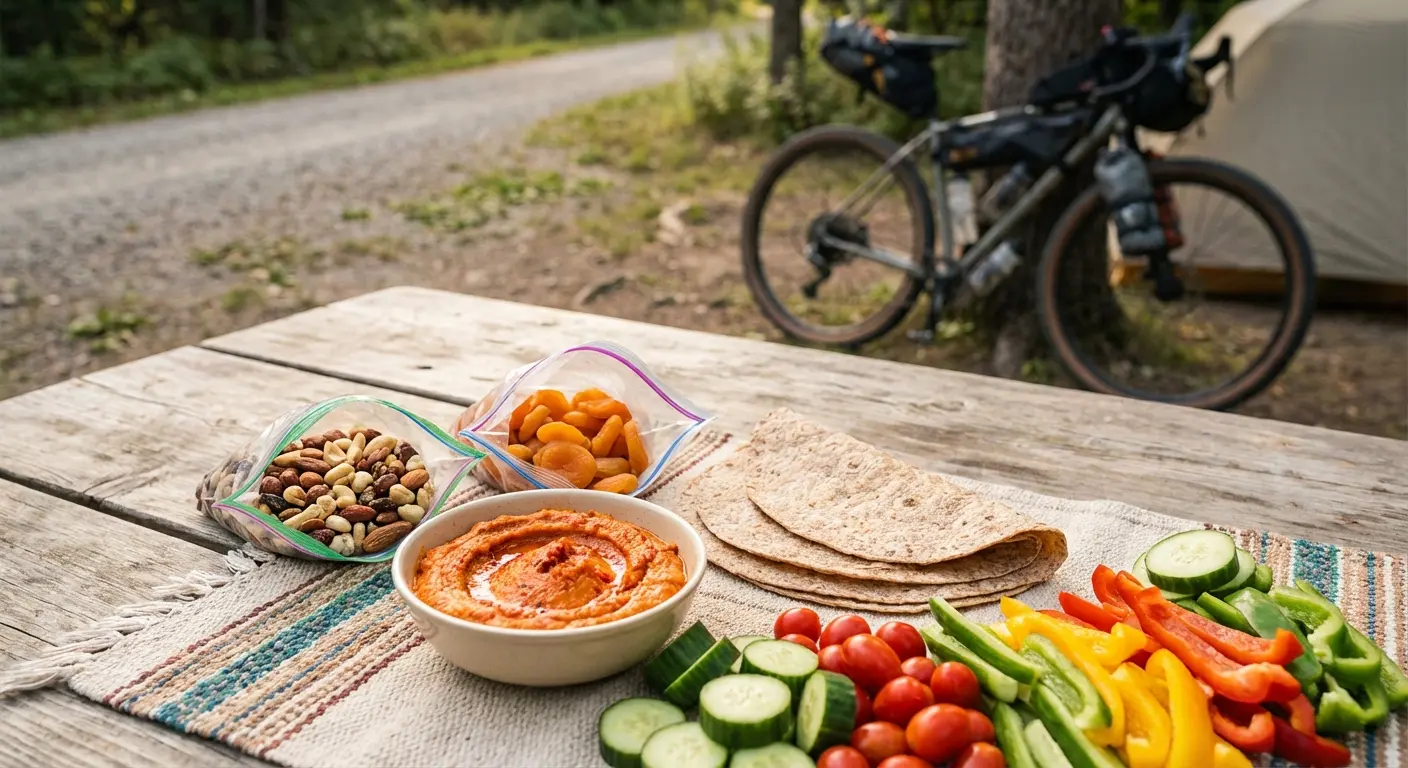
- Tortilla + hummus + olives + sun-dried tomatoes
- Crackers + nut butter + banana chips
- Pita + falafel mix (just add water, no cooking)
- Rice cakes + avocado (from town resupply)
From resupply:
- Grocery store prepared foods (check labels)
- Fresh fruit and vegetables
- Bread with nut butter
Dinner
Freeze-dried options (growing selection):
- Good To-Go: Extensive vegan options
- Backpacker's Pantry: Many vegan meals
- Patagonia Provisions: Premium vegan options
- Outdoor Herbivore: Dedicated vegan brand
DIY hot meals:
- Ramen + peanut butter + sriracha + dried vegetables
- Instant rice + coconut cream + curry powder + dried peas
- Couscous + olive oil + sun-dried tomatoes + pine nuts
- Lentils + instant rice + spices (longer cook time)
- TVP + instant mashed potatoes + gravy mix
Cook time consideration: Many vegan protein sources (dried beans, lentils) require longer cooking than instant meals. Plan stove fuel accordingly or choose quick-cook options like TVP or red lentils.
Meal Planning for Vegan Bikepackers
Weekend Trip (2-3 Days)
Carry everything from home—no resupply complications.
Sample daily menu:
| Meal | Foods | Protein | Calories |
|---|---|---|---|
| Breakfast | Oatmeal + PB + seeds + dried fruit | 15g | 500 |
| Trail snacks | 4 bars + trail mix + dates | 25g | 1,000 |
| Lunch | Tortilla + hummus + crackers | 12g | 500 |
| Dinner | Ramen + PB + TVP + veggies | 30g | 700 |
| Evening | Dark chocolate + almonds | 8g | 300 |
| Daily Total | 90g | 3,000 |
Week-Long Trip (5-7 Days)
Requires resupply—research vegan options in advance.
Before departure: (See our Resupply Guide for detailed planning strategies)
- Map grocery stores vs. gas stations
- Identify natural food stores or co-ops
- Call ahead to small-town stores if unsure
- Pack extra protein-dense foods as backup
Resupply strategy:
- Gas stations: Nuts, peanut butter, crackers, some bars, bananas
- Small grocery: Add canned beans, hummus, fresh produce
- Large grocery: Full selection, fresh options, specialty items
- Natural food stores: Best vegan selection, often in college towns
Extended Trip (2+ Weeks)
Additional considerations:
- Mail drops for specialty items (vegan freeze-dried, protein powder)
- Town restaurant research (call ahead)
- Backup protein: Carry extra nuts/nut butter between resupply
- Supplement consideration: B12, omega-3 if concerned
Resupply Challenges and Solutions
The Small-Town Problem
Rural gas stations and small grocery stores rarely stock specialty vegan items. But staples exist everywhere:
Available almost anywhere:
- Peanut butter (usually)
- Nuts (often)
- Bananas (usually)
- Bread (check for dairy/eggs)
- Crackers (many are vegan)
- Dried fruit
- Chips and pretzels
- Some granola bars
Rarely available in small towns:
- Plant milk
- Vegan cheese
- Specialty bars (beyond Clif)
- Hummus
- Vegan frozen meals
- Fresh produce variety
Solutions
1. Carry backup protein Always have 2-3 extra days of protein-dense foods (nuts, nut butter) beyond what you calculate needing. Small-town resupply may yield only carbs.
2. Use mail drops For remote sections, mail yourself:
- Vegan protein powder
- Specialty freeze-dried meals
- Favorite bars
- Supplements
3. Restaurant research Before the trip, identify vegan-friendly restaurants along your route. Apps like HappyCow help locate options.
4. Embrace simplicity Some of the best vegan meals are the simplest:
- Peanut butter tortillas
- Oatmeal with everything
- Rice and beans (if you have cook time)
High-Protein Vegan Recipes
Power Oatmeal (Breakfast)
- 1 packet instant oatmeal (4g protein)
- 2 tbsp peanut butter (7g protein)
- 1 tbsp hemp seeds (5g protein)
- 1 tbsp chia seeds (2g protein)
- Dried fruit for sweetness
Total: 18g protein, ~450 calories
Protein Trail Mix
- 1 cup peanuts (35g protein)
- 1 cup almonds (30g protein)
- 1/2 cup pumpkin seeds (15g protein)
- 1/2 cup dark chocolate chips
Makes ~12 servings, 7g protein per 1/4 cup
TVP Dinner Bowl
- 1/2 cup TVP (24g protein)
- 1 packet instant rice
- 1 tbsp olive oil
- Soy sauce or tamari packet
- Dried vegetables
Rehydrate TVP with hot water 10 min, add to cooked rice.
Total: 30g protein, ~600 calories
Peanut Ramen (Classic)
- 1 ramen packet (discard flavor packet) (5g protein)
- 2 tbsp peanut butter (7g protein)
- Sriracha to taste
- Crushed peanuts (3g protein)
- Dried vegetables
Total: 15g protein, ~550 calories
Supplements to Consider
B12
Plant foods don't provide adequate B12. For trips longer than a week, consider:
- Daily B12 supplement
- Fortified nutritional yeast (adds cheesy flavor to meals)
- Fortified plant milk (when available)
Protein Powder
Optional but helpful for extended trips:
- Pea protein (lightweight, mixes into oatmeal)
- Plant-based blends (variety of amino acids)
- Single-serving packets for precise portions
Omega-3s
Plant sources (walnuts, flax) provide ALA but not EPA/DHA. For long expeditions, consider algae-based omega-3 supplements.
Iron
Plant iron (non-heme) absorbs less efficiently. Pair iron-rich foods (spinach, lentils, fortified cereals) with vitamin C sources to boost absorption. Consider a supplement if you have a history of low iron.
Vegan Freeze-Dried Meals
The vegan freeze-dried market has expanded significantly:
Good To-Go
- Herbed Mushroom Risotto
- Thai Curry
- Classic Marinara
- Mexican Quinoa Bowl
Quality: Excellent Price: Premium ($10-12 per meal)
Backpacker's Pantry
- Pad Thai (vegan version)
- Louisiana Red Beans & Rice
- Cuban Coconut Black Beans & Rice
- Kathmandu Curry
Quality: Good Price: Moderate ($8-10 per meal)
Outdoor Herbivore
- Dedicated vegan brand
- Wide variety of options
- Often lighter weight than competitors
Quality: Very good Price: Moderate ($8-10 per meal)
Patagonia Provisions
- Premium, organic ingredients
- Excellent sustainability practices
- Limited but excellent options
Quality: Excellent Price: Premium ($12-15 per meal)
Common Mistakes
Mistake 1: Inadequate Protein
Calories are easy; protein requires intention. Track protein roughly, especially on extended trips.
Fix: Include protein-rich foods at every meal. Target 20-30g per meal minimum.
Mistake 2: Relying on Specialty Products
That vegan jerky brand won't be in small-town gas stations.
Fix: Build your staple foods from universally available items (peanut butter, nuts, oats).
Mistake 3: Insufficient Variety
Eating peanut butter tortillas for every meal gets old fast.
Fix: Pack variety from home. Include different nuts, various bars, multiple flavor options.
Mistake 4: Underestimating Cook Time
Dried beans take 30+ minutes to cook—not practical on most bikepacking trips.
Fix: Use quick-cooking options: red lentils (10 min), TVP (rehydrate only), instant bean flakes.
Mistake 5: No Backup Plan
That "health food store" may be closed Sundays.
Fix: Always carry 1-2 extra days of food beyond calculated needs.
FAQ
Is it harder to bikepack as a vegan?
Slightly, mainly due to resupply challenges in rural areas. With planning, it's completely manageable. Many staple bikepacking foods are already vegan.
How do I get enough protein without meat?
Nuts, nut butters, seeds, TVP, and legumes. Aim for protein at every meal. A daily target of 85-115g is achievable with planning.
What if I can't find vegan food in a small town?
Peanut butter, nuts, bread, and bananas exist in most stores. Carry backup protein-dense foods between resupply.
Are there vegan freeze-dried meals?
Yes—Good To-Go, Backpacker's Pantry, Outdoor Herbivore, and Patagonia Provisions all offer excellent vegan options.
Should I take supplements while bikepacking?
B12 is recommended for any vegan, especially on extended trips. Protein powder is optional but helpful. Consider iron if you have a history of deficiency.
What's the best vegan protein source for bikepacking?
Peanuts and peanut butter offer the best protein-to-calorie ratio among portable, shelf-stable options. TVP provides the most protein per ounce but requires rehydration.
Quick Reference: Vegan Staples
Always pack:
- Peanut butter (or almond butter)
- Mixed nuts
- Oatmeal packets
- Tortillas
- Trail mix
- Vegan bars (Larabar, Clif, GoMacro)
- Olive oil
- Dried fruit
For hot meals:
- Ramen (check ingredients)
- Instant rice
- Couscous
- TVP or dried lentils
- Dehydrated vegetables
- Spice packets
For resupply:
- Hummus
- Fresh fruit
- Fresh vegetables
- Canned beans
- Plant milk (single-serve)
For complete nutrition guidance, see our Complete Bikepacking Food Guide. For calorie optimization, check Calorie-Dense Foods for Bikepacking.
Plant-powered pedaling. Fuel the adventure sustainably.