Best Trail Snacks for Bikepacking: What to Eat While Riding
20+ years testing gear in Colorado backcountry
This article contains affiliate links. We may earn a commission if you make a purchase through our links, at no extra cost to you.
Snacking Is Your Primary Fuel System
Here's the truth about bikepacking nutrition: most of your calories come from snacks, not meals. Breakfast and dinner bookend the day, but those 6-10 hours in the saddle? That's snack territory.
The old advice holds: eat before you're hungry, drink before you're thirsty. Once you feel hungry, you're already depleted. Once you bonk, recovery takes hours. Consistent snacking prevents the crash and keeps you riding strong all day.
This guide covers the best trail snacks for bikepacking—from commercial options to homemade alternatives—and how to build a snacking strategy that keeps your energy steady from sunrise to camp.
For complete nutrition planning, see our Complete Bikepacking Food Guide. For energy bar deep-dives, check Best Energy Bars for Bikepacking.
What Makes a Great Trail Snack
Not all snacks work for eating on a bike. The best bikepacking snacks share key characteristics:
Eat-ability While Riding
Can you eat it one-handed? Without stopping? These factors matter:
- Easy to unwrap (or no wrapper)
- Doesn't require utensils
- Won't crumble everywhere
- Chewable at any exertion level
Durability
Your snacks live in bags that bounce over rough terrain:
- Won't crush into powder
- Survives compression
- Handles temperature swings
- Stays edible for days
Calorie Efficiency
Weight matters. Good snacks deliver calories:
- 100+ calories per ounce minimum
- 130+ calories per ounce ideal
- Balanced macros for sustained energy
Palatability Over Time
You'll eat these snacks repeatedly:
- Flavors you don't tire of
- Multiple options prevent fatigue
- Both sweet and savory available
Featured Products
Clif Bar Variety Pack
Clif Bars have earned their trail ubiquity through consistent performance. At 250-270 calories with 40-45g carbs and 10g protein, they provide the sustained energy bikepacking demands. The oat-based formula avoids sugar crashes while the substantial texture satisfies between meals. With 16 flavors in variety packs, you can rotate to prevent bar fatigue. The wrappers tear easily with teeth (gloves-on compatible), and the bars survive pack abuse without crumbling. At roughly $1.20 each in bulk, they're affordable enough to pack generously. For all-around trail snacking, Clif remains the benchmark.
- 250-270 calories per bar
- 10g protein for sustained energy
- Easy one-handed eating
- 16 flavor options
- Budget-friendly in bulk
Bobo's Oat Bars
When you need maximum calories per bar, Bobo's delivers. At 340 calories in a 3oz bar (~115 cal/oz), they're among the most calorie-dense commercial options. The baked oat texture feels like homemade—because essentially they are: oats, butter, brown sugar, and flavorings. They're substantial enough to replace small meals on big days. The softer texture means they don't survive rough handling as well as denser bars, but careful packing solves this. Flavors like Peanut Butter and Chocolate Chip satisfy comfort food cravings. For bikepackers pushing big miles who need serious calories, Bobo's earns its place.
- 340 calories per bar
- Homemade taste and texture
- Simple, recognizable ingredients
- Substantial enough to replace meals
- Multiple flavor options
Honey Stinger Waffles
When you need fast fuel mid-climb, Honey Stinger Waffles hit different than dense bars. The thin stroopwafel format dissolves easily—no heavy chewing when you're breathing hard. Honey-based sugars absorb quickly for immediate energy rather than sustained release. At 160 calories per waffle, they're lighter than full bars—use them as boosts between larger snacks rather than replacements. The waffle holds together surprisingly well in packs. Flavors like Caramel and Salted Caramel taste like treats, making them easy to eat even when appetite fades. Perfect for climbs, hard efforts, or bonk recovery.
- Fast-absorbing honey sugars
- Easy to eat while breathing hard
- 160 calories per waffle
- Treat-like taste
- Compact packaging
Justin's Nut Butter Squeeze Packs
Individual nut butter packets solve the mess problem that jars create. Justin's squeeze packs deliver 190-200 calories of dense, satisfying fuel in a squeeze-and-eat format. No spoon needed—squeeze directly into your mouth or onto tortillas. The packets seal after opening if you don't finish. Available in peanut, almond, and hazelnut varieties. At 170-180 cal/oz, they're among the most calorie-efficient snacks available. The main downside: cost. At roughly $1.50-2 per packet, they're pricier than buying jars. But for mess-free, on-bike nut butter, they're unmatched.
- 190-200 calories per packet
- Mess-free squeeze format
- No utensils needed
- Resealable if needed
- Multiple nut varieties
Sahale Snacks Glazed Mix
Standard trail mix works, but Sahale elevates it. Their glazed nut blends add flavor complexity that makes eating enjoyable mile after mile. The Honey Almonds and Valdosta Pecans varieties deliver 150-160 cal/oz with interesting taste profiles beyond 'salty nuts.' Glazing adds some sugar but also makes flavors pop. The resealable bags portion easily for daily carries. Nuts stay whole rather than crumbling. Yes, you can make cheaper trail mix at home, but Sahale's flavor profiles justify the premium for many riders. When you want trail mix that tastes special, this is it.
- 150-160 calories per ounce
- Glazed flavors beat basic mix
- Resealable bags
- Nuts stay whole
- Premium taste quality
That's It Fruit Bars
When you want real food, not engineered bars, That's It delivers literal fruit. Ingredients: apples and one other fruit. That's actually it. At 100 calories per bar, they're less calorie-dense than nut-based options, but the clean energy and easy digestion make them valuable. The fruit sugar absorbs quickly for immediate fuel. They're soft, easy to eat, and gentle on upset stomachs. No artificial anything. For riders who want whole-food snacking or need easily digestible options, these fill a unique niche. Pair with nut butter packets for balanced macros.
- Just fruit—nothing else
- 100 calories per bar
- Easy on sensitive stomachs
- Quick-absorbing sugars
- No artificial ingredients
Snack Categories Compared
Energy Bars
The workhorse of trail snacking. Convenient, calorie-dense, and available everywhere.
| Bar Type | Cal/Bar | Cal/oz | Best For |
|---|---|---|---|
| Clif Bar | 250-270 | 120 | All-around fuel |
| RX Bar | 210 | 130 | Clean ingredients, protein |
| Larabar | 220 | 130 | Simple ingredients |
| KIND | 200 | 125 | Lower sugar option |
| Bobo's | 340 | 115 | Maximum calories |
| ProBar | 370 | 120 | Meal replacement |
Strategy: Carry 4-6 bars per day. Rotate flavors to prevent fatigue.
For detailed comparisons, see Best Energy Bars for Bikepacking.
Nuts and Trail Mix
High calorie density, satisfying crunch, and natural ingredients.
| Type | Cal/oz | Protein/oz | Notes |
|---|---|---|---|
| Almonds | 165 | 6g | Best protein ratio |
| Cashews | 160 | 5g | Creamy, satisfying |
| Peanuts | 165 | 7g | Budget-friendly |
| Macadamias | 200 | 2g | Highest density |
| Mixed trail mix | 140-160 | 4-5g | Variety in one bag |
Strategy: Pre-portion into daily bags. Mix nuts with chocolate and coconut for calorie boost.
Nut Butter Packets
Pure calorie efficiency in portable form.
- Justin's packets: $1.50-2 each, premium quality
- Jif To Go: $0.75-1 each, budget option
- Trader Joe's packets: $1 each, good value
Strategy: 2-3 packets per day supplements other snacks significantly.
Quick-Energy Options
For hard efforts when you need fuel fast:
- Honey Stinger Waffles
- Dried fruit (dates, apricots)
- Gummy candies
- Energy gels
- Fig bars
Strategy: Keep in jersey pocket or stem bag for immediate access during climbs.
Savory Snacks
When sweet fatigue hits, savory saves the day:
- Pretzels
- Crackers
- Cheese
- Salami/pepperoni sticks
- Corn nuts
Strategy: Include savory options even if you think you won't want them. You will.
Building Your Snack System
Daily Snack Planning
For a typical day burning 4,000-5,000 calories:
- Breakfast: 500-700 cal (meal)
- Trail snacks: 1,500-2,000 cal (spread throughout day)
- Lunch: 500-700 cal (quick meal or heavy snacking)
- Dinner: 800-1,200 cal (meal)
Snack breakdown (1,500-2,000 cal target):
- 4-5 energy bars: 1,000-1,350 cal
- 2-3 nut butter packets: 400-600 cal
- Trail mix/nuts: 300-500 cal
- Quick-energy items: 200-300 cal
Snack Accessibility Hierarchy
Not all snacks are equally accessible while riding:
Tier 1 - Immediate Access (eat while riding):
- Stem bag or top tube bag
- Jersey pockets
- Foods: Quick-energy items, half-eaten bars
Tier 2 - Easy Access (brief stop):
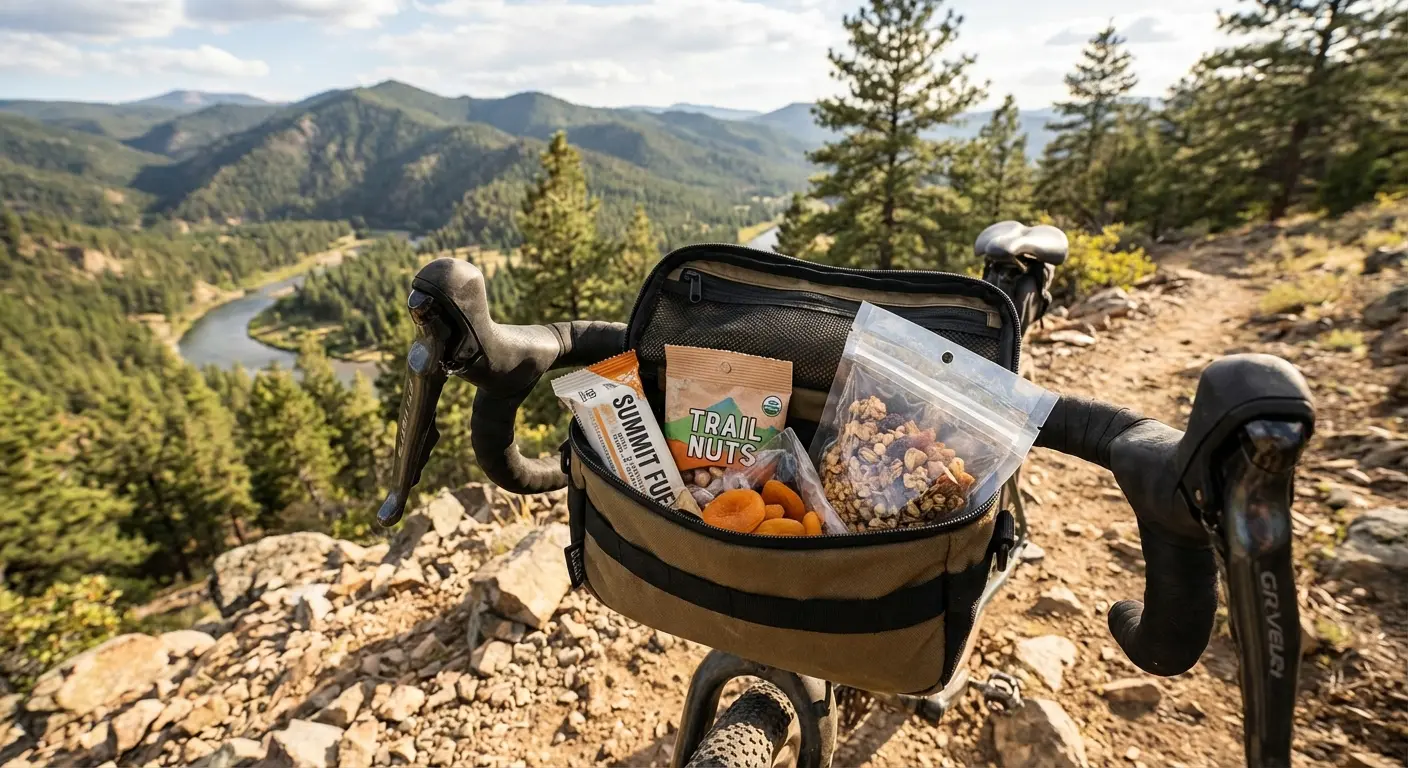
- Handlebar bag top pocket
- Frame bag external pocket
- Foods: Bars, nut butter packets
Tier 3 - Camp/Break Access:
- Deep in bags
- Foods: Nuts, cheese, crackers, bulk items
Rule: Your most-needed snacks should be in Tier 1 or 2. Buried snacks don't get eaten.
Timing Strategy
Hourly targets:
- 200-300 calories per hour while riding
- Eat every 30-45 minutes
- Don't wait until hungry
Sample timing (8-hour riding day):
- 7am: Breakfast
- 8am: Start riding, first snack within 30 min
- 8:30am: Half bar or quick energy
- 9:30am: Full bar
- 10:30am: Nut butter packet + crackers
- 11:30am: Bar + dried fruit
- 12:30pm: Lunch stop (or heavy snacking)
- Continue pattern afternoon...
Homemade Snack Options
Commercial snacks are convenient but expensive. Homemade alternatives save money and let you control ingredients.
Energy Balls
Recipe:
- 1 cup oats
- 1/2 cup peanut butter
- 1/3 cup honey
- 1/2 cup chocolate chips
- 2 tbsp chia seeds
Mix, roll into balls, refrigerate. Makes ~15 balls at ~100 cal each.
Pros: Cheap, customizable, no wrapper waste Cons: Less durable, need refrigeration before trip
Homemade Trail Mix
High-calorie formula:
- 2 cups mixed nuts
- 1 cup dark chocolate chips
- 1/2 cup dried coconut
- 1/2 cup peanuts
~160 cal/oz, significantly cheaper than commercial.
Tip: Pre-portion into daily bags at home.
Rice Crispy Treats (Upgraded)
Recipe:
- Standard rice crispy treat recipe
- Add 1/2 cup peanut butter
- Add 1/4 cup protein powder
- Cut into bars
~150 cal/oz, transportable, familiar comfort food.
Date Balls
Recipe:
- 1 cup dates
- 1/2 cup nuts
- 2 tbsp cocoa powder
- Pinch salt
Blend, roll into balls. ~120 cal each.
Weather Considerations
Hot Weather Snacking
Heat changes everything:
- Chocolate melts (avoid or store carefully)
- Nut butter gets runny (still edible)
- Appetite decreases (eat anyway)
Hot weather picks:
- Dried fruit (won't melt)
- Pretzels and crackers
- Nut butter packets
- Larabars (no chocolate varieties)
- Fresh fruit from resupply
Cold Weather Snacking
Cold brings different challenges:
- Some bars become brick-hard
- Frozen fingers struggle with wrappers
- Need more calories for warmth
Cold weather picks:
- Honey Stinger Waffles (stay soft)
- Cheese and salami (hold up well)
- Pre-opened wrappers
- Hand-warmer proximity for bar softening
Budget Strategies
Trail snacks add up. Here's how to manage costs:
Cost Per Calorie Comparison
| Snack | Cost/Cal | Notes |
|---|---|---|
| Homemade trail mix | $0.003 | Best value |
| Peanuts (bulk) | $0.004 | Budget champion |
| Clif Bars (bulk) | $0.005 | Good value |
| Homemade energy balls | $0.005 | Cheap but effort |
| Generic granola bars | $0.006 | Lower quality |
| Justin's nut butter | $0.010 | Premium price |
| Bobo's bars | $0.008 | Worth it for calories |
Money-Saving Tactics
- Buy in bulk: 24-packs save 20-30% vs. singles
- Make homemade: Energy balls and trail mix at half the cost
- Use store brands: Generic bars work fine
- Watch sales: Stock up when prices drop (bars last months)
- Mix premium and budget: Use expensive options strategically
Common Mistakes
Mistake 1: Not Eating Enough
The number one snacking mistake. You're burning more calories than you think.
Fix: Set phone reminders every 30-45 minutes to eat.
Mistake 2: All Sweet, No Savory
Sweet fatigue is real. By day three, you'll be sick of sugar.
Fix: Pack savory options even if they seem unnecessary.
Mistake 3: Burying Snacks
Snacks in the bottom of your frame bag don't get eaten.
Fix: Keep 2-3 hours of snacks in immediately accessible positions.
Mistake 4: Same Snacks Every Day
Eating the same three bars for a week is demoralizing.
Fix: Build variety. Different brands, flavors, and types.
Mistake 5: Ignoring Personal Preferences
That "healthy" bar you hate eating won't get eaten.
Fix: Pack snacks you actually enjoy. Taste matters.
FAQ
How many snacks should I carry per day?
Plan for 1,500-2,000 calories from snacks daily. That's typically 5-7 bars plus additional items (nut butter, trail mix, etc.).
What's the best snack for immediate energy?
Honey Stinger Waffles, dried dates, or energy gels. Fast-absorbing sugars for quick fuel when bonking or climbing.
Can I survive on just energy bars?
Technically yes, but you'll hate it. Mix in variety—trail mix, real food, savory options.
How do I prevent chocolate from melting?
Insulate it (center of bags, wrapped in clothes), choose dark chocolate (higher melt point), or skip chocolate in extreme heat.
Should I eat the same snacks as for road cycling?
Bikepacking differs—you're carrying everything and riding all day for multiple days. Prioritize calorie density and variety over pure performance products.
What about energy gels?
Gels work for quick energy but shouldn't be your primary fuel. They're expensive, create wrapper waste, and don't satisfy hunger. Use sparingly for hard efforts.
Quick Reference: Daily Snack Kit
Minimum daily snack kit:
- 4-5 energy bars: 1,000-1,350 cal
- 2 nut butter packets: 400 cal
- Trail mix (4 oz): 600 cal
- Quick energy (2 items): 200-300 cal
- Total: ~2,200-2,600 cal
Plus savory options:
- Cheese (2 oz): 230 cal
- Crackers (2 oz): 260 cal
- Salami (2 oz): 280 cal
Adjust based on:
- Daily calorie needs (terrain, duration)
- Personal appetite
- Meal sizes
- Resupply timing
For complete nutrition strategy, see our Complete Bikepacking Food Guide. For bar-specific recommendations, check Best Energy Bars for Bikepacking. For calorie-efficient packing, see Calorie-Dense Foods for Bikepacking.
Snack smart. Ride strong. Never bonk.