The 5 Best Bike Bags for Bikepacking
20+ years testing gear in Colorado backcountry
Forget Panniers: Modern Bikepacking Bags Change Everything
Traditional panniers work great for touring on paved roads. But the moment you hit gravel, singletrack, or rough terrain, those swinging side bags become a liability. They catch on trees, throw off your balance, and make technical riding nearly impossible.
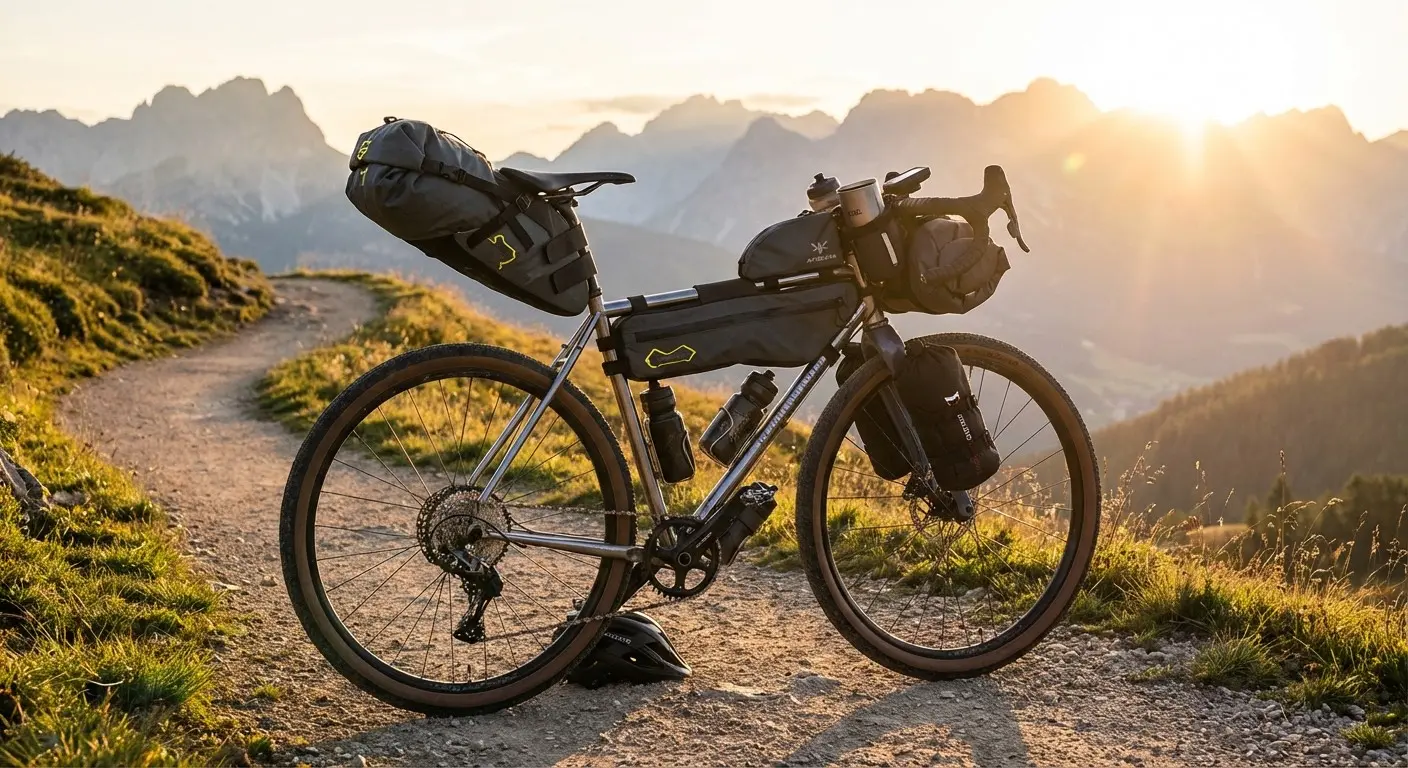
Modern bikepacking bags solve this by strapping directly to your frame, handlebars, and seatpost. As BIKEPACKING.com's gear philosophy explains, the weight stays centered and low, preserving your bike's handling characteristics even when fully loaded. No racks required—just straps, buckles, and clever design.
The three-bag system has become the gold standard: a frame bag for heavy essentials, a saddle pack for bulky lightweight items like sleeping gear, and a handlebar roll for quick-access layers and camp supplies. Together, they can carry everything you need for multi-day adventures while keeping your bike nimble enough for technical terrain.
Here's what we recommend for 2025.
For deep dives into each bag category, see our guides on frame bags, saddle bags, and handlebar bags. For complete gear system guidance, check our Complete Bikepacking Bag & Storage Guide.
The Three Types of Bikepacking Bags
Before diving into specific products, understand what each bag type does best:
Frame Bags
Frame bags fit inside your main triangle and carry the heaviest items—tools, water, food, and electronics. Because the weight sits low and centered, frame bags have minimal impact on handling. Full-frame bags maximize capacity but block water bottle mounts. Half-frame or wedge bags preserve bottle access.
Saddle Bags (Seat Packs)
Saddle bags attach to your seatpost and saddle rails, extending behind the seat. They're ideal for lightweight but bulky items like sleeping bags, tents, and extra clothing. Look for designs with internal stiffeners to prevent swaying on rough terrain.
Handlebar Bags
Handlebar bags carry quick-access items at the front of the bike. Most use a harness system with a removable dry bag—perfect for stuffing in a puffy jacket or shelter without unpacking everything. Avoid overloading; too much weight up front affects steering.
Featured Products
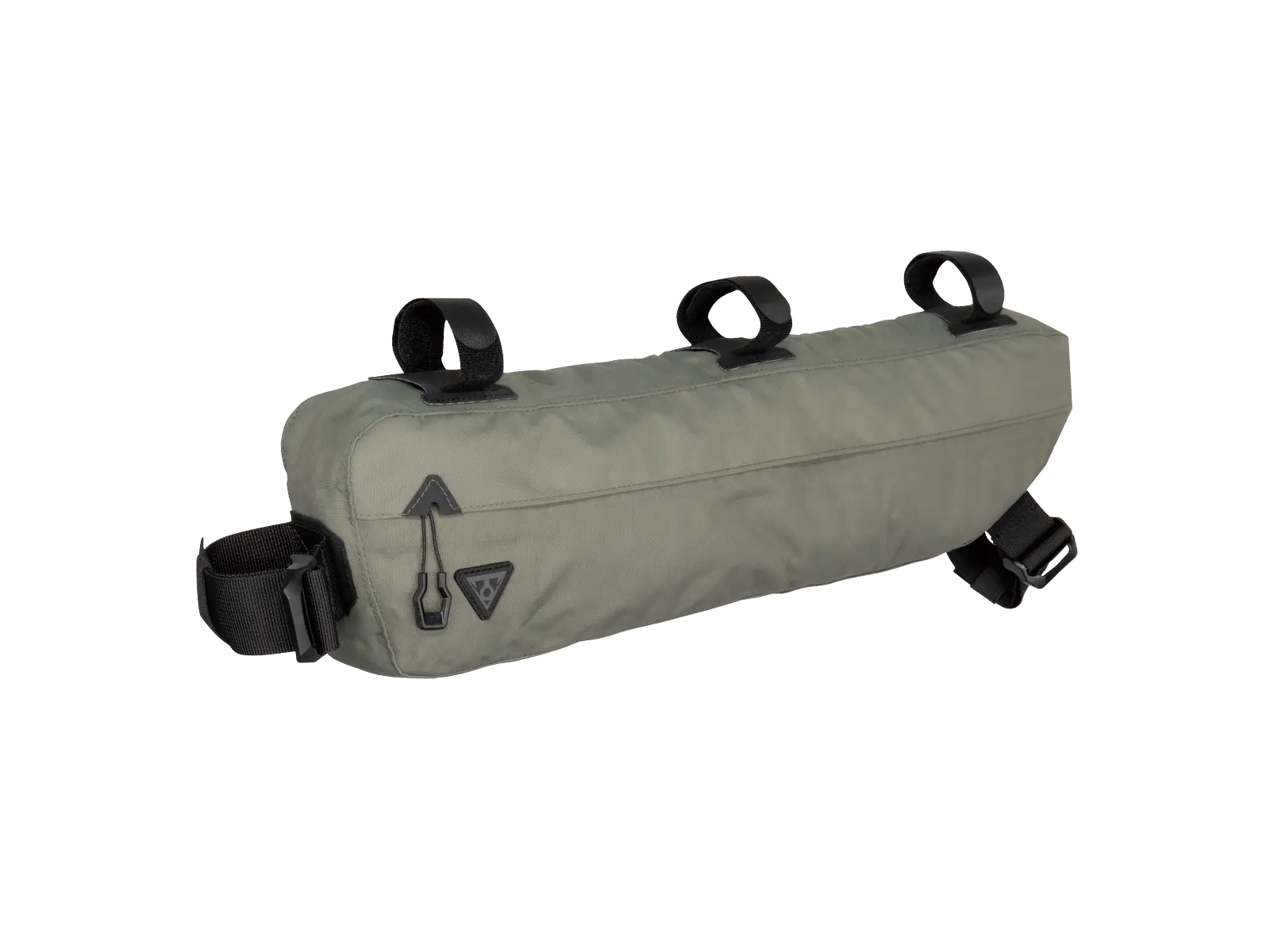
Topeak Midloader Frame Bag (4.5L)
The Midloader hits the sweet spot for most bikepackers: enough capacity for tools, snacks, and electronics without completely blocking your frame. Dual-side zipper access means you can grab what you need from either side of the bike. The water-resistant construction handles splashes and light rain, while hook-and-loop mounting fits most frame geometries with top tube diameters from 45-66mm. Topeak's attention to detail shows in small touches like internal pockets for organization and reinforced contact points that protect your frame's finish. Available in 3L, 4.5L, and 6L sizes.
- Dual-side zipper access
- Water-resistant construction
- Hook-and-loop mounting fits most frames
- Internal organization pockets
- Available in 3 sizes (3L, 4.5L, 6L)
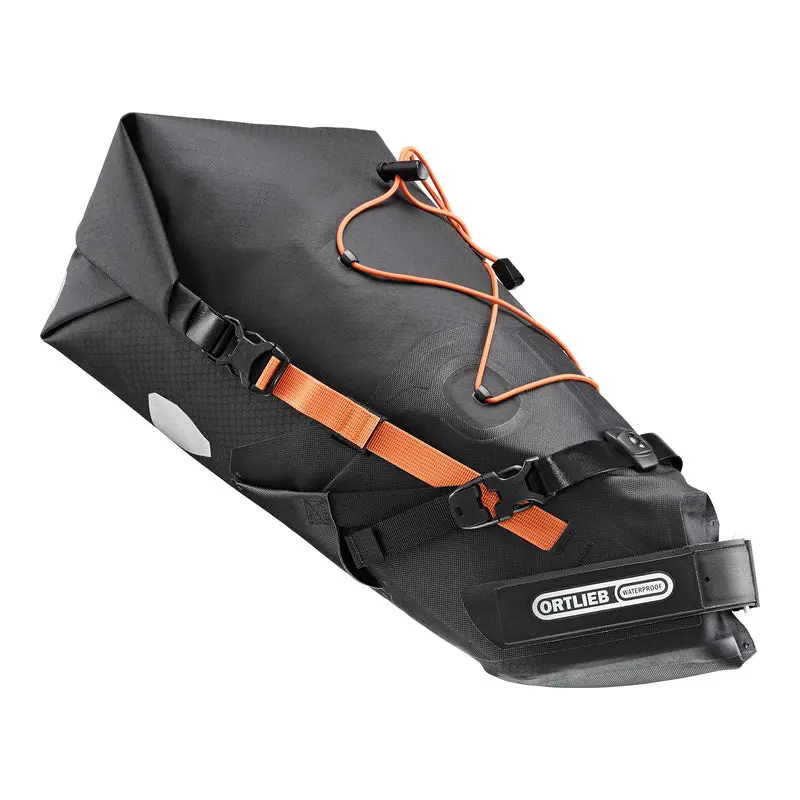
Ortlieb Seat Pack (11L)
When you need bombproof waterproofing, Ortlieb delivers. The Seat Pack uses the same welded construction and roll-top closure that made their panniers legendary, adapted for bikepacking. The result is a saddle bag that keeps gear dry in genuine downpours—not just light rain. An internal air-release valve lets you compress the bag without trapping air, and the redesigned pull-string makes one-handed operation easy even with gloves. Interior reinforcement panels prevent the dreaded side-to-side sway that plagues cheaper seat packs. Yes, it costs more—but for wet-climate riding, this is the bag you want.
- Fully waterproof welded construction
- Roll-top closure with air-release valve
- Interior reinforcement prevents sway
- One-handed pull-string compression
- Made in Germany
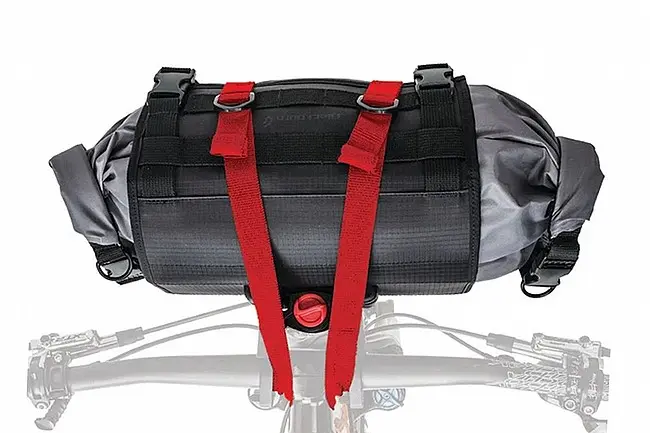
Blackburn Outpost Elite Handlebar Roll
Blackburn nailed the handlebar bag formula: a rigid harness that stays put on rough terrain, paired with a removable waterproof dry bag you can grab and go at camp. The scuba-style air bleed valve and welded seam construction keep contents dry in any weather. Unlike cheaper designs that shift and rotate, the Outpost Elite's harness locks solidly to your bars. The quick-release system lets you detach the dry bag in seconds without removing the harness. Works with both 25.4mm and 31.8mm handlebars, though Blackburn doesn't recommend carbon bars.
- Rigid harness eliminates rotation
- Waterproof removable dry bag
- Scuba-style air bleed valve
- Quick-release for fast access
- Fits 25.4mm and 31.8mm bars
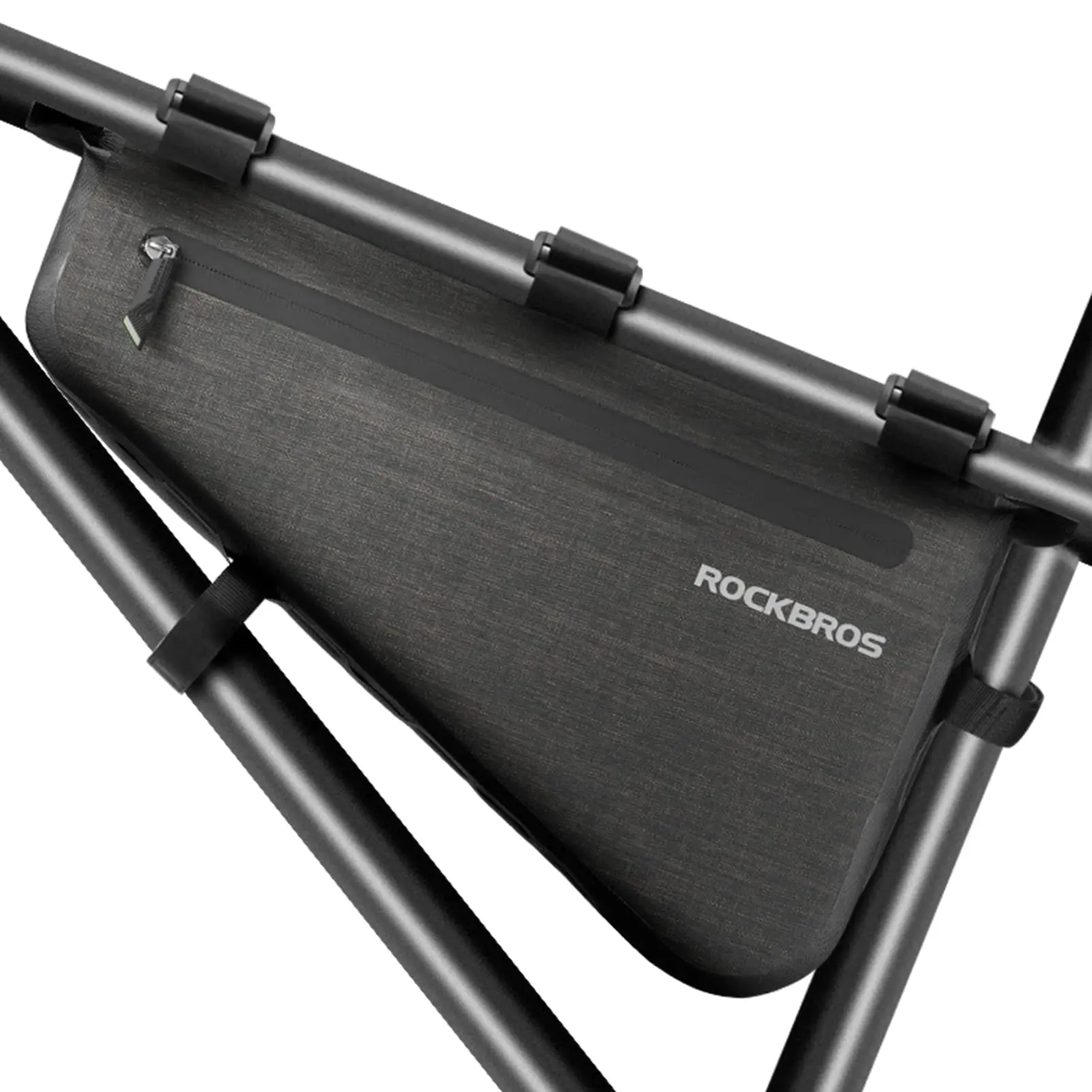
ROCKBROS Triangle Frame Bag (4L)
You don't need to spend $100+ on a frame bag. The ROCKBROS 4L Triangle Bag delivers 95% waterproofing thanks to seamless heat-press construction, plus enough capacity for tools, snacks, and a spare tube. The triangular shape maximizes use of your frame's main triangle while maintaining water bottle clearance on most bikes. Dual zippers provide access from both sides. At this price point, some compromises exist—the mounting straps aren't as refined as premium options, and the zippers aren't fully waterproof—but for fair-weather bikepackers or those testing the waters, this bag punches well above its weight class.
- 95% water resistance
- Seamless heat-press construction
- Dual-side zipper access
- Budget-friendly price point
- 840D nylon durability
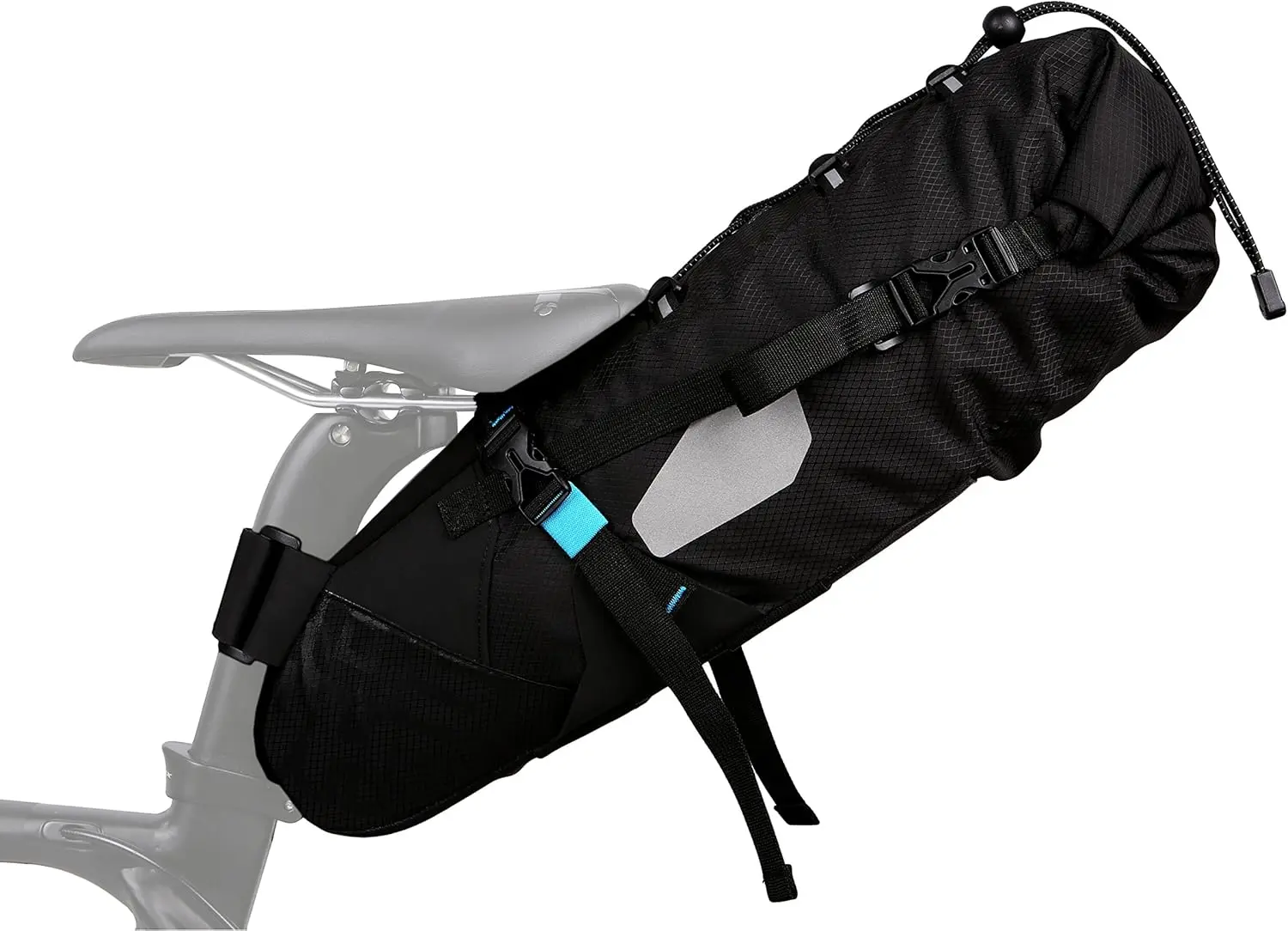
Roswheel ATTACK Saddle Bag (3-10L)
The ATTACK series gives you expandable capacity without the premium price tag. The roll-top design lets you adjust volume from 3L for day rides up to 10L for overnight adventures—stuff in a sleeping bag or leave it collapsed for minimal bulk. Waterproof fabric with all-weather lining handles wet conditions better than you'd expect at this price. The mounting system uses two seatpost straps plus saddle rail attachment for secure positioning. Reflective accents add nighttime visibility. For bikepackers who want real capability without breaking the bank, the ATTACK delivers.
- Expandable 3-10L capacity
- Roll-top waterproof design
- All-weather lining
- Dual seatpost + saddle rail mount
- Reflective accents for visibility
How to Build Your Bag System
Start with a frame bag—it's the most versatile and affects handling the least. Add a saddle pack when you need overnight capacity. Handlebar bags come last; they're great for quick access but affect steering most noticeably.
Suggested Load Distribution:
- Frame bag: Tools, tubes, pump, electronics, snacks, valuables (heaviest items)
- Saddle pack: Sleeping bag, tent/bivy, extra clothing (bulky, lightweight items)
- Handlebar bag: Rain jacket, camp shoes, toiletries (quick-access items)
Keep weight balanced side-to-side and as low as possible. Test your setup on a short ride before committing to a multi-day trip. For detailed packing strategies, see our weight distribution guide.
The First Year Evolution
Here's how most bikepackers' bag systems evolve in their first year—learn from others' progression:
Trip 1-2: "Do I really need all this capacity?" You brought too much stuff. The bags work fine, but you realize you only used half what you packed.
Trip 3-4: "I need easier snack access." You add a top tube bag after realizing you never ate enough because food was buried in your frame bag.
Trip 5-6: "Water is always a problem." You add fork cages after running dry on a hot day when your two frame bottles weren't enough.
Trip 7-8: "My saddle bag sways too much." You either learn to pack it better (compression is everything) or upgrade to a bag with better stability features.
By year's end: Your setup looks nothing like what internet recommendations suggested. It's weird, personal, and works perfectly for how you actually ride.
FAQ
Do I need all three bag types?
Not necessarily. For day rides or fast overnight trips, a frame bag alone might suffice. As trip length and gear requirements increase, add saddle and handlebar bags. Many bikepackers start with just a frame bag and saddle pack, adding handlebar storage later.
Will bikepacking bags fit my bike?
Most bags use adjustable straps designed for various frame sizes. However, full-suspension mountain bikes, small frames, and bikes with unusual geometry may have limited frame bag options. Measure your frame triangle before buying.
Waterproof vs. water-resistant—does it matter?
For fair-weather riding, water-resistant bags work fine. If you ride in genuine rain or ford streams, invest in fully waterproof construction like Ortlieb's welded bags. A garbage bag liner works as cheap insurance for water-resistant bags.
How much total capacity do I need?
For supported bikepacking races with resupply options, 15-20L total often suffices. Self-supported multi-day trips typically need 25-40L depending on climate and gear choices. Ultralight bikepackers can go lower; comfort-focused riders may want more.
Can I use bikepacking bags for commuting?
Absolutely. A frame bag works great for daily essentials, and many saddle bags are small enough for commuter use. The no-rack design means easy on/off when you want to ride unloaded.
For complete gear recommendations beyond bags, see our Complete Bikepacking Gear Guide. Building a setup on a budget? Check our Budget Bikepacking Setup Under $500.