First Aid Kits for Bikepackers: What to Carry
20+ years testing gear in Colorado backcountry
Medical Self-Sufficiency
When you're miles from the nearest road, first aid isn't optional—it's the difference between continuing your trip and needing rescue. Bikepacking injuries are usually minor: blisters, scrapes, muscle pain, insect stings. But minor problems become major ones without basic supplies to address them.
The goal isn't carrying a complete emergency room. It's having what you need to treat common issues, stabilize serious ones until help arrives, and continue riding when problems are manageable.
This guide covers pre-made kit options, how to customize for your specific needs, and the skills that make supplies useful.
For complete safety gear, see our Emergency Gear Guide.
Pre-Made Kits vs. DIY
Pre-Made Kit Advantages
- Curated contents: Someone with medical knowledge assembled the supplies
- Proper packaging: Waterproof, organized, compact
- Replenishable: Replace individual items as used
- Starting point: Add personal items to a solid base
DIY Kit Advantages
- Customization: Include exactly what you use
- Weight optimization: Eliminate supplies you won't need
- Cost savings: May be cheaper for basic kits
- Personal medications: Must be added regardless
Recommended Approach
Start with a quality pre-made kit, then customize. Add personal medications, remove items you'll never use, and adjust for specific trip conditions.
Featured Products
Adventure Medical Kits Ultralight/Watertight .7
The Ultralight/Watertight .7 hits the sweet spot for most bikepackers—comprehensive enough for multi-day trips, light enough to always carry. The waterproof DryFlex inner bag keeps supplies dry through stream crossings and rain. Contents cover wound care, blister treatment, medications, and basic tools like tick removers. At under 6 ounces, it fits easily in a frame bag or handlebar pack. The organized pouches let you find what you need quickly. For trips up to 3 days with 1-3 people, this kit provides genuine capability without unnecessary bulk.
- Waterproof construction
- Under 6 oz weight
- 3-person/3-day capacity
- Organized pouches
- Tick remover included
Adventure Medical Kits Ultralight/Watertight .5
For overnighters and weight-conscious minimalists, the .5 kit provides essential supplies in a truly ultralight package. At 3.5 ounces, it barely registers in your pack. Contents focus on the most common needs: wound cleaning, bandaging, blister care, and basic medications. The waterproof packaging protects supplies without adding weight. It won't handle extended trips or serious injuries, but for weekends with reasonable access to civilization, it's sufficient. Many bikepackers carry this even on day rides for basic trail-side first aid.
- 3.5 oz ultralight
- Waterproof DryFlex bag
- Essential supplies only
- Fits in jersey pocket
- Weekend-trip focused
Adventure Medical Kits Ultralight Pro
For week-long expeditions or group trips, the Ultralight Pro expands capability significantly. CPR mask, irrigation syringe, wound closure strips, and comprehensive wound care supplies prepare you for more serious situations. The larger kit serves 1-4 people for up to 7 days. Weight increases to around 10 ounces, but so does capability. If you're leading groups, traveling in remote areas, or expect extended time between resupply, the Pro version provides meaningful safety margin.
- Extended trip capacity
- CPR mask included
- Wound closure strips
- Irrigation syringe
- 1-4 people, up to 7 days
What to Carry: Category Breakdown
Wound Care
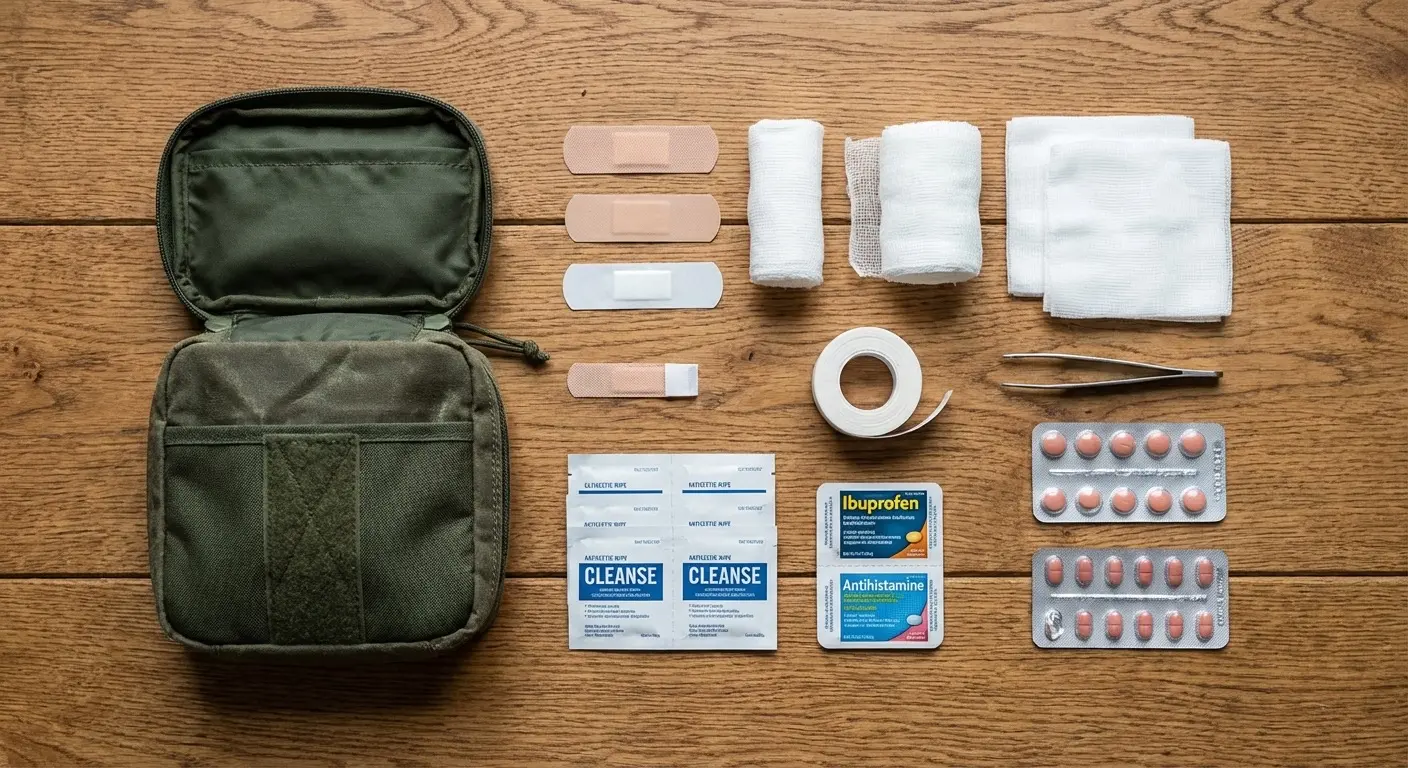
Essential supplies:
- Adhesive bandages (various sizes)
- Gauze pads (2x2 and 4x4)
- Medical tape
- Antiseptic wipes
- Antibiotic ointment (single-use packets)
- Butterfly closures or wound closure strips
Why it matters: Road rash, cuts from tools or branches, and scrapes from falls are common bikepacking injuries. Clean wounds, apply antibiotic ointment, and cover to prevent infection.
Blister Care
Essential supplies:
- Moleskin or blister pads
- Alcohol wipes (for cleaning before application)
- Medical tape (for securing moleskin)
- Needle or safety pin (for draining, if necessary)
Why it matters: Foot blisters from hiking, hand blisters from gripping, and saddle sores all respond to proper care. Untreated blisters become infected or debilitating.
Medications
Consider carrying:
- Pain reliever (ibuprofen or acetaminophen)
- Anti-diarrheal (Imodium)
- Antihistamine (Benadryl)
- Electrolyte tablets
- Personal prescriptions
Why it matters: Pain relief keeps you moving. Anti-diarrheal prevents trip-ending GI issues. Antihistamines treat allergic reactions and help with sleep.
Note: Pack medications in original packaging or clearly labeled containers for border crossings.
Tools and Accessories
Essential supplies:
- Tweezers or splinter picker
- Tick remover (in tick country)
- Safety pins
- Medical tape
- Scissors (or use multi-tool)
- SAM splint (for extended remote trips)
Why it matters: Splinter and tick removal prevents complications. Tape and splints stabilize injuries until proper care is available.
Customizing Your Kit
Add Based on Conditions
Hot weather:
- Extra electrolytes
- Sunscreen (if not in toiletry kit)
- Burn treatment gel
Cold weather:
- Hand warmers
- Extra tape (cold affects adhesive)
- Knowledge of hypothermia signs
Bug season:
- Extra antihistamine
- Sting relief wipes or gel
- Tick remover (essential)
Remote routes:
- Wound closure strips
- SAM splint
- Irrigation syringe
- Emergency space blanket
Add Personal Items
Prescription medications: Always carry in addition to kit contents
Allergy medications: EpiPen if prescribed; antihistamines regardless
Known conditions: Asthma inhaler, insulin, etc.
Remove What You Won't Use
Pre-made kits include items for broad audiences. Remove:
- Supplies you don't know how to use
- Redundant items
- Medications you'd never take
- Items past expiration
Keep kits lean. You're more likely to carry a light kit than leave a heavy one behind.
Kit Location and Access
Where to Pack First Aid
Accessible location: You need first aid when you need it—not after unpacking everything.
Good locations:
- Frame bag (top or side pocket)
- Handlebar bag (accessible compartment)
- Top tube bag (if kit is small enough)
Bad locations:
- Bottom of saddle bag
- Deeply packed in frame bag
- Anywhere requiring full unload to access
Waterproofing
Even "waterproof" kits deserve extra protection:
- Keep in dry bag if using non-waterproof kit
- Replace contents if kit gets wet
- Check waterproof seals before trips
Marking for Others
In emergency, others may need to find your kit. Consider:
- Distinctive color or marking
- Telling riding partners where it's located
- Standard first aid symbol if visible
Skills Matter More Than Supplies
Basic Skills Everyone Should Know
Wound cleaning: Irrigate with clean water, remove debris, apply pressure for bleeding.
Blister treatment: Clean, drain if necessary (needle sterilized in flame), apply protective covering.
Splinting: Immobilize suspected fractures using sticks, trekking poles, or SAM splint.
Tick removal: Grasp near head with tweezers, pull straight out slowly, save tick if concerned about disease.
Recognizing serious problems: When to stop riding, when to seek help, when to call for rescue.
Training Resources
Wilderness First Aid (WFA): 16-hour course covering backcountry medical scenarios. NOLS Wilderness Medicine is the gold standard. Highly recommended for remote riders.
Wilderness First Responder (WFR): 80-hour comprehensive course. Overkill for most bikepackers but valuable for guides or frequent remote travelers.
CPR/AED: Basic life support skills. Red Cross and many organizations offer short courses.
Online resources: REI Expert Advice, NOLS, and Wilderness Medical Associates offer online introductions.
Kit Sizing by Trip Type
Overnighters (1-2 nights)
Kit: Ultralight/Watertight .5 or minimal DIY
Contents focus:
- Wound care basics
- Blister care
- Pain relief
- Personal medications
Weight target: 2-4 ounces
Multi-Day (3-5 days)
Contents focus:
- Full wound care
- Blister care with extras
- Medications for GI issues
- Basic tools
Weight target: 4-8 ounces
Extended/Remote (1+ week)
Kit: Ultralight Pro or augmented standard kit
Contents focus:
- Comprehensive wound care
- Wound closure capability
- Splinting materials
- Extended medication supply
- CPR mask
Weight target: 8-12 ounces
Replenishing and Maintenance
After Every Trip
Check kit contents:
- Replace used items
- Note items that were missing
- Remove expired medications
- Dry out if kit got wet
The Pre-Trip First Aid Audit (5 Minutes)
Before every multi-day trip, run through this quick check:
- Open every compartment. Visually confirm supplies are present and intact
- Check medication dates. Especially ibuprofen and antibiotic ointment—these degrade
- Verify adhesives. Peel back one bandage edge—if it doesn't stick well, replace the batch
- Test your knowledge. Can you name how you'd treat a serious blister? A deep cut? If unsure, review before the trail
- Confirm location. Is your kit packed where you can reach it without unpacking everything?
This habit catches problems before they matter. The 5 minutes before your trip is worth far more than discovering issues mid-adventure.
Annual Maintenance
Even unused, kits need attention:
- Check all expiration dates
- Replace adhesives (tape, bandages) that may have degraded
- Verify waterproof seals still function
- Review contents against current knowledge
Restocking Sources
Adventure Medical Kits sells refill supplies. Pharmacies and outdoor stores stock common items. Keep a list of your kit's contents for efficient restocking.
When First Aid Isn't Enough
Knowing Your Limits
First aid is first response, not definitive care. Seek professional help for:
- Deep cuts that won't stop bleeding
- Suspected fractures
- Head injuries with confusion
- Allergic reactions with breathing difficulty
- Severe GI illness with dehydration
- Any injury that prevents safe riding
Emergency Communication
First aid supplies are useless if you can't call for help when needed.
Options:
- Cell phone (limited coverage on many routes)
- Satellite communicator (inReach, SPOT)
- Personal locator beacon (PLB)
- Satellite phone
For remote routes, satellite communication provides genuine safety margin. Our Emergency Gear Guide covers communication devices and other essential backup equipment.
FAQ
What's the most important first aid item?
Knowledge. All the supplies in the world won't help if you don't know how to use them. After that: wound cleaning supplies and basic bandages cover most situations.
Should I carry a SAM splint?
For extended remote trips, yes. For weekends with reasonable access, probably not—improvise with sticks or bike parts if needed.
How often do medications expire?
Most OTC medications last 1-2 years. Prescription medications vary. Check dates annually and replace as needed.
What about snake bite kits?
Modern medical consensus: don't carry them. They're ineffective and may cause harm. In snake country, learn to identify venomous species and get to medical care quickly.
Is wilderness first aid training worth it?
Yes, especially if you ride remote routes or travel with groups. The 16-hour WFA course provides practical skills and confidence. Many first-time bikepackers underestimate safety preparation—see our guide on Common Bikepacking Mistakes to avoid other pitfalls.
Quick Kit Checklist
Wound Care:
- Bandages (various sizes)
- Gauze pads
- Medical tape
- Antiseptic wipes
- Antibiotic ointment
- Butterfly closures
Blister Care:
- Moleskin
- Alcohol wipes
- Medical tape
Medications:
- Pain reliever
- Anti-diarrheal
- Antihistamine
- Personal prescriptions
Tools:
- Tweezers
- Tick remover
- Safety pins
Be Prepared, Stay Safe
The best first aid kit is one you carry consistently and know how to use. Start with a quality pre-made kit, customize for your needs, and invest in basic training.
Most bikepacking injuries are minor inconveniences with proper supplies. The kit in your bag provides confidence to handle problems and continue your adventure.
For complete safety planning, see our Emergency Gear Guide. For trip planning that minimizes risk, check our First Trip Planning Guide.
Ride prepared. Ride far.