10 Bikepacking Mistakes That Ruin Trips (Avoid These)
20+ years testing gear in Colorado backcountry
Learning the Hard Way (Or Not)
Every experienced bikepacker has stories. The time they packed too much. The ride they didn't eat enough. The route that looked reasonable on a map but wasn't. These lessons usually come from personal experience—often uncomfortable experience.
You don't have to repeat every mistake yourself. Learning from others' failures is faster, cheaper, and far less painful than discovering problems mid-trip in the middle of nowhere.
As Bicycling magazine's experts note, these mistakes appear consistently across first-timers worldwide.
This guide covers the most common bikepacking mistakes, why they happen, and how to avoid them. Consider it condensed wisdom from hundreds of trips that went wrong so yours can go right.
For complete preparation, see our Beginners Guide and First Trip Planning.
Gear Mistakes
Packing Too Much
The mistake: Bringing everything "just in case." Multiple clothing changes, backup for every tool, gear you've never used.
Why it happens: Fear of being unprepared. The comfort of having options. Inexperience judging what's actually necessary.
The consequences: Heavier bike, slower climbing, more fatigue, less enjoyment, stressed bag zippers.
The fix:
- Follow the "one is none, two is one" rule only for truly critical items
- Lay out everything, remove 30%, then remove another 20%
- Ask for each item: "What happens if I don't have this?"
- Test your setup on a short overnight before major trips
For efficient packing, see our Packing List.
Skimping on Sleep System
The mistake: Choosing the cheapest sleeping bag and pad to save money or weight.
Why it happens: Sleep gear is expensive. Weight savings are tempting. How bad could one night be?
The consequences: Poor sleep destroys multi-day trips. You can't perform if you can't recover.
The fix:
- Invest in quality sleep gear—it's non-negotiable
- Choose temperature ratings conservatively (colder than expected)
- Test your setup before depending on it
See our Sleep Gear Guide and Sleeping Pad Guide.
Wrong Bag Configuration
The mistake: Improper weight distribution, overstuffed bags, poor organization.
Why it happens: Bags look roomy in photos. Packing seems intuitive. Nobody teaches bag loading.
The consequences: Unstable handling, bags rubbing, difficulty accessing essentials, premature wear.
The fix:
- Heavy items low and centered (frame bag)
- Light bulky items in saddle bag
- Quick-access items in handlebar and top tube bags
- Never exceed bag capacity—compression is not infinite
For proper technique, see our Weight Distribution Guide.
Ignoring Repair Kit
The mistake: Carrying inadequate repair tools or not knowing how to use them.
Why it happens: Repairs are boring to think about. Nothing's broken yet. Skills seem intimidating.
The consequences: Simple mechanical issues become trip-ending emergencies.
The fix:
- Carry appropriate multi-tool and patch kit
- Learn to fix flats, adjust brakes, repair chains before you leave
- Practice at home—not trailside in the dark
Planning Mistakes
Overestimating Daily Mileage
The mistake: Planning routes based on road cycling fitness. "I can ride 60 miles easy."
Why it happens: Underestimating the impact of weight, terrain, and accumulated fatigue.
The consequences: Falling behind schedule, riding after dark, exhaustion, cutting trips short.
The fix:
- Plan for 50-70% of your typical road distance
- Account for elevation gain (add 1 hour per 1,000 feet)
- Build in buffer days for weather or fatigue
- Shorter first days while finding your loaded rhythm
Inadequate Water Planning
The mistake: Assuming water will be available, not checking sources, insufficient carrying capacity.
Why it happens: Maps don't show dry seasons. Water seems abundant in green areas. Carrying water is heavy.
The consequences: Dehydration is dangerous. It degrades performance before you feel thirsty.
The fix:
- Research every water source on your route
- Carry more capacity than you think you need
- Never pass reliable water without filling up
- Have backup filtration
No Bail-Out Plan
The mistake: Only knowing the intended route. No alternatives if things go wrong.
Why it happens: Optimism. Focusing on the ideal scenario. Not wanting to plan for failure.
The consequences: When problems occur, you have no good options.
The fix:
- Know where roads intersect your route
- Identify towns accessible from the trail
- Have emergency contact numbers saved offline
- Know general direction to civilization at all points
Ignoring Weather
The mistake: Checking weather once before departure and ignoring it thereafter.
Why it happens: Weather seems manageable. Updates require connectivity. Denial is comfortable.
The consequences: Getting caught in dangerous conditions without appropriate gear or shelter.
The fix:
- Check weather obsessively before and during trips
- Adjust plans when forecasts change
- Carry rain gear always, even if forecast is clear
- Know the signs of incoming weather
Riding Mistakes
Starting Too Fast
The mistake: Beginning each day—and the trip itself—at an unsustainable pace.
Why it happens: Fresh legs feel good. Excitement overrides reason. Comparing to unloaded riding.
The consequences: Early fatigue, reduced daily mileage, accumulated exhaustion, injury risk.
The fix:
- Start slower than feels natural
- The goal is finishing strong, not starting fast
- Save energy for day 3 and beyond
- Find your sustainable loaded pace
Not Eating Enough
The mistake: Underestimating caloric needs, skipping meals, rationing food excessively.
Why it happens: Riding suppresses appetite. Food is heavy. Town seems close enough.
The consequences: Bonking. Once you're depleted, recovery takes hours, not minutes.
The fix:
- Eat before you're hungry
- Keep snacks accessible (top tube bag, jersey pocket)
- 200-300 calories per hour while riding
- Never ration below minimum intake
- Set a timer if you forget to eat (every 45 minutes)
Poor Nutrition Balance
The mistake: Relying on convenience store junk food for all calories.
Why it happens: It's available, cheap, and easy. Sugar tastes good when depleted.
The consequences: Energy crashes, digestive issues, reduced recovery, declining performance.
The fix:
- Balance quick carbs with protein and fat
- Real food when possible
- Carry emergency nutrition that isn't just sugar—energy bars with protein are better than pure sugar gels
- Electrolyte tablets, not just water
Ignoring Warning Signs
The mistake: Pushing through pain, fatigue, or mechanical issues that are clearly worsening.
Why it happens: Goal fixation. Not wanting to seem weak. Underestimating severity.
The consequences: Minor problems become major. Injuries worsen. Bikes break completely.
The fix:
- "If in doubt, check it out"
- Small adjustments early prevent big problems later
- Knee pain doesn't go away—it gets worse
- A weird noise means something
Camp Mistakes
Late Camp Selection
The mistake: Riding until you're too tired to care, then searching for a campsite in the dark.
Why it happens: Wanting more miles. Not monitoring time. Unfamiliar with camp-finding rhythm.
The consequences: Poor sites, unsafe locations, rushed setup, cold dinner.
The fix:
- Start looking for camp 1-2 hours before dark
- Good sites go fast in popular areas
- Know what a good site looks like for your setup
- It's okay to stop early for a great spot
Improper Tent Site
The mistake: Not checking ground conditions, drainage, overhead hazards before setting up.
Why it happens: Fatigue. Darkness. Just wanting to sleep.
The consequences: Flooding, uncomfortable sleep, safety hazards, damaged gear.
The fix:
- Check for drainage (don't camp in low spots)
- Clear ground of rocks and sticks
- Look up—dead branches kill people
- Consider wind direction and sun exposure
Neglecting Food Storage
The mistake: Keeping food in or near your shelter in bear country or areas with wildlife.
Why it happens: Convenience. Skepticism that animals are really a concern. Fatigue.
The consequences: Dangerous wildlife encounters. Lost food supply. Damaged gear.
The fix:
- Research wildlife considerations for your route
- Hang food where required
- Use bear canisters in bear country
- Even mice can destroy a trip—secure food always
Navigation Mistakes
Over-Reliance on Technology
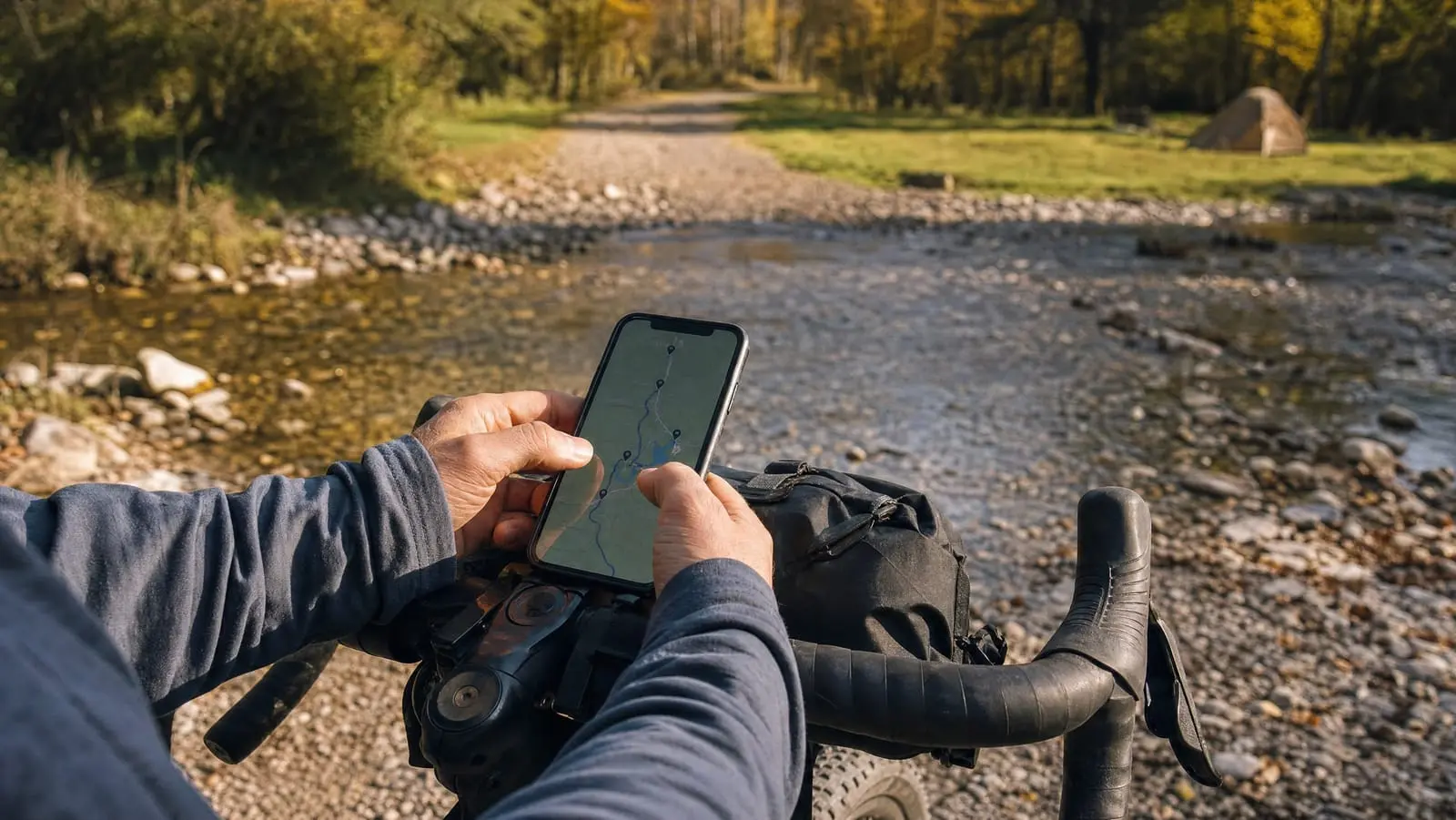
The mistake: Depending entirely on phone GPS with no backup.
Why it happens: Phones are convenient. Maps are heavy. GPS seems infallible.
The consequences: Dead battery, broken screen, or lost signal leaves you genuinely lost.
The fix:
- Download offline maps before every trip
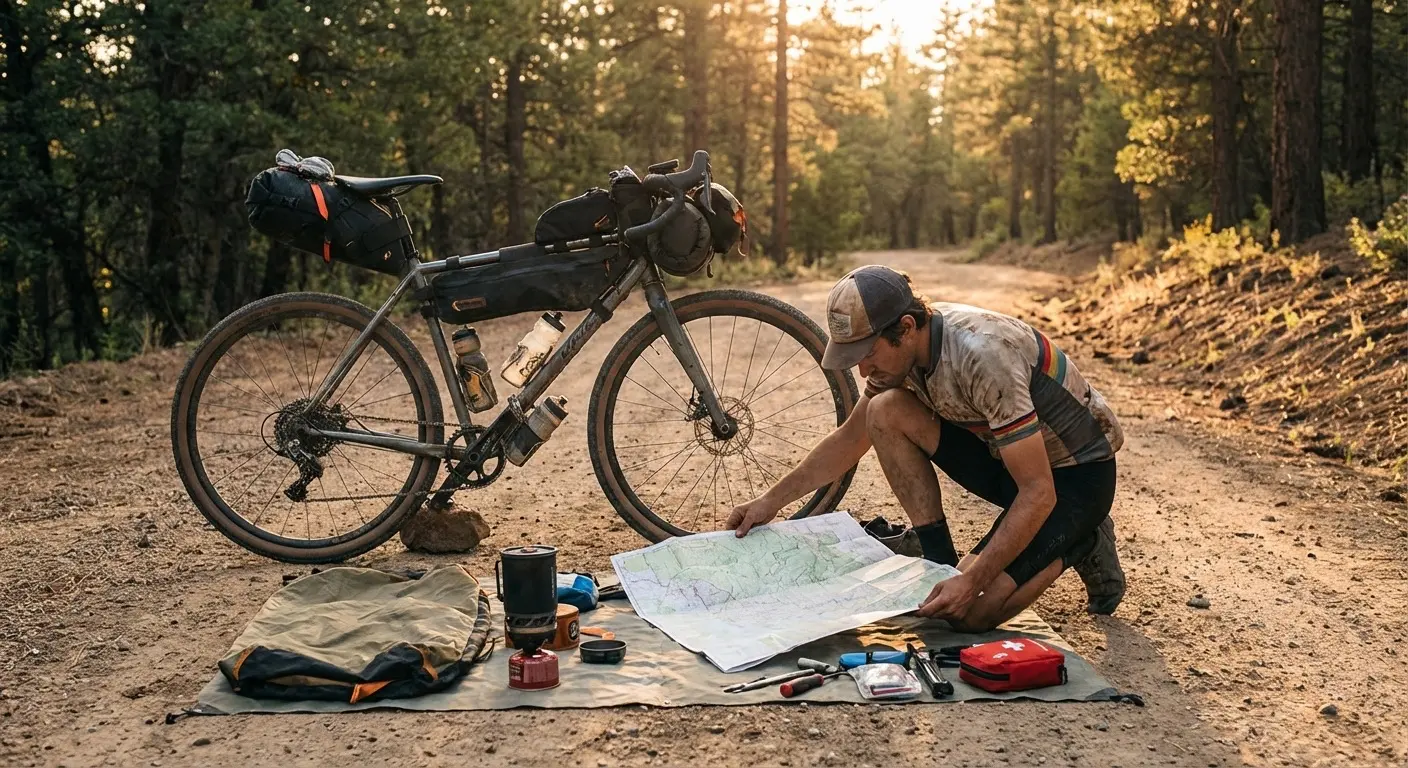
- Carry backup navigation (cycling computer or paper maps)
- Know general orientation to roads and towns
- Battery management strategy for multi-day trips
Not Pre-Riding the Route
The mistake: Showing up to a major bikepacking route with zero familiarity.
Why it happens: Travel logistics. Time constraints. Assuming a GPS track is sufficient.
The consequences: Surprises that could have been anticipated. Sections harder than expected.
The fix:
- Study maps thoroughly before departure
- Read trip reports from others
- Identify challenging sections in advance
- Know what to expect, at least roughly
Ignoring Elevation
The mistake: Planning based on distance without accounting for climbing.
Why it happens: Mileage is simple to measure. Elevation seems abstract until you're in it.
The consequences: 40 miles with 6,000 feet of climbing is not a 40-mile day.
The fix:
- Review elevation profiles for every section
- Plan extra time for climbing days
- Know where major climbs are and when you'll hit them
- Consider loaded climbing pace, not unloaded
Social Mistakes
Not Telling Anyone
The mistake: Heading into the backcountry without telling someone your plans.
Why it happens: Independence. Spontaneity. Not wanting to worry people.
The consequences: If something goes wrong, no one knows to look for you.
The fix:
- Always tell someone your route and timeline
- Establish check-in schedule
- Consider a satellite communicator for remote routes
- Update contact if plans change
Comparing to Others
The mistake: Measuring your trip against what you see online.
Why it happens: Social media shows highlights. Comparison is human nature.
The consequences: Feeling inadequate. Missing your own experience. Unsafe decisions to keep up.
The fix:
- Your trip is for you
- Highlight reels aren't reality
- Finishing is success—speed and style are irrelevant
- Enjoyment matters more than achievement
First-Trip Specific Mistakes
Too Ambitious First Route
The mistake: Planning a week-long epic as your first bikepacking trip.
Why it happens: Excitement. Wanting the "real" experience. Underestimating learning curve.
The consequences: Problems compound. No opportunity to adjust before serious commitment.
The fix:
- First trip: one night, close to home, with bail-out options
- Test every system on low-stakes outings
- Build experience incrementally
- Epics will wait—learn the basics first
New Gear on New Routes
The mistake: Testing new equipment on important trips.
Why it happens: New gear is exciting. No time for testing. Seems fine in the store.
The consequences: Discovering problems when you can't fix them.
The fix:
- Test all gear on short trips first
- Sleep in your tent at home
- Ride loaded on familiar trails
- Save the new stuff for trips #2+
Trying to Learn Everything at Once
The mistake: Changing too many variables simultaneously.
Why it happens: Enthusiasm. Wanting to optimize immediately. Information overload.
The consequences: When things go wrong, you don't know which factor caused it.
The fix:
- Change one thing at a time
- Master basics before optimizing
- Simple systems are more reliable than complex ones
- Experience teaches better than research
FAQ
What's the most common mistake beginners make?
Packing too much. Nearly universal. Most first-time bikepackers carry 30-50% more than necessary. The only cure is experience—each trip teaches what you actually needed.
How do I know if I'm making a mistake before it's too late?
Discomfort is a signal. If something feels wrong—physically, mechanically, or situationally—investigate. Small problems become big problems when ignored.
Should I be embarrassed about making mistakes?
No. Every experienced bikepacker has learned from failures. Mistakes are part of the process. The goal is learning from them rather than repeating them.
What mistake has the worst consequences?
Water and navigation failures can be genuinely dangerous. Gear mistakes cause discomfort; planning mistakes can cause emergencies. Prioritize safety over comfort.
Learn and Ride
Mistakes will happen despite your best preparation. That's part of adventure. The goal isn't perfection—it's learning quickly and avoiding the same mistakes twice.
Start with manageable trips. Pay attention to what works and what doesn't. Adjust for next time. Your system will evolve with experience.
For complete preparation, see our Beginners Guide and First Trip Planning. For gear selection, check our Complete Gear Guide. For bike preparation and avoiding mechanical issues, see our Complete Bikepacking Maintenance Guide.
Make new mistakes. That means you're trying new things.