Weekend Bikepacking: Your Complete 2-Day Trip Checklist
20+ years testing gear in Colorado backcountry
Maximum Adventure, Minimal Time
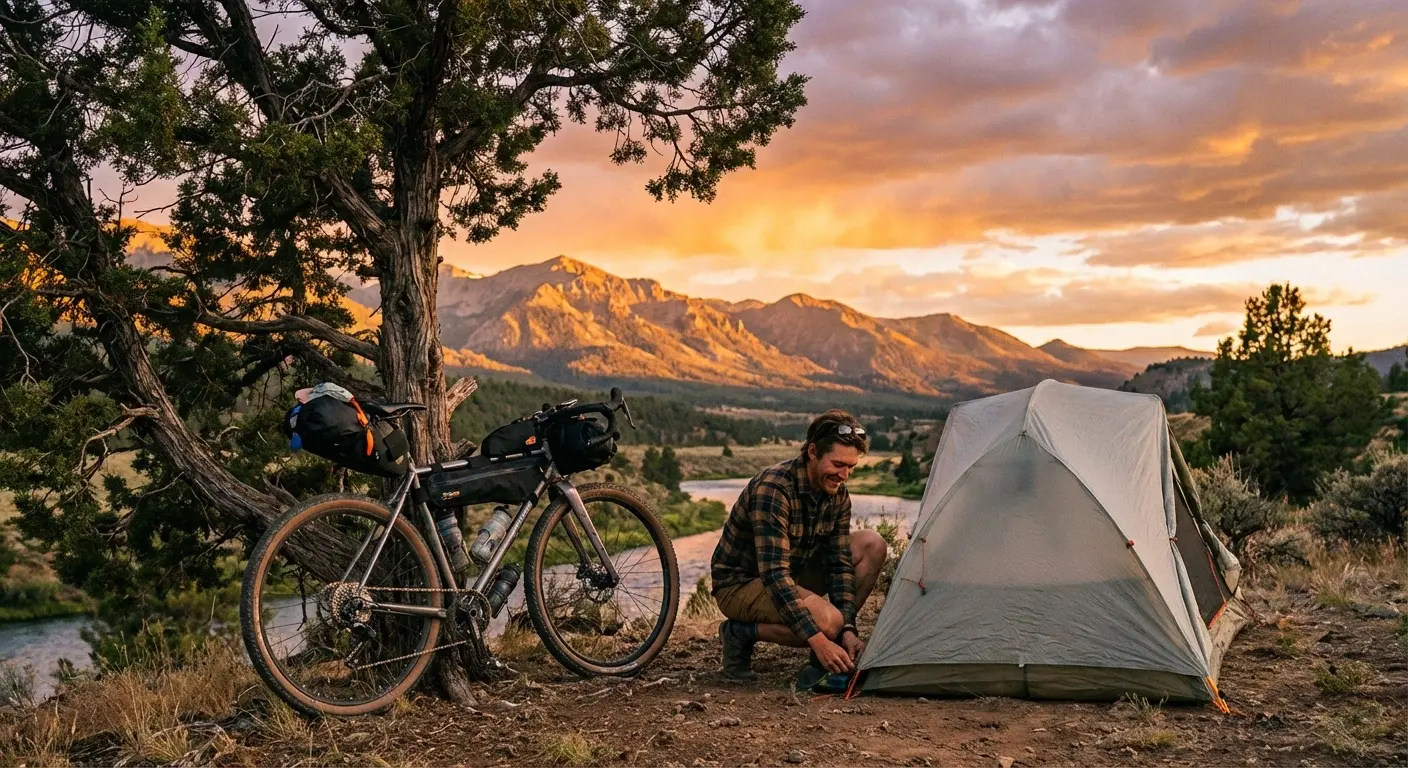
You don't need a week off to experience bikepacking. A single overnight—leave Saturday morning, return Sunday afternoon—delivers the full experience: loaded riding, camp setup, sleeping under stars, morning coffee in the wilderness, and the satisfaction of self-supported adventure.
Weekend trips are also the best training ground for longer adventures. You learn your gear, discover your limits, and refine your systems without the commitment of extended time away. As BIKEPACKING.com's overnighter guides demonstrate, many experienced bikepackers do more overnighters than week-long trips—they're the accessible core of the activity.
This guide covers everything specific to short trips: what to pack, how to plan, and strategies for maximizing limited time.
For complete trip planning, see our First Bikepacking Trip Guide.
The Weekend Format
Classic Overnight
Saturday: Ride 25-40 miles to camp, set up, cook dinner, sleep Sunday: Break camp, ride 25-40 miles home
Total: 50-80 miles over two days
This is the standard format. It's manageable for most cyclists and leaves buffer time for unexpected delays.
Out-and-Back
Ride to a destination, camp, ride back the same route. Simplest logistics—your car is right where you left it.
Advantages:
- No shuttle needed
- Familiar return route
- Easy bail-out (just turn around)
Disadvantages:
- See the same scenery twice
- Less sense of journey
Loop Route
Start and end at the same point via different routes. Best of both worlds—new scenery in both directions.
Advantages:
- Varied terrain and views
- Sense of completing a circuit
- Car waiting at finish
Disadvantages:
- Requires more planning
- Longer route options may not exist
Point-to-Point (with Shuttle)
Ride from A to B with car shuttle or pickup arranged.
Advantages:
- Pure forward progress
- Often follows natural corridors (rail trails, river routes)
- No backtracking
Disadvantages:
- Requires second vehicle or pickup
- More logistics to coordinate
- Less flexibility for route changes
Weekend Packing: Streamlined Approach
Weekend trips allow lighter packing than extended adventures. You only need enough for 24-36 hours of self-sufficiency.
What's Different for Weekends
Food: Carry everything—no resupply needed. Three meals plus snacks fit easily.
Clothing: One riding outfit, one camp outfit. That's genuinely sufficient for one night.
Repair: Basic kit only. You're never far from help or your car.
Electronics: Smaller power bank. One charge handles most phones for 36 hours.
Weekend Packing List
Sleep System:
- Tent or bivy (Best One-Person Tents)
- Sleeping bag (Best Sleeping Bags)
- Sleeping pad (Best Sleeping Pads)
Cooking (Optional):
- Stove and fuel (Stoves Guide)
- Pot and utensil
- Lighter
Food:
- Dinner (freeze-dried or simple)
- Breakfast (oatmeal, bars, coffee)
- Lunch for day 2 (sandwiches, bars)
- Snacks for riding (bars, gels, trail mix)
Clothing:
- Riding: shorts, jersey, socks, gloves
- Camp: shirt, light pants, sleep socks
- Layers: puffy jacket, rain jacket
- Warm hat if cold expected
Repair:
- Multi-tool (Best Multi-Tools)
- Spare tube
- Tire levers
- Pump or CO2
Electronics:
- Phone (charged)
- GPS device (GPS Guide)
- Lights (front and rear) (Lights Guide)
- Headlamp
- Power bank (5,000-10,000 mAh)
- Cables
Personal:
- Toothbrush
- Wet wipes
- Sunscreen
- ID, cash, cards
- First aid basics
What to Leave Home
Skip for weekend trips:
- Extra clothing changes
- Large power banks (unless shooting video)
- Extensive repair kits
- Full toiletry bags
- Books and entertainment (you'll be tired)
Route Planning for Weekends
Distance Calculation
Work backward from your available time:
Saturday:
- Morning departure: 8-9am after loading
- Riding time: 4-6 hours with breaks
- Camp arrival: 3-5pm for setup before dark
- Maximum distance: 30-45 miles for most riders
Sunday:
- Morning departure: 8-10am after breakfast
- Riding time: 3-5 hours
- Return home: Early-mid afternoon
- Maximum distance: 25-40 miles (often tired from Saturday)
Total comfortable distance: 50-80 miles
Ambitious riders can push 100+ miles, but that leaves little time to enjoy the experience.
Finding Good Weekend Routes
Best sources:
- Local bike shop recommendations
- Regional cycling clubs
- BIKEPACKING.com Overnighters - curated overnight routes worldwide
- Ride with GPS - search by distance
- Komoot - route discovery with elevation profiles
- State park trail systems
Ideal weekend route characteristics:
- 50-70 miles total
- Campground or established camp spot midway
- Mix of terrain (not all brutal climbing)
- Scenic payoff for the effort
- Bailout options if needed
Camp Spot Strategy
For one-night trips, you have three main options:
Campground reservation: Most reliable. Reserve ahead for popular weekends.
First-come campground: Works for less popular areas. Arrive by mid-afternoon to ensure spots.
Dispersed camping: Free camping on public land. Know the rules and have backup locations.
The Weekend Timeline
Here's how a typical weekend trip flows:
Friday Night: The Prep Ritual
Experienced bikepackers follow a consistent Friday night routine that prevents Saturday morning scrambling:
6:00pm - Weather and Route Final Check
- Review forecast for both days
- Check wind direction (headwind on day 2 is brutal when tired)
- Confirm campsite status (fires allowed? water available?)
7:00pm - Gear Layout
- Spread everything on floor by category
- Photograph your layout (helpful for future trips)
- Verify nothing missing from checklist
8:00pm - Pack and Load
- Pack each bag completely
- Mount bags on bike
- Weigh if you're curious (optional but educational)
9:00pm - Final Touches
- Charge all electronics (phone, GPS, lights, power bank)
- Prep breakfast for quick morning
- Set out riding clothes
10:00pm - Early Bed
- Pre-trip excitement causes restless sleep—budget extra time
- Set alarm for realistic wake-up (not optimistic)
This ritual takes 3-4 hours but eliminates morning chaos.
Saturday Morning
7:00am: Wake up, breakfast 8:00am: Load bike, final checks 8:30am: Depart for ride start (if driving to trailhead) 9:00am: Rolling
Saturday Riding
- Pace yourself—you're carrying weight
- Stop for snacks and photos
- Check map regularly
- Aim for camp arrival by 4-5pm
Saturday Evening
4:00pm: Arrive at camp 4:30pm: Tent setup 5:00pm: Relax, explore, swim 6:00pm: Start cooking 6:30pm: Dinner 8:00pm: Evening relaxation 9:00pm: In tent 9:30pm: Asleep
Sunday Morning
6:00am: Wake with light 6:30am: Coffee/breakfast 7:30am: Break camp, pack 8:30am: Rolling
Sunday Riding
- May feel tired—that's normal
- Don't rush—enjoy final miles
- Watch energy levels (eat!)
- Arrive home early afternoon
Food Strategy for Weekends
Keep It Simple
Weekend trips don't require elaborate meal planning. Here's a practical approach:
Saturday lunch (pre-ride or early): Eat a good meal before departure. Sandwich, leftovers, whatever's easy.
Saturday snacks: Energy bars, gels, trail mix—eat throughout the ride. You'll consume 200-400 calories per hour of riding.
Saturday dinner: The main "camping meal." Options:
- Freeze-dried backpacking meal (add hot water)
- Ramen with added protein (tuna packet, cheese)
- Pre-made sandwiches if no stove
- Tortillas with nut butter and honey
Sunday breakfast: Coffee if you want it, plus:
- Instant oatmeal
- Granola bars
- Pop-Tarts (legitimately effective)
- Cold soak overnight oats
Sunday snacks: Same as Saturday—bars, mix, gels.
Sunday lunch (post-ride): Celebrate with a proper meal at home or a restaurant.
The No-Cook Weekend
Skip the stove entirely for the lightest setup:
- Cold-soak meals (oatmeal, couscous)
- Nut butter wraps
- Cheese and crackers
- Deli meat tortillas
- Energy bars and snacks
- Town food if route passes services
You save significant weight and complexity. Many bikepackers prefer this for short trips.
Weekend Weather Strategy
The Go/No-Go Decision
For weekend trips, you have flexibility to postpone. Bad weather affects short trips more than long ones—there's no time to wait it out.
Go despite:
- Chance of brief showers
- Cool temperatures (layer up)
- Wind under 25mph
- Uncertainty in forecast
Consider postponing for:
- Sustained heavy rain (miserable camp experience)
- Extreme temperatures
- Severe weather warnings
- High winds (30+ mph)
If Weather Changes Mid-Trip
Options:
- Adjust route to include bailout
- Seek shelter earlier than planned
- Shorten day 2 to get home faster
- Embrace it (some of the best stories)
For a one-night trip, you're never far from safety. This margin makes weekend trips forgiving for weather learning.
Building Weekend Trips Into Your Practice
The Monthly Overnighter
Many serious bikepackers do monthly overnight trips. This cadence:
- Keeps gear tested and ready
- Maintains camp skills
- Provides regular adventure
- Trains for longer trips
- Discovers local routes
Even experienced bikepackers value the quick overnighter. It's not "training"—it's the core of the activity.
Weekend Trip Progression
First few trips: Established campgrounds, easy routes, conservative distances.
After you're comfortable: Wild camping, longer routes, more challenging terrain.
Advanced weekends: Epic one-night pushes, challenging conditions, technical routes.
The weekend format scales with your ability. There's always a harder, longer, more interesting overnight within driving distance.
Common Weekend Trip Mistakes
Over-Packing
You don't need three shirts for one night. Every extra ounce slows you down. Pack what the packing list says, then remove two more items.
Under-Estimating Time
"It's only 40 miles" ignores loaded bike realities. Add 50% to your usual riding time estimates. Hills take longer, breaks are more frequent, navigation requires attention.
Poor Camp Timing
Arriving at camp in the dark stresses everyone. Build generous buffer into your schedule. Arriving at 3pm beats arriving at 7pm.
Skipping the Test Ride
Never take untested gear on any trip. That new saddle bag needs a shakedown ride before the weekend.
Ignoring Weather
Checking once isn't enough. Review forecasts Friday night and Saturday morning. Conditions change, especially in mountains.
What Actually Goes Wrong (Data from Real Trips)
Based on patterns from bikepacking forums and trip reports, here's what derails weekend trips—and how to prevent each:
#1: "My phone died and I got lost" (30% of reported issues)
- Prevention: Charge to 100%, airplane mode while riding, carry power bank
- Backup: Download offline maps, carry paper backup for complex navigation
#2: "The campsite was full" (20%)
- Prevention: Reserve ahead for weekends, or have two backup options identified
- Backup: Know dispersed camping rules for your area
#3: "I bonked hard on day 2" (15%)
- Prevention: Eat 200-300 calories per hour while riding, force yourself to eat even when not hungry
- Signs: Irritability, legs feeling weak on flat ground, difficulty making decisions
#4: "My rear tire went flat and I couldn't fix it" (10%)
- Prevention: Practice changing tubes at home before the trip
- Backup: Carry two tubes (or plugs + sealant for tubeless)
#5: "I got too cold overnight" (10%)
- Prevention: Temperature ratings are optimistic—add 10-15°F buffer
- Backup: Emergency bivy weighs ounces and can save a night
Understanding these failure modes doesn't prevent all problems—but it prevents the predictable ones.
FAQ
What's the minimum fitness needed for a weekend trip?
If you can ride 30 miles comfortably unloaded, you can handle a conservative overnight (20-25 miles/day). Start with shorter distances and build up.
Can I do a weekend trip with a regular bike?
Yes. Any bike that fits your bags works. Mountain bikes, gravel bikes, touring bikes, even rigid hybrids. Avoid full suspension if possible (bag mounting is difficult).
What if I can't find a good route near me?
Drive to one. An hour or two of driving expands your options dramatically. Trailheads in national forests, state parks, and recreational areas often have excellent overnight options.
Should I do my first trip solo or with someone?
Either works. A partner adds safety margin and shared problem-solving. Solo adds flexibility and self-reliance. Both are valid.
What about wild camping vs. campgrounds?
Start with campgrounds. The guaranteed location, water access, and safety net make early trips smoother. Move to wild camping once you're comfortable with the basics.
This Weekend
You probably have a weekend available. Maybe not this one, but soon. Pick a date, find a route, check the weather, and go.
Weekend trips aren't lesser bikepacking—they're the accessible core of the activity. Some of the best adventures happen in 24 hours with a bike and a bag.
For complete planning guidance, see our First Trip Planning Guide. For gear specifics, check our Complete Gear Guide.
The weekend's waiting.