How to Convert Any Bike for Bikepacking
20+ years testing gear in Colorado backcountry
Your Bike Is Probably Ready
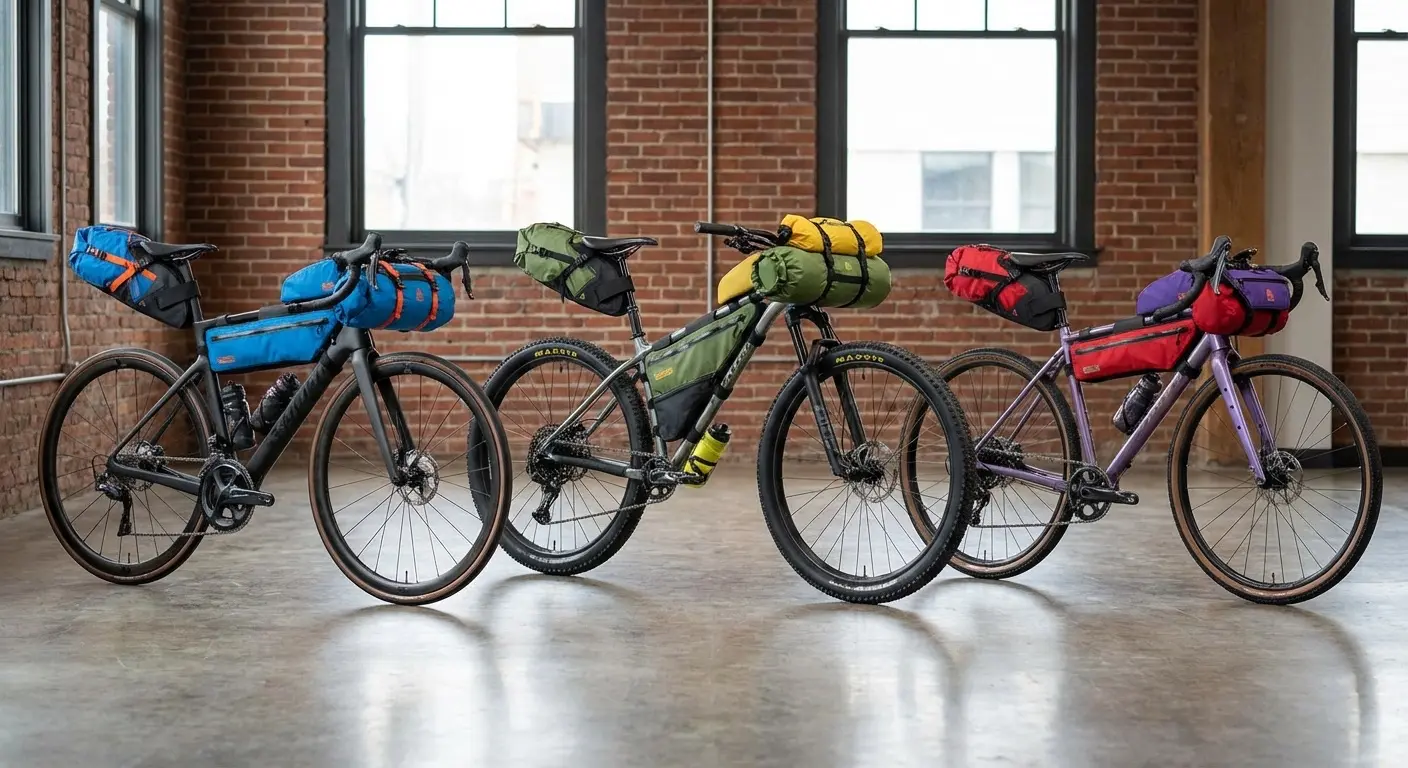
Purpose-built bikepacking bikes exist, but they're optimizations, not requirements. As Bicycling magazine notes, "the best bike for your first bikepacking trip is the one you already own." Experienced bikepackers have completed epic routes on everything from carbon road bikes to vintage steel touring frames. The bike matters less than the rider's adaptability and the bag system's compatibility.
This guide covers how to assess your existing bike, choose compatible bags, make necessary modifications, and start bikepacking without buying new wheels.
For complete bike recommendations, see our Best Bikepacking Bikes Guide.
Assessing Your Current Bike
What Every Bikepacking Bike Needs
Frame triangle space: Your frame bag goes here. Most frames work; extremely small frames or unusual geometries may limit options.
Handlebar mounting points: Handlebar bags attach via straps or cradles. Drop bars, flat bars, and riser bars all work with appropriate bag choices.
Saddle rail clearance: Saddle bags hang from your saddle rails. Standard rails work universally; some aero saddles with integrated rails require adapters.
Stable handling when loaded: Bikes with relaxed geometry handle loads better, but even twitchy race bikes work with practice.
Frame Styles and Compatibility
Road bikes: Work well for gravel roads and smooth trails. Limited clearance restricts tire options. Frame bags and seat packs attach without issues. Keep total load moderate—these frames weren't designed for heavy cargo.
Gravel bikes: Ideal starting point. Tire clearance handles varied terrain. Mount points often include three-pack bosses on forks. Geometry balances efficiency with stability.
Mountain bikes (hardtail): Excellent for rough routes. Wide tire clearance handles anything. Frame bag compatibility depends on suspension design and bottle cage mounts. Rigid forks simplify bag mounting; suspension forks work but limit options.
Mountain bikes (full suspension): Challenging for bikepacking. Rear suspension moves relative to saddle, complicating seat pack mounting. Frame triangles often interrupted by shock linkage. Possible but requires creative solutions.
Hybrids and flat-bar bikes: Underrated options. Often have relaxed geometry, rack mounts, and clearance for reasonable tires. The flat bars accommodate various bag styles.
Touring bikes: Purpose-built for loaded riding but typically designed for panniers and racks rather than bikepacking bags. They work fine with soft bags too.
Bag Compatibility by Bike Type
The Core Three Bags
Every bikepacking setup needs some combination of:
- Frame bag - Uses the frame triangle
- Saddle bag - Hangs from the saddle
- Handlebar bag - Mounts to the handlebars
The specific models depend on your frame geometry and bar type.
Road Bike Considerations
Frame bag: Standard sizes work. Measure your frame triangle carefully—road bikes often have smaller triangles than gravel or mountain bikes.
Saddle bag: Most seat packs attach via straps to saddle rails and seatpost. Road saddles with titanium or standard rails work universally. Integrated seatposts may need adapter solutions.
Handlebar bag: Compact rolls work best with drop bars. Large handlebar bags can interfere with brake/shift cables. Handlebar packs designed for drop bars exist specifically for road bike compatibility.
Limitations: Skinny tire clearance limits terrain. Consider widest tires your frame accepts.
Mountain Bike Considerations
Frame bag: Hardtails have standard triangles. Full-suspension bikes often have reduced usable space. Measure actual space, not frame size.
Saddle bag: Dropper posts complicate matters—bags can interfere with full travel. Non-dropper posts work normally. Some riders use a standard seatpost for bikepacking trips.
Handlebar bag: Wide flat bars accommodate larger bags. Consider bar ends and brake lever positioning.
Advantages: Tire clearance, suspension capability for rough routes.
Gravel Bike Considerations
Frame bag: Usually straightforward. Gravel frames often have good triangle proportions.
Saddle bag: Standard mounting works. Check seatpost clamp clearance.
Handlebar bag: Drop bars similar to road bikes. Many gravel-specific bags available.
Fork bags: Many gravel forks include three-pack bosses. Cargo cages and fork bags add significant capacity.
Advantages: Best all-around platform for most bikepacking.
Essential Modifications
Tires: The Most Important Upgrade
If your bike accepts larger tires, install them. Wider tires:
- Roll faster on rough surfaces
- Provide more grip
- Resist flats better
- Increase comfort
Road bikes: Go as wide as frame allows (often 28-32mm). Panaracer GravelKing offers excellent performance in this range. Gravel bikes: 38-45mm works for most terrain. WTB Riddler or Teravail Cannonball are proven choices. Mountain bikes: Already have appropriate width
Tire choice matters more than almost any other component for bikepacking.
Gearing: Lower Is Better
Loaded bikes need lower gearing. Climbing a steep grade with 20 pounds of gear exposes gearing limitations quickly.
Options for lower gearing:
- Larger cassette (11-42 or 11-46 instead of 11-32)
- Smaller front chainring
- 1x drivetrain conversion (wide-range cassette)
If your current gearing already spins easily up steep hills unloaded, it'll probably work loaded. If you grind up climbs now, invest in lower gearing.
Handlebars: Minor Adjustments
Most handlebars work without changes. Consider adjustments if:
Drop bars: Add bar-end extensions for multiple hand positions on long days. Flared gravel bars increase leverage for rough terrain.
Flat bars: Consider ergonomic grips for comfort. Add bar ends for position variety.
Saddle: Comfort Over Long Days
Your current saddle may work fine. But bikepacking days are long, and saddle issues compound. Test your saddle on extended rides before committing to multi-day trips.
If problems arise, try:
- Different saddle width (sit bone measurement)
- Different nose shape
- Different padding density
Don't assume you need an expensive new saddle—sometimes minor position adjustments solve comfort issues.
Fitting Bags to Your Bike
Measuring Your Frame
Frame bag: Measure the triangle's three sides and interior height. Account for bottle cage interference—most frames need half-frame bags to preserve water access. Our frame bag guide covers sizing in detail.
Saddle bag: Measure seatpost exposed length (how high is your saddle?). Longer exposed seatposts accommodate larger bags. Short exposed seatposts limit capacity.
Handlebar bag: Measure bar width and consider cable routing. Drop bar bags must fit between the drops without interfering with shifting.
Common Fit Problems and Solutions
Frame bag hits tire: Size down to a smaller bag or choose half-frame design.
Saddle bag sways: Tighten straps, add stabilizer strap to seat stay, or load more carefully (stable items at bottom).
Handlebar bag interferes with cables: Route cables differently, choose narrower bag, or use external cable routing solutions.
Fork bags hit wheel: Position higher on fork or choose smaller capacity bags.
Water Bottle Access
Bikepacking bags often block standard bottle cages. Solutions:
- Half-frame bag: Preserves downtube bottle position
- Top tube cage mount: Adds cage on top tube
- Fork cages: Put bottles on fork instead of frame
- Hydration bladder: In handlebar bag or frame bag
Don't sacrifice hydration access for cargo space. Cargo cages on your fork can hold bottles if frame space is limited.
Conversion by Bike Type
Converting a Road Bike
Best for: Gravel roads, smooth trails, mixed-surface touring
Bag setup:
- Compact frame bag (half-frame to preserve bottles)
- Medium saddle bag (8-12L)
- Small handlebar roll (designed for drops)
- Top tube bag for snacks and phone
Modifications to consider:
- Widest tires that fit
- Lower gearing if hills are planned
- Flared bars for stability (optional)
Limitations:
- Terrain limited by tire clearance
- Aggressive geometry may feel twitchy loaded
- No fork mounting options usually
Converting a Hardtail Mountain Bike
Best for: Technical terrain, rough routes, mixed conditions
Bag setup:
- Full or half-frame bag (depends on bottle needs)
- Large saddle bag (10-16L)
- Handlebar roll or dry bag setup
- Fork bags if fork has mounts
Modifications to consider:
- Remove dropper post for cleaner saddle bag mounting (or keep it, just manage interference)
- Add fork mounts if missing (hose clamps work temporarily)
- Consider rigid fork for longer tours (optional)
Advantages:
- Handles any terrain
- Wide tire clearance
- Often has useful mount points
Converting a Gravel Bike
Best for: Maximum versatility—this is the ideal platform
Bag setup:
- Full frame bag or half-frame depending on preference
- Medium-large saddle bag (10-14L)
- Handlebar bag or roll
- Fork bags utilizing three-pack bosses
- Top tube bag for access items
Modifications to consider:
- Already optimized for bikepacking in most cases
- Maybe lower gearing for loaded climbing
- Consider dynamo hub for long tours
Advantages:
- Purpose-built for this use case
- Maximum bag compatibility
- Good balance of efficiency and capability
Converting a Hybrid/Flat-Bar Bike
Best for: Budget bikepacking, smooth routes, accessible adventure
Bag setup:
- Full frame bag (usually good triangle access)
- Medium saddle bag
- Large handlebar bag (flat bars accommodate well)
- Basket front (if desired—practical but not ultralight)
Modifications to consider:
- Better tires if stock tires are cheap
- Lower gearing if needed
- Comfortable grips for long days
Advantages:
- Often affordable
- Relaxed geometry handles loads well
- Simple, reliable drivetrains
Real Conversion Stories: What Actually Works
The 10-Year-Old Road Bike: "My aluminum road bike had 25mm tire clearance. I fitted 28mm tires (the max), added a half-frame bag, medium saddle pack, and small handlebar roll. Total capacity: about 15L. It handled gravel roads and smooth trails for two years before I upgraded. The twitchy handling took practice, but it worked."
The Department Store Hybrid: "My $300 hybrid from Target became my first bikepacking bike. I added $200 in budget bags, wider tires, and did a 200-mile trip. The bike weighed more than fancy alternatives, but it got me hooked on bikepacking before I knew what I actually wanted."
The Hardtail MTB: "I removed my dropper post and installed a regular seatpost for cleaner saddle bag mounting. Added frame bag around the suspension, fork bags on the rigid fork. It handles technical terrain that would destroy a gravel bike. Still my favorite for rough routes."
The common thread: every bike has limitations, but people complete real adventures on converted bikes every week. Start where you are.
Budget Conversion Priorities
If you're converting an existing bike on a budget, prioritize spending in this order:
1. Bags (Required)
You need bags to carry gear. Start with the essentials:
- Frame bag: $50-150
- Saddle bag: $50-200
- Handlebar bag: $40-150
Budget brands like ROCKBROS offer functional options. Premium brands like Revelate and Apidura cost more but last longer. See our Bag & Storage Guide.
2. Tires (Often Required)
If your current tires are worn, wrong size, or inadequate:
- Quality tires: $40-80 each
- Tubeless conversion (optional): $30-50 in materials
3. Gearing (Sometimes Required)
If you struggle on climbs unloaded:
- Larger cassette: $30-80
- New derailleur (if needed for larger cassette): $50-100
4. Saddle (If Needed)
Only if current saddle causes problems on long rides:
- Quality saddle: $60-150
5. Everything Else (Optional)
Handlebars, stems, pedals—usually fine as-is. Upgrade only if specific problems arise.
When Your Bike Won't Work
Some bikes genuinely don't convert well:
Time trial/triathlon bikes: Extreme geometry, no useful mounting points, designed for a completely different purpose.
Track/fixie bikes: No brakes (problem on descents), aggressive geometry, often lack accessory mounts.
BMX bikes: Too small, wrong geometry, no useful mounting.
Very small frames: Extremely small frames may lack usable frame triangle space.
Full-suspension with unusual linkage: Some designs have no frame bag space and complicated saddle mounting.
For these bikes, consider renting or borrowing a more suitable bike for your first trips, or check out our budget bike recommendations.
Testing Before Your First Trip
The Shakedown Ride
Never take untested setups on real trips. Do a shakedown ride:
- Load all bags with actual gear weight
- Ride 10-20 miles on mixed terrain
- Check for:
- Bag shifting or rubbing
- Knee clearance issues
- Handling problems
- Comfort concerns
- Adjust, fix, reload
- Repeat until stable
What to Watch For
Bag movement: Bags should stay put over bumps. Tighten straps, adjust position, or choose different bags if instability persists.
Tire/frame interference: Loaded bikes squat slightly. Ensure bags don't contact tires at full suspension compression or over bumps.
Handling changes: Your bike will feel different loaded. Practice turning, climbing, and descending before hitting challenging terrain.
Comfort: Note any pain points. Saddle pressure, hand numbness, and neck strain all indicate needed adjustments.
FAQ
Can I really bikepack on a road bike?
Yes. People complete major routes on road bikes regularly. Limit yourself to appropriate terrain (gravel roads, smooth trails) and accept some limitations on rough surfaces.
Do I need a new bike for bikepacking?
Rarely. Most cyclists can adapt their existing bike. Special bikepacking bikes optimize the experience but aren't required to start.
What's the minimum I need to spend to convert my bike?
$150-300 for basic bags if you don't need other modifications. Add tire costs if upgrades are needed. See our Budget Bikepacking Guide for complete cost breakdowns.
Will bikepacking damage my nice bike?
It adds wear. Bags can rub, dust gets everywhere, and the bike sees more stress. If you're worried about your carbon race bike, maybe use a different bike—or accept that bikes are meant to be ridden.
Can I use my full-suspension mountain bike?
It's challenging but possible. Main issues: saddle bag interference with rear shock travel, frame bag fit around linkage. Some riders do it successfully with creative mounting.
Start With What You Have
The best bikepacking bike is one you already own. Perfection isn't required—adaptation and attitude matter more than equipment specifications.
Buy bags that fit your current bike. Make minor adjustments if needed. Do a test ride. Then go bikepacking.
You can always upgrade later once you know what you actually want from experience, not speculation.
For complete bag recommendations, see our Bag & Storage Guide. For gear across all categories, check the Complete Bikepacking Gear Guide. Before your first trip, run through our Pre-Trip Inspection Checklist to ensure everything is ready, and see our Complete Bikepacking Maintenance Guide for ongoing care.
Your bike is ready. Are you?