Best Bikepacking Bikes for Every Budget in 2025
20+ years testing gear in Colorado backcountry
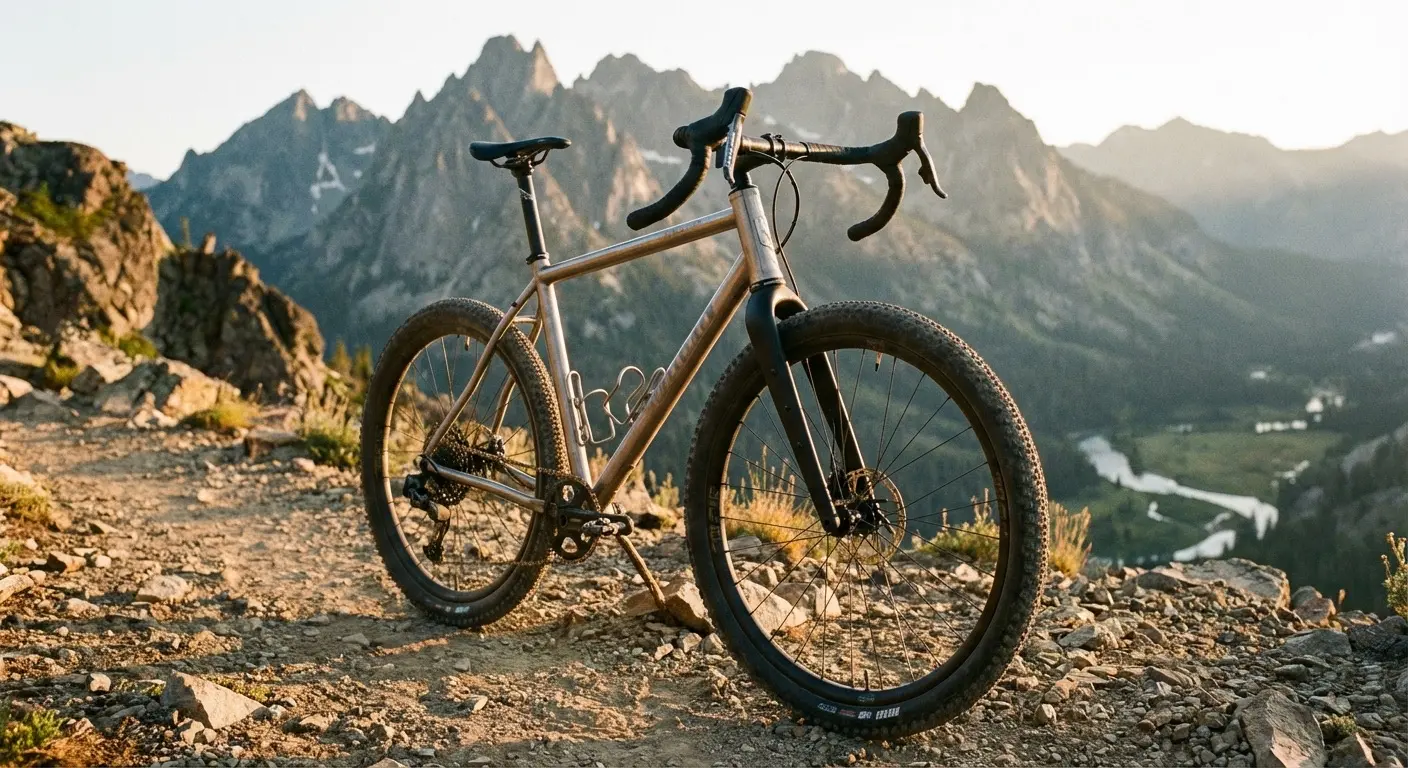
Your Bike Is the Foundation of Every Adventure
Bags, shelter, and sleep systems all matter—but they're meaningless without the right machine underneath. The bike determines where you can go, how far you can travel, and whether loaded riding feels like freedom or punishment.
Bikepacking bikes differ from standard road or mountain bikes in ways that matter under load. As BIKEPACKING.com's bike guides explain, they prioritize stability over twitchiness, include mounting points for bags and bottles, clear wider tires for mixed terrain, and feature gearing low enough to climb steep grades with 20+ pounds of gear.
The good news: excellent bikepacking bikes exist at every price point. You don't need a $5,000 carbon machine to have genuine adventures. Budget-friendly options from respected brands handle serious routes without complaint. Premium bikes offer refinements that dedicated bikepackers appreciate—but they're not prerequisites for getting started.
This guide covers every budget from under $1,000 to $5,000+, with specific recommendations in each tier. Whether you're testing the waters with weekend overnighters or planning transcontinental expeditions, there's a bike here that fits your needs and budget.
What to Look For in a Bikepacking Bike
Before diving into specific models, understand the features that separate capable bikepacking bikes from poor choices. These five factors matter most.
Tire Clearance
Bikepacking routes don't stick to pavement. Gravel, dirt, sand, mud, and technical singletrack all demand wider rubber than road bikes allow. For tire maintenance on the road, see our Tubeless Tire Maintenance Guide.
Minimum guidelines:
- Gravel-focused routes: 40mm minimum, 45-50mm preferred
- Mixed terrain with technical sections: 50mm+ or 2.1" MTB tires
- Dedicated singletrack routes: 2.2" or wider
Wider tires provide better traction, absorb bumps, and handle loose surfaces with confidence. They roll slower on pavement—a worthwhile trade for capability on real bikepacking terrain.
Mounting Points
Bikepacking requires carrying gear, and mounting points determine your options. See our guides on frame bags, saddle bags, and fork cages for bag options.
Essential mounts:
- Three water bottle cage mounts (minimum two, three preferred)
- Top tube and seat tube bolts for frame bags
- Fork mounts for cargo cages (three-pack on each leg ideal)
- Fender/rack mounts for versatility
Bikes designed for bikepacking include all of these. Road bikes converted for bikepacking often lack them, limiting your carrying options.
Geometry
How a bike handles under load matters enormously. Bikepacking geometry prioritizes stability over responsiveness.
Look for:
- Longer chainstays (spread the load, stable handling)
- Slacker head angles (less twitchy at speed, especially descending)
- Lower bottom brackets (stable center of gravity)
- Longer wheelbases (less affected by weight shifts)
Race-oriented geometry—short chainstays, steep head angles, aggressive positioning—amplifies every bag shift and makes loaded riding sketchy. Leave the race bikes for racing.
Frame Material
Each material offers trade-offs. None is objectively best—choose based on your priorities.
Steel (Chromoly):
- Comfortable ride quality (natural vibration damping)
- Durable and field-repairable (welders exist worldwide)
- Heavier than aluminum or carbon
- Excellent for long-distance touring and rough conditions
- Best value at lower price points
Aluminum:
- Lightweight and stiff
- Most affordable high-performance option
- Less forgiving ride than steel
- Cannot be repaired in the field
- Excellent balance of performance and price
Carbon:
- Lightest weight possible
- Can be tuned for comfort or stiffness
- Expensive and fragile to impacts
- Cannot be field repaired
- Best for weight-conscious riders with higher budgets
Titanium:
- Combines steel's comfort with aluminum's weight
- Extremely durable
- Very expensive
- Ultimate choice for those who can afford it
Gearing
Loaded climbing demands lower gears than you'd ever use unloaded. What feels easy on a day ride becomes impossible with 25 pounds of gear on a 15% grade.
Guidelines:
- 1x drivetrains: Look for 30t or smaller chainring paired with 50t+ cassette
- 2x drivetrains: Compact or sub-compact chainrings (46/30 or smaller)
- Internal gear hubs: Consider for maintenance simplicity on long tours
If the lowest gear doesn't feel absurdly easy on flat ground, it's not low enough for loaded climbing. For drivetrain care, see our Chain Maintenance Guide.
Budget Tier: Under $1,500
You don't need thousands to start bikepacking. These capable machines handle serious routes at accessible prices.
Salsa Journeyer — Our Pick (~$1,200)
The Journeyer proves you don't need to spend thousands for a well-designed bikepacking bike. Salsa—a brand synonymous with adventure cycling—packed everything that matters into an affordable package.
Why it works: The geometry prioritizes comfort over speed, with an upright riding position that feels right after eight hours in the saddle. Clearance for 700c x 50mm or 650b x 2.1" tires lets you choose based on your terrain. Mounting points cover everything—multiple bottle cages, frame bag bosses, fork mounts, and rack/fender options.
Specs that matter:
- Aluminum frame, steel fork
- Choice of 700c or 650b wheels
- Shimano Sora drivetrain
- Mechanical disc brakes
- Full complement of bikepacking mounts
The Journeyer won't win any races. It's not meant to. It's meant to carry you and your gear across mountain passes and down gravel roads, day after day, without complaint. It excels at exactly that.
Surly Bridge Club (~$1,400)
When Surly builds a bike, they build it to last. The Bridge Club continues that tradition with chromoly steel construction that handles abuse and remains repairable virtually anywhere on Earth.
Why it works: The steel frame provides genuine comfort on rough roads—vibration damping that aluminum can't match. Stock 27.5 x 2.4" tires (with clearance for 2.8") handle everything from pavement to moderate singletrack. The long chainstays and stable geometry make loaded handling predictable even on descents.
What makes it special:
- Chromoly steel frame and fork
- Bombproof construction
- Versatile tire clearance
- Hydraulic disc brakes
- Classic Surly durability
The Bridge Club weighs more than aluminum alternatives. For bikepackers prioritizing comfort and durability over weight, that trade-off makes sense.
Cannondale Topstone 4 (~$1,300)
Cannondale's gravel platform translates well to bikepacking with thoughtful geometry and solid components at a competitive price.
Why it works: The SmartForm alloy frame provides respectable weight without budget-breaking costs. Generous tire clearance and plenty of mounting options check the essential boxes. Shimano's drivetrain shifts reliably regardless of conditions.
Best for: Riders wanting a versatile bike that handles gravel rides, light bikepacking, and commuting duties.
Mid-Range Tier: $1,500–$3,000
This price range offers the best value for serious bikepackers. You get meaningful upgrades in components, weight, and features without paying premium-tier prices.
Canyon Grizl 6 — Our Pick (~$1,800)
Canyon's direct-to-consumer model means you get more bike for your money. The Grizl represents the brand's adventure-focused platform, purpose-built for loaded riding.
Why it dominates this tier: The Grizl 6 includes SRAM's Apex groupset with a wide-range cassette for loaded climbing. The alloy frame features generous tire clearance (up to 50mm) and extensive mounts. Available with RockShox's Rudy XPLR suspension fork for added capability on rough terrain.
Standout features:
- Aluminum frame designed specifically for adventure
- Optional 30mm suspension fork
- SRAM Apex 1x drivetrain
- Tubeless-ready wheels
- Aggressive tire clearance
The value proposition is exceptional. Comparable specced bikes from shop brands cost $500+ more.
Trek Checkpoint ALR 5 (~$2,500)
Trek's Checkpoint platform has earned respect in the gravel community. The ALR 5 brings that capability in aluminum form with components that handle serious riding.
Why it works: Trek's IsoSpeed decoupler adds compliance without suspension weight—meaningful on long days over rough surfaces. The geometry balances capability with all-day comfort. Shimano GRX components shift precisely even when filthy.
Best for: Riders wanting a versatile gravel bike that transitions seamlessly between local rides and loaded bikepacking.
Salsa Cutthroat Apex 1 (~$2,800)
The Cutthroat defies easy categorization. Drop bars, 29" wheels, mountain bike geometry, and clearance for 2.4" tires—it's a gravel bike that thinks it's a mountain bike, or vice versa.
Why it's special: For routes that mix gravel roads with genuine singletrack, the Cutthroat handles terrain that would terrify traditional gravel bikes. The stable geometry inspires confidence on technical descents. Those 29" wheels roll over obstacles that stop smaller wheels.
Ideal for: Bikepackers tackling routes with significant singletrack, or mountain bikers wanting drop-bar efficiency.
Premium Tier: $3,000+
When budget constraints disappear, these bikes represent the pinnacle of bikepacking capability. They save weight, add refinement, and handle the most demanding routes.
Salsa Cutthroat GRX 810 — Our Pick (~$4,200)
The carbon Cutthroat represents Salsa's full vision for their drop-bar mountain bike platform. Every detail targets long-distance loaded riding.
What justifies the price: The carbon frame saves significant weight over aluminum without sacrificing durability. Shimano's GRX 810 groupset provides hydraulic braking and precise shifting. The geometry remains unchanged from the alloy version—proven and capable.
Premium features:
- Full carbon frame and fork
- Shimano GRX 810 2x drivetrain
- Hydraulic disc brakes
- Clearance for 29 x 2.4" tires
- Sub-23 lb loaded weight
This bike handles multi-week expeditions on the Great Divide or Colorado Trail with equal confidence. It's the choice of experienced bikepackers who've tested lesser options and know what they actually need.
Santa Cruz Stigmata (~$4,500)
Mountain bikers transitioning to bikepacking gravitate toward the Stigmata. It handles like a trail bike despite its drop bars.
Why MTB riders love it: The geometry comes straight from Santa Cruz's mountain bike lineage—capable, confident, and composed on technical descents. The carbon frame matches trail bikes for stiffness and weight. It feels like cheating on terrain that challenges other gravel bikes.
Best for: Experienced mountain bikers wanting drop-bar efficiency without sacrificing off-road capability.
Surly Krampus (~$1,800 frameset)
The Krampus started the 29+ bikepacking movement over a decade ago. It remains the benchmark for all-terrain loaded capability.
Why it endures: Those 29 x 3.0" tires float over sand, mud, and technical terrain that stops smaller wheels. The chromoly steel frame handles decades of abuse. The geometry balances trail capability with all-day comfort.
Note: Typically sold as a frameset. Complete builds require additional component investment but allow full customization.
Hardtail Mountain Bike Options
Routes with significant singletrack demand mountain bike capability. These hardtails handle technical terrain while remaining bikepacking-capable.
Surly Karate Monkey
The Karate Monkey covers the widest range of riding styles in Surly's lineup. Chromoly steel provides comfort and durability. Available as rigid or suspension builds. The geometry works for everything from XC to light trail riding with loaded bags.
Best for: Bikepackers wanting one bike that handles technical singletrack and loaded touring equally well.
Kona Unit X
Steel frames don't require premium pricing. The Unit X proves that with chromoly construction, modern geometry, and a price that undercuts most aluminum competitors. The sliding dropouts allow belt drive or singlespeed conversion for ultimate simplicity.
Best for: Budget-conscious riders wanting steel's comfort and durability.
Salsa Timberjack
The Timberjack brings Salsa's adventure expertise to a proper trail bike platform. The aluminum frame keeps weight reasonable. Alternator dropouts provide drivetrain flexibility. Generous tire clearance handles any conditions.
Best for: Riders prioritizing trail capability who also want bikepacking versatility.
Can Your Current Bike Work?
Before buying anything new, honestly assess what you already own. Many bikes work for bikepacking with minor modifications. See our detailed guide on how to convert any bike for bikepacking.
Minimum Requirements
Your bike can probably work if it has:
- Tire clearance for at least 35mm (wider preferred)
- Disc brakes (rim brakes work but limit tire choices)
- Enough frame space for a bag
- Reasonably stable handling
Simple Upgrades That Help
- Wider tires: The single biggest improvement for capability
- Lower gearing: A larger cassette or smaller chainring
- Handlebar bag harness: Adds carrying capacity without frame modifications
- Saddle bag: Expands capacity significantly
When to Upgrade vs. Adapt
Upgrade when your current bike:
- Lacks tire clearance for your intended terrain
- Has geometry that feels dangerous when loaded
- Can't mount bags you need for trip duration
- Requires constant maintenance on every ride
Otherwise, ride what you have. Money saved on bikes buys experiences.
How to Test Ride for Bikepacking
Bike shop test rides rarely simulate loaded bikepacking. Here's how to evaluate a potential purchase:
Ask the shop: "Can I take it for an extended test ride loaded?" Many shops allow this for serious buyers. Bring your bags with weight in them.
If they say no, simulate these on your test ride:
- Ride the steepest hill nearby in the lowest gear—imagine adding 20 lbs
- Do tight, slow figure-8s—stability matters when loaded
- Descend and brake hard—loaded bikes need controlled stopping
- Check standing clearance for frame bag with your normal pedaling style
Key feelings to evaluate:
- Does the bike feel stable at low speeds? (Critical for technical terrain)
- Is the riding position comfortable after 15 minutes? (Multiply by 8 hours)
- Can you reach all controls easily with gloves?
- Does the gearing feel spinnable on climbs?
The perfect bike on paper can feel wrong in practice. Trust your body's feedback over spec sheets.
Where to Buy
Complete bikes in this category typically aren't available on Amazon. Instead, look to:
- Local bike shops: Test rides, professional fitting, ongoing service
- REI: Good selection, excellent return policy, member dividends
- Canyon: Direct-to-consumer value (ships direct)
- Salsa Cycles: Through dealers or direct
- Surly Bikes: Through local dealers
- Used market: Pinkbike Buy/Sell, Facebook Marketplace, and local classifieds for previous-generation bikes at significant discounts
Supporting local shops builds relationships that pay dividends through years of riding.
FAQ
Gravel bike vs. mountain bike for bikepacking?
Depends on your routes. Gravel bikes handle paved roads to moderate doubletrack efficiently. Mountain bikes excel when singletrack dominates. For mixed terrain, err toward whichever bias matches the hardest parts of your planned routes. See our guide on Bikepacking vs. Bike Touring for more on choosing your approach.
Do I need a suspension fork?
No, but it helps on rough terrain. Rigid forks are lighter, cheaper, and offer more mounting options. Suspension forks add comfort on rough descents but require maintenance. For smooth gravel, go rigid. For technical terrain, consider suspension.
Steel vs. carbon for bikepacking?
Steel prioritizes comfort and repairability. Carbon prioritizes weight and stiffness. Long-distance tourers often prefer steel's ride quality and global repairability. Weight-conscious riders on technical terrain appreciate carbon. Both work excellently.
Can I use a road bike for bikepacking?
Technically yes, but limitations compound quickly. Narrow tire clearance restricts terrain. Race geometry feels unstable loaded. Lack of mounts limits carrying options. Road bikes work for credit-card touring on pavement. For genuine bikepacking, purpose-built bikes handle routes road bikes can't.
Start Riding
The best bikepacking bike is one you actually ride. Waiting for the perfect machine means missing adventures available today.
If budget allows, buy something from the mid-range tier—you'll get capable components without premium pricing. If budget is tight, the Salsa Journeyer or Surly Bridge Club handle serious routes without apology. If budget is no object, the carbon Cutthroat represents the state of the art.
Whatever you choose, pair it with the right gear. See our Complete Bikepacking Gear Guide for everything else you need to build your kit. For keeping your new bike running smoothly, check our Complete Bikepacking Maintenance Guide. Getting your fit dialed in? Read our Bike Fit Guide.
Then stop researching and start riding. The routes are waiting.
Prices are approximate MSRP and may vary. Check local bike shops, REI, or manufacturer websites for current availability and pricing.