Bikepacking vs Bike Touring: Which Style Fits You Best?
20+ years testing gear in Colorado backcountry
Two Ways to Travel by Bike
Both bikepacking and bike touring mean riding bicycles loaded with gear for multi-day adventures. But they approach the challenge differently—different bikes, different bags, different terrain, different philosophies.
This guide compares the two disciplines across every dimension that matters, helping you decide which path to pursue—or whether to blend elements of both. For deeper dives into each style, BIKEPACKING.com's 101 Handbook covers the trail-focused approach, while Adventure Cycling Association offers excellent touring resources.
The Core Distinction
Bikepacking
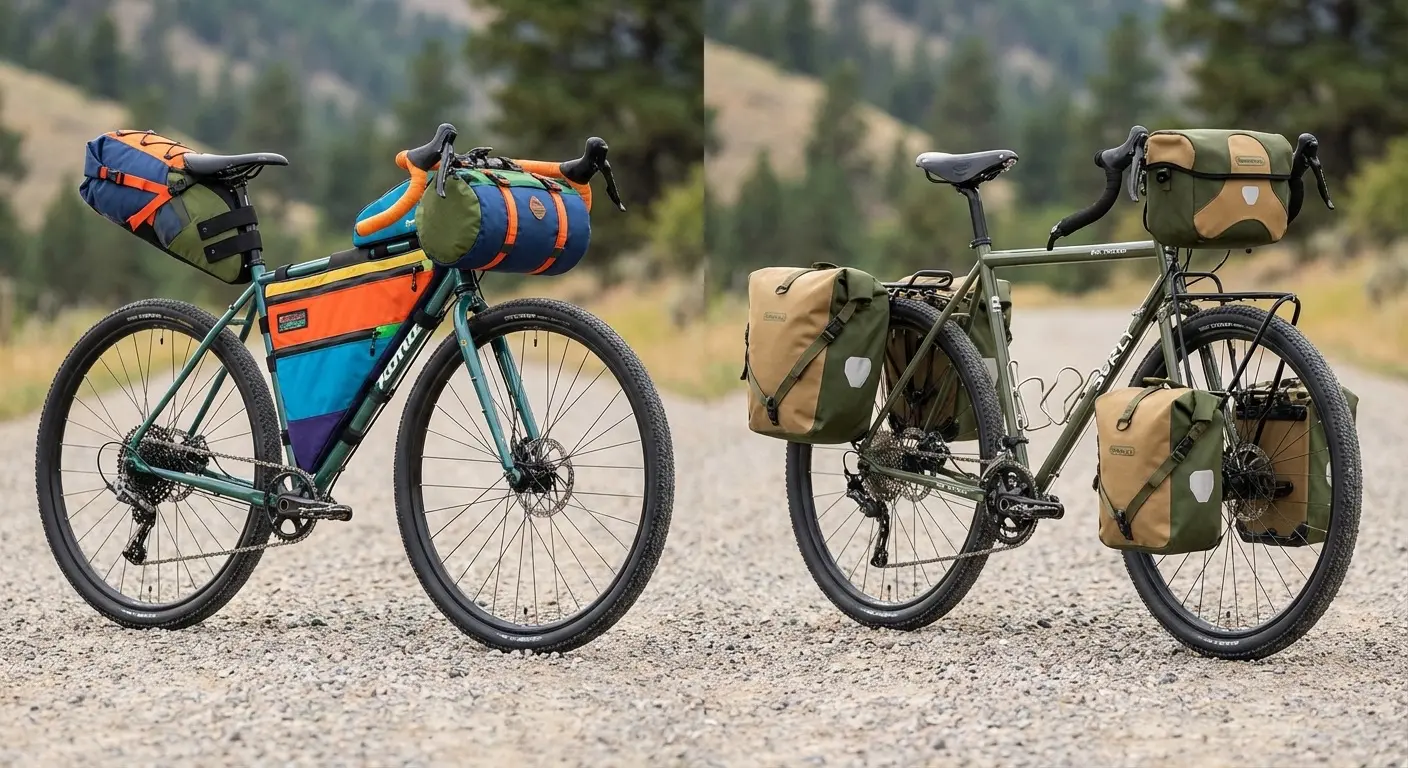
Definition: Multi-day cycling using soft bags attached directly to the bike frame, designed for mixed terrain including trails, gravel, and rough roads.
Philosophy: Go lighter, go further, access more terrain. Minimize gear to maximize capability.
Typical setup: Gravel or mountain bike with frame bag, saddle bag, handlebar roll. Total bag capacity 20-40 liters.
Bike Touring
Definition: Multi-day cycling using panniers (hard-sided bags) mounted on racks, typically on paved or well-maintained roads.
Philosophy: Bring what you need for comfort and self-sufficiency. The bike carries the load; you ride the bike.
Typical setup: Touring or gravel bike with front and rear racks, panniers, possibly handlebar bag. Total capacity 60-100+ liters.
Gear Comparison
Bags and Storage
Bikepacking:
- Soft bags (frame, saddle, handlebar)
- No racks required
- Lower total capacity (25-40L typical)
- Weight distributed across frame
- Works on any bike with frame space
See our Bag & Storage Guide for recommendations.
Bike Touring:
- Panniers on front and rear racks
- Requires rack mounts (braze-ons)
- Higher total capacity (60-100L+)
- Weight carried low on wheels
- Requires touring-compatible bike
Bikes
Bikepacking bikes:
- Gravel bikes (most popular)
- Hardtail mountain bikes
- Drop-bar adventure bikes
- Any bike with frame bag space
See our Best Bikepacking Bikes Guide.
Touring bikes:
- Dedicated touring frames (Surly, Salsa, Kona)
- Steel frames for durability
- Relaxed geometry for stability
- Multiple rack mount points
- Strong wheels for heavy loads
Weight Philosophy
Bikepacking: Lighter is better. Every ounce matters when climbing trails or pushing through rough terrain. Typical base weights: 15-25 lbs of gear.
Touring: Comfort over weight. The bike handles the load, so carrying an extra 10 lbs for a better sleeping pad or real cooking gear matters less. Typical base weights: 30-50+ lbs.
Terrain and Routes
Where Bikepacking Goes
- Singletrack trails
- Gravel roads
- Forest service roads
- Mixed-surface routes
- Rough terrain requiring technical skills
- Routes inaccessible to loaded touring bikes
Examples: Colorado Trail, Arizona Trail, Oregon Outback, Baja Divide. These iconic routes showcase what bikepacking unlocks—terrain that would destroy panniers and challenge loaded touring bikes.
Where Touring Goes
- Paved roads
- Well-maintained gravel
- Established cycling routes
- Highways with shoulders
- International road networks
- Routes with regular services
Examples: TransAmerica Trail, Pacific Coast Route, European EuroVelo routes, Camino de Santiago. Touring shines on these established, service-rich corridors.
The Overlap
Many routes work for both:
- Major gravel routes with good surfaces
- Rail trails
- Mixed-surface touring routes
- Adventure routes with road alternatives
Riding Experience
Daily Distance
Bikepacking: Typical daily distances: 30-60 miles. Technical terrain, elevation gain, and rougher surfaces slow progress. Quality over quantity.
Touring: Typical daily distances: 50-80+ miles. Paved roads and efficient bikes allow higher mileage. Some tourers average 100+ mile days.
Handling
Bikepacking: Lighter loads mean handling stays relatively normal. Bikes remain maneuverable on technical terrain. Standing climbing works. Quick direction changes possible.
Touring: Heavy loads change handling significantly. Bikes feel stable at speed but sluggish in technical situations. Loaded descents require caution. Steering is slower and more deliberate.
Physical Demands
Bikepacking: More technically demanding. Requires off-road skills. Lighter loads mean less raw power needed but terrain adds difficulty.
Touring: More endurance-focused. Technical skills less critical. Moving heavy weight requires strength and stamina but terrain is more forgiving.
Camping Style
Bikepacking Camping
Approach: Minimalist by necessity. Ultralight shelters, compact sleep systems, simple cooking.
Typical setup:
- 1-person ultralight tent or bivy
- Compact sleeping bag
- Minimal sleeping pad
- No-cook or simple stove system
See our Camp Gear Guide.
Where: Wild camping, dispersed sites, stealth camping, occasional campgrounds.
Touring Camping
Approach: Comfort-focused. Room for larger tents, better sleep systems, real cooking gear.
Typical setup:
- 2-person tent (even for solo)
- Full-featured sleeping bag
- Thick sleeping pad
- Complete cooking system with pots/pans
Where: Campgrounds, designated sites, warmshowers hosts, hostels, hotels.
Self-Sufficiency
Bikepacking Self-Sufficiency
Food capacity: 1-3 days between resupply. Limited space means frequent town stops.
Water capacity: 2-4 liters typical. May need filtration for backcountry sources.
Repairs: Basic tools, limited spare parts. Focus on getting to help rather than fixing everything.
Touring Self-Sufficiency
Food capacity: 3-7+ days possible. Panniers hold significant groceries.
Water capacity: 4-8+ liters easy. Room for larger containers.
Repairs: Full tool kit, extensive spare parts. Ability to handle most repairs independently.
Cost Comparison
Getting Started
Bikepacking startup costs:
- Bags: $200-600 (quality soft bags)
- May need no bike modifications
- Total additional cost: $300-800
See our Budget Bikepacking Guide.
Touring startup costs:
- Racks: $100-300
- Panniers: $150-400
- May need new bike: $800-2000+
- Total additional cost: $400-2500+
Long-Term Costs
Bikepacking:
- Bags wear out eventually
- Minimal consumables
- Lighter wear on bike components
Touring:
- Racks and panniers last indefinitely
- Heavier wear on bike components (wheels, drivetrains)
- More frequent tire replacement
Learning Curve
Bikepacking Skills Needed
Before first trip:
- Basic off-road riding ability
- Packing efficiently in soft bags
- Minimalist mindset
- Navigation without cell coverage
Developed over time:
- Technical trail skills
- Ultralight optimization
- Backcountry camping competence
- Self-rescue capability
Touring Skills Needed
Before first trip:
- Comfortable road cycling
- Panniers loading/balancing
- Basic bike maintenance
- Route planning
Developed over time:
- Efficient daily routines
- Long-distance endurance
- International travel logistics
- Mechanical self-sufficiency
Social Aspects
Bikepacking Community
Culture: Younger demographic, racing scene exists (events like Tour Divide), strong online community, emphasis on Type II fun and suffering.
Social riding: Often solo or small groups. Technical terrain limits group size. Meet people at camps and trailheads.
Touring Community
Culture: Broader age range, families common, warmshowers hosting network, slower-paced social emphasis, long-established traditions.
Social riding: Couples and groups common. Easier to ride together on roads. Strong hospitality network through Warmshowers.org—a free worldwide hospitality exchange for touring cyclists with thousands of hosts globally.
Choosing Between Them
Choose Bikepacking If:
- You want to access trails and rough terrain
- Lighter weight appeals to you
- You already own a suitable bike (gravel/MTB)
- Minimalism matches your personality
- You're drawn to backcountry adventure
- Technical riding excites you
Choose Touring If:
- You prefer roads and established routes
- Comfort matters more than weight
- You want higher daily mileage capability
- You're traveling internationally on roads
- You want to carry more creature comforts
- Extended self-sufficiency appeals to you
Choose Both If:
Many cyclists do both, using different setups for different trips:
- Bikepacking for weekend trail adventures
- Touring for extended international trips
- Bikepacking setup for fast-and-light missions
- Touring setup when bringing partner and extra gear
Hybrid Approaches
Touring Bikes with Bikepacking Bags
Use soft bags on a touring bike for:
- Lighter setup on touring-capable routes
- Flexibility without full pannier commitment
- Transitioning between styles
Bikepacking Bikes with Light Racks
Add a small rear rack for:
- Slightly more capacity
- Panniers for specific uses
- Town errands during extended trips
Gravel Bikes as Compromise
Modern gravel bikes accept:
- Full bikepacking soft bag setup
- Light racks and small panniers
- Multiple water bottle positions
- Wide tire range
This makes them the most versatile platform for exploring both disciplines.
Real-World Decision Examples
"I want to ride the TransAmerica Trail" → Touring setup. It's primarily paved roads with regular services. Panniers' extra capacity means fewer town stops and more self-sufficiency.
"I want to ride the Colorado Trail" → Bikepacking setup. Technical singletrack, significant elevation, limited services. Soft bags and a capable bike are essential.
"I want to explore Tuscan backroads for two weeks" → Either works. Gravel roads suit bikepacking; wine and food suit touring's capacity. Choose based on your comfort priorities.
"I want to commute and do overnighters" → Start with bikepacking bags on your existing bike. Add a rack later if you want touring capacity.
"I have a road bike and want to start adventure cycling" → Bikepacking bags first. Most road bikes accept frame bags and saddle packs without modification. Test your interest before buying a dedicated adventure bike.
FAQ
Can I start with one and switch later?
Yes. Skills transfer well. The main expense is bags/racks, not entirely new equipment. Many cyclists own setups for both.
Which is harder?
Bikepacking is more technically demanding (terrain skills). Touring is more physically demanding (moving heavy weight far). Neither is objectively harder—they're different challenges.
Can I bikepack on a touring bike?
Yes, with limitations. Touring bikes work on gravel but struggle on technical trails. Soft bags attach fine, but geometry and weight won't feel ideal.
Can I tour on a bikepacking bike?
Yes. You'll have less carrying capacity and may want to add a small rack. Modern gravel bikes tour very effectively.
Which has better gear available?
Both have excellent gear ecosystems. Bikepacking gear development is newer but very active. Touring gear is mature and proven.
Start Somewhere
Both disciplines lead to incredible adventures. Don't overthink the choice—pick whichever appeals more and start riding. Experience teaches better than research.
Most cyclists who try one eventually try the other. The skills, fitness, and mindset transfer directly. You're joining a community of people who explore the world by bicycle, regardless of which bags they use.
For bikepacking-specific guidance, see our Complete Bikepacking Gear Guide and Beginners Guide.
The road—or trail—awaits.