Pushing Through or Quitting: When to Stop Your Bikepacking Ride
20+ years testing gear in Colorado backcountry
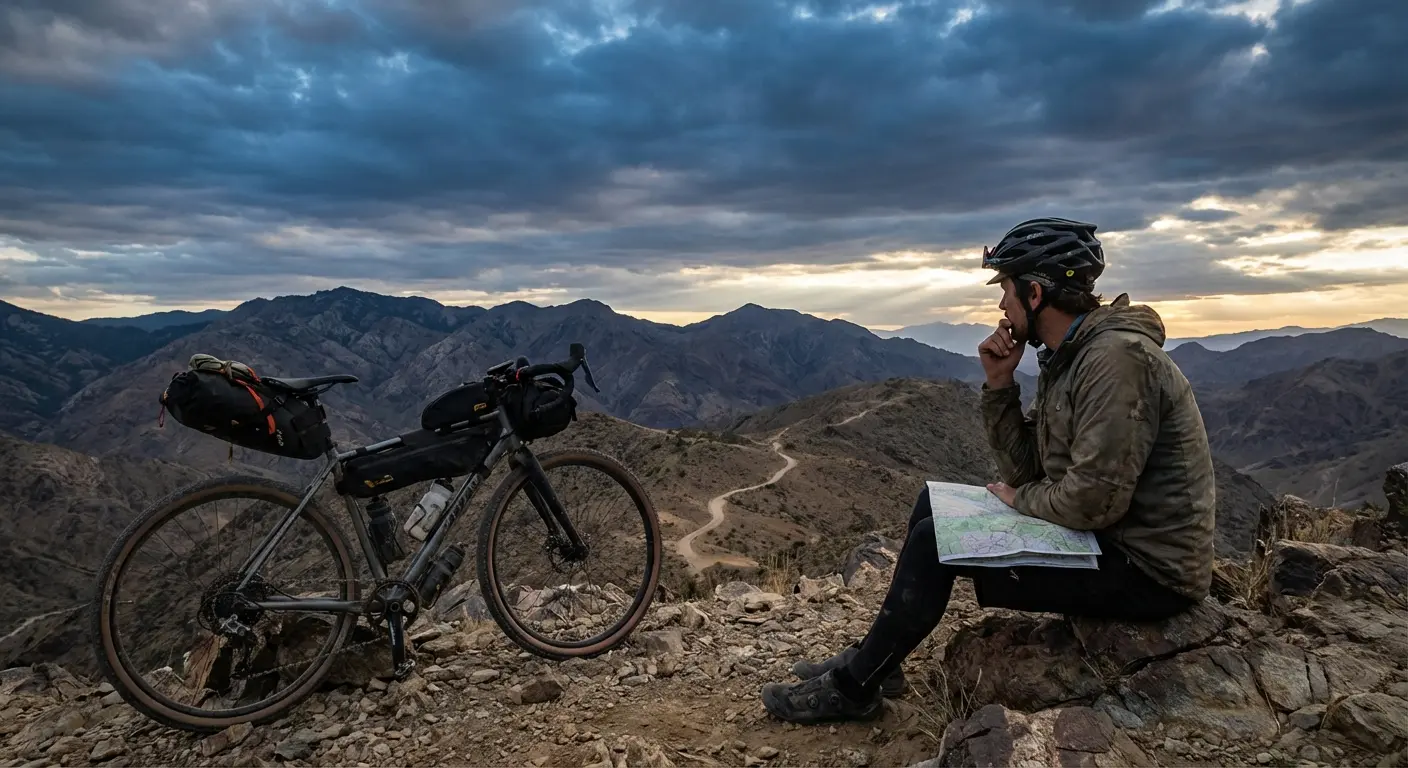
The Decision Nobody Prepares You For
This article contains affiliate links. We may earn a commission if you make a purchase through our links, at no extra cost to you.
It's essential to challenge the mindset that quitting is a sign of failure or weakness because there are many valid reasons to step away from a goal—whether due to physical health, mental well-being, or uncontrollable circumstances. Success shouldn't be defined solely by crossing the finish line but by being able to recognize your limits, having meaningful experiences, and prioritizing your welfare.
Every bikepacker eventually faces the moment: hunched over handlebars in deteriorating weather, body protesting, mind generating increasingly compelling reasons to stop. The question isn't whether this moment will come—it's how you'll respond when it does.
The answer isn't simple. "Never quit" is as dangerous as "quit at the first discomfort." The riders who complete challenging trips aren't those who ignore hardship—they're those who accurately distinguish between discomfort that passes and signals that something is genuinely wrong.
This guide helps you make that distinction: understanding the difference between temporary difficulty and meaningful warnings, knowing when pushing through is strength and when it's stubbornness, and building a framework for the hardest decisions bikepacking presents.
For the broader context of mental resilience, see the Complete Mental Resilience Guide.
Reframing "Quitting"
Stopping vs. Quitting
The language matters. "Quitting" carries shame—it implies failure, weakness, giving up. "Stopping" or "ending" simply describe changing your activity. Same external action, entirely different internal experience.
Experienced bikepackers distinguish between:
Quitting: An emotional escape made to avoid discomfort you could actually handle Stopping: A strategic decision made from awareness of genuine limits
The external observer can't tell these apart. But you can, if you're honest with yourself about which is happening.
The Problem with "Never Quit"
Our culture celebrates pushing through at all costs. This produces:
- Injuries that become chronic
- Mental damage from forced continuation
- Negative associations with activity you might otherwise love
- Poor modeling for newer riders watching you suffer pointlessly
The strongest athletes often have nuanced relationships with stopping. They've learned that sustainable performance requires knowing when to back off—that pushing through today might cost weeks or months tomorrow.
The Pause Option
A crucial insight from one experienced rider: "You know, it's not always go or give up. You can also pause, take shelter, let the worst of it pass, look after yourself, and move forward when the time is right."
Between "complete the ride as planned" and "abandon entirely" lie many options:
- Zero days: Stop moving for 24+ hours to recover
- Route modifications: Complete a shorter or easier version
- Mode changes: Skip a section by other transport, continue after
- Extended breaks: Rest for hours rather than minutes
- Overnight reset: What feels impossible today may feel manageable tomorrow
Explore these before deciding you must either suffer through or go home.
The Push-Through Framework
When You Should Probably Continue
Temporary physical discomfort: Tired legs, minor aches, and low-level suffering are normal parts of bikepacking. They usually respond to rest, food, and time. If the discomfort is stable or improving rather than worsening, continuing is often appropriate.
Fear without objective danger: Your nervous system may generate fear where no actual threat exists. If you're safe but afraid, pushing through often reveals the fear was unfounded. See Managing Fear and Anxiety for more.
Boredom or monotony: Miles of uninteresting terrain can erode motivation without indicating anything wrong. This passes—either the terrain changes or you adapt.
Weather-induced misery: Cold, wet, and windy conditions feel awful but usually don't create danger if you have appropriate gear. Forecast improvement makes continuation reasonable.
Low motivation after poor sleep: One bad night tanks motivation. The solution is better sleep, not abandoning your trip. Make camp early, sleep deeply, reassess in the morning.
The 20-minute rule: Many low points pass within 20 minutes if you eat, drink, and keep moving. Before making any significant decision, commit to 20 more minutes. If the feeling persists unchanged, then reassess.
Markers of Difficulty You Can Handle
- The problem has a clear cause (hunger, fatigue, weather) with a clear solution
- You've handled similar situations before
- Others have handled similar situations routinely
- The discomfort is unpleasant but not worsening
- Your basic functions (decision-making, coordination) remain intact
The Stop Framework
When You Should Probably Stop
Persistent pain that worsens: Pain that doesn't respond to rest and returns worse with activity signals potential injury. Continuing risks serious damage. One ride isn't worth weeks of recovery or chronic problems.
Deteriorating mental state: If you're having persistent thoughts of hopelessness, self-harm, or wanting to hurt yourself, stop and seek support. No trip is worth your wellbeing. See the mental health resources below.
Inability to make basic decisions: Confusion, disorientation, or inability to perform routine tasks suggests cognitive impairment—from exhaustion, hypothermia, heat illness, or other causes requiring immediate attention.
Objective danger you cannot safely manage: Weather beyond your gear's capability, terrain beyond your skill, or situations where continuing meaningfully risks serious injury.
Gut-level sense that something is wrong: Sometimes your body knows before your mind does. Persistent, strong intuition that you should stop deserves serious consideration.
Markers That Warrant Stopping
- The problem has no clear cause or solution
- The situation is worsening despite interventions
- Basic physical or mental functions are compromised
- Continuing requires risk significantly beyond your capability
- Multiple warning signs are present simultaneously
Decision-Making Under Stress
Why Good Decisions Are Hard
When you most need to decide wisely, your capacity for wisdom is lowest. Exhaustion, stress, and low blood sugar impair the same cognitive functions required for sound judgment.
This creates a dangerous paradox: the harder your situation, the worse your decision-making becomes just when good decisions matter most.
Recognize the problem: If you're struggling to think clearly, that itself is information. Pause. Eat. Rest. Make major decisions after basic needs are met, not before.
Pre-Committed Decision Rules
One solution: decide in advance when you'll stop, so crisis-moments don't require real-time judgment.
Example pre-commitments:
- "If pain exceeds [level] for more than [duration], I stop."
- "If I can't remember my route for more than [duration], I stop."
- "If [specific condition] develops, I stop."
Writing these down before your trip—when your cognition is intact—creates guardrails for impaired states.
The Crowd-of-One Test
Imagine a hundred people in your exact situation. What would a reasonable, experienced bikepacker advise the majority to do?
This question bypasses ego ("I should be able to handle this") and emotional reasoning ("I feel like a failure") to access practical wisdom. What would you tell someone else in your position?
Specific Scenarios
The First Bad Day
Most trips include at least one bad day—everything goes wrong, nothing feels right, the trip seems like a mistake. This is normal. It almost always passes.
Strategy:
- Lower expectations for that day
- Focus solely on basics (ride, eat, camp)
- Don't make any permanent decisions
- Sleep on it—tomorrow is usually better
Abandoning trips on the first bad day produces the most regret. Push through at least one full cycle of sleep before deciding.
Multiple Bad Days
If several consecutive days feel terrible, the calculus changes. Sustained misery might indicate:
- Accumulating fatigue requiring real rest
- Gear problems needing resolution
- Route mismatch requiring modification
- Trip length exceeding current capacity
Evaluate whether continuing makes sense or whether stopping is appropriate.
Injury Decisions
Minor injuries (blisters, mild strains, superficial wounds): Usually manageable with attention. Stop activity that worsens them; continue activity that doesn't.
Moderate injuries (significant sprains, lacerations requiring care): Requires honest assessment. Can you complete the trip safely with this injury? What happens if it worsens? Having first aid capability with a comprehensive bikepacking first aid kit expands what you can manage.
Severe injuries (suspected fractures, head injuries, anything affecting consciousness or basic function): Stop. Get help. No trip is worth permanent damage.
Weather Decisions
Weather that feels terrible may not be dangerous:
- Cold rain with proper gear: Miserable but manageable
- Wind on open roads: Slow but not dangerous
- Heat with adequate water: Uncomfortable but safe
Weather that requires stopping:
- Hypothermia symptoms developing despite efforts
- Heat illness signs (confusion, cessation of sweating)
- Lightning with no shelter
- Conditions genuinely exceeding gear limits
When uncertain, err toward caution. You can always continue after conditions improve; you can't undo weather-related emergencies.
The Psychology of Stopping
Managing the Emotional Fallout
Even when stopping is right, it rarely feels good. Expect:
- Disappointment
- Self-criticism
- Comparing yourself unfavorably to others
- Second-guessing
- Relief mixed with guilt about feeling relieved
These emotions don't indicate you made the wrong choice. They're normal responses to ending something you invested in.
What helps:
- Acknowledge the emotions without judging them
- Talk to supportive people who understand
- Journal about what happened and what you learned
- Avoid immediate conclusions ("I'm not cut out for this")
- Give perspective time to develop
Telling Your Story
How you narrate your decision shapes how you experience it.
Stories that harm:
- "I failed."
- "I'm weak."
- "I should have pushed through."
- "I'm not a real bikepacker."
Stories that help:
- "I made a judgment call based on available information."
- "I prioritized safety over ego."
- "I learned what my limits currently are."
- "I can try again with better preparation."
The facts are the same. The meaning you assign determines whether stopping is traumatic or educational.
The Return Question
How you handle stopping affects whether you return to bikepacking. Riders who interpret stopping as failure often don't try again. Riders who interpret it as information about what they need become more capable over time.
Almost every experienced bikepacker has stopped trips early at some point. The difference is they didn't let those experiences define their identity or end their engagement with the sport.
Maintaining Perspective
Why We Sometimes Push Too Far
Several factors cause riders to continue when they shouldn't:
Sunk cost fallacy: "I've already come this far—I can't stop now." Social pressure: "What will people think if I quit?" Identity investment: "I'm the kind of person who finishes what they start." Comparison: "Others have done this route; I should be able to." Fear of regret: "I'll always wonder if I could have finished."
These are all real feelings. None of them should override genuine signals that stopping is appropriate.
The Long View
This trip is not the last trip. Your bikepacking career spans years or decades. What happens on one ride matters far less than your trajectory over time.
Decisions that protect your body and mind for future adventures serve long-term success even if they feel like short-term failure.
One rider's philosophy captures this well: "My fundamental goal is to have a rewarding and fulfilling experience. I embrace pivoting when the experience becomes unsustainable—I allow myself to switch it up, take a day or two off, adjust my route, or even use alternative transportation before quitting and going home."
The Rest That Serves Progress
"Stepping back for a week to a month gives my body time to recover and makes me realize how much I love bikepacking and ultra cycling. When I return to the bike, I feel stronger and fresher and have newfound confidence in myself. It's easy to see rest as the opposite of progress, but often, it's a big part of making your way through a tough time."
Rest isn't failure. Recovery isn't weakness. Sometimes stopping is exactly what makes future success possible.
When to Seek Help
Mental Health Red Flags
If you experience any of these, stop your trip and seek professional support:
- Persistent thoughts of self-harm or suicide
- Hallucinations or severe confusion
- Panic attacks that don't resolve
- Complete inability to function
- Despair that doesn't lift with rest and food
Resources:
- National Suicide Prevention Lifeline: 988 (US)
- Crisis Text Line: Text HOME to 741741 (US)
- International Association for Suicide Prevention: https://www.iasp.info/resources/Crisis_Centres/
A satellite communicator provides emergency SOS capability from anywhere, ensuring help is always accessible even in remote areas.
No bikepacking goal is worth your life or mental health.
Physical Red Flags
Seek medical attention for:
- Signs of head injury (confusion, vision changes, persistent headache after impact)
- Symptoms of heart problems (chest pain, severe shortness of breath, irregular heartbeat)
- Signs of severe infection (high fever, red streaks, pus)
- Suspected fractures
- Symptoms of serious heat illness (confusion, cessation of sweating, rapid heartbeat)
- Symptoms of severe hypothermia (severe shivering, confusion, loss of coordination)
Better to get checked and discover nothing is wrong than to continue with something serious.
Building Good Judgment
After Every Trip
Whether you finished or stopped, reflect:
- What signals did I notice?
- What did those signals actually indicate?
- What would I do differently?
- What did I learn about my limits and capabilities?
This reflection develops the judgment that distinguishes experienced bikepackers from beginners.
Before Every Trip
Ask yourself:
- What conditions would warrant stopping?
- What are my pre-commitments?
- Who will I contact if I need support?
- What are my backup plans?
Having answers before you need them prevents crisis-mode decision-making.
The Judgment Muscle
Like any skill, good judgment develops through practice. Each challenging situation—whether you pushed through or stopped—adds data. Over time, you develop intuition about what you can handle and what you can't.
Trust that intuition when it develops. It knows things your conscious mind might not.
The Wisdom of Uncertainty
Here's the uncomfortable truth: sometimes you won't know if you made the right decision. You pushed through and finished—but were those warning signs actually serious? You stopped early—but could you have completed it?
This uncertainty is inherent in the territory. No one has perfect judgment. No decision framework eliminates doubt.
What you can do is make the best decision available with the information you have, learn from the results, and adjust your approach for next time. That's all anyone can do.
The riders who develop the best judgment aren't those who are never wrong—they're those who continuously refine their assessment through honest reflection on both successes and mistakes.
For the broader mental framework, see the Complete Mental Resilience Guide.