Recovery Strategies for Multi-Day Bikepacking
20+ years testing gear in Colorado backcountry
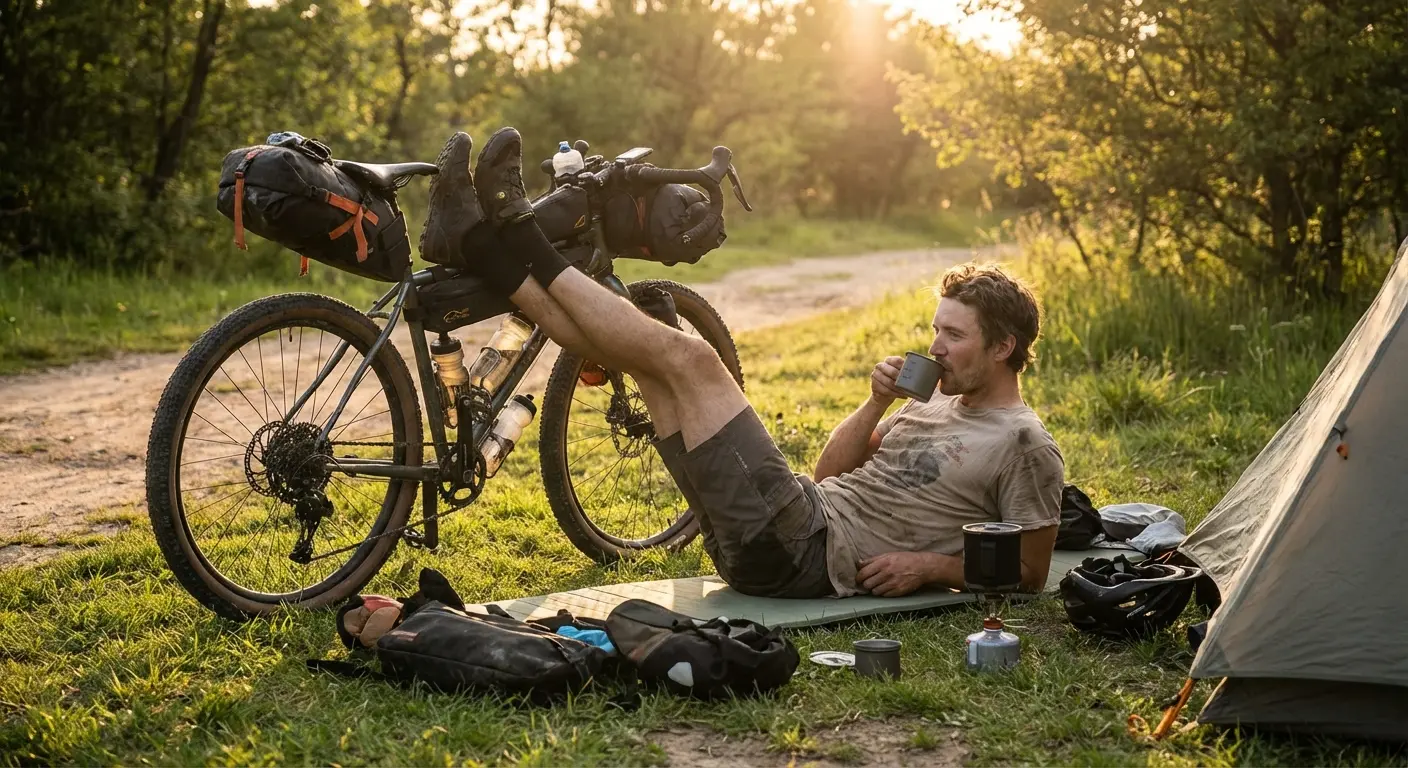
Recovery Is Where Progress Happens
The riding breaks you down. Recovery builds you back up. On multi-day trips, what you do between rides—sleep, nutrition, movement—determines whether tomorrow feels strong or broken.
Bikepacking is unique among endurance activities: you ride hard, then recover in primitive conditions. No ice bath, no massage therapist, no comfortable bed. Yet recovery still matters—arguably more than in controlled environments because you're doing it again tomorrow.
The riders who feel strongest by trip's end aren't necessarily the fittest. They're often the ones who prioritize recovery, treating the evening hours as preparation for the next day's effort. This guide covers practical recovery strategies that work in bikepacking conditions.
For complete comfort guidance, see our Complete Bikepacking Comfort Guide.
Why Recovery Matters More for Bikepacking
The Cumulative Effect
Single-day riding:
- Go hard, recover fully at home
- Comfortable bed, quality food
- Days before next hard effort
Multi-day bikepacking:
- Repeat hard effort before full recovery
- Sleeping on the ground
- Limited food options
- Cumulative fatigue builds
The Downward Spiral
Without adequate recovery:
- Day 1: Feel good
- Day 2: Slightly fatigued
- Day 3: Noticeably tired
- Day 4: Every hill is a struggle
- Day 5: Consider quitting
Breaking the Pattern
With intentional recovery:
- Body adapts to demands
- Fatigue stabilizes
- Fitness actually improves during trip
- Later days can feel better than early ones
Sleep: The Foundation
Sleep is your most important recovery tool. Nothing else comes close.
Why Sleep Matters
During sleep:
- Growth hormone releases
- Muscle repair accelerates
- Glycogen stores replenish
- Central nervous system recovers
- Mental freshness restores
Sleep deprivation effects:
- Decreased power output
- Impaired decision making
- Reduced pain tolerance
- Compromised immune function
- Worse mood and motivation
Sleep Quality in the Field
Challenges:
- Ground hardness
- Temperature regulation
- Unfamiliar environment
- Noise (wind, wildlife, traffic)
- Anxiety about weather/safety
Solutions:
Better sleeping pad:
- Adequate R-value for temperature
- Sufficient thickness for comfort
- Consider upgrading for long trips
Temperature management:
- Sleeping bag rated appropriately
- Layer inside bag if cold
- Vent if too warm
- Keep head covered in cold
Sleep routine:
- Consistent bedtime when possible
- Wind-down ritual (stretching, reading)
- Limit screen time before sleep
- Avoid eating immediately before sleep
For complete sleep system guidance: Best Sleeping Bags and Best Sleeping Pads
How Much Sleep
Recommendations:
- 7-9 hours opportunity to sleep
- More than your normal if possible
- Quality matters as much as quantity
Reality:
- Camp logistics eat into sleep time
- Early departures tempting
- Sometimes sleep is shortened
Balance:
- An extra hour of sleep often more valuable than an extra hour of riding
- Don't sacrifice sleep for extra miles consistently
Nutrition for Recovery
What you eat after riding affects tomorrow's performance.
Post-Ride Window
The first 30-60 minutes:
- Muscles most receptive to glycogen replenishment
- Protein synthesis elevated
- Prioritize carbs and protein
Practical application:
- Eat something substantial at camp
- Don't wait until you're "done" setting up
- Even a snack helps
Macronutrient Priorities
Carbohydrates:
- Replenish glycogen stores
- 0.5-0.7g per pound body weight in first hour
- Continue eating carbs through evening
Protein:
- Supports muscle repair
- 20-30g in post-ride meal
- Continue protein intake through evening
Fat:
- Less urgent but necessary
- Helps with calorie density
- Doesn't need to be prioritized immediately
Hydration
Rehydration:
- Replace fluid lost during riding
- Include electrolytes if sweated heavily
- Continue drinking through evening
Signs of poor hydration:
- Dark urine
- Headache
- Fatigue beyond normal
- Poor sleep quality
See: Electrolytes and Nutrition Guide
Practical Food Choices
Good recovery foods (packable):
- Instant rice or pasta with protein
- Recovery drink mixes
- Nut butter and bread
- Cheese and crackers
- Dried meat plus carbs
Less ideal:
- Bars alone (often low protein)
- Sugary snacks only
- Skipping meals to save weight
For complete nutrition guidance: Complete Food Guide
Active Recovery
Light movement helps recovery more than complete rest.
Why Moving Helps
Physiological benefits:
- Increases blood flow to muscles
- Promotes waste product removal
- Reduces stiffness
- Maintains range of motion
Evening Movement
After arriving at camp:
- Short walk around camp (5-10 minutes)
- Gentle stretching routine
- Foam rolling if carrying
- Light mobility work
What to avoid:
- Complete immobility after stopping
- Sitting for hours before moving
- Going straight to sleep without some movement
Morning Movement
Before riding:
- Short walk to loosen up
- Dynamic stretching routine
- Joint mobility work
- Gradual warm-up on bike
See: Stretching and Mobility Routine
Rest Days
Strategic rest days prevent cumulative fatigue from becoming overwhelming.
When to Take Rest Days
Planned rest days:
- Every 5-7 days on long trips
- At interesting locations
- Coinciding with resupply
Unplanned rest days:
- Unusual fatigue accumulation
- Minor injury needing recovery
- Weather forcing stop anyway
What to Do on Rest Days
Morning:
- Sleep in (if body wants)
- Light stretching
- Easy walk or short ride
During day:
- Bike maintenance
- Resupply and laundry
- Gentle exploration
- Napping acceptable
Evening:
- Thorough stretching routine
- Early sleep if desired
- Preparation for next riding day
Active Rest vs. Complete Rest
Active rest (recommended):
- Light walking
- Very easy spin (30-60 min)
- Swimming if available
- Promotes recovery without adding fatigue
Complete rest:
- May feel stiff next day
- Sometimes needed for injury
- Okay occasionally but not default
Featured Products
Tailwind Recovery Mix
Purpose-formulated for endurance recovery with the right ratio of carbs to protein (3:1), plus electrolytes for rehydration. Mix into water immediately after riding for the recovery window. The rebuild variety includes 10g of protein per serving. Tastes mild and mixes easily, even in cold water. Single-serve packets are perfect for bikepacking—no bulk powder to spill. More effective than plain water or random snacks for recovery.
- 3:1 carb to protein ratio
- Includes electrolytes
- Single-serve packets
- Mixes easily
- Designed for endurance recovery
Skratch Labs Recovery Drink Mix
Made with real food ingredients rather than artificial flavors and sweeteners. Contains whey protein, sugar from cane, and cocoa for the chocolate version. Higher protein content (16g) than some competitors. The ingredients are pronounceable and familiar. Mix into cold water for a smoothie-like drink. More expensive per serving but the quality of ingredients appeals to many riders. Available in multiple flavors.
- Real food ingredients
- 16g protein per serving
- No artificial additives
- Good taste
- Multiple flavors
CEP Compression Socks
Graduated compression promotes blood flow and reduces swelling after hard efforts. Wear during the evening after riding for recovery benefit. The mild compression feels supportive without being restrictive. Some riders sleep in them; others wear just for a few hours. Quality construction holds compression through many wash cycles. Not essential but noticeable benefit for riders prone to leg fatigue or swelling.
- Graduated compression
- Promotes blood flow
- Durable construction
- Comfortable fit
- Evening recovery use
Therm-a-Rest NeoAir XLite
Sleep quality affects recovery more than any supplement. The NeoAir XLite provides excellent comfort (3.2 R-value, 2.5-inch thickness) in a compact, lightweight package. Better sleep means better recovery. The investment pays dividends every night of every trip. Warmer and more comfortable than many heavier alternatives. If you're going to spend money somewhere, quality sleep surface is a smart choice.
- Excellent comfort
- Lightweight compact
- R-value 4.2
- Quality sleep investment
- Durable construction
Nuun Hydration Tablets
Staying hydrated includes replacing electrolytes. Nuun tablets drop into water and dissolve, providing electrolytes without excessive sugar. The light flavor makes drinking more water appealing. Easy to pack—one tube provides 10 servings. Use one in evening water to help rehydration. Also great during riding on hot days. Multiple flavors available; the light sweetness isn't overwhelming.
- Electrolytes without sugar
- Easy tablet format
- Light flavor
- Packable tubes
- Multiple flavors
Recovery by Trip Length
Different trip lengths require different recovery approaches.
Weekend (2-3 Days)
Recovery needs:
- Moderate—body can handle short-term push
- Sleep quality still matters
- Basic nutrition sufficient
Approach:
- Can push harder knowing full recovery coming
- Don't neglect basics
- Return home before serious fatigue accumulates
Week-Long (5-7 Days)
Recovery needs:
- Important—fatigue accumulates noticeably
- One rest day often valuable
- Nutrition and sleep quality critical
Approach:
- Plan rest day strategically (day 4 or 5)
- Don't treat every day as maximum effort
- Recovery routine each evening
Multi-Week (14+ Days)
Recovery needs:
- Critical—determines trip success or failure
- Regular rest days essential
- Body adapts if recovery adequate
Approach:
- Rest day every 5-6 days
- Some easy riding days built in
- Serious attention to sleep and nutrition
- Monitor for overtraining signs
Signs You Need More Recovery
Listen to your body for these signals.
Physical Signs
Fatigue:
- Legs don't respond to efforts
- Hills feel harder than they should
- Power/speed down from early days
Sleep:
- Trouble sleeping despite tiredness
- Waking frequently
- Not feeling rested after sleep
Other:
- Elevated resting heart rate
- Unusual muscle soreness
- Minor injuries not healing
Mental Signs
Motivation:
- Dreading getting on bike
- Not enjoying the trip
- Just wanting to be done
Mood:
- Unusual irritability
- Low spirits
- Difficulty making decisions
Response
When signs appear:
- Take a rest day (or easy day)
- Prioritize sleep
- Increase calorie intake
- Reassess pace and plans
FAQ
How much sleep do I really need on a bikepacking trip?
More than at home. Your body is under unusual stress. 8+ hours of sleep opportunity is reasonable. You may not sleep that entire time, but give yourself the chance. Sacrificing sleep for more miles usually backfires.
Are recovery supplements worth carrying?
Recovery drink mixes can be worthwhile—they provide precise nutrition in the critical post-ride window. Individual supplements (like BCAAs) are less proven and harder to justify the weight. Real food works if you eat enough of the right things.
Should I nap during rest days?
If your body wants to, yes. A 20-30 minute nap can be restorative. Longer naps may interfere with night sleep for some people. Listen to your body.
Does beer help recovery?
Alcohol impairs recovery—it affects sleep quality, hormone levels, and hydration. One beer won't ruin you, but treating alcohol as a recovery tool is misguided. Celebrate after the trip.
How do I know if I'm recovering enough?
If you feel progressively worse as the trip continues, recovery is inadequate. If you stabilize or feel better later in the trip, you're recovering well. Track how you feel—morning soreness, motivation, energy levels.
Is it okay to ride on a rest day?
Light riding (under an hour, easy pace) counts as active recovery and can help. A hard ride defeats the purpose of the rest day. If you ride, keep it genuinely easy.
Related Guides
- Complete Bikepacking Comfort Guide - Full comfort overview
- Stretching and Mobility Routine - Evening stretching
- Complete Food Guide - Nutrition fundamentals
- Best Sleeping Bags - Sleep system choices
- Best Sleeping Pads - Comfort for sleep
- Building Saddle Time - Conditioning approach
Recovery isn't passive—it's active preparation for tomorrow. Sleep well, eat enough, move gently, and give your body the resources it needs to rebuild.
The riders who feel strong on day seven took recovery seriously on days one through six.
Rest well, ride strong.