Electrolytes and Sports Nutrition for Bikepacking
20+ years testing gear in Colorado backcountry
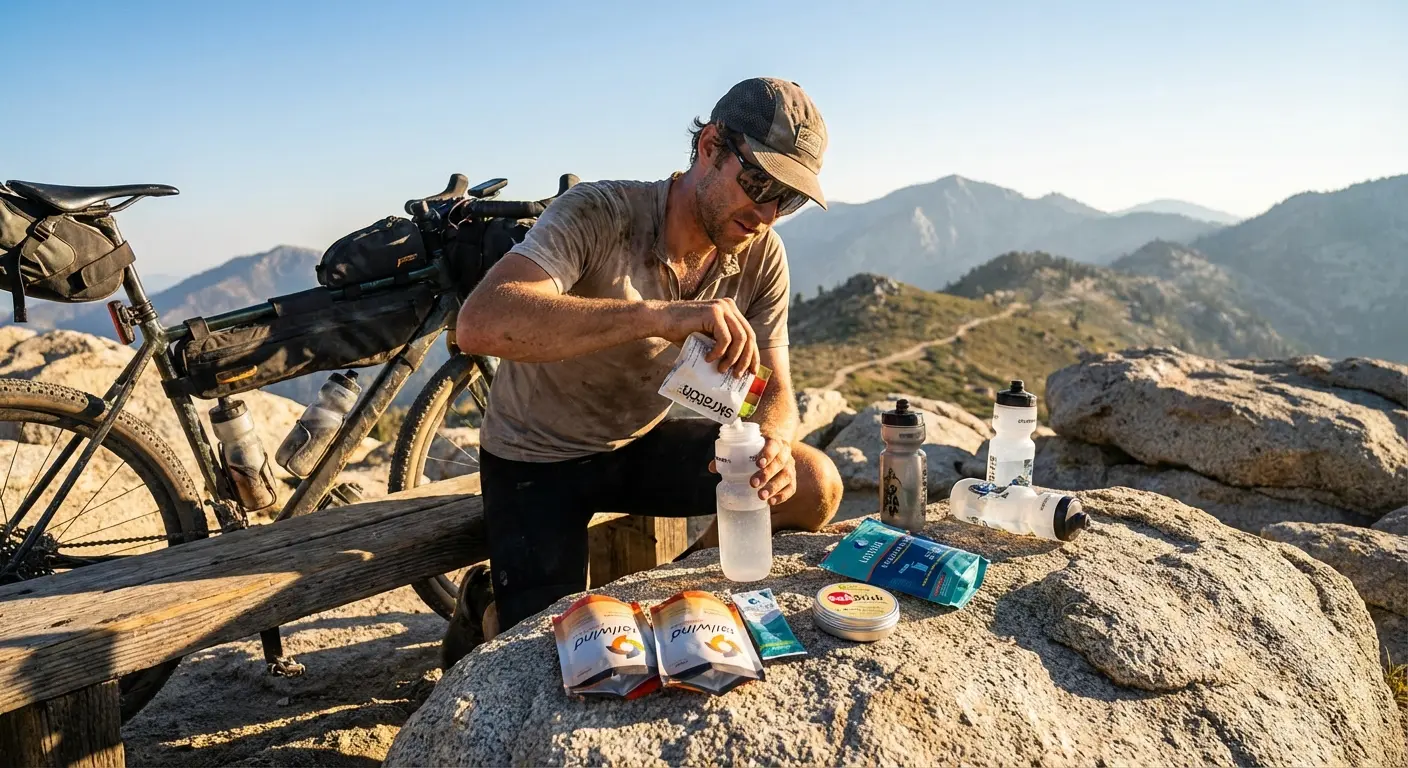
Beyond Water: The Electrolyte Equation
You can drink gallons of water and still suffer from dehydration symptoms. The culprit? Electrolyte imbalance. When you sweat, you lose sodium, potassium, magnesium, and other minerals essential for muscle function, nerve signaling, and fluid balance. Replace water without replacing electrolytes, and you'll cramp, fade, and potentially face dangerous hyponatremia.
For bikepackers riding 6-12 hours daily in varying conditions, electrolyte management isn't optional—it's essential for performance and safety. This guide covers the science of electrolyte balance, practical supplementation strategies, and how to recognize and prevent the most common nutrition mistakes on multi-day rides.
For complete nutrition strategy, see our Complete Bikepacking Food Guide. For hydration system choices, check Bikepacking Hydration: Water Bottles vs Bladders.
Understanding Electrolytes
What Are Electrolytes?
Electrolytes are minerals that carry electrical charges when dissolved in water. They regulate:
- Muscle contraction and relaxation
- Nerve impulse transmission
- Fluid balance between cells and bloodstream
- pH balance in blood
- Blood pressure regulation
The Key Players
| Electrolyte | Function | Lost in Sweat | Daily Need |
|---|---|---|---|
| Sodium | Fluid balance, nerve function | 500-2,000 mg/L | 1,500-3,000+ mg |
| Potassium | Muscle function, heart rhythm | 100-300 mg/L | 2,600-4,700 mg |
| Magnesium | Muscle relaxation, energy production | 10-50 mg/L | 310-420 mg |
| Calcium | Muscle contraction, bone health | 20-60 mg/L | 1,000-1,200 mg |
| Chloride | Fluid balance, digestion | 500-1,500 mg/L | Paired with sodium |
Sodium is king. You lose far more sodium in sweat than any other electrolyte. Most electrolyte issues stem from sodium depletion.
Sweat Rate Reality
Sweat rates vary dramatically:
| Condition | Typical Sweat Rate | Sodium Loss/Hour |
|---|---|---|
| Cool, easy effort | 0.5-0.75 L/hr | 250-750 mg |
| Warm, moderate effort | 0.75-1.25 L/hr | 500-1,500 mg |
| Hot, hard effort | 1.25-2.0 L/hr | 1,000-3,000 mg |
| Extreme heat | 2.0+ L/hr | 2,000-4,000+ mg |
Individual variation matters. Some riders are "salty sweaters" (visible salt crust on skin/clothes) and need significantly more sodium than average.
Signs of Electrolyte Imbalance
Sodium Depletion (Hyponatremia)
Early signs:
- Muscle cramps (especially calves, quads)
- Fatigue beyond normal exertion
- Headache
- Nausea
- Dizziness
Severe signs (seek medical help):
- Confusion or disorientation
- Swelling of hands and feet
- Vomiting
- Seizures
Risk increases when: Drinking large amounts of plain water without electrolytes, especially in hot conditions.
Potassium Depletion
Signs:
- Muscle weakness (different from fatigue)
- Irregular heartbeat
- Constipation
- Muscle twitching
Note: Potassium depletion is less common than sodium but can compound problems.
Magnesium Depletion
Signs:
- Muscle cramps and spasms
- Eye twitching
- Difficulty sleeping
- Anxiety or restlessness
Note: Magnesium depletes over multiple days of hard effort. Often an issue on extended trips.
Dehydration vs. Electrolyte Imbalance
These overlap but aren't identical:
| Symptom | Dehydration | Electrolyte Imbalance |
|---|---|---|
| Thirst | Primary sign | May be absent |
| Dark urine | Yes | Not necessarily |
| Muscle cramps | Possible | Primary sign |
| Headache | Yes | Yes |
| Fatigue | Yes | Yes |
| Nausea | Possible | Common with severe imbalance |
Key insight: If you're drinking plenty of water but still cramping and feeling awful, the problem is likely electrolytes, not water volume.
Electrolyte Products Compared
Drink Mixes
| Product | Sodium/Serving | Best For | Notes |
|---|---|---|---|
| LMNT | 1,000 mg | Heavy sweaters, keto | Zero sugar, strong taste |
| Skratch Labs | 400 mg | Moderate sweating | Light flavor, some sugar |
| Nuun Sport | 300 mg | Light-moderate | Tablets, convenient |
| Liquid IV | 500 mg | Moderate sweating | Uses CTT for absorption |
| Drip Drop | 330 mg | Moderate sweating | Medical-grade formula |
| Gatorade | 270 mg | Light sweating | High sugar, widely available |
Choosing the right product:
- Hot conditions or heavy sweater: Choose higher sodium (LMNT, Liquid IV)
- Moderate conditions: Skratch, Nuun, or Drip Drop
- Calorie-conscious: Zero-sugar options (LMNT, Nuun)
- Easy availability: Gatorade available at every gas station
Tablets vs. Powder vs. Liquid
| Format | Pros | Cons |
|---|---|---|
| Tablets (Nuun, SaltStick) | Compact, precise dosing | Need water to dissolve |
| Powder packets (Skratch, LMNT) | Flexible dosing, variety | Can clump, needs mixing |
| Liquid concentrate | No mixing needed | Heavy, bulky |
| Salt capsules (SaltStick) | Most concentrated | Need separate water |
For bikepacking, tablets and packets offer the best weight-to-benefit ratio.
Salt Capsules
For riders who prefer plain water taste:
- SaltStick Caps: 215 mg sodium, 63 mg potassium per capsule
- Hammer Endurolytes: 100 mg sodium, 50 mg potassium per capsule
Take 1-2 capsules per hour in hot conditions with water.
Practical Supplementation Strategy
The Basic Framework
Calculate your baseline:
- Estimate sweat rate (weigh yourself before/after training ride)
- Assess conditions (temperature, humidity, intensity)
- Know your type (salty sweater or not)
Then apply:
| Condition | Sodium Target/Hour | Strategy |
|---|---|---|
| Cool, easy | 200-400 mg | One bottle with electrolytes |
| Warm, moderate | 400-700 mg | Both bottles with electrolytes OR one + salt capsule |
| Hot, hard | 700-1,000+ mg | High-sodium mix + salt capsules |
Daily Rhythm for Multi-Day Trips
Morning:
- Start hydrated (16 oz water with breakfast)
- Include electrolytes if you'll be riding hard early
- Eat sodium with breakfast (salt on eggs, salty oatmeal)
While Riding:
- Drink before thirsty (set reminders if needed)
- Alternate plain water and electrolyte drink
- Sip consistently rather than gulping
- Increase electrolyte concentration in heat
At Camp:
- Rehydrate fully before dinner
- Include sodium in dinner (salty foods, add salt)
- Avoid excessive plain water that dilutes remaining electrolytes
- Consider magnesium supplement for recovery
The Two-Bottle System
Many riders use a simple system:
Bottle 1: Plain water Bottle 2: Electrolyte mix
Benefits:
- Rinse mouth with plain water when electrolyte taste gets old
- Adjust ratio based on conditions
- Always have backup hydration
When to Increase Electrolytes
Increase supplementation when:
- Temperature rises above 80°F (27°C)
- Humidity is high (sweat doesn't evaporate)
- Riding above normal intensity
- Multiple consecutive hard days (cumulative depletion)
- You notice white salt on skin or clothes
- You experience any cramping
Food-Based Electrolytes
High-Sodium Trail Foods
| Food | Sodium | Notes |
|---|---|---|
| Pretzels (1 oz) | 400-500 mg | Perfect trail snack |
| Salted nuts (1 oz) | 150-200 mg | Protein + sodium |
| Beef jerky (1 oz) | 500-700 mg | Excellent combo (see energy bars for more options) |
| Cheese (1 oz) | 150-200 mg | Good for lunch |
| Pickles | 300-400 mg each | Intense but effective |
| Olive packets | 200-300 mg | Great with lunch |
| Ramen (1 packet) | 800-1,500 mg | Dinner sodium bomb |
| Miso soup (1 packet) | 600-900 mg | Light dinner option |
Strategy: Include salty snacks throughout the day, not just at meals.
High-Potassium Options
| Food | Potassium | Notes |
|---|---|---|
| Banana | 400-450 mg | Classic, but fragile |
| Dried apricots (1/4 cup) | 380 mg | Trail-friendly |
| Potato (baked) | 900+ mg | Town resupply |
| Coconut water (8 oz) | 400-500 mg | Resupply option |
| Orange (medium) | 240 mg | Fresh fruit treat |
| Trail mix with nuts | 200-300 mg/oz | Continuous intake |
Magnesium Sources
| Food | Magnesium | Notes |
|---|---|---|
| Pumpkin seeds (1 oz) | 150 mg | Trail-friendly |
| Almonds (1 oz) | 80 mg | Snacking staple |
| Dark chocolate (1 oz) | 65 mg | Morale + minerals |
| Cashews (1 oz) | 75 mg | Versatile nut |
Sports Nutrition Beyond Electrolytes
Carbohydrate Fueling
Why it matters: Carbs are your primary fuel for moderate-to-hard effort. Depleting glycogen stores ("bonking") means dramatically reduced performance.
Targets:
- Easy riding: 30-40g carbs/hour
- Moderate riding: 40-60g carbs/hour
- Hard riding: 60-90g carbs/hour
Sources:
| Food | Carbs | Absorption |
|---|---|---|
| Energy gel | 20-25g | Fast |
| Energy bar | 20-45g | Medium |
| Banana | 27g | Medium |
| Fig bars | 22g (2 bars) | Medium |
| Dates (3) | 20g | Fast |
| PB&J on tortilla | 50g+ | Slower |
Multi-day consideration: On extended trips, you can't eat enough while riding to fully replace what you burn. Eat at every opportunity—morning, breaks, dinner—to maintain reserves. For trip planning, see our Bikepacking Meal Planning guide.
Protein for Recovery
Why it matters: Protein repairs muscle damage from long days in the saddle. Inadequate protein means slower recovery and accumulated fatigue.
Target: 1.2-1.6g per kg body weight daily (84-112g for 70kg rider)
Best trail sources:
- Nut butters: 7-8g per 2 tbsp
- Nuts: 6-7g per oz
- Cheese: 7g per oz
- Jerky: 9-13g per oz
- Tuna/chicken pouch: 15-20g per pouch
Strategy: Include protein at every meal, not just dinner.
For more protein strategies, see Calorie-Dense Foods for Bikepacking and Vegan Bikepacking Food.
Fat as Endurance Fuel
Why it matters: Fat provides sustained energy for low-to-moderate effort. A fat-adapted body burns more fat, sparing glycogen for hard efforts.
Best trail fats:
- Olive oil (add to dinners)
- Nut butters
- Nuts and seeds
- Cheese
- Coconut oil packets
Multi-day benefit: Fat-rich foods keep you satisfied longer between meals.
Common Mistakes
Mistake 1: Only Water, No Electrolytes
Plain water dilutes remaining electrolytes. In hot conditions, this leads to hyponatremia.
Fix: Always include electrolytes in hot weather or during hard effort.
Mistake 2: Waiting Until Cramping
By the time you cramp, you're severely depleted. Recovery takes longer than prevention.
Fix: Supplement consistently before symptoms appear.
Mistake 3: One-Size-Fits-All Approach
Your sweat rate and sodium loss differ from the next rider's.
Fix: Experiment in training. Note what works for you specifically.
Mistake 4: Ignoring Magnesium on Long Trips
Sodium gets attention, but magnesium depletes over days and affects recovery.
Fix: On trips longer than 3-4 days, add magnesium-rich foods or supplements.
Mistake 5: Over-Supplementing
More isn't always better. Excessive sodium can cause GI distress and bloating.
Fix: Follow guidelines, adjust based on conditions, and listen to your body.
Heat-Specific Strategies
Riding in Extreme Heat
When temperatures exceed 95°F (35°C):
- Pre-load electrolytes: Start the day with a high-sodium breakfast and electrolyte drink
- Increase sodium concentration: Use higher-sodium products (LMNT, extra salt capsules)
- Ride cooler hours: Start early, take midday breaks
- Wet your clothes: Evaporative cooling reduces sweat loss
- Monitor urine color: Should be light yellow, not clear (over-hydration) or dark (dehydration)
- Know your limits: Heat stroke is serious—if you feel confused or stop sweating, seek shade and help
Signs You Need to Stop
- Dizziness or lightheadedness that doesn't improve with rest
- Confusion or difficulty concentrating
- Cessation of sweating in hot conditions
- Rapid or irregular heartbeat
- Nausea or vomiting that prevents drinking
These indicate heat exhaustion or stroke. Find shade, cool down, and seek help if symptoms persist.
Building Your Electrolyte Kit
Minimalist Kit
- Nuun tablets (1 tube = 10 servings)
- Salt packets (from fast food)
- Salty snacks (pretzels, jerky)
Weight: ~3 oz Best for: Short trips, cooler conditions
Standard Kit
- Electrolyte powder packets (LMNT, Skratch)—5-7 day supply
- Salt capsules (SaltStick)—1 bottle
- Nuun tablets (backup)
- Magnesium supplement (for trips 4+ days)
Weight: ~6-8 oz Best for: Multi-day trips, moderate conditions
Hot Weather Kit
- High-sodium powder (LMNT)—7+ day supply
- Salt capsules—2 bottles
- Extra salt packets
- Oral rehydration salts (Drip Drop) for emergency
Weight: ~10-12 oz Best for: Desert riding, summer heat
FAQ
How do I know if I need more electrolytes?
Muscle cramps, fatigue despite adequate calories, and headaches while drinking plenty of water all suggest electrolyte depletion. White salt marks on skin or clothes indicate you're a heavy sodium loser.
Can I drink too much water?
Yes. Excessive water without electrolytes dilutes blood sodium (hyponatremia), which can be dangerous. Balance water intake with sodium supplementation.
What about energy drinks like Red Bull?
Energy drinks provide caffeine and sugar but inadequate electrolytes for endurance. They're not a substitute for proper electrolyte products.
Should I take electrolytes every day on a long trip?
Yes. Cumulative depletion over multiple days compounds problems. Maintain consistent supplementation throughout your trip.
Do I need electrolytes if it's not hot?
Yes, but less. Even in cool weather, extended effort depletes electrolytes. Reduce concentration but don't skip entirely.
What's better: drink mix or salt capsules?
Both work. Drink mixes are easier to remember (you taste them). Salt capsules let you drink plain water if you prefer. Many riders use both.
Quick Reference: Electrolyte Needs by Condition
| Condition | Sodium/Hour | Strategy |
|---|---|---|
| Cool, easy (under 60°F, zone 1-2) | 200-300 mg | Light electrolyte drink |
| Moderate (60-75°F, zone 2-3) | 300-500 mg | Standard electrolyte drink |
| Warm (75-85°F, zone 3-4) | 500-700 mg | Full-strength mix + salty snacks |
| Hot (85-95°F, zone 3-4) | 700-1,000 mg | High-sodium mix + salt caps |
| Extreme (over 95°F) | 1,000+ mg | Maximum supplementation + shade breaks |
For complete hydration strategy, see Bikepacking Hydration: Water Bottles vs Bladders. For overall nutrition planning, check our Complete Bikepacking Food Guide.
Balance your chemistry. Ride stronger. Recover faster.