Bikepacking Meal Planning: How to Plan Food for Any Trip Length
20+ years testing gear in Colorado backcountry
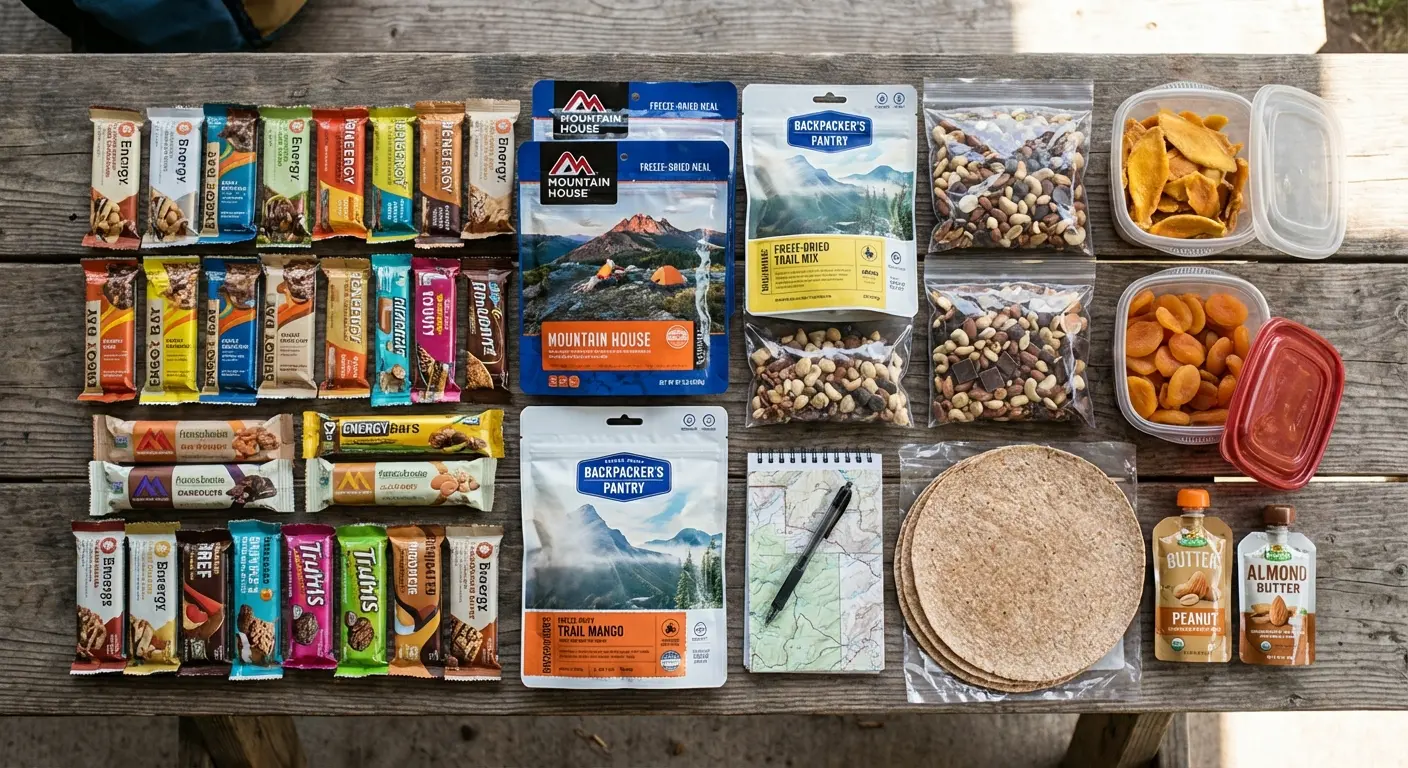
Planning Your Food Is Planning Your Success
Poor food planning ruins more bikepacking trips than mechanical failures. Run short, and you're bonking 20 miles from town. Overpack, and you're hauling unnecessary weight uphill all day. Get it right, and food becomes one less thing to worry about—fuel that appears when needed without thought.
The key insight: meal planning isn't just deciding what to eat. It's a logistics system that accounts for calories, weight, resupply options, cooking capability, and personal preferences. This guide walks you through building that system for trips of any length.
For specific food recommendations, see our Complete Bikepacking Food Guide. For cooking gear, check the Bikepacking Stoves Guide.
Step 1: Calculate Your Calorie Needs
Before choosing foods, know how much fuel you need.
Daily Calorie Requirements
| Riding Style | Daily Calories | Per Hour Estimate |
|---|---|---|
| Easy (flat, 3-4 hours) | 2,500-3,500 | ~500 cal/hour |
| Moderate (rolling, 5-6 hours) | 3,500-4,500 | ~600 cal/hour |
| Hard (mountain, 7+ hours) | 4,500-6,000+ | ~700+ cal/hour |
Quick formula: Your baseline metabolism (~2,000 cal) plus hours of riding × intensity factor (500-800 cal/hour).
Practical Targeting
You won't replace 100% of calories burned—and don't need to. Aim for 70-80% replacement. Your body handles short-term deficits fine; chronic under-eating tanks performance.
Target zones by trip length:
- Weekend (2-3 days): Slight deficit is okay; you'll recover at home
- Week-long: Stay closer to 80% to maintain energy
- Multi-week: Maximize intake; accumulating deficit catches up
Step 2: Determine Food Weight Budget
Every ounce matters when you're climbing. Balance sufficient calories against reasonable carrying weight.
Food Weight Guidelines
| Food Type | Calories/oz | Weight for 3,000 cal |
|---|---|---|
| Freeze-dried meals | 100-130 | 23-30 oz |
| Mixed trail food | 130-150 | 20-23 oz |
| Calorie-optimized | 150-180 | 17-20 oz |
Rule of thumb: 1.5-2 pounds of food per day covers most bikepackers. Lighter is possible with calorie-dense choices; heavier happens with fresh food and treats.
Weight vs. Resupply Trade-off
Carrying more food = more climbing weight but fewer resupply stops Carrying less food = lighter riding but more resupply planning
For weekend trips, just carry everything. For longer trips, strategic resupply keeps daily weight manageable.
Step 3: Map Your Resupply Options
For trips longer than 2-3 days, resupply strategy matters as much as meal selection.
Resupply Source Quality
| Source | Food Quality | Reliability | Best For |
|---|---|---|---|
| Full grocery store | Excellent | High | Restocking everything |
| Small-town grocery | Good | Medium | Basic resupply |
| Gas station/convenience | Limited | High | Emergency only |
| Restaurant/diner | Great (fresh) | Varies | Morale boost + fresh food |
| Mail drop | Exactly what you want | High | Specific foods, remote areas |
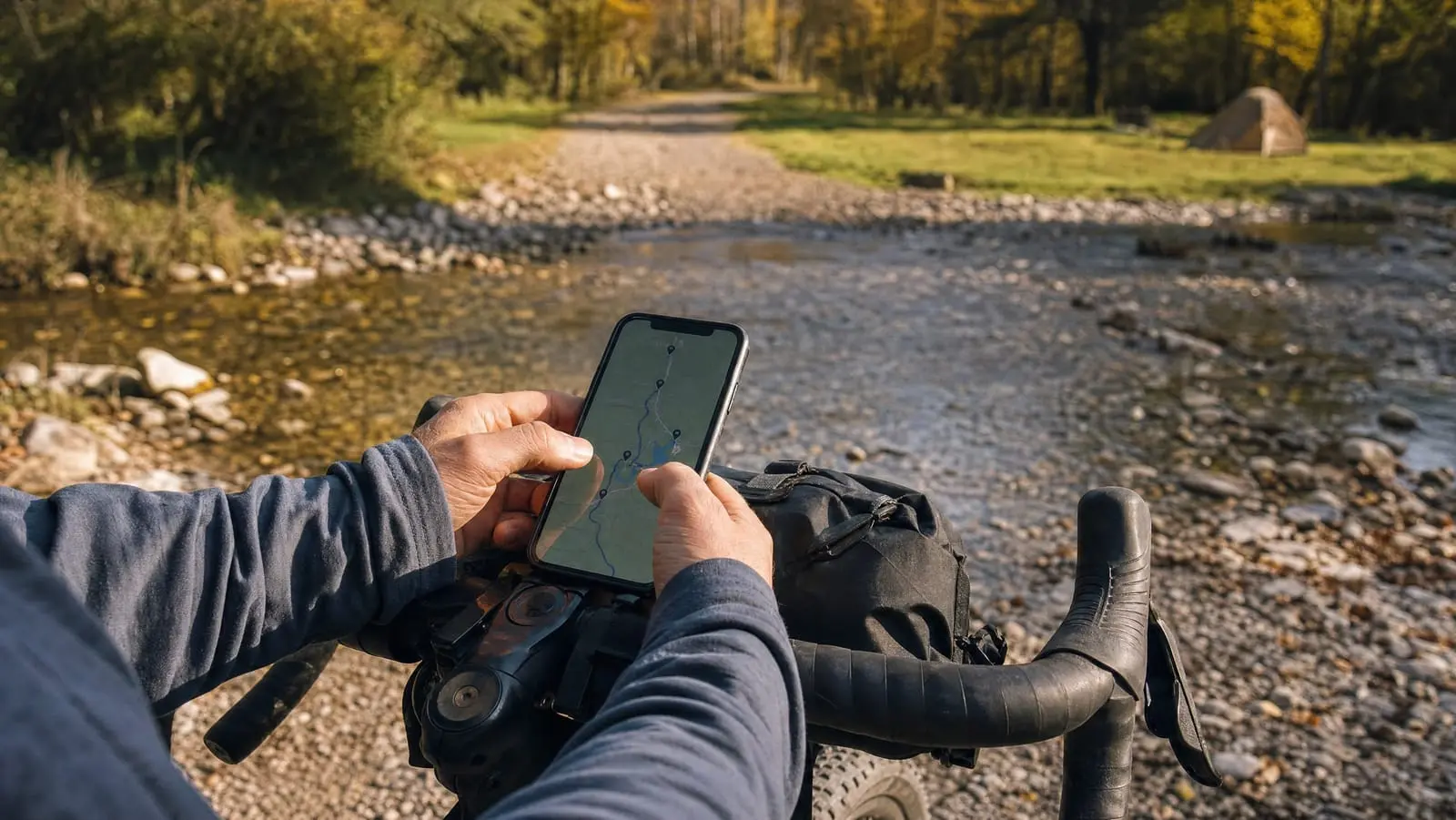
Research Before You Go
That small town with a "grocery store" might only have chips and beer. Verify:
- Google Maps reviews: What do recent visitors say?
- Hours of operation: Small-town stores close early
- Day of week: Some close Sundays
- Seasonal closures: Tourist towns may close off-season
Planning Resupply Spacing
- Conservative: 2-day food carries between resupply (lighter daily weight)
- Moderate: 3-4 day food carries (balance of weight and stops)
- Aggressive: 5+ day carries (fewer stops, heavier riding)
Your riding pace, calorie needs, and route options determine the right spacing.
For detailed resupply tactics, see How to Resupply on Long Bikepacking Routes.
Step 4: Build Your Meal Categories
Organize food by when and how you'll eat it. This prevents everything being "just snacks" and ensures balanced nutrition.
Breakfast Category
Purpose: Jumpstart the day, provide sustained energy for morning riding.
Options by cook preference:
- Hot: Instant oatmeal, freeze-dried breakfasts, grits
- No-cook: Granola with powdered milk, overnight oats, Pop-Tarts
- Town: Hit a diner or bakery before riding
Target: 500-800 calories
Trail Snacks Category
Purpose: Continuous fueling while riding. Most critical category—this is where bonking happens.
Characteristics needed:
- Easy to eat one-handed
- Won't melt or crush
- Quick energy (carb-focused)
- Small wrappers for pocket stuffing
Target: 800-1,200 calories throughout riding (200-300 cal/hour)
For snack recommendations, see Best Trail Snacks for Bikepacking.
Lunch Category
Purpose: Mid-day fuel. Can be a formal stop or just larger snacking.
Approaches:
- Grazing: No formal lunch; just more snacks during midday break
- Assembly meal: Tortilla wraps, crackers with tuna, cheese and meat
- Town stop: Restaurant lunch when route allows
Target: 500-700 calories
Dinner Category
Purpose: Recovery fuel, comfort, ending the day well.
Options:
- Freeze-dried meals (convenient, consistent)
- Ramen-based meals (cheap, customizable)
- Rice/couscous with protein and fat additions
- Town restaurant (best morale, requires planning)
Target: 700-1,200 calories
For dinner ideas, see Best Freeze-Dried Meals.
Extras Category
Purpose: Morale boosters, emergency reserves, specific cravings.
Include:
- Coffee or tea (morale essential for many)
- Chocolate or candy (treat after hard sections)
- Extra bars (emergency calorie reserve)
- Electrolyte mix
Step 5: Create Your Menu Template
Build reusable meal patterns rather than planning every meal individually.
The Pattern Approach
Instead of planning "Day 1 breakfast: oatmeal, Day 2 breakfast: granola..." create patterns:
Breakfast Pattern: Alternate hot (oatmeal) and cold (granola) mornings Snack Pattern: 1 bar + trail mix mid-morning, 2 bars afternoon, fruit chews as needed Dinner Pattern: Freeze-dried Day 1, ramen-based Day 2, town food Day 3 if available
Patterns adapt to trip length without replanning everything.
Sample 3-Day Template
| Day | Breakfast | Snacks | Lunch | Dinner |
|---|---|---|---|---|
| 1 | Cold (quick start) | 4 bars, trail mix | Tortilla wraps | Freeze-dried |
| 2 | Hot (leisurely) | 4 bars, dried fruit | Town lunch | Ramen + upgrades |
| 3 | Cold (early start) | 3 bars, last reserves | Final push | Town dinner |
Extending Templates
For longer trips, repeat the template with variations:
- Different bar flavors
- Rotate freeze-dried meal types
- Adjust based on resupply availability
Planning By Trip Length
Weekend Trips (2-3 Days)
Approach: Carry everything from start. No resupply needed.
Food weight: 3-4.5 pounds total Planning time: 15 minutes
Sample food bag:
- 2 breakfast options
- 8-12 bars/snacks
- Lunch supplies for 2-3 days
- 2 dinners
- Coffee/treats
Key principle: Slightly overpack. Extra weight for 2-3 days is minimal; running short is miserable.
Week-Long Adventures (5-7 Days)
Approach: One mid-trip resupply. Carry 3-4 days food at a time.
Food weight: 5-6 pounds per carry Planning time: 30-60 minutes
Strategy:
- Plan resupply point (Day 3 or 4)
- Research resupply options thoroughly
- Pack first segment complete
- Have backup plan if resupply fails
Key principle: Build flexibility. Weather delays or closed stores happen. Carry one extra day's worth as buffer.
Extended Expeditions (2+ Weeks)
Approach: Multiple resupplies, possibly mail drops, careful logistics.
Food weight: Variable by segment (4-7 pounds per carry) Planning time: Several hours across multiple sessions
Strategy:
- Map all potential resupply points
- Research each thoroughly (call ahead for remote areas)
- Plan mail drops for specific foods or remote segments
- Build route options around resupply reliability
- Accept flexibility in daily menus
Key principle: Expect the unexpected. Store closures, delays, and changed plans are normal. Rigid meal plans fail on long trips.
For long-trip logistics, see How to Resupply on Long Bikepacking Routes.
The Meal Planning Spreadsheet
For trips longer than a weekend, a simple spreadsheet prevents gaps.
Basic Columns
| Day | Breakfast (cal) | Snacks (cal) | Lunch (cal) | Dinner (cal) | Daily Total | Resupply? |
|---|---|---|---|---|---|---|
| 1 | Oatmeal (400) | Bars x4 (800) | Wraps (500) | FD meal (600) | 2,300 | No |
| 2 | Granola (350) | Bars x4 (800) | Town (700) | Ramen+ (650) | 2,500 | Yes |
What This Reveals
- Daily calorie totals vs. targets
- Where resupply needs to happen
- Days that need more/less food
- Total food weight to carry
Don't Over-Engineer
A rough spreadsheet beats precise planning. Real trips never follow exact plans—stores are closed, you're extra hungry, weather changes schedules. Use spreadsheets for big-picture planning, not minute tracking.
Practical Tips
Tip 1: Test Meals Before the Trip
Don't discover that a freeze-dried meal is disgusting on night two. Eat test meals at home first.
Tip 2: Pack Food By Day or Meal
Organize food bags by day or meal type. "Day 2 dinner" or "All breakfasts" beats digging through a jumbled food bag.
Tip 3: Keep Trail Snacks Accessible
Food in your frame bag gets eaten less than food in your jersey pocket or top tube bag. Accessibility determines eating frequency.
Tip 4: Build In Treats
All fuel, no fun makes for joyless trips. Include chocolate, candy, or whatever treats motivate you.
Tip 5: Plan for Worst Case
Storms, mechanicals, and wrong turns happen. Carry one extra day's worth of food beyond planned needs.
Common Planning Mistakes
Mistake 1: Planning Based on Home Appetite
You eat more while bikepacking than you think. Most people underestimate calories by 30-40%.
Mistake 2: All Bars, All the Time
Bars are convenient but create menu fatigue. Include variety: real food, different textures, varied flavors.
Mistake 3: Ignoring Water Requirements
Each hot meal needs 1.5-2.5 cups of water. Factor cooking water into your hydration planning.
Mistake 4: Assuming Resupply Will Work
That "grocery store" might be closed Sundays. That "gas station" might only sell bait. Research and have backup plans.
Mistake 5: Forgetting Electrolytes
Water without electrolytes leads to cramping and bonking, especially in heat. Plan electrolyte replacement.
For electrolyte strategy, see Electrolytes and Sports Nutrition.
FAQ
How many days of food should I carry maximum?
5-7 days is practical for most bikepackers—about 7-10 pounds of food. Beyond that, weight becomes punishing. Plan routes with resupply or use mail drops.
Should I plan every meal specifically?
For weekends, no—just pack enough variety. For longer trips, plan meal categories and resupply points specifically, but stay flexible on daily specifics.
What if I'm not hungry but should eat?
Eat anyway. Trail appetite doesn't always match calorie needs. Small, frequent snacking is easier than forcing big meals.
How do I plan for dietary restrictions?
Research resupply options carefully—small towns may lack specialized foods. Carry more from start, plan mail drops for specific items, and identify larger towns with real grocery stores.
Should I count calories precisely?
General awareness beats obsessive counting. Know roughly what you're eating and trust hunger signals. If you're consistently losing energy or weight, eat more.
Quick Planning Checklist
Before the trip:
- Calculate daily calorie target
- Map resupply points and verify availability
- Build meal template with variety
- Test any unfamiliar foods
- Pack food organized by day/meal
- Include treats and emergency reserves
- Check electrolyte supplies
Food bag audit:
- Sufficient calories for segment
- Variety across meals and snacks
- Trail snacks accessible, not buried
- Cooking supplies match meal needs
- Emergency reserves included
For specific food recommendations, see our Complete Bikepacking Food Guide. Keep your food safe in bear country with our Bear Canisters vs Bear Bags guide.
Plan smart. Eat well. Ride far.