Preventing and Treating Saddle Sores: The Bikepacker's Guide
20+ years testing gear in Colorado backcountry
The Problem Nobody Talks About
Saddle sores are the dirty secret of cycling. Everyone gets them, few discuss them openly, and many riders quit the sport rather than solve the problem. But saddle sores are preventable, and even when they occur, they're treatable.
On multi-day bikepacking trips, your saddle contact area endures thousands of pressure cycles, constant friction, and exposure to sweat and bacteria. Without proper prevention, problems are almost inevitable. With the right approach, you can ride for weeks without issues.
This guide covers everything you need to know: what causes saddle sores, how to prevent them, what products actually work, and what to do when prevention fails. Master saddle comfort and you've solved bikepacking's most common trip-ending problem.
For complete comfort information, see our Complete Bikepacking Comfort Guide.
Understanding Saddle Sores
"Saddle sore" is a catch-all term covering several distinct problems. Understanding the type you're dealing with determines the right treatment.
Types of Saddle Issues
Skin chafing:
- Surface irritation from friction
- Red, raw skin that stings
- Usually first stage of problems
- Responds well to lubrication
Folliculitis:
- Infected hair follicles
- Small red bumps, possibly with whiteheads
- Caused by bacteria entering irritated follicles
- Common in sweaty, warm conditions
Furuncles (boils):
- Deeper infections
- Painful, swollen lumps
- May require medical treatment
- Need time off the bike to heal
Pressure sores:
- Tissue damage from sustained pressure
- Often deeper than surface issues
- Caused by poor saddle fit
- Need saddle change, not just cream
Cysts:
- Fluid-filled lumps
- Often develop from repeated irritation
- May require medical drainage
- Recurring cysts suggest fit problems
Causes of Saddle Sores
| Cause | Mechanism | Solution |
|---|---|---|
| Friction | Skin rubbing against saddle/shorts | Lubrication, proper shorts |
| Pressure | Blood flow restriction, tissue damage | Saddle fit, position changes |
| Moisture | Skin maceration, bacterial growth | Moisture-wicking, hygiene |
| Bacteria | Infection of irritated skin | Cleanliness, antimicrobial products |
| Poor fit | Concentrated pressure, chafing | Saddle width, position |
| Dirty shorts | Bacterial contamination | Fresh shorts daily |
Most saddle sores result from multiple factors combining. Effective prevention addresses all potential causes.
Prevention: The Foundation
Prevention is dramatically more effective than treatment. These strategies keep saddle sores from developing in the first place.
Chamois Cream: Your First Defense
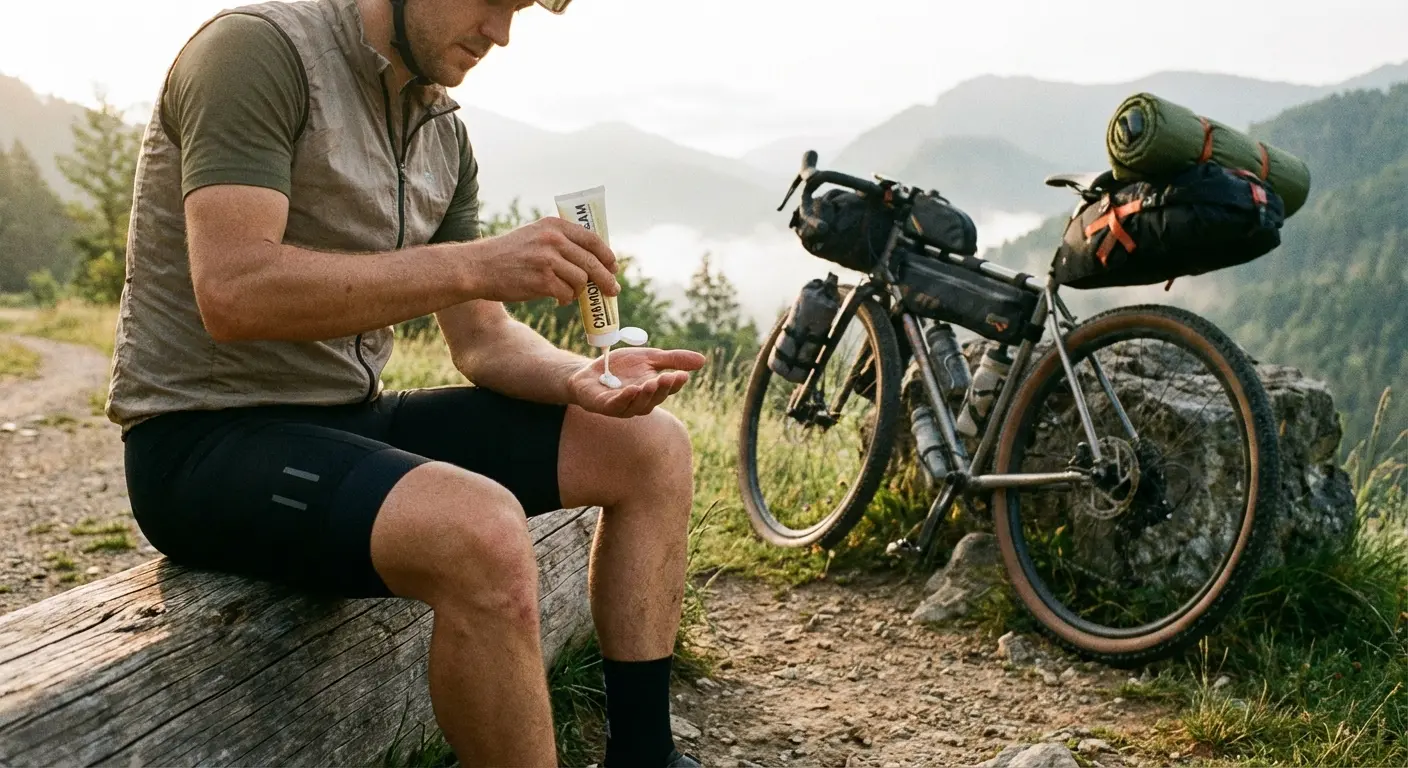
Chamois cream reduces friction between skin and shorts while providing antibacterial protection. It's the single most effective saddle sore prevention tool.
How to apply:
- Apply generously to skin (not just shorts)
- Cover entire contact area—sit bones, perineum, inner thighs
- Apply to chamois pad as well for extra protection
- Reapply at lunch stops on long days
- Don't be conservative—more is better
When to apply:
- Every ride over 30 minutes
- Generously for multi-hour rides
- Extra application for hot/humid conditions
- Reapplication for all-day rides
Hygiene Matters
Bacteria turns minor irritation into infected sores. Strict hygiene prevents this progression.
Before riding:
- Start with clean, dry skin
- Apply chamois cream to clean skin
- Wear fresh shorts (never rewear without washing)
After riding:
- Get out of cycling shorts immediately
- Shower or clean contact area thoroughly
- Dry completely before dressing
- Let skin breathe—wear loose clothing
On multi-day trips:
- Rinse shorts daily (even without soap)
- Dry shorts completely before rewearing
- Carry wet wipes for cleaning when no shower available
- Consider two pairs of shorts if space allows
Shorts Quality and Fit
Your shorts are the interface between you and the saddle. Quality matters.
Chamois pad quality:
- Seamless construction prevents pressure points
- Multi-density foam supports different areas
- Antibacterial treatment inhibits bacteria
- Proper size for your anatomy
Shorts fit:
- Snug but not restrictive
- No bunching or wrinkles in chamois
- Legs stay in place without riding up
- Waistband doesn't dig in
Bib shorts vs. regular shorts:
- Bibs eliminate waistband pressure
- No gap between shorts and jersey
- More comfortable for long rides
- Harder for bathroom breaks
Nothing Under Your Shorts
Wearing underwear under cycling shorts is the most common mistake new cyclists make.
Why underwear causes problems:
- Creates additional friction layers
- Bunches and wrinkles against skin
- Absorbs moisture and holds it against skin
- Seams cause pressure points
The rule: Cycling shorts are designed to be worn against bare skin. The chamois pad is your underwear. Adding a layer defeats its purpose.
Saddle Fit and Position
No amount of chamois cream fixes a fundamentally wrong saddle. Getting fit right is essential.
Sit Bone Width
Your sit bones (ischial tuberosities) are designed to support your weight. A saddle that matches your sit bone width distributes pressure properly.
Measuring sit bones:
- Sit on corrugated cardboard
- Lean forward slightly
- Stand up and measure center-to-center of impressions
- Add 20-25mm for saddle width
Common measurements:
| Sit Bone Width | Recommended Saddle |
|---|---|
| 90-100mm | 130-140mm saddle |
| 100-120mm | 143-155mm saddle |
| 120-140mm | 155-168mm saddle |
| 140mm+ | 168mm+ saddle |
Saddle Position
Even the right saddle causes problems when poorly positioned.
Height:
- Too high = rubbing as hips rock
- Too low = increased pressure, less power
- Sweet spot = slight knee bend at bottom of stroke
Angle:
- Start perfectly level
- Slight nose-down for forward positions
- Nose-up causes excessive soft tissue pressure
Fore-aft:
- Affects weight distribution
- Too far forward = more hand pressure
- Too far back = reaching for handlebars
Cutout and Relief Channels
Modern saddles often feature cutouts or channels to relieve soft tissue pressure.
Full cutout:
- Complete opening in saddle center
- Maximum soft tissue relief
- Some riders find edges uncomfortable
Relief channel:
- Groove down center of saddle
- Reduces pressure without full opening
- Often more comfortable than full cutout
Flat/traditional:
- No relief features
- Works for some riders
- May cause numbness for others
The right choice depends on your anatomy and riding position. What works for one rider may not work for another.
Featured Products
Chamois Butt'r Original
The industry standard chamois cream that's proven effective for decades. Non-greasy formula applies easily and lasts through long rides without reapplication. Contains no parabens or artificial fragrances that might irritate sensitive skin. The larger 8oz tube provides enough for weeks of riding and is more economical than smaller sizes. We've used this on rides from day trips to month-long tours—it simply works. Apply generously to both skin and chamois for best results.
- Proven formula
- Non-greasy
- Long-lasting protection
- No artificial fragrances
- Available in multiple sizes
DZ Nuts Chamois Cream
Formulated with tea tree oil for natural antibacterial protection, DZ Nuts excels in hot, humid conditions where bacterial growth is most problematic. The cooling sensation is noticeable but not overwhelming, providing welcome relief on sweaty summer rides. Slightly thicker consistency than some competitors means it stays in place better during long efforts. Originally developed for professional racers dealing with extreme stage race conditions. The 4oz tube is perfect for packing on trips.
- Tea tree oil antibacterial
- Cooling sensation
- Thick, long-lasting formula
- Pro-level protection
- Great for humid conditions
Assos Chamois Creme
The premium option from the Swiss brand known for obsessive attention to cycling comfort. Assos chamois creme uses a unique formula that adapts to body temperature for consistent protection throughout the ride. The light, non-greasy texture feels natural against skin. More expensive than alternatives, but the quality is evident—a little goes further and protection lasts longer. If you're investing in quality shorts, matching them with quality cream makes sense.
- Temperature-adaptive formula
- Premium Swiss quality
- Light texture
- Long-lasting protection
- A little goes far
Eucerin Aquaphor
Not specifically designed for cycling, but Aquaphor's healing ointment works surprisingly well as chamois cream—especially for riders with sensitive skin who react to specialized products. The petroleum-based formula creates an excellent friction barrier, and it's available everywhere at reasonable prices. Many long-distance cyclists swear by it. Also excellent for treating already-irritated skin. The small tube fits easily in a jersey pocket for on-ride reapplication.
- Sensitive skin friendly
- Widely available
- Excellent friction barrier
- Also heals irritation
- Affordable
Specialized Power Expert Saddle
One of the most popular saddles for endurance riding, the Power's short-nose design reduces soft tissue pressure while maintaining proper sit bone support. The center channel provides relief without a full cutout that some riders find uncomfortable. Level3 padding offers enough cushion for long days without excessive squish that causes rubbing. Width options (143mm, 155mm, 168mm) let you match your anatomy. The standard choice for many bikepackers and touring cyclists.
- Short-nose design
- Center relief channel
- Multiple width options
- Proven comfortable
- Level3 padding
Brooks B17 Leather Saddle
The legendary leather saddle that's been supporting cyclists for over a century. Brooks leather saddles require a break-in period but eventually mold to your specific anatomy for truly personalized support. Many long-distance tourers consider them the most comfortable option once properly broken in. The steel frame adds durability but also weight. Requires maintenance (leather treatment) but lasts decades with care. Not for everyone, but beloved by those who take the time to break them in properly.
- Molds to your body
- Lasts decades
- Classic proven design
- 170mm width standard
- Steel frame durability
Treatment: When Prevention Fails
Despite best efforts, saddle sores sometimes develop. Caught early, most heal quickly with proper treatment.
Early Stage Treatment
Minor chafing:
- Clean area thoroughly
- Apply healing ointment (Aquaphor, A&D)
- Let skin breathe—no tight clothing
- Extra chamois cream on next ride
- Monitor for worsening
Small bumps/early sores:
- Clean with antibacterial wash
- Apply antibiotic ointment
- Cover with breathable bandage if needed
- Take a rest day if possible
- Resume riding with extra cream and monitoring
More Serious Sores
Signs you need time off:
- Open wounds that won't heal
- Increasing pain rather than improving
- Signs of infection (spreading redness, warmth, pus)
- Difficulty sitting comfortably off the bike
Treatment approach:
- Take complete time off the saddle
- Keep area clean and dry
- Apply antibiotic ointment regularly
- Use warm compresses to encourage drainage
- See a doctor if no improvement in 48-72 hours
Riding Through It
Sometimes you're on a trip and can't take time off. To continue riding with minor saddle sores:
- Extra lubrication - Apply chamois cream very liberally
- Bandaging - Protect open areas with appropriate wound covering
- Saddle adjustment - Sometimes moving the sore away from pressure points helps
- Standing frequently - Reduce time in the saddle
- Shorter days - Reduce total saddle time
- Evening care - Thorough cleaning and treatment after riding
This is damage control, not healing. Plan to rest properly as soon as possible.
Special Considerations
Women-Specific Issues
Female anatomy creates different saddle sore patterns and requires some different approaches.
Key differences:
- Soft tissue pressure often more problematic
- Saddle width needs may be greater
- Chafing patterns differ
- Yeast infections can develop from moisture
Prevention:
- Women-specific saddles often have larger cutouts
- Moisture control is especially important
- Some prefer saddles with no nose pressure at all
- Chamois cream formulations exist for female anatomy
See also: Women's Bikepacking Complete Guide
Hot Weather Challenges
Heat and humidity multiply saddle sore risk significantly.
Additional precautions:
- Apply chamois cream more liberally
- Reapply at every opportunity
- Consider antimicrobial cream formulations
- Clean and dry shorts mid-day if possible
- Evening hygiene becomes critical
Multi-Week Tours
Extended trips require sustained vigilance. Problems that seem minor in week one can become serious by week three.
Long-tour strategies:
- Rotate between two pairs of shorts
- Take periodic rest days
- Adjust saddle position if needed
- Don't hesitate to take an extra rest day for healing
- Resupply chamois cream before running low
The Saddle Break-In Reality
New saddles and new sit bones both need time to adapt. Understanding this process helps manage expectations.
First Weeks of Riding
What's normal:
- Some sit bone soreness
- Gradual adaptation over 2-3 weeks
- Soreness that improves during rides
- Consistent riding speeds adaptation
What's not normal:
- Pain that increases during rides
- Numbness or tingling
- Skin breakdown
- Issues getting worse over time
Breaking In a New Saddle
The process:
- Start with shorter rides (30-60 minutes)
- Gradually increase duration
- Use chamois cream from the start
- Give it 8-10 rides before judging
- Some saddles never work—that's okay
When to give up:
- No improvement after 10+ rides
- Numbness or nerve symptoms
- Pain rather than soreness
- Skin problems despite cream use
Not every saddle works for every rider. If a saddle isn't working after genuine break-in effort, try a different one.
FAQ
How much chamois cream should I use?
More than you think. Apply a generous layer covering all contact areas—sit bones, perineum, and inner thighs. Also apply to the chamois pad itself. You should be able to feel the lubricating effect while riding. For long days, reapply at stops.
Can I use regular lotion instead of chamois cream?
Regular lotion absorbs quickly and provides minimal friction protection. Chamois cream is formulated to stay on the surface providing lubrication throughout the ride. In an emergency, petroleum-based products like Vaseline or Aquaphor work better than regular lotion.
How do I know if my saddle is too narrow or too wide?
Too narrow: sit bones hang off the edges, soft tissue bears weight, chafing on inner thighs. Too wide: inner thighs rub on saddle edges, sitting on soft parts of saddle rather than sit bones. Ideal: sit bones supported fully, soft tissue relieved, no thigh rubbing.
Should I wear underwear under cycling shorts?
No. Cycling shorts are designed to be worn against bare skin. Underwear adds layers that bunch, trap moisture, and create friction points. The chamois pad functions as your underwear—trust the system.
How long does it take to break in a new saddle?
Plan for 8-10 rides of gradually increasing length. Most riders know within this period whether a saddle will work for them. Some saddles feel great immediately; others take the full break-in period. If you're still suffering after 10 rides, that saddle probably isn't right for you.
Why do saddle sores keep coming back?
Recurring saddle sores in the same location often indicate a fit issue rather than a hygiene issue. The saddle may be concentrating pressure on that spot. Consider saddle position adjustment, different saddle shape, or professional bike fit.
Related Guides
- Complete Bikepacking Comfort Guide - Full comfort overview
- Hand Numbness and Handlebar Comfort - Another key contact point
- Bike Fit for Loaded Bikepacking - How load affects saddle pressure
- What to Wear Bikepacking - Shorts and clothing selection
- Building Saddle Time - Conditioning your body
- Women's Bikepacking Guide - Women-specific considerations
Saddle sores are not an inevitable part of cycling. With proper prevention—good saddle fit, quality shorts, consistent chamois cream use, and strict hygiene—most riders avoid problems entirely.
When issues do develop, catch them early and treat them promptly. Taking one rest day beats losing a week to an infected sore.
Protect your contact points. Keep riding.