Night Riding Psychology: Conquering Your Fear of the Dark
20+ years testing gear in Colorado backcountry
Why the Dark Feels Dangerous
This article contains affiliate links. We may earn a commission if you make a purchase through our links, at no extra cost to you.
Society had made me afraid of the dark and the strange people of the night. I soon discovered this was unfounded. People are mostly warm and kind, and there is nothing to fear in the darkness other than our own imaginations.
Night fear is one of the most common psychological barriers in bikepacking. The transition from daylight to darkness activates ancient survival programming—our brains evolved to treat darkness as dangerous, and that programming doesn't switch off just because we're carrying a headlamp.
This fear is normal. It's not weakness, irrationality, or evidence you're unsuited for bikepacking. It's the same fear every human ancestor experienced, the same fear that kept them alive when darkness actually did contain predators.
The difference now is that the actual threats are minimal while the psychological experience remains intense. Learning to manage night anxiety—not eliminate it, but work with it—opens up entire dimensions of bikepacking that daytime-only riders never access.
This guide covers why night fear happens, practical strategies for managing it, and how to progressively build comfort with darkness. For the broader mental framework, see the Complete Mental Resilience Guide.
Understanding Night Anxiety
The Evolutionary Explanation
Your fear response to darkness isn't a bug—it's a feature that humans developed over millions of years.
Before artificial light:
- Darkness meant genuine danger (nocturnal predators, falls, getting lost)
- The safest strategy was staying put after dark
- Fear was adaptive—it kept people alive
The modern mismatch: Your brain hasn't updated for the modern world. It still treats darkness as high-threat, even when actual danger is minimal. The mismatch between ancient programming and current reality creates the uncomfortable experience of feeling intensely afraid when you're actually safe.
What's Actually Happening
When darkness falls, your nervous system:
- Releases stress hormones
- Heightens sensory awareness
- Interprets ambiguous stimuli as threatening
- Reduces rational assessment capacity
- Prepares for fight or flight
This state was useful for our ancestors. For modern bikepackers, it creates unnecessary suffering unless managed deliberately.
The Fear-Reality Gap
One rider captured this perfectly: "I was most anxious about where to sleep on my first trip, but every morning I would wake up and feel silly for having been stressed the night before. Darkness does funny things to your fear factor."
The pattern is consistent: evening anxiety feels overwhelming; morning reveals it was unfounded. Recognizing this pattern doesn't eliminate night fear, but it provides crucial context. Your evening brain is unreliable about danger assessment.
Common Night Fears
Sounds
At night, every sound seems amplified and threatening:
- Rustling in bushes (usually wind or small animals)
- Cracking branches (usually thermal expansion/contraction)
- Animal calls (usually just animals being animals)
- Footsteps (usually rain, falling debris, or imagination)
What helps:
- Learn to identify common night sounds
- Remember that dangerous situations are rarely quiet
- Use white noise or nature sounds if helpful
- Accept that some sounds remain unidentified—this is okay
"Someone Is Out There"
The feeling of being watched or that strangers are nearby is common. It's usually unfounded.
Reality: Most night intruders are animals investigating interesting smells. Actual hostile humans are extraordinarily rare—and they're not typically lurking in remote bikepacking terrain at night.
What helps:
- Statistics: actual attacks on bikepackers are vanishingly rare
- Context: criminals prefer easy targets in accessible locations
- Observation: after many nights, you'll have evidence that nothing happened
Wildlife Encounters
Concern about bears, mountain lions, snakes, or other wildlife intensifies at night.
Reality:
- Most wildlife avoids humans
- Proper food storage dramatically reduces attraction
- Nighttime animal activity is normal, not threatening
- Actual dangerous encounters are rare
What helps:
- Follow proper protocols (food storage, noise)
- Carry appropriate deterrents (bear spray in bear country)
- Know what to do in actual encounters
- Recognize that most night sounds are small creatures
Getting Lost in the Dark
Concern about navigation when you can't see landmarks.
What helps:
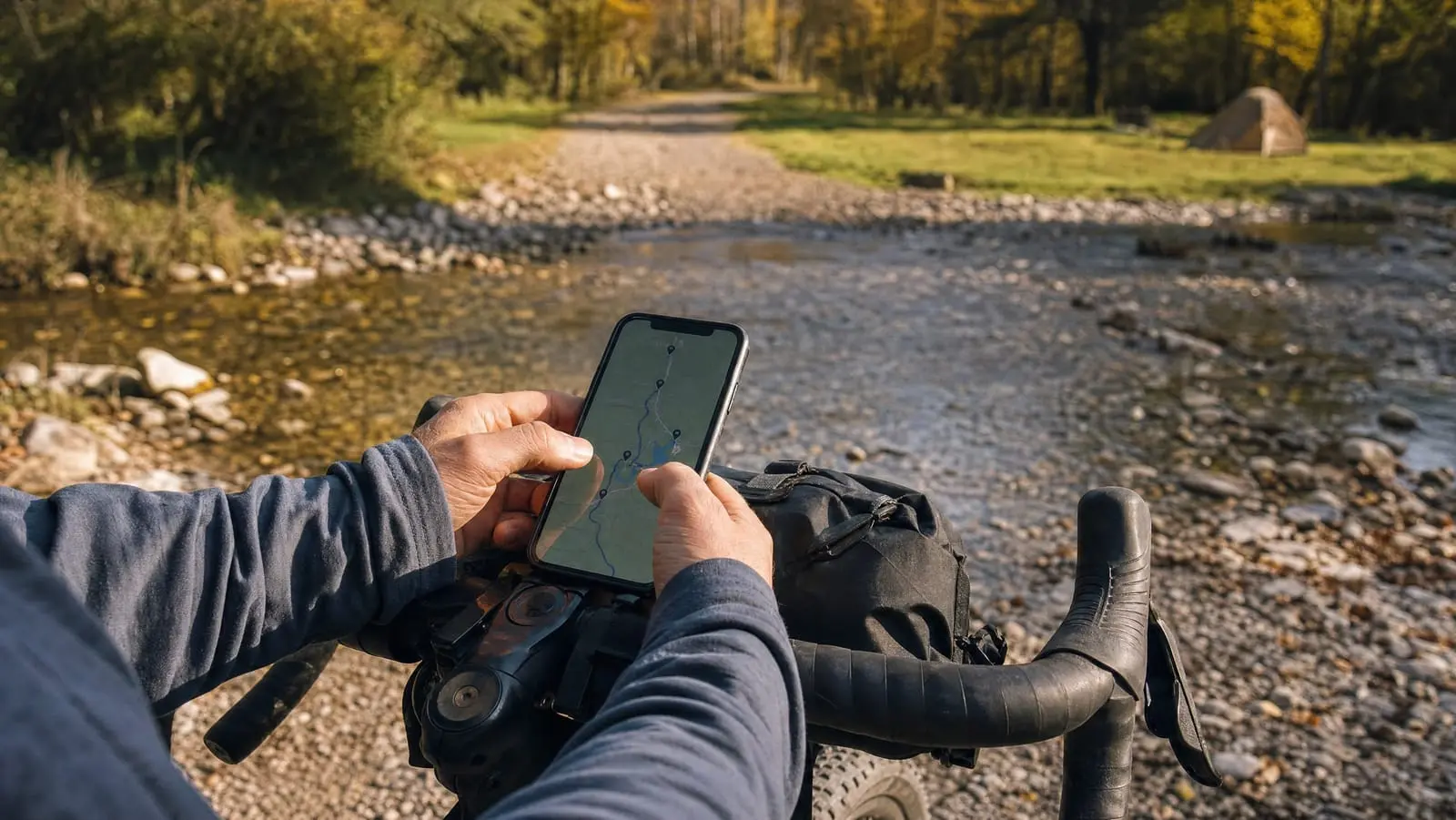
- Quality GPS device with night visibility
- Stop and camp before navigation becomes problematic
- Know your route well enough that landmarks aren't necessary
- Accept that getting slightly off-route isn't catastrophic
Progressive Desensitization
The Principle
You cannot think your way out of night fear—you must experience your way out. Each successful night without incident rewires your threat assessment.
"The more you camp alone, the easier it gets. Doing a lot of overnighters local to home in places you feel safe helps build comfort."
Level 1: Controlled Darkness
Backyard camping: Start in the most controlled environment possible. Sleep outside in your own yard. Experience darkness in a location you know is safe.
What you're learning: The experience of being in the dark isn't itself dangerous.
Familiar locations: Camp at established campgrounds you know. The presence of others and known terrain reduces threat perception while you acclimate to darkness.
Level 2: Managed Exposure
Local wild camping: Camp in less developed areas but still relatively accessible. Challenge your fear while maintaining reasonable safety margins.
Progressively remote: Gradually increase remoteness as comfort grows. Each successful night builds evidence that your fears are unfounded.
Level 3: Full Exposure
Actual trip conditions: Camp in the conditions your trip will present. If your expedition involves remote solo camping, practice remote solo camping before departure.
The goal isn't eliminating fear—it's building enough experience that fear no longer controls your behavior.
Night Riding Strategies
Lighting
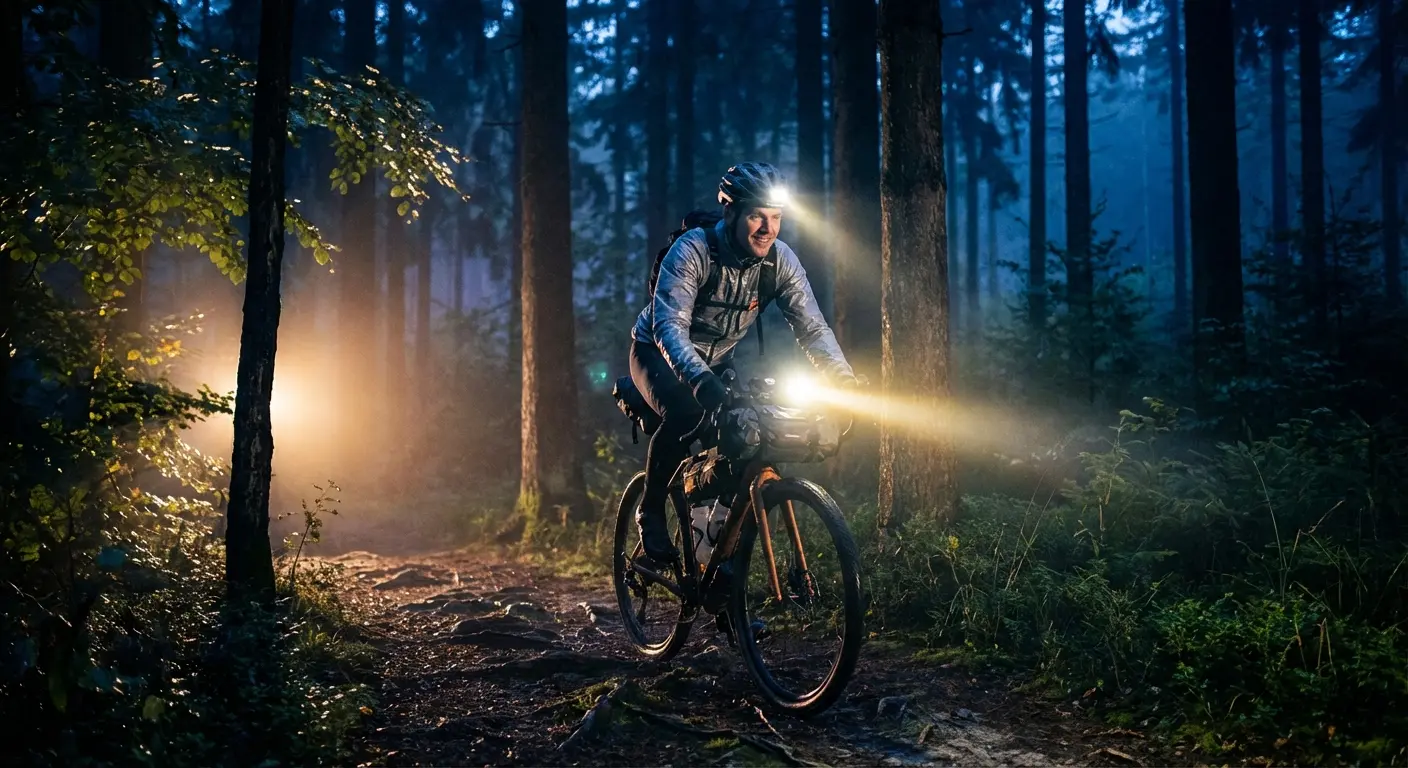
Good lighting transforms night from threatening to manageable:
Headlamp selection: A quality headlamp provides:
- Sufficient brightness for trail navigation
- Multiple modes (bright for riding, dim for camp)
- Long battery life or backup options
- Comfortable fit for extended wear
Bike lights: Proper bike lighting is essential for night riding:
- Front light with enough output for your speed
- Rear light for any road sections
- Consider bar-mounted for trail riding (reduces shadows)
Light management:
- Use dimmer red lights to preserve night vision
- Keep spare batteries accessible
- Know how long your lights last at various settings
Timing Decisions
When to ride: Some riders embrace full night riding; others prefer limiting it:
- Early morning (pre-dawn start) often feels less threatening than post-sunset
- Familiar terrain is easier to navigate in darkness
- Full moon nights provide ambient light that significantly helps
- Avoid the worst darkness if it impairs you
When to stop: "Set up camp with plenty of daylight remaining. Choose sites that feel secure. Complete all essential tasks before darkness."
There's no shame in camping early enough to avoid setup in darkness. This is strategy, not weakness.
Navigation
Night-specific considerations:
- Preload routes on devices with night-readable screens
- Simplify navigation for dark sections (fewer decision points)
- Know the next few miles well enough that you don't need constant checking
- Accept slower pace—rushing at night causes errors
Camp Psychology
Choosing Sites
What feels safe:
- Some natural shelter (trees, terrain features)
- Not too exposed
- Some visibility of approaches
- Flat enough for comfortable sleep
- Away from immediate sound sources (rushing water, highways)
What's actually safe:
- Away from falling hazards
- Protected from weather
- Appropriate terrain for tent or bivy
- Away from animal paths/water sources
Sometimes these overlap; sometimes they don't. Prioritize actual safety, but where choice exists, choose sites that also feel psychologically comfortable.
Evening Routines
Build predictability:
"Create routines. Predictable evening rituals signal safety to your nervous system. Same dinner time, same setup process, same wind-down activities."
Your brain uses routine as a signal that everything is normal. The same sequence of activities each night creates a template of "this is what safe evenings feel like."
Suggested evening sequence:
- Set up shelter with daylight remaining
- Prepare sleeping system
- Cook and eat dinner
- Secure food and trash
- Final organization
- Wind-down activity (reading, journaling, audio)
- Sleep preparation
Managing Night Wake-Ups
Waking at night is normal—especially in unfamiliar environments:
When you wake anxious:
- Remind yourself where you are
- Breathe slowly and deeply
- Listen—you'll often hear nothing concerning
- If anxious about a specific sound, sit up and look around
- Often, seeing that nothing is there is calming
Common triggers:
- Full bladder (address it; don't try to sleep through)
- Temperature changes (adjust layers/sleeping bag)
- Unfamiliar sounds (identify if possible, accept if not)
- General anxiety (breathing, grounding, time)
Psychological Reframes
From Threat to Magic
Experienced night riders often describe darkness as magical rather than threatening:
- Stars visible as they can't be in light-polluted areas
- Quiet that daylight never provides
- Different wildlife active and visible
- Sense of adventure intensified
- Solitude deepened
The same darkness that feels threatening can feel enchanting—it depends on how you hold it.
From Vulnerability to Competence
Each successful night builds evidence of your capability:
- "I can manage my fear"
- "I can navigate in the dark"
- "I can handle whatever sounds occur"
- "Nothing bad happened despite my fear"
Over time, this evidence accumulates into confidence. The fear doesn't fully disappear, but it no longer controls you.
From Alone to Present
Night solitude can shift from painful isolation to profound presence:
"Being completely solo in the middle of nowhere seems to take all the thoughts bouncing around your head and put them back in order."
Many riders describe night as when bikepacking becomes most itself—stripped of distractions, intensified in experience, memorable in ways daylight rarely achieves.
Special Situations
Ultra-Endurance Events
Events requiring riding through the night present specific challenges:
Sleep deprivation: Fatigue compounds fear. When exhausted, your threat assessment becomes even less reliable. Be aware that 3 AM fears often reflect tiredness more than danger.
Pacing: Don't try to maintain daytime speeds at night. Slower, steadier progress prevents accidents that cause real problems.
Hallucinations: Extreme sleep deprivation can cause visual and auditory hallucinations. If you're seeing things that can't be real, you need rest, not continued riding.
Solo vs. Group
Night fear intensifies dramatically when solo:
"When riding solo, the constant low-level hypervigilance can be exhausting. When riding with others, cyclists often feel nearly invincible by contrast."
If traveling solo:
- Accept higher fear levels as part of the experience
- Build extra margin into decisions
- Use communication devices (Garmin inReach) for security
- Be gentle with yourself about fear responses
If traveling with others:
- Night fear often feels manageable
- Share night-watch if helpful
- Use the group for reality-checking concerns
Weather
Bad weather at night compounds anxiety:
Rain: Reduces visibility, increases unfamiliar sounds, creates discomfort. But properly sheltered, you're not in danger—just uncomfortable.
Wind: Constant noise makes threat assessment impossible. This is anxiety-producing but not dangerous.
Cold: Fear of inadequate warmth is valid. If your sleep system is appropriate, trust it.
Building Night Confidence
The Confidence Ladder
- Awareness: Understand that night fear is normal
- Preparation: Develop strategies and practice
- Exposure: Accumulate successful nights
- Evidence: Notice patterns of safety
- Confidence: Trust your ability to manage
Each successful night moves you up the ladder. Setbacks are temporary—they don't erase previous progress.
Tracking Progress
Keep a log of nights:
- Where you camped
- Initial fear level (1-10)
- What helped
- What happened (usually nothing)
- Morning reflection
Over time, this log provides evidence your evening brain can't ignore: you've done this many times and been fine.
Celebrating Success
Don't minimize your accomplishments:
- Completing a night despite fear is success
- Learning something new about yourself is success
- Trying again after a hard night is success
- Asking for help when needed is success
Night confidence builds through acknowledged wins, not minimized achievements.
The Transformed Experience
Riders who work through night fear often describe transformation:
"There is nothing to fear in the darkness other than our own imaginations."
What once felt threatening becomes normal. What once felt normal becomes limiting. Eventually, the idea of only riding during daylight seems like missing half the experience.
Night has its own beauty, its own quiet, its own magic. Getting there requires working through fear, not around it. But once there, you've unlocked something that stays with you—not just in bikepacking, but in all the dark places life presents.
The fear doesn't fully disappear. Even experienced riders feel heightened alertness at night. But it becomes manageable—a companion rather than a controller.
That's the transformation night offers, if you're willing to work toward it.
For the broader mental framework, see the Complete Mental Resilience Guide.