Knee Pain Prevention for Cyclists: Protect Your Joints on Long Rides
20+ years testing gear in Colorado backcountry
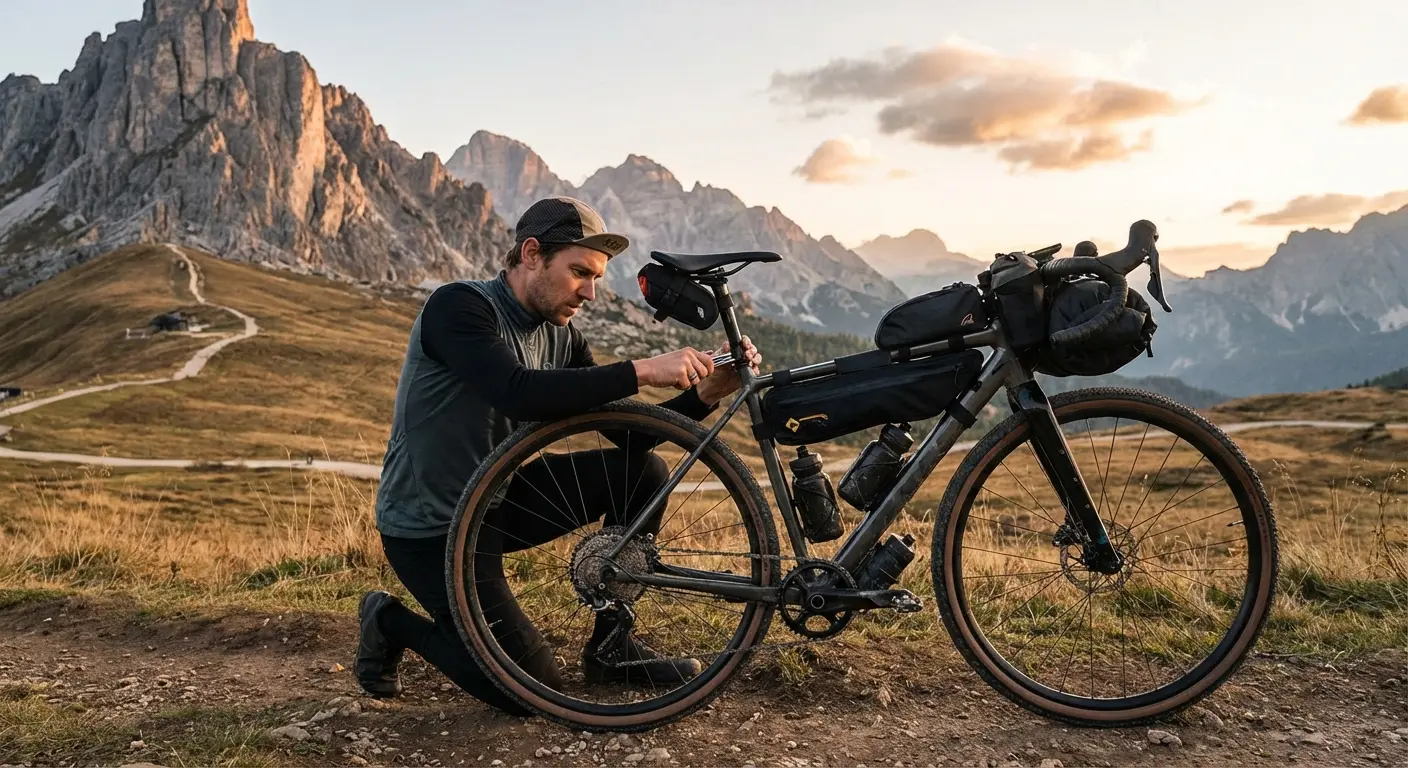
Your Knees Are Not Indestructible
Cycling is often recommended for people with joint problems because it's low-impact—until it isn't. Poor bike fit and bad habits can destroy knees. Proper setup and technique protect them for life.
Unlike saddle sores or hand numbness that cause suffering but rarely permanent damage, knee injuries can end cycling careers. Your knees flex thousands of times per ride, each pedal stroke loading the joint. Small errors in bike fit or riding technique compound into serious problems over time.
The good news: cycling-related knee pain is almost always preventable. The mechanics are well understood. Saddle height, cleat position, cadence, and load management account for the vast majority of cycling knee issues. Master these factors and you protect your most vulnerable joints.
This guide covers the causes of cycling knee pain, how to prevent it, and critically, when to stop riding and seek help. Knees are worth protecting.
For complete comfort guidance, see our Complete Bikepacking Comfort Guide.
Understanding Cycling Knee Pain
The location of your knee pain tells you a lot about the cause. Different parts of the knee respond to different problems.
Pain Location Guide
| Location | Common Name | Typical Causes |
|---|---|---|
| Front of knee | Anterior/Patellar | Saddle too low, high gears, excessive load |
| Back of knee | Posterior | Saddle too high, overextension |
| Inside of knee | Medial | Cleat rotation wrong, Q-factor narrow |
| Outside of knee | Lateral/IT Band | IT band tightness, cleat rotation, wide Q-factor |
| Under kneecap | Chondromalacia | Overuse, tracking issues, many causes |
Why Cyclists Get Knee Pain
The repetitive stress problem:
- 5,000+ pedal strokes per hour
- Each stroke loads the knee joint
- Small biomechanical errors multiply
- Cumulative damage builds silently
Contributing factors:
- Improper bike fit (especially saddle height)
- Insufficient warm-up
- Too much too soon (volume or intensity)
- Low cadence/high gear grinding
- Cold weather without warm clothing
- Previous injuries or structural issues
The Warning Signs
Early signals:
- Aching during or after rides
- Stiffness that increases with riding
- Pain that varies with gear selection
- Discomfort that improves with rest
Serious warnings:
- Sharp pain at any point in pedal stroke
- Pain that doesn't improve with rest
- Swelling visible or palpable
- Clicking, catching, or giving way
- Pain that increases despite adjustments
Saddle Height: The Critical Factor
Saddle height affects knee health more than any other fit parameter. Both too high and too low cause problems.
Signs Your Saddle Is Too Low
Symptoms:
- Pain at front of knee (patellar tendinitis)
- Quads burning before you're cardio-limited
- Feeling of "mashing" rather than spinning
- Can't find a comfortable gear
What's happening:
- Knee angle too acute at top of stroke
- Quadriceps work harder than necessary
- Patella tracking stressed by angle
- Efficiency drops, forcing harder effort
Signs Your Saddle Is Too High
Symptoms:
- Pain at back of knee
- Hips rocking side to side
- Reaching for pedals at bottom of stroke
- Hamstring tightness during rides
What's happening:
- Knee hyperextends at bottom of stroke
- Hamstrings stretched beyond comfort
- Rocking wastes energy and causes saddle friction
- Posterior structures strained
Finding the Right Height
Methods for initial setup:
Heel method:
- Sit on saddle, clip or place heel on pedal
- At bottom of stroke, leg should be fully straight
- When pedaling normally (ball of foot), slight bend remains
109% method:
- Measure inseam (floor to crotch)
- Multiply by 0.883 (or 1.09 for top-of-pedal measurement)
- Set saddle height from bottom bracket center to saddle top
The real test:
- Ride and assess comfort
- Watch for hip rocking (too high)
- Note quad dominance (too low)
- Adjust in 5mm increments
- Test thoroughly before making more changes
Loaded Bikes Change Things
Weight on your bikepacking bike can affect saddle height needs:
Rear-loaded bikes:
- May benefit from slight saddle height reduction
- Climbing position shifts weight forward
- Test with full load before long trips
Complete fit guidance: Bike Fit for Loaded Bikepacking
Cleat Position and Q-Factor
For clipped-in riders, cleat position affects knee tracking throughout the pedal stroke.
Cleat Fore-Aft Position
Cleat too far forward:
- Ball of foot ahead of pedal axle
- More calf engagement
- Can increase knee stress
Cleat too far back:
- Ball of foot behind pedal axle
- More stable platform
- Often more knee-friendly
Recommendation: Start with ball of foot over pedal axle, then experiment. Many riders find relief moving cleats back 5-10mm from the "standard" position.
Cleat Rotation (Angle)
This affects how your knees track during the pedal stroke.
Signs of wrong rotation:
- Inside knee pain = feet pointing too far outward
- Outside knee pain = feet pointing too far inward
- Pain worse on one side = asymmetric setup
Finding your angle:
- Walk normally and note natural toe angle
- Set cleats to mimic this angle
- Use float-enabled cleats initially
- Reduce float once optimal angle is found
Q-Factor (Stance Width)
The distance between your feet affects knee alignment.
Too narrow:
- Knees bow outward during stroke
- Inside knee stress
- Common on road-oriented setups
Too wide:
- Knees bow inward during stroke
- Outside knee stress
- Less common problem
Adjustments:
- Pedal spindle length options
- Cleat positioning on shoe
- Different pedal systems
- Spacer washers (for some pedals)
Flat Pedals and Knee Health
Riders on flat pedals have more position freedom but should still consider:
- Pedal width (wider = more comfortable usually)
- Foot position consistency
- Shoe stiffness affecting pressure distribution
Cadence: The Overlooked Factor
How fast you spin affects knee load dramatically. Low cadence, high-gear riding destroys knees.
The Physics of Cadence
Low cadence (50-70 RPM):
- Higher force per pedal stroke
- More muscular load, less cardiovascular
- Significantly more knee stress
- "Grinding" sensation
High cadence (80-100 RPM):
- Lower force per pedal stroke
- More cardiovascular, less muscular
- Less knee stress per stroke
- "Spinning" sensation
The math: At 60 RPM vs 90 RPM with the same power output, each pedal stroke at 60 RPM requires 50% more force. That force goes through your knees.
Target Cadence for Knee Health
General recommendation: 80-95 RPM for sustained riding
Climbing loaded bikes:
- Easy to drop cadence on steep climbs
- Shift early, before grinding
- Accept slower speed for knee protection
- Stand periodically to change loading
When to grind:
- Short power bursts (sprints)
- Very brief steep sections
- Never as sustained effort
Building Cadence Habits
If you're used to grinding:
- Consciously count RPM periodically
- Shift earlier than feels necessary
- Use a cycling computer with cadence
- Practice high-cadence drills
- Accept initial feeling of "spinning out"
It feels inefficient at first. Your cardiovascular system adapts. Your knees will thank you.
Training and Load Management
How you build cycling volume matters as much as bike fit.
The Too Much Too Soon Problem
Common pattern:
- Rider does little cycling over winter
- Spring arrives, enthusiasm peaks
- First big ride of season is ambitious
- Knee pain develops
Why it happens:
- Tendons and ligaments adapt slowly
- Muscles recover in days, connective tissue takes weeks
- Sudden load spikes overwhelm unprepared joints
Building Volume Safely
The 10% rule:
- Increase weekly volume no more than 10% per week
- Applies to distance and time
- More conservative for returning from injury
Before bikepacking trips:
- Build to trip daily distance gradually
- Include back-to-back riding days in training
- Simulate loaded conditions
- Don't make your trip your first big effort of season
Recovery Needs
Knees need recovery time:
- Rest days allow tissue repair
- Active recovery (easy spinning) aids blood flow
- Sleep is when repair actually happens
- Chronic fatigue increases injury risk
Featured Products
Park Tool AK-1 Adjustable Saddle Height Tool
Getting saddle height exactly right—and keeping it consistent—requires precise measurement. This adjustable gauge provides accurate, repeatable height measurements from the bottom bracket to saddle top. Essential when experimenting with height adjustments or setting up multiple bikes identically. Marks along the ruler let you note your optimal setting. Cheaper than repeated bike fits and useful for any saddle adjustments during bikepacking trips.
- Precise height measurement
- Repeatable results
- Essential for experimentation
- Works with any bike
- Markings for recording
Wahoo RPM Cadence Sensor
If you don't know your cadence, you can't manage it. The Wahoo RPM attaches to any crank arm and broadcasts to your phone or cycling computer. The small sensor is unobtrusive and battery lasts over a year. Seeing real-time cadence helps build awareness and better spinning habits. Compatible with ANT+ and Bluetooth for broad device support. A small investment that pays dividends in knee health.
- Dual ANT+/Bluetooth
- Year+ battery life
- Small and unobtrusive
- Easy installation
- Helps build habits
Shimano SPD Cleats (SM-SH56)
The multi-release SPD cleats provide more float and easier release than the standard SM-SH51. The additional float lets your foot find its natural position rather than forcing a specific angle. Easier release in multiple directions reduces the chance of knee torque during unexpected unclipping. Many riders with knee issues find these more forgiving. Compatible with any SPD pedal system.
- Multi-directional release
- More float than standard
- Forgiving on knees
- Universal SPD compatible
- Easy to install
Pro Bike Tool Torque Wrench
Ensuring your saddle stays exactly where you set it requires proper torque on seatpost clamp bolts. This torque wrench covers the range needed for most bike adjustments (3-15 Nm) including seatpost clamps, stems, and handlebars. Consistent torque prevents slipping without over-tightening. When you find your perfect saddle height, make sure it stays there. Includes multiple bits for various bolt types.
- 3-15 Nm range
- Includes common bits
- Prevents slipping
- Avoids over-tightening
- Compact for travel
TheraBand Resistance Band Set
Knee stability depends on muscle strength around the joint. This resistance band set enables the strengthening exercises physical therapists recommend for cyclists: terminal knee extensions, clamshells, lateral walks. Different resistance levels allow progression as you strengthen. Packable for bikepacking trips where maintaining strength helps prevent problems. A small investment in long-term knee health.
- Multiple resistance levels
- Enables key knee exercises
- Compact and packable
- PT-recommended tool
- Progressive training
Tiger Balm Pain Relieving Ointment
For minor knee aches that don't indicate serious injury, Tiger Balm provides temporary relief. The warming sensation and active ingredients (camphor, menthol) can ease discomfort during multi-day trips when complete rest isn't possible. Not a substitute for addressing root causes, but helpful for managing minor symptoms. Keep in a small container in your repair kit. Wash hands thoroughly after application.
- Temporary pain relief
- Warming sensation
- Compact size
- Long shelf life
- Affordable
When to Stop Riding
The most important knee protection skill: knowing when to stop.
Continue Riding If
- Mild ache that stays stable
- Discomfort that improves during warm-up
- Issue responding to bike adjustments
- No sharp pain at any point
- Symptoms resolving with rest
Stop Immediately If
- Sharp pain at any point in pedal stroke
- Pain increasing despite adjustments
- Popping, clicking, or catching sensation
- Visible swelling
- Instability (knee "giving way")
- Pain persisting after ride ends
The Cost of Pushing Through
Short-term thinking: "It's just a little pain, I'll push through"
Long-term consequence:
- Acute injury becomes chronic
- Tendinitis becomes tendinosis (degenerative)
- Small tear becomes large tear
- Months of recovery vs days of rest
Taking a rest day feels frustrating. Taking six months off for a serious knee injury is far worse.
Treatment and Recovery
When knee issues develop, systematic treatment helps.
RICE Protocol
Rest: Stop the aggravating activity Ice: 15-20 minutes several times daily Compression: Support bandage (not too tight) Elevation: When resting, keep leg raised
Returning to Riding
After minor issues:
- Wait until pain-free walking
- Start with short, easy rides
- Lower resistance, higher cadence
- Increase gradually over days/weeks
- Any return of pain = more rest
After significant issues:
- Medical evaluation recommended
- Physical therapy often valuable
- Return protocol based on diagnosis
- Bike fit professional worth investment
Long-Term Prevention
Regular maintenance:
- Keep legs warm in cool weather
- Warm up before hard efforts
- Stretch hip flexors and IT band regularly
- Maintain leg strength (squats, lunges)
- Monitor saddle height consistency
Awareness:
- Track any knee sensations
- Note conditions when issues occur
- Don't ignore warning signs
- Address problems when small
Specific Conditions
Some knee conditions are common among cyclists.
Patellar Tendinitis ("Jumper's Knee")
What it is: Inflammation of tendon connecting kneecap to shinbone Feels like: Pain below kneecap, worse with activity Common cause: Saddle too low, excessive load Treatment: Rest, ice, correcting bike fit
IT Band Syndrome
What it is: Friction of iliotibial band over outside of knee Feels like: Burning on outside of knee, often appears after certain distance Common cause: Cleat rotation, Q-factor, tight IT band Treatment: Rest, stretching, rolling, fit adjustments
Patellofemoral Pain Syndrome
What it is: Pain under or around kneecap Feels like: Aching that worsens with activity, stairs, prolonged sitting Common cause: Muscle imbalance, tracking issues, overuse Treatment: Strengthening, stretching, potentially fit changes
For any persistent condition, professional evaluation is recommended. Cycling-specific physical therapists and bike fitters can identify and address the root cause.
FAQ
How long should I rest for knee pain?
Depends on severity. Mild aches that resolve overnight may just need an easy day. Sharp pain or symptoms that persist require longer rest—days to weeks. If pain doesn't improve within a few days of rest, seek medical evaluation.
Can I bike with a knee injury?
Some injuries allow modified cycling (low resistance, limited time). Others require complete rest. A healthcare provider who understands cycling can advise based on your specific situation. When in doubt, rest.
Will knee pain go away if I keep riding?
Unlikely. More commonly, continuing to ride through knee pain makes it worse. What starts as minor inflammation can become chronic tissue damage. Rest early, address causes, and return gradually.
Is a bike fit worth it for knee pain?
Often yes. A professional fit identifies issues you might not notice. For chronic or recurring knee problems, a fit is a worthwhile investment. Look for fitters with experience in injury resolution.
Should I take ibuprofen to ride through knee pain?
Masking pain to continue riding is generally a bad idea—you remove the warning signal while the damage continues. Anti-inflammatories can be useful for recovery, but taking them to ignore pain and keep riding often makes things worse.
Are clipless pedals better or worse for knees?
Depends on setup. Properly positioned cleats with appropriate float can be very knee-friendly. Poorly positioned cleats can cause problems that flat pedals wouldn't. Flat pedals give more freedom but less efficiency. Neither is inherently better—fit and setup matter most.
Related Guides
- Complete Bikepacking Comfort Guide - Full comfort overview
- Bike Fit for Loaded Bikepacking - Complete fit guidance
- Saddle Sores Prevention - Another key comfort issue
- Stretching and Mobility Routine - Flexibility for knee health
- Building Saddle Time - Safe volume building
- Bikepacking Fitness Training - Training principles
Your knees have to last your whole life. Cycling can be completely knee-friendly—or it can cause lasting damage. The difference is bike fit, technique, and respecting warning signs.
Set your saddle height correctly. Spin rather than grind. Stop when something hurts.
Protect the joints. Ride forever.