Bikepacking Coffee: Best Lightweight Coffee Gear for the Trail
20+ years testing gear in Colorado backcountry
This article contains affiliate links. We may earn a commission if you make a purchase through our links, at no extra cost to you.
Morning Coffee Makes Morning Miles
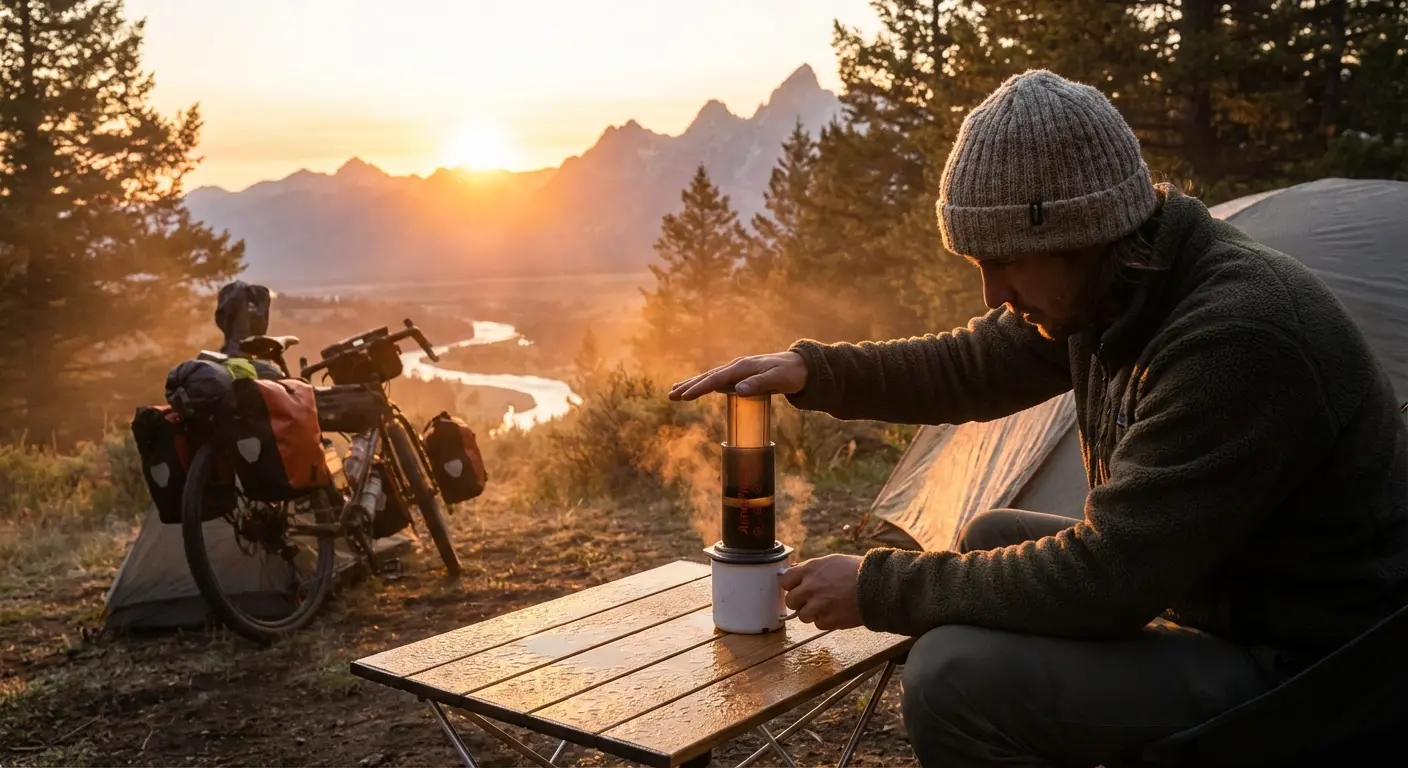
For many bikepackers, coffee isn't optional. That first cup at camp transforms groggy awakening into energized readiness. It's ritual, comfort, and practical caffeine all in one.
But bikepacking coffee requires compromise. You can't carry a full pour-over setup, espresso machine, or pounds of beans. Weight matters. Simplicity matters. Yet coffee quality varies dramatically between options—from barely-tolerable instant to genuinely excellent camp brews.
This guide covers every coffee method suited to bikepacking, from ultralight instant packets to café-quality portable setups, so you can find the right balance of weight, quality, and effort for your riding style.
For complete camp cooking guidance, see our Bikepacking Stoves Guide, Camp Gear Guide, and Complete Bikepacking Food Guide.
The Bikepacking Coffee Hierarchy
Coffee quality and convenience exist on a spectrum:
| Method | Weight | Time | Quality | Effort |
|---|---|---|---|---|
| Instant coffee | 0.3 oz | 1 min | ★★☆☆☆ | Minimal |
| Coffee bags | 0.4 oz | 5 min | ★★★☆☆ | Minimal |
| Pour-over (collapsible) | 1.5 oz | 5 min | ★★★★☆ | Moderate |
| AeroPress Go | 11.5 oz | 3 min | ★★★★★ | Moderate |
| French press (GSI) | 12 oz | 5 min | ★★★★☆ | Moderate |
Choose based on your priorities: ultralight riders accept instant; coffee lovers carry the AeroPress.
Featured Products
AeroPress Go
If coffee quality matters as much as riding, the AeroPress Go is the only choice. It produces genuinely excellent coffee—smooth, rich, and comparable to good café espresso-style drinks. The full-immersion brewing extracts maximum flavor without bitterness. The Go version includes a travel mug that doubles as carrying case, keeping everything contained. At 11.5 oz with mug, it's not ultralight, but coffee devotees consider this weight essential. Cleanup takes 30 seconds: eject the puck, rinse. Durable plastic survives pack abuse. For bikepackers who refuse to compromise on coffee, the AeroPress Go delivers café quality at camp.
- Café-quality coffee
- Full system weighs 11.5 oz
- 30-second cleanup
- Includes travel mug/case
- Nearly unbreakable
Starbucks VIA Instant Coffee
Most instant coffee tastes like hot brown water. Starbucks VIA is the exception—genuinely drinkable, sometimes even enjoyable. The micro-ground process includes actual coffee particles, not just freeze-dried extract, creating better flavor and body. At 0.4 oz per packet (including packaging), weight is negligible. Pour packet into hot water, stir, drink. No cleanup, no gear, no fuss. Available in multiple roasts and even flavored options. For riders who want caffeine without compromise on weight or simplicity, VIA offers the best instant experience. Is it as good as AeroPress? No. Is it acceptable? Definitely.
- Best-tasting instant option
- 0.4 oz per packet
- Zero cleanup
- No gear required
- Multiple roast options
GSI Outdoors Collapsible Java Drip
Pour-over brewing at 1.3 oz: the GSI Collapsible Java Drip proves ultralight coffee doesn't mean instant. The silicone dripper collapses flat, sitting on any cup or pot. Use with standard #2 filters (or cut-down #4 filters). The ritual of pour-over—blooming grounds, spiral pouring—brings café experience to camp. Coffee quality significantly exceeds instant; approaches AeroPress territory. The main limitation: you need filters, and they're not ultralight-friendly long-term. Carry a few filters per trip segment. For the weight-conscious rider who still wants real coffee, this balances quality and ounces perfectly.
- Weighs only 1.3 oz
- Collapses completely flat
- Real pour-over quality
- Uses standard #2 filters
- Fits any cup or pot
Snow Peak Titanium French Press
For bikepackers who demand both quality and durability, Snow Peak's titanium French press represents the premium end. French press brewing produces full-bodied coffee with oils intact—richer than pour-over, comparable to AeroPress. The titanium construction is essentially indestructible and serves double-duty as your cook pot. At 12.8 oz for the 30 fl oz version, it's not light, but it replaces your pot entirely. The mesh filter eliminates disposable filters. Japanese craftsmanship means precision fit and flawless function. For riders willing to invest in a do-everything vessel, this is peak camp coffee elegance.
- Premium titanium construction
- Doubles as cook pot
- Full-bodied French press coffee
- No disposable filters needed
- Japanese build quality
Kuju Coffee Pocket PourOver
Kuju combines pour-over quality with instant coffee convenience. Each single-serve packet contains pre-measured grounds in a filter that hangs on your cup. Pour hot water through, wait, discard filter. No gear to carry beyond the packets. Coffee quality genuinely surprises—these taste like real pour-over because they are real pour-over. At $2-3 per serving, they cost more than DIY methods, but for weekend trips or resupply-focused riding, the convenience is unmatched. Available in various roasts. When you want better-than-instant without carrying gear, Kuju delivers.
- Real pour-over in packet form
- Zero gear required
- No cleanup beyond discarding
- Multiple roast options
- Genuinely good flavor
Coffee Methods Explained
Instant Coffee
The ultralight default. Add powder to hot water, stir, drink.
Best options:
- Starbucks VIA: Best taste among mass-market instant
- Mount Hagen: Organic, smooth, decent quality
- Alpine Start: Designed for outdoors, good flavor
Weight: 0.3-0.5 oz per serving (packet included) Pros: Near-zero weight, no cleanup, foolproof Cons: Coffee purists will notice the compromise
When to choose: Ultralight trips, when every ounce matters, or you simply don't care much about coffee quality.
Coffee Bags (Tea-Bag Style)
Steep like tea—grounds in a bag, immersed in hot water.
Best options:
- Steeped Coffee: Best single-serve bags
- Chamberlain Coffee: Trendy but decent
- Various specialty roasters offer these
Weight: 0.4-0.6 oz per serving Pros: Simple, better than instant, no cleanup Cons: Weaker extraction than immersion/pour-over
When to choose: Want better than instant without any gear.
Pour-Over
Classic drip method: water poured through grounds in a filter.
Setup weight: 1-2 oz for collapsible dripper Plus: Ground coffee and filters
Pros: Excellent clean flavor, café-quality possible Cons: Requires filters, technique matters, slower
When to choose: Coffee quality matters, but you want to minimize gear weight.
AeroPress
Full-immersion brewing with pressure filtration.
Setup weight: 11.5 oz (AeroPress Go complete)
Pros: Best portable coffee quality, fast brewing, easy cleanup Cons: Heavier than other options, proprietary filters (though you can reuse)
When to choose: Coffee quality is non-negotiable; weight sacrifice acceptable.
French Press
Immersion brewing with metal mesh filter.
Setup weight: 8-13 oz depending on model
Pros: Full-bodied coffee, no paper filters, doubles as pot Cons: Heavier, sediment in cup, cleanup more involved
When to choose: You love French press specifically, or want dual-use pot/press.
Cold Brew
Pre-made concentrate or grounds steeped in cold water overnight.
Options:
- Carry cold brew concentrate (heavy but convenient)
- Cold-steep regular grounds overnight
- Use cold brew packets designed for cold water
Pros: Smooth flavor, no stove needed Cons: Requires planning ahead, limited hot coffee option
When to choose: No-cook trips, hot weather, or as a novelty change.
Building Your Coffee Kit
Ultralight Setup (< 1 oz)
Components:
- Instant coffee packets (Starbucks VIA)
- Your existing pot/mug for hot water
Weight: 0.4 oz per serving + stove system Quality: ★★☆☆☆ Best for: Gram counters, casual coffee drinkers
Lightweight Quality (2-3 oz)
Components:
- GSI Collapsible Java Drip (1.3 oz)
- Ground coffee (pre-portioned bags, ~0.5 oz each)
- Paper filters (negligible, a few per trip)
Weight: ~2 oz gear + 0.5 oz per serving Quality: ★★★★☆ Best for: Quality-conscious riders watching weight
Full Quality (12-14 oz)
Components:
- AeroPress Go (11.5 oz)
- Ground coffee (pre-portioned)
Weight: 11.5 oz gear + 0.5 oz per serving Quality: ★★★★★ Best for: Coffee lovers who prioritize quality
Premium Dual-Use (13 oz)
Components:
- Snow Peak Titanium French Press (12.8 oz)
- Ground coffee (pre-portioned)
Weight: 12.8 oz (but doubles as pot) Quality: ★★★★☆ Best for: Minimalists wanting one vessel for cooking and coffee
Coffee Grounds: Pre-Packaged vs. Bulk
Pre-Portioned Packets
Specialty roasters sell single-serve ground coffee packets:
- No measuring in the field
- Consistent portions
- Slightly more expensive
Where to find: Counter Culture, Stumptown, specialty outdoor brands
DIY Portioning
Before your trip:
- Weigh portions (15-18g per serving)
- Pack in small zip bags or reusable containers
- Label if using multiple roasts
Pros: Cheaper, use your favorite beans, fresher if ground just before trip
Whole Beans
Some riders carry a mini grinder and whole beans.
Pros: Freshest possible coffee Cons: Adds weight, effort, and noise at camp
Verdict: Overkill for most bikepacking. Pre-ground works fine for typical trip lengths.
Practical Tips
Tip 1: Pre-Boil Water the Night Before
For faster morning coffee:
- Boil water in evening
- Store in insulated bottle (stays warm overnight in mild conditions)
- Morning coffee ready faster
Tip 2: Pair Coffee with Breakfast Routine
While oatmeal rehydrates (see our bikepacking breakfast ideas):
- Pour-over can drip
- French press can steep
- AeroPress takes only 2-3 minutes anyway
Tip 3: Consider Town Coffee
The best bikepacking coffee? Someone else making it:
- Café stops break up riding
- Fresh roasted beats anything portable
- Morale boost is real
Tip 4: Manage Grounds Disposal
Leave No Trace applies:
- Pack out used grounds (they're not truly Leave No Trace compliant to scatter)
- AeroPress pucks are easy to pack out
- Small zip bag for spent grounds
Tip 5: Altitude Affects Brewing
At elevation:
- Water boils at lower temperatures
- Extraction may be weaker
- Steep/brew slightly longer to compensate
No-Stove Coffee Options
Going no-cook on your trip? Coffee options still exist:
Cold Brew Concentrate
Carry pre-made concentrate and dilute with cold water. Heavy but convenient for short trips.
Instant in Cold Water
Some instant coffee dissolves in cold water. Taste varies—test before depending on it.
Caffeine Alternatives
- Caffeine gum
- Caffeine pills
- Caffeinated energy bars
- Caffeinated drink mixes (Nuun Energy, etc.)
Not coffee, but delivers the caffeine if that's what you need. Check our electrolytes guide for caffeinated drink mix options.
Coffee Weight Budget Reality Check
Is 12 oz for an AeroPress worth it?
Perspective:
- 12 oz = roughly one full water bottle of weight
- Over a 5-day trip with 2 coffees/day = 10 cups
- Cost per cup: 1.2 oz of carrying weight
For coffee lovers, the quality upgrade from instant to AeroPress justifies that weight. For casual drinkers, instant or pour-over saves meaningful ounces.
The honest truth: Riders who love coffee make room for good coffee gear. Those who just need caffeine use instant. Both are valid choices.
Common Mistakes
Mistake 1: Forgetting Coffee Needs Hot Water
Obvious but critical: you need your stove system for most coffee methods. Going no-cook? Plan cold brew or cold-soluble instant.
Mistake 2: Under-Packing Coffee
Running out of coffee mid-trip is demoralizing. Pack slightly more than calculated—some servings may spill, you may want extra, etc.
Mistake 3: Heavy Mugs
Your cookware pot can double as coffee mug. Dedicated camp mugs add weight that's often unnecessary.
Mistake 4: Ignoring Cleanup Needs
AeroPress cleanup is easy. French press cleanup is more involved. Pour-over filters simplify. Consider cleanup effort in your choice.
Mistake 5: Buying Gas Station Coffee Gear
Those $5 "camping coffee makers" are heavy, break easily, and make bad coffee. Invest in quality or go ultralight—nothing in between.
FAQ
Is carrying an AeroPress really worth it?
For coffee lovers, absolutely. The quality difference versus instant is dramatic. For casual coffee drinkers, probably not—use instant or pour-over.
What's the best instant coffee?
Starbucks VIA is the most widely available decent option. Mount Hagen and Alpine Start are excellent alternatives. All are significantly better than Folgers-type instant.
Can I use regular coffee grounds for cold brew?
Yes, but coarse-ground works better. Fine grounds create sediment. Cold-steep overnight (8-12 hours) in a bottle or container.
How much coffee should I carry per day?
One serving = ~15-18g grounds. Plan 1-2 servings per day depending on your caffeine needs. Add 10% buffer for spillage.
Does altitude affect coffee taste?
Yes—water boils at lower temperatures at altitude, affecting extraction. Brew slightly longer to compensate. The difference is subtle but noticeable to coffee enthusiasts.
Can I reuse AeroPress filters?
Yes, many times. Rinse after use, let dry. They last 10-20 uses easily. Reduces waste and weight of carrying extras.
Quick Reference: Coffee Methods
| Method | Weight | Quality | Effort | Best For |
|---|---|---|---|---|
| Instant (VIA) | 0.4 oz | ★★☆ | Minimal | Ultralight riders |
| Coffee bags | 0.5 oz | ★★★ | Minimal | Better-than-instant |
| Kuju packets | 0.5 oz | ★★★½ | Minimal | Convenience priority |
| Collapsible pour-over | 1.3 oz | ★★★★ | Moderate | Quality at low weight |
| AeroPress Go | 11.5 oz | ★★★★★ | Moderate | Maximum quality |
| French press | 12+ oz | ★★★★ | Moderate | Dual-use pot/press |
For stove recommendations to boil your coffee water, see our Bikepacking Stoves Guide. For complete nutrition planning, check the Complete Bikepacking Food Guide.
Brew well. Ride caffeinated. Enjoy the ritual.