Chafing Prevention for Bikepackers: Beyond the Saddle
20+ years testing gear in Colorado backcountry
Friction's Many Targets
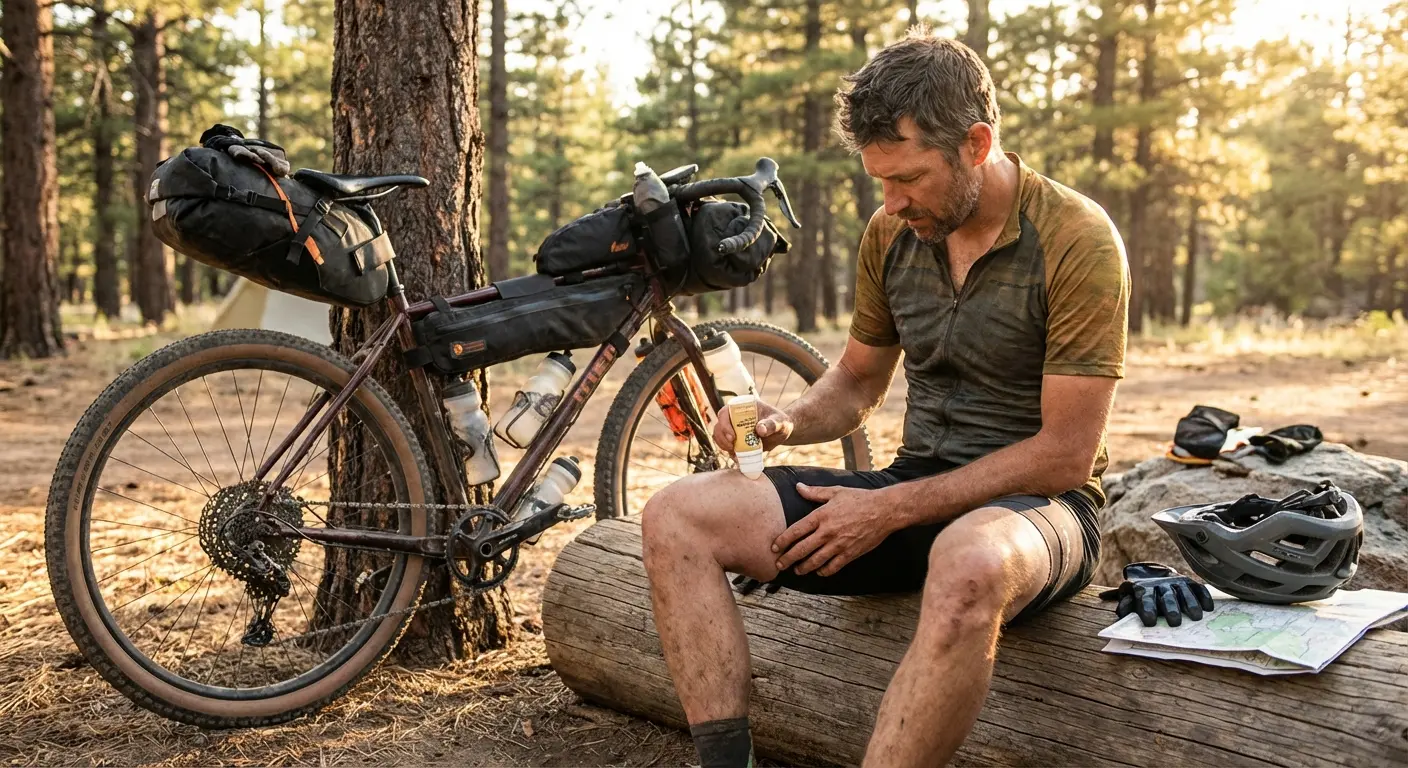
Saddle chafing gets all the attention, but friction attacks everywhere skin moves against skin or fabric. Inner thighs, underarms, feet, nipples, bra lines—bikepackers can chafe in places they never expected.
Hours of repetitive motion, combined with sweat and salt, create perfect conditions for friction damage anywhere on your body. A small irritation on day one becomes a raw wound by day three. Minor chafing becomes the thing you can't stop thinking about.
The good news: chafing is almost completely preventable. Understanding where it happens, why it happens, and how to stop it lets you ride comfortably for days. This guide covers all the chafing zones and how to protect them.
For saddle-specific issues, see Preventing and Treating Saddle Sores. For complete comfort guidance, see our Complete Bikepacking Comfort Guide.
Understanding Chafing
How Chafing Develops
Stage 1: Irritation
- Repeated friction between surfaces
- Skin becomes slightly red
- Mild discomfort
Stage 2: Inflammation
- Skin becomes noticeably red and tender
- Friction continues damaging outer layer
- Burning sensation
Stage 3: Skin breakdown
- Raw, possibly bleeding skin
- Painful with any contact
- Risk of infection
Contributing Factors
| Factor | Why It Matters |
|---|---|
| Moisture (sweat) | Softens skin, increases friction |
| Salt (dried sweat) | Crystals abrade skin |
| Heat | Increases sweating and swelling |
| Repeated motion | Cumulative friction damage |
| Ill-fitting clothing | Creates pressure and rubbing |
| Seams and tags | Focal points for friction |
Chafing Zones and Solutions
Inner Thighs
Why it happens:
- Thighs rub together or against saddle
- Constant movement during pedaling
- Sweat accumulates in area
Prevention:
- Cycling shorts with proper length
- Chamois cream extended to inner thighs
- Anti-chafe balm for exposed skin
- Compression shorts under baggy shorts
If it starts:
- Apply more anti-chafe product immediately
- Adjust shorts leg length if possible
- Don't ignore—will worsen rapidly
Underarms
Why it happens:
- Arm movement against body
- Seams in jerseys
- Sweat and salt concentration
Prevention:
- Sleeveless or seamless arm holes
- Anti-chafe stick in armpits before riding
- Jersey that fits without binding
- Quick-dry fabrics
If it starts:
- Apply balm at rest stops
- Change shirts if possible
- Take arm out of jersey briefly when safe
Nipples (Especially Men)
Why it happens:
- Jersey fabric rubbing constantly
- Sweat makes fabric more abrasive
- Small area with sensitive skin
Prevention:
- Apply tape or adhesive bandages before riding
- Anti-chafe balm on nipples
- Softer jersey fabric
- Compression layer under jersey
If it starts:
- Cover immediately with tape/bandage
- This is one area where prevention is far better than treatment
Bra Lines and Bands (Women)
Why it happens:
- Elastic and underwire movement
- Seams against skin
- Sweat trapped under band
Prevention:
- Sports bras designed for cycling (minimal seams)
- Anti-chafe balm under band and straps
- Proper bra fit (not too tight)
- Moisture-wicking materials
See also: Women's Bikepacking Guide
Feet
Why it happens:
- Socks moving against skin
- Seam pressure points
- Moisture from sweat
- Hot spots from pedaling pressure
Prevention:
- Quality cycling socks (no cotton)
- Anti-chafe balm on hot spot areas
- Properly fitted shoes (not too tight)
- Double-layer or seamless socks
Related guide: Foot Comfort and Hot Foot
Back of Neck
Why it happens:
- Jersey collar rubbing
- Head movement
- Sunscreen and sweat creating friction
Prevention:
- Jerseys with comfortable collar design
- Bandana or buff under collar
- Anti-chafe balm on collar line
- Sunscreen fully absorbed before jersey
Waistband Area
Why it happens:
- Shorts waistband movement
- Bent-over position shifts clothing
- Pack waist belts
Prevention:
- Bib shorts (no waistband)
- High-rise shorts that stay put
- Anti-chafe at waist line
- Adjust pack belt position
Anti-Chafe Products
Product Types
Balms and butters:
- Thick consistency, stays in place
- Apply before riding
- May need reapplication on long days
- Best for known problem areas
Sticks and roll-ons:
- Easy application
- Good for quick touch-ups
- Some dry to powder-like finish
- Convenient for carrying
Powders:
- Absorb moisture
- Some friction reduction
- Less effective than balms for active friction
- Good for sweat-prone areas
Tapes and bandages:
- Physical barrier
- Essential for nipples
- Works on heels and toes
- No reapplication needed
When to Apply
Before every ride:
- All known problem areas
- Generous application
- Let absorb briefly before dressing
During breaks (long rides):
- Reapply to areas that feel irritated
- Check for early signs of chafing
- Add to areas that are sweating heavily
Featured Products
Body Glide Original Anti-Chafe Balm
The standard for anti-chafe protection, Body Glide applies like a deodorant and creates a dry, invisible barrier against friction. Works on inner thighs, underarms, feet, and any other problem area. The stick format is easy to apply and pack. Doesn't stain clothing or feel greasy. Lasts through sweat and continues protecting. We've used this everywhere imaginable—it simply works. Available in multiple sizes; the smaller stick packs easily.
- Stick format easy application
- Dry, invisible barrier
- Doesn't stain clothes
- Lasts through sweat
- Trusted standard
Squirrel's Nut Butter Anti-Chafe
All-natural ingredients (coconut oil, cocoa butter, beeswax, vitamin E) for those who prefer to avoid petroleum-based products. Effective protection in a more environmentally friendly formula. The balm format requires finger application but provides thick, lasting coverage. Some riders prefer the feel over synthetic products. The tin travels well and the small amount goes a long way. Good for sensitive skin that reacts to other products.
- All-natural ingredients
- Coconut oil based
- Good for sensitive skin
- Long-lasting coverage
- Eco-friendly
3M Transpore Medical Tape
For nipple chafing, nothing beats a physical barrier. This medical tape sticks securely to skin, doesn't come off with sweat, and removes cleanly. Cut small pieces before the ride and apply directly over nipples. More reliable than balms for this specific problem. The tape breathes and moves with skin. A single roll lasts through many rides. Also useful for taping hot spots on feet. An essential item for riders prone to nipple chafing.
- Stays on through sweat
- Removes cleanly
- Breathable material
- Cuts easily
- Multi-use item
Gold Bond Friction Defense Stick
Widely available and inexpensive, Gold Bond provides solid chafe protection at a fraction of specialty product prices. Find it at any pharmacy or grocery store. The stick format works like Body Glide—apply to problem areas before riding. May not last quite as long as premium options but easily reapplied. A good choice for new bikepackers discovering what chafing zones need attention before investing in more expensive products.
- Widely available
- Inexpensive
- Easy stick application
- Solid protection
- Good starter choice
Darn Tough Cycling Socks
Quality socks prevent foot chafing better than any balm. Darn Tough's merino wool blend wicks moisture, resists odor, and the seamless toe construction eliminates a primary friction point. The lifetime warranty speaks to durability. Merino maintains comfort wet or dry. These cost more than cheap socks but last years and keep feet comfortable throughout long rides. Worth the investment for any serious bikepacker.
- Merino wool blend
- Seamless toe
- Moisture wicking
- Lifetime warranty
- Odor resistant
Swiftwick Pursuit Zero Socks
For hot weather when even merino feels too warm, Swiftwick's minimal no-show design provides friction protection with maximum ventilation. The olefin fiber wicks moisture better than cotton or basic synthetics. No-show height still covers heel chafe zone. Compression fit holds sock in place without bunching. When heat is the enemy, these keep feet cooler while still preventing chafing. Multiple thickness options available.
- Maximum ventilation
- Excellent wicking
- No-show height
- Compression fit
- Hot weather choice
Clothing Choices
The right clothing prevents chafing before it starts.
Fabric Selection
Best fabrics:
- Smooth, synthetic blends
- Merino wool (natural friction resistance)
- Seamless construction where possible
Avoid:
- Cotton (holds moisture)
- Rough or textured fabrics
- Heavy, non-wicking materials
Fit Matters
Too tight:
- Creates pressure points
- Seams dig in
- Blood flow restricted
Too loose:
- Fabric bunches
- More movement = more friction
- Chafing from fabric itself
Just right:
- Snug enough to stay in place
- Loose enough to move freely
- Seams lie flat without pressure
Seam Awareness
Problem seams:
- Side seams under arms
- Inseams on shorts
- Collar seams
- Bra strap connections
Solutions:
- Flat-lock seams
- Seamless construction zones
- Tape or balm over known problem seams
Hot Weather Challenges
Heat increases every chafing risk.
Why Heat Is Worse
- More sweating
- Skin stays wet
- Salt accumulates faster
- Skin more sensitive when hot
- Clothing sticks and pulls
Hot Weather Strategies
Increase product use:
- More frequent application
- Heavier initial coverage
- Carry products for mid-ride touch-up
Clothing adjustments:
- Lighter fabrics
- More ventilation
- Might need different kit for heat
Hydration:
- Sweat more dilute when well-hydrated
- Less salt = less skin irritation
Breaks:
- Stop to dry off when possible
- Let skin breathe
- Reapply products
Treating Chafing
When prevention fails, proper treatment speeds healing.
Immediate Actions
Stop the friction:
- Apply thick layer of balm
- Add bandage if possible
- Change position if friction source identified
Clean the area:
- Gentle wash with water
- Don't scrub irritated skin
- Pat dry
Overnight Treatment
Basic approach:
- Clean thoroughly
- Apply healing ointment (Aquaphor, A&D, zinc oxide)
- Let skin breathe if possible
- Protect from further friction
For raw skin:
- Treat like a wound
- Keep clean
- Apply antibiotic ointment
- Cover with non-stick bandage
Continuing to Ride
If you must continue riding with chafed skin:
- Thick barrier layer (Aquaphor, zinc oxide)
- Bandage if possible
- Modify position to reduce friction
- Expect discomfort
- Plan for proper healing when possible
FAQ
Should I use anti-chafe products even if I've never chafed there?
For known problem areas (inner thighs, anywhere that's been an issue before), yes. For areas without history, you can wait and respond if issues develop. Once you know your personal pattern, you'll know where to apply preventively.
Can I use Vaseline for chafing?
Yes, petroleum jelly works as a friction barrier. It's messier than stick products and can stain clothing, but it's effective. Aquaphor (petroleum-based but with healing ingredients) is a good compromise between effectiveness and convenience.
How do I know if chafing has become infected?
Signs of infection: increasing pain after initial friction stops, spreading redness, warmth around area, pus or unusual discharge, fever. Minor chafing heals quickly with protection; infected chafing worsens. Seek medical attention if infection signs appear.
Is there such a thing as too much anti-chafe product?
Not really. Extra product is messy but not harmful. It's much better to over-apply than under-apply. The consequences of chafing are worse than the inconvenience of excess balm.
Do I need different products for different body areas?
Most anti-chafe products work everywhere. Some people prefer thicker products (balms) for high-friction areas and lighter products (sticks) for large areas. Chamois cream specifically formulated for saddle contact may have additional ingredients (antimicrobial, cooling) but regular anti-chafe works fine too.
Why did chafing suddenly start in a place that's never been a problem?
New clothing, different riding position, changed weather (especially getting hotter), weight changes, or just cumulative effect of multi-day riding. Address with product and investigate what changed.
Related Guides
- Complete Bikepacking Comfort Guide - Full comfort overview
- Saddle Sores Prevention - Specific saddle area care
- What to Wear Bikepacking - Clothing choices
- Foot Comfort Guide - Foot-specific care
- Women's Bikepacking Guide - Women-specific considerations
- Recovery Strategies - Between-ride healing
Chafing is friction damage, and friction is predictable. Once you know your body's vulnerable areas, prevention becomes routine. A minute of product application before riding saves hours of suffering.
Protect every friction zone. Ride smooth, ride far.
Your skin will thank you.