Foot Comfort and Hot Foot Prevention for Bikepackers
20+ years testing gear in Colorado backcountry
The Burning Problem
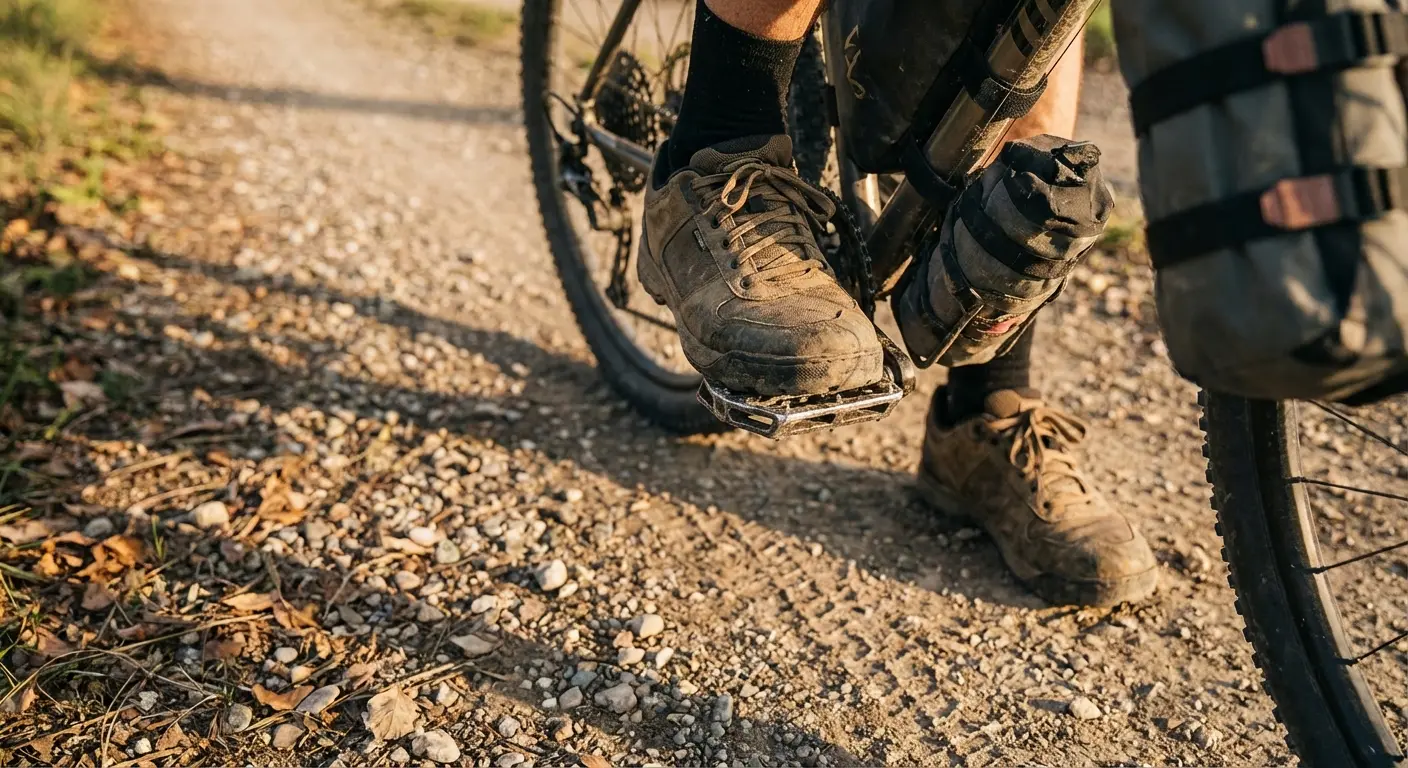
"Hot foot" — that burning, tingling pain in the ball of your foot — can transform a beautiful ride into a desperate search for the next place to stop. Foot problems are less common than saddle or hand issues, but they're equally capable of ending rides early.
Your feet are the power transfer point between your body and the bike. All that force channels through a relatively small contact area on the forefoot. Add hours of repetitive pressure, poor blood flow from a cramped position, and heat from exertion, and you have the recipe for "hot foot" and other foot problems.
The good news: foot comfort issues respond well to equipment changes. Proper shoe fit, appropriate pedal selection, and correct cleat position can eliminate most problems. This guide covers the causes and solutions for cycling foot discomfort.
For complete comfort guidance, see our Complete Bikepacking Comfort Guide.
Understanding Hot Foot
"Hot foot" is the common term for metatarsalgia — pain and burning in the ball of the foot. It's one of several foot problems cyclists experience.
What Causes Hot Foot
Pressure concentration:
- Pedal force focuses on small area
- Ball of foot (metatarsal heads) bears most load
- Nerves between metatarsals get compressed
- Resulting pain, burning, and numbness
Contributing factors:
| Factor | How It Contributes |
|---|---|
| Narrow shoe toe box | Squeezes metatarsals together |
| Stiff cycling sole | Doesn't distribute pressure |
| Small pedal platform | Concentrates force |
| Cleat too far forward | Ball of foot directly on axle |
| Tight shoe fit | Restricts blood flow |
| Hot weather | Feet swell, shoes become tighter |
| Long climbs | Extended pressure in fixed position |
Types of Foot Discomfort
Hot foot (metatarsalgia):
- Burning under ball of foot
- Often between 3rd and 4th metatarsals
- Can feel like walking on a marble
- Worse with continued pedaling
Numbness:
- Loss of sensation in toes
- Usually due to pressure on nerves
- Can be from tight shoes or cleat position
- Should resolve with pressure relief
Heel pain:
- Less common in cycling
- May indicate cleat too far back
- Could be shoe fit issue
Top of foot pain:
- Often from straps or buckles too tight
- Pressure on dorsal nerves
- Easy to fix by loosening closures
Shoe Fit Fundamentals
Proper shoe fit is the foundation of foot comfort.
Size Matters
Cycling-specific sizing:
- Feet swell during exercise
- Swelling increases in heat
- Afternoon feet are larger than morning feet
- Multi-day tours cause progressive swelling
Sizing recommendations:
- Size up from normal shoes (at least half size)
- Fit shoes in afternoon when feet are larger
- Try with cycling socks you'll actually wear
- Leave room for toe movement
Width Considerations
Narrow toe boxes:
- Common in racing-oriented shoes
- Squeeze metatarsals together
- Contribute directly to hot foot
What to look for:
- Room to wiggle toes
- No pressure on sides of foot
- Width at ball matches your foot
Wide-fit options:
- Some manufacturers offer wide versions
- Touring/MTB shoes often wider than road shoes
- Don't force feet into narrow shoes
Closure Systems
BOA dials:
- Easy to adjust on the ride
- Can create pressure points if overtightened
- Often multiple zones allow targeted adjustment
Velcro straps:
- Simple and reliable
- Easy to loosen when needed
- Less precise than BOA
Laces:
- Traditional, comfortable fit
- Can loosen during ride
- Consider lace locks
The key: Any system works if you actually adjust it during the ride as feet swell.
Pedal Selection
Your pedal choice affects pressure distribution significantly.
Platform Size
Small platforms:
- Concentrate force on smaller area
- More pressure per square centimeter
- Can contribute to hot foot
Large platforms:
- Spread force over greater area
- Less pressure per square centimeter
- Often more comfortable for long rides
Clipless vs. Flat Pedals
Clipless pedals:
- Fixed foot position (less or more float)
- Power transfer efficiency
- Cleat position affects comfort
- Some allow more cleat adjustment than others
Flat pedals:
- Freedom to move foot around
- Adjust position constantly
- No cleat-related issues
- Many bikepackers prefer them
For foot comfort specifically: Flat pedals give more freedom but less efficiency. Clipless can be comfortable with proper cleat positioning. Neither is inherently better — setup matters.
Platform Pedals for Comfort
If foot comfort is a priority, consider wide platform flats:
- Large platform spreads pressure
- Foot can adjust position naturally
- No cleat hot spots
- Works with any shoe
Cleat Position
For clipless pedal users, cleat position dramatically affects foot comfort.
Fore-Aft Position
Cleat too far forward:
- Ball of foot directly over axle
- Maximum metatarsal loading
- Classic hot foot position
Cleat moved back:
- Moves pressure toward midfoot
- Reduces metatarsal loading
- Often more comfortable
How far back?
- Traditional: ball of foot over axle
- Comfort-focused: cleat 5-15mm behind ball of foot
- Experiment to find your sweet spot
Lateral Position
Cleat too far inward (foot outward on pedal):
- May stress outside of foot
Cleat too far outward (foot inward on pedal):
- May stress inside of foot
Finding neutral:
- Stand and note natural foot splay
- Match cleat position to natural stance
- Both feet may differ
Float and Rotation
Cleat float:
- Degrees of rotation allowed
- More float = more freedom
- Some riders need it, others prefer fixed position
Wrong rotation angle:
- Forces foot into unnatural angle
- Strains foot and ankle
- Can contribute to knee problems too
Featured Products
Shimano XC3 Mountain Bike Shoes
Purpose-built for off-road riding with comfort in mind. The XC3 offers a wide toe box compared to road racing shoes, with enough stiffness for efficient power transfer without the extreme rigidity that contributes to hot foot. The sole has slight flex, and the fit accommodates real-world foot shapes. Two-bolt SPD cleat compatible with significant adjustment range. Walk-friendly tread for hike-a-bike sections. An excellent balance of efficiency and comfort for bikepacking.
- Wide toe box
- Comfortable for long rides
- Walk-friendly tread
- Good cleat adjustability
- Reasonable price
Giro Rumble VR Cycling Shoe
Designed specifically for riders who want a shoe that works well both on and off the bike. The casual appearance hides SPD-compatible hardware and a reasonably stiff sole. Wide toe box and lace closure allow adjustment for swelling feet. Excellent for bikepackers who spend significant time walking—the grip and comfort off-bike exceed dedicated cycling shoes. Not as stiff as race shoes but plenty efficient for touring pace.
- Casual appearance
- SPD compatible
- Walk-friendly design
- Comfortable all day
- Lace adjustment
Superfeet Green Insoles
Stock cycling shoe insoles are often minimal. Superfeet Green provides structured arch support and a deep heel cup that stabilizes the foot. Proper support reduces fatigue and can help with pressure distribution issues. The high-profile design works well for most arches. Available in many sizes—trim to fit your shoe. Not a cure-all, but many riders notice significant comfort improvement. Works in both cycling shoes and regular footwear.
- Structured arch support
- Deep heel cup
- Reduces fatigue
- Trim to fit
- Works in any shoe
Crank Brothers Stamp 7 Pedals
If flat pedals are your solution to foot problems, the Stamp 7 is an excellent choice. The large platform (111mm x 102mm) spreads pressure over the maximum area. Adjustable pins let you dial in traction. Low profile keeps your feet close to the axle. Available in multiple sizes to match different shoe sizes. Sealed bearings handle bikepacking conditions. The thin profile and light weight defy the stereotype that platform pedals are heavy and clunky.
- Large platform
- Adjustable pins
- Sealed bearings
- Multiple sizes available
- Surprisingly light
Shimano SPD SH-51 Cleats
The standard single-release SPD cleat offers secure attachment with good cleat position adjustability. The two-bolt pattern on SPD cleats allows more fore-aft adjustment than three-bolt road cleats, which is valuable for finding a comfortable position. The 4-degree float provides some freedom without feeling loose. For riders experiencing hot foot, moving these cleats back on the shoe often helps. Inexpensive enough to experiment with positioning.
- Good adjustability
- 4-degree float
- Inexpensive to replace
- Widely compatible
- Durable
Specialized Body Geometry Footbed
Designed specifically for cycling shoes, these insoles address the unique demands of pedaling. The forefoot varus wedge corrects common foot alignment issues. Metatarsal button relieves pressure on nerves. Three arch heights let you match your anatomy. More expensive than generic insoles but purpose-built for cycling. Many riders find these solve problems that general insoles don't address. Worth trying if standard solutions haven't worked.
- Cycling-specific design
- Metatarsal relief
- Three arch heights
- Forefoot correction
- Designed for pedaling
On-Trail Relief
When foot problems develop during a ride, immediate action helps.
Quick Fixes
Loosen closures:
- First and easiest step
- Significantly looser than you think
- Check periodically as feet swell
Remove shoes:
- At rest stops, free your feet
- Let them air and cool
- Walk around if possible
Massage:
- Press thumb into ball of foot
- Roll foot on water bottle or round object
- Stretch toes apart
Change position:
- If using clipless, try different foot angle
- On flats, move foot on pedal
- Stand periodically
Position Adjustments
Point toes:
- Periodically point toes down while pedaling
- Stretches top of foot
- Changes pressure distribution briefly
Heel drop:
- Consciously drop heels during pedal stroke
- Shifts pressure toward heel
- Can provide temporary relief
Move on pedal:
- Slide foot forward and back slightly
- Varies pressure location
- Prevents static loading
Preventing Problems
Long-term prevention beats repeatedly treating symptoms.
Shoe Selection Strategy
For touring/bikepacking:
- Prioritize comfort over weight
- Choose wider toe boxes
- Consider walk-ability
- Size up for swelling
Test thoroughly:
- Ride in new shoes before trips
- Note any hot spots
- Return/exchange if problems develop
Pedal and Cleat Setup
Initial setup:
- Start with cleat in neutral fore-aft position
- Ride and assess
- If hot foot occurs, move cleat back 5mm
- Repeat until comfortable
Periodic checks:
- Cleats wear and shift
- Check tightness regularly
- Replace when worn
Build Adaptation
Like saddle time, feet adapt:
- Shorter rides at first
- Gradually increase duration
- Consistency helps
- Give feet recovery time
Special Situations
Some circumstances require additional consideration.
Hot Weather
Heat makes everything worse for feet:
- Increased swelling
- More perspiration
- Shoes feel tighter
- Hot foot more likely
Strategies:
- Start with looser fit
- White or light-colored shoes reflect heat
- Mesh uppers breathe better
- Pour water on feet at rest stops
Cold Weather
Cold feet have different problems:
- Numbness from cold (not pressure)
- Blood flow restriction
- Shoe fit may actually be fine
Multi-Day Tours
Progressive issues on long trips:
- Feet may continue swelling over days
- Minor irritation becomes major
- Spare shoes impossible to carry
Strategies:
- Very generous initial sizing
- Adjustable closures essential
- Sandals for camp (let feet recover)
- Address issues early before they compound
When Foot Problems Persist
If you've tried basic solutions without success, consider:
Professional Fitting
A cycling-specific shoe fitter can assess:
- Actual foot shape and size
- Arch type and support needs
- Cleat positioning optimization
- Custom insole options
Custom Insoles
For structural foot issues:
- Custom orthotics address individual anatomy
- More expensive but precisely fitted
- May be covered by health insurance
- Worth it for chronic problems
Medical Evaluation
Persistent foot pain may indicate:
- Morton's neuroma (nerve tumor)
- Plantar fasciitis
- Stress fracture
- Other conditions requiring treatment
If problems don't respond to basic interventions, see a podiatrist or sports medicine physician.
FAQ
How tight should cycling shoes be?
Snug but not tight. You should be able to wiggle your toes. No pressure points on sides. Room for feet to swell. If in doubt, err toward loose—you can tighten closures, but you can't make shoes bigger.
Are stiff soles better or worse for foot comfort?
It depends. Very stiff soles transfer power efficiently but don't distribute pressure as well. Moderate stiffness often works best for long rides. If you're experiencing hot foot, slightly less stiff shoes may help.
Should I switch to flat pedals for foot problems?
Flat pedals eliminate cleat-related issues and allow natural foot positioning. They're worth trying if clipless pedals aren't working for you. Many bikepackers prefer them. The slight efficiency loss rarely matters at touring pace.
How far back should I move my cleats?
Start with 5mm back from traditional ball-over-axle position. If that helps but doesn't solve the problem, try another 5mm. Some riders end up with cleats very far back. There's no single correct position—find what works for you.
Why do my feet only hurt on long climbs?
Climbing extends time in fixed position with consistent pressure. Less coasting, less position variation. The solution is conscious position changes even while climbing—sliding foot slightly, standing periodically, pointing toes down.
Can insoles really make a difference?
Yes, for many riders. Stock insoles are often minimal. Good aftermarket insoles provide arch support and heel stability that reduces fatigue and can improve pressure distribution. Not a guaranteed fix, but worth trying.
Related Guides
- Complete Bikepacking Comfort Guide - Full comfort overview
- Knee Pain Prevention - Cleat position affects knees too
- Bike Fit for Loaded Bikepacking - Complete fit guidance
- What to Wear Bikepacking - Clothing including socks
- Winter Bikepacking Guide - Cold weather foot care
Foot comfort is solvable. The combination of proper shoe fit, appropriate pedal choice, and correct cleat positioning keeps most riders comfortable. Don't accept hot foot as inevitable—it's a problem with solutions.
Give your feet room to breathe, spread the pressure, and adjust throughout the ride.
Happy feet, happy rider.