Wildlife Safety for Bikepackers: Bears, Dogs, and Backcountry Encounters
20+ years testing gear in Colorado backcountry
Staying Safe Around Wildlife on the Trail
Staying safe around wildlife while bikepacking comes down to three habits: prevent encounters by managing food and making noise, read the animal in front of you, and respond the way wildlife agencies recommend for that specific species. Most encounters are avoidable, and the ones that do happen are usually manageable if you stay calm and don't run.
That's the reassuring truth underneath a topic that draws dramatic headlines. In practice, the "wildlife" most bikepackers deal with is a farm dog off a porch, a marmot on a hip-belt strap, or a deer frozen in a headlight beam. Serious predator encounters are rare. But rare isn't never, and the right response differs enough from animal to animal that guessing is a bad plan.
This guide is a companion to our Bikepacking Safety guide. We'll go deep on animals: how to avoid problems, and exactly what to do when a dog, bear, moose, mountain lion, snake, or camp raider shows up. It's practical and species-specific, because the difference between a black bear and a grizzly is the difference between two opposite survival strategies.
Prevention is most of wildlife safety. The rest is knowing which animal you're looking at and having one calm, correct response ready before you need it.
Before the Trip: Prevention Beats Reaction
The riders who never have a bad encounter aren't lucky. They just do a handful of unglamorous things every trip.
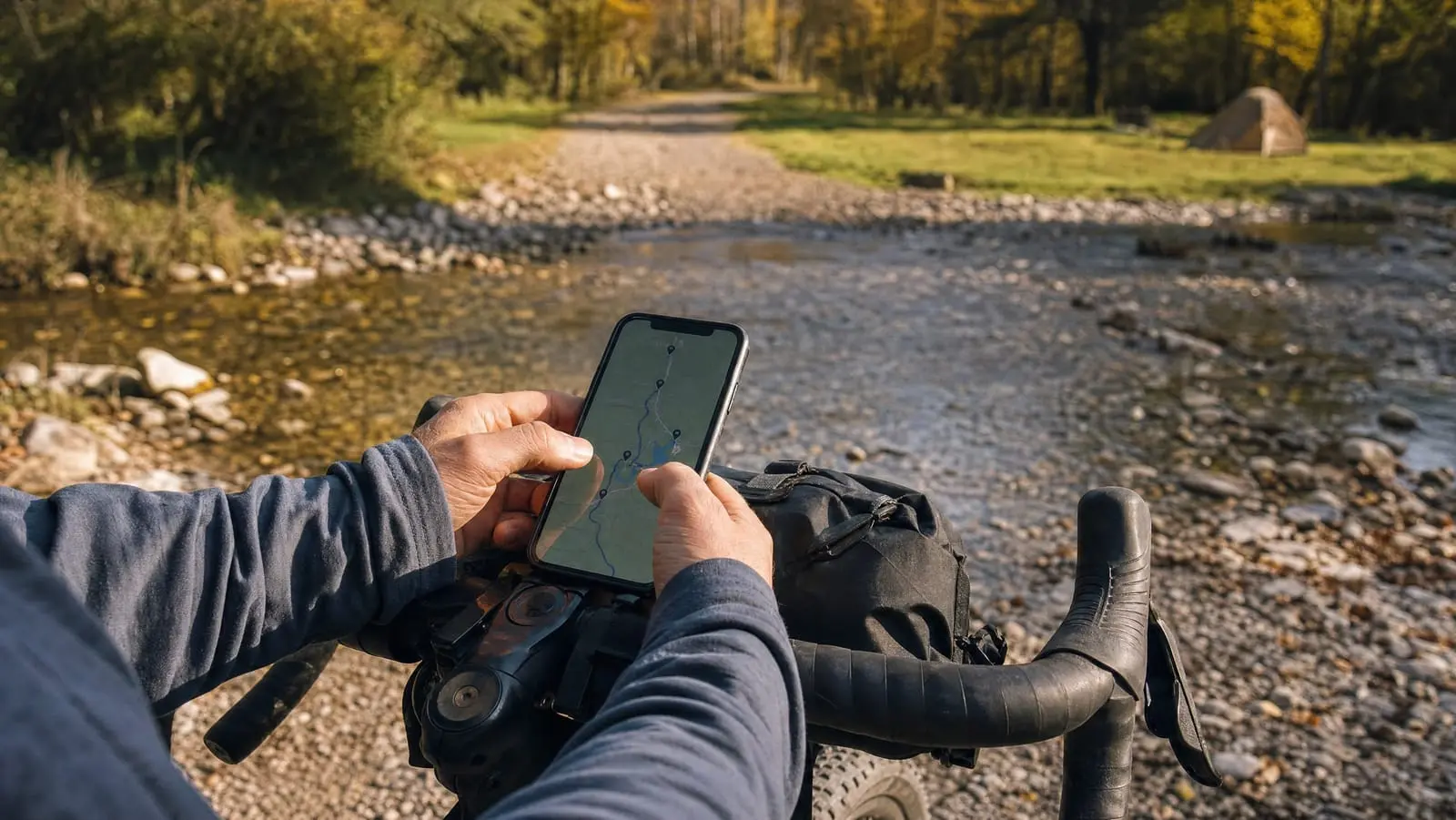
Learn who lives there. Find out which species are active on your route and in what season. A ranger district office, state wildlife agency page, or park alerts section will tell you if you're rolling into grizzly country, a bear-closure area, or a stretch known for aggressive dogs. The answer changes what you carry and how you camp.
Make yourself predictable and loud. Most animals will leave if they hear you coming; surprising one at close range is what turns a non-event into an incident. Talk, sing, or call out on blind corners and in thick brush, where a fast, quiet bike can close distance before an animal notices you.
Have a food plan before you pack the first snack. Decide where and how you'll store food at home, not at dusk with a raccoon watching.
Ride with margins if you're solo. Riding alone amplifies every risk; there's no one to help you signal, splint, or scare off an animal. Our guide to solo bikepacking and riding alone covers the habits that keep the odds in your favor. Two related topics deserve their own prep time, and we cover them separately: self-rescue for bikepackers and severe weather safety.
Loose Dogs: The Encounter You'll Actually Have
The animal most likely to charge you is somebody's dog. Rural roads and gravel routes are full of them, and a chasing dog is both a bite risk and a crash risk if it tangles your front wheel.
The instinct to sprint away is exactly wrong. According to Road Bike Rider, slowing your pace can de-escalate the situation, because sprinting triggers a dog's chase instinct rather than ending it. Standing on the pedals to outrun a fresh four-legged sprinter just escalates the chase and raises your odds of crashing.
The sequence that works:
- Ease off and stay calm. Sit up, slow down, and stop pedaling hard. Removing the moving-prey signal often ends the chase on its own.
- Put the bike between you. If a dog closes in, dismount and keep the bike as a barrier. Using your bike as a shield, placed between you and the animal, gives it a wall of metal and rubber to get around.
- Use your voice. A loud, firm command like "NO!" or "GO HOME!" projects authority, and many dogs are used to obeying that tone.
- Don't stare it down or reach out. Keep the dog in your peripheral vision, back your bike away slowly, and let it lose interest. Never put a hand toward a growling dog's face.
Bear Country: Black Bears and Grizzlies Are Not the Same
Here, getting the species right genuinely matters: the correct response to one bear is the wrong response to the other.
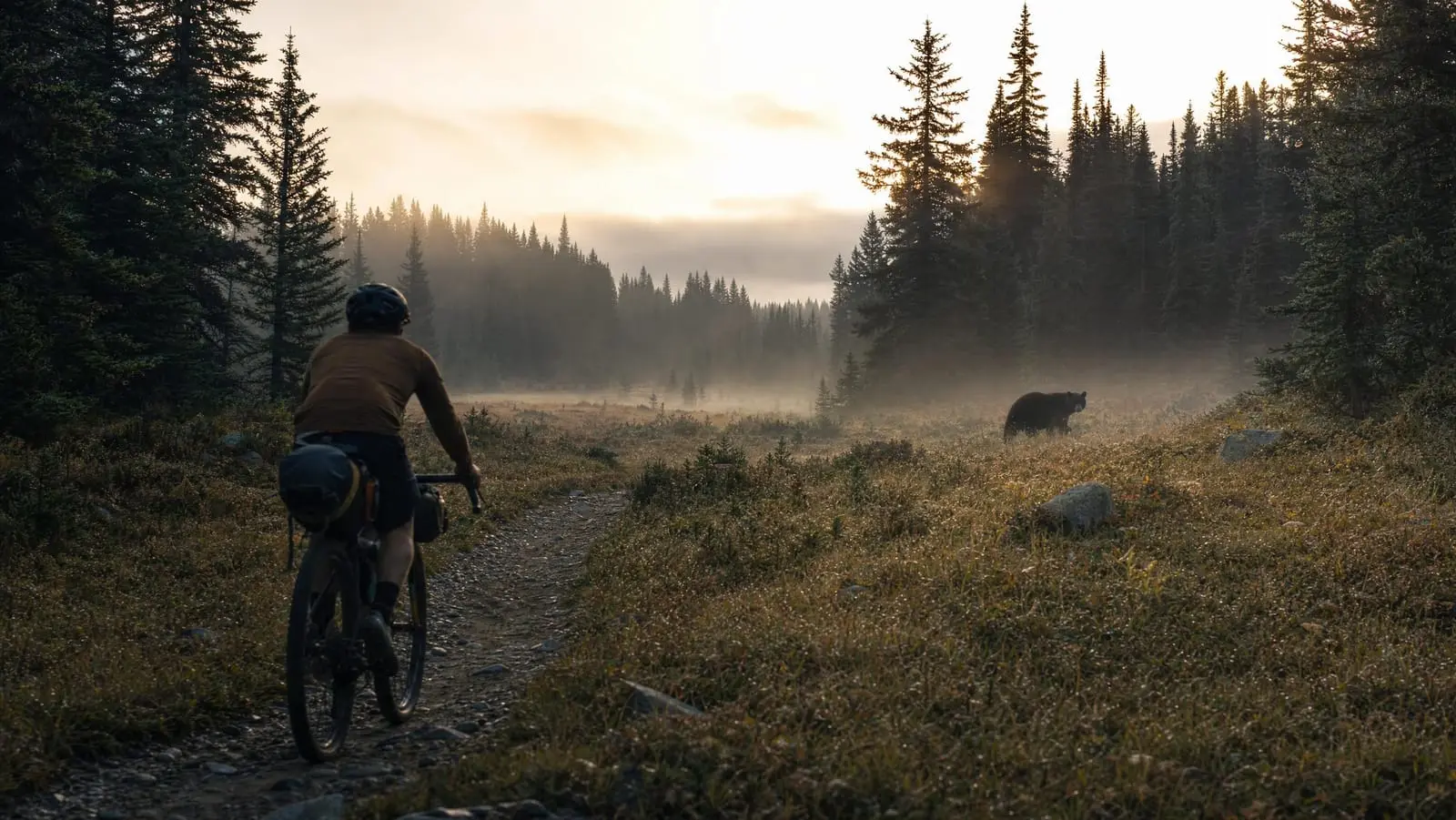
First, avoid the encounter. Store food properly, make noise in brushy terrain, and never approach a bear for a photo. If you see one at a distance, stop, stay calm, and give it a wide berth. Do not run: running can trigger a chase, and no one outruns a bear on foot or on a loaded bike.
If a bear actually makes contact, the National Park Service gives clearly different guidance by species:
Black bears. According to the National Park Service, if a black bear attacks you, do not play dead. Try to escape to a secure place such as a building or a vehicle. If escape isn't possible, fight back, concentrating your kicks and blows on the bear's face and muzzle.
Grizzly (brown) bears. For a grizzly, the NPS says to do the opposite: leave your pack on and play dead. Lie flat on your stomach with your hands clasped behind your neck and spread your legs to make it harder for the bear to roll you over. Stay down until the bear leaves. If the attack continues and becomes prolonged, then fight back, focusing on the face.
Not sure which bear you're looking at? Color is unreliable; black bears range from black to cinnamon to blond. Grizzlies have a prominent shoulder hump, a dished face, and shorter, rounded ears. When you can't tell and you're in grizzly range, plan for the grizzly response.
Bear Spray: Your Most Effective Tool
In bear country, bear spray is the single most effective deterrent you can carry, and it's more forgiving than a firearm because it doesn't require precise aim. According to the Interagency Grizzly Bear Committee, a review of bear-spray incidents in Alaska found the spray effectively stopped undesirable bear behavior more than 90% of the time.
To make it work:
- Keep it reachable, not buried. Mount it where you can grab it in under two seconds, and move it to a hip holster when you're off the bike at camp.
- Know the range. The Interagency Grizzly Bear Committee notes an effective range of roughly 20 to 30 feet. Deploy a cloud the bear has to pass through, aiming slightly downward toward an approaching animal, and adjust for wind.
- Practice the motion. Mime a deployment a few times at home so your hands know the sequence under stress. Never test-fire a live can near camp or gear.
Moose: Bigger Threat Than Most Riders Expect
Riders routinely underestimate moose. A moose isn't a predator, but a startled or protective one is enormous, fast, and willing to stomp, and in some regions moose injure more people than bears do.
According to the Alaska Department of Fish and Game, cow moose can be aggressive when they have calves in spring and summer, and bull moose turn aggressive and territorial during the fall breeding season. Give any moose a huge amount of room, and never ride between a cow and her calf.
With a moose, running is the right call. The Alaska Department of Fish and Game advises that if a moose charges, you should run rather than stand your ground, and put a solid obstacle like a tree, rock, or vehicle between you and the animal. Unlike a bear, a moose usually won't chase you far.
If a moose knocks you down, the same agency says to curl into a ball, protect your head with your hands, and hold still. Don't try to get up until the moose has moved well away, or it may resume the attack.
Mountain Lions: Rare, But Know the Drill
Mountain lion encounters are uncommon and attacks rarer still, but cats are ambush predators, and the response is the near-opposite of playing dead.
According to the National Park Service, if you encounter a mountain lion, do not run, because running can stimulate its instinct to chase. Instead, stand and face the animal, make eye contact, and try to appear larger by raising and waving your arms or opening your jacket. A standing, arm-waving human simply doesn't look like prey.
From there, the NPS guidance is to back away slowly while giving the lion room to escape. If it acts aggressively, throw stones or sticks within reach without crouching or turning your back, and speak firmly in a loud voice. If a lion attacks, fight back; people have driven them off with sticks, jackets, tools, and bare hands. A bike held up between you and the cat makes you look larger and gives you something solid to swing.
Snakes: Watch Where You Reach and Step
Snakes are a warm-season reality on gravel and desert routes, but the danger is easy to keep in perspective. According to the CDC, roughly 7,000 to 8,000 people are bitten by venomous snakes in the United States each year, and only about five of those bites are fatal, largely because most people can reach medical care.
Most prevention is simply not surprising or handling one. Per Poison Control, you should never approach, throw things at, or try to handle a rattlesnake, and that includes a snake that appears dead, because a reflex bite is still possible. Give it distance and walk your bike around it.
Practical trail habits that keep you out of range:
- Look before you reach or sit. Check the far side of logs and rocks before you put a hand or foot there.
- Watch shaded edges on hot days. Snakes rest in shade at midday and warm on open trail in the cool of morning and evening.
- Wear real shoes off the bike. Closed shoes and long socks around camp and tall grass are cheap insurance.
Small Critters at Camp: Rodents and Raccoons
The most frequent "wildlife problem" on a bikepacking trip has nothing to do with fangs. It's a mouse gnawing through a bag pocket for a granola bar, or a raccoon dragging off an unattended stuff sack, and once these raiders link your camp with a meal they get bold.
The fix is the discipline that keeps bears away: control the smell and the access. Backpacker magazine notes that a hard-sided canister is one of the most foolproof ways to protect food from any animal, rodents included, even when you're nowhere near bear country. If you're weighing canisters against hangs and odor-proof bags, our breakdown of bear canisters vs. bags for bikepacking covers the tradeoffs for a bike-sized load.
A few rules keep camp quiet:
- Never store food or scented items in your tent. REI's food-storage guidance is to keep everything aromatic, including toothpaste, sunscreen, lip balm, and trash, stored with your food, not in your sleeping space.
- Don't leave a pack unattended. A rodent needs only a few unwatched minutes to chew an entry hole.
- Keep a clean camp. Pack out crumbs and scraps, and cook and eat away from where you sleep when you can.
What to Carry (Without Overpacking)
You don't need a survival arsenal, just a short, deliberate kit for the realistic scenarios:
- Bear spray, in grizzly or active black-bear country, holstered where you can reach it fast.
- A food-protection system for your route: a canister, an odor-proof bag, or a solid hang.
- A first aid kit you know how to use. A bite, a crash scrape, or a fall all need on-the-spot care; our guide to first aid kits for bikepackers covers a sensible load-out.
- A way to call for help beyond cell service. After a serious encounter or injury, a satellite communicator that summons a rescue can matter more than anything else you carry; see our roundup of the best satellite messengers for bikepacking.
- A loud whistle to alert animals to your presence and signal for help.
The Calm, Prepared Rider Wins
Wildlife safety isn't about fear. It's a few good habits plus a small library of correct responses you rehearse until they're automatic. Store your food, make noise, give animals room, and remember the rule that trips people up: the right move depends on the species in front of you. Play dead for a grizzly, fight a predatory black bear, run from a moose, stand tall for a lion, and just walk your bike away from a dog or a snake.
Do that, and the animals become the best part of the trip instead of the scary part. For the bigger picture on route planning, communication, and everything else that goes into staying safe on remote rides, keep building the habits one trip at a time. The backcountry rewards riders who respect it.