Best Satellite Messengers for Bikepacking: inReach, ZOLEO & SPOT Compared
20+ years testing gear in Colorado backcountry
The Short Answer for Bikepackers
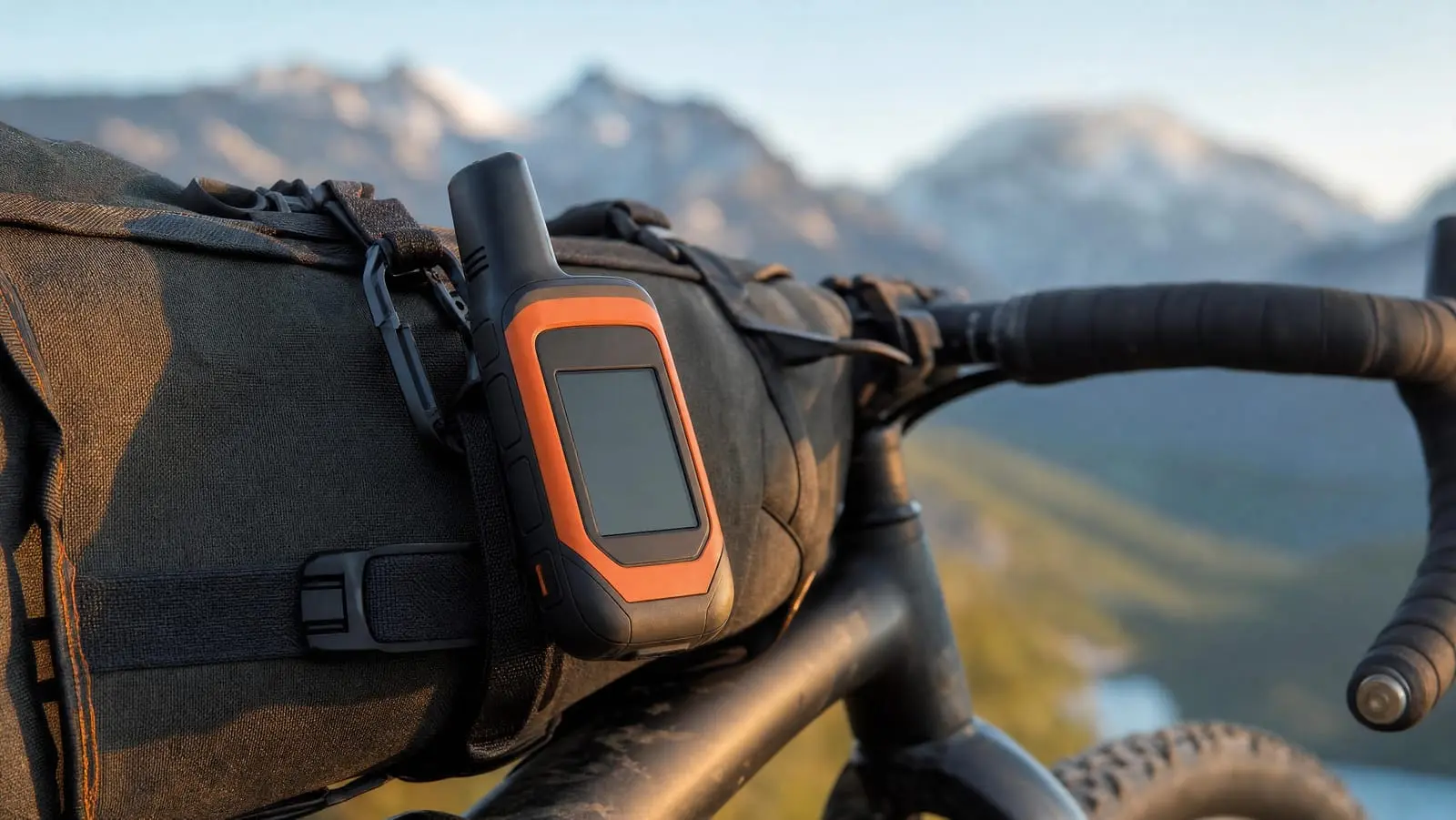
For most riders, the Garmin inReach Mini 2 is the best satellite messenger for bikepacking: at 3.5 ounces it sends two-way texts and triggers an interactive SOS anywhere on the global Iridium network, and it lasts days per charge. Want the same protection for less money? The ZOLEO is our value pick.
This article contains affiliate links. We may earn a commission if you make a purchase through our links, at no extra cost to you.
A satellite messenger is the one piece of kit that turns "I'm alone out here" into "I can reach help in minutes." If you ride past the edge of cell coverage — and most good routes do — it belongs in your frame bag next to your first-aid kit. Below we rank six devices we'd actually carry, explain how they differ, and help you match one to your riding. For the bigger picture on staying safe off-grid, start with our complete bikepacking safety guide, then use this page to choose the device that does the talking.
Why a Satellite Messenger Belongs in Your Kit
Bikepacking routes are chosen for exactly the qualities that kill a cell signal: remoteness, forest, canyon, and altitude. When something goes wrong — a mechanical you can't fix, a crash, a wrong turn into weather — your phone becomes a flashlight and a camera, nothing more. A satellite messenger keeps working where towers don't.
The two jobs that matter are two-way messaging (telling someone you're running late so they don't launch a search, or asking a partner to arrange a pickup) and interactive SOS (summoning professional search-and-rescue and staying in contact until they arrive). This is the reliable way to solve emergency communication when there's no cell signal, and it's the reason we'd never talk a rider out of one for a genuinely remote trip.
A messenger also pulls double duty on multi-day trips. Scheduled check-ins and live tracking let people at home follow your dot, which is peace of mind for them and a safety net for you. It won't help with bike security and theft prevention around town, but out where the pavement ends, it's the most important electronic you carry. Pair it with the rest of your kit using our emergency gear guide for every bikepacker.
Satellite Messenger vs. PLB: What's the Difference?
This is the first fork in the road, so let's settle it. A PLB (personal locator beacon) and a satellite messenger both call for help, but they are not the same tool.
According to a Colorado Search and Rescue primer summarized by GPS Central, a PLB sends a one-way 406 MHz distress signal over the government-run COSPAS-SARSAT satellite system — the same network aircraft beacons use — and it requires no subscription. You press the button, it screams "SOS" with your location, and that's the whole conversation. You can't describe your emergency, and you can't tell family you're simply running late.
A satellite messenger, by contrast, uses commercial satellites to send and receive actual text messages, plus SOS. The trade-off, per the same comparison, is that messengers require a paid service plan to function. For bikepackers, that two-way ability is usually worth the subscription: most "emergencies" are really logistics problems that a text can solve without ever triggering a rescue.
How to Choose a Bikepacking Satellite Messenger
Five things separate the right device from an expensive paperweight.
- Network coverage. Iridium offers true global coverage; Globalstar is regional. More on this below — it's the single biggest performance difference.
- One-way vs. two-way. Two-way lets you receive replies and coordinate. One-way only shouts SOS and pre-set check-ins. For most riders, two-way is worth paying for.
- Standalone vs. phone-paired. Some devices type on their own; others need your phone as the keyboard. If your phone dies, a paired-only device can't compose a custom message (though SOS still works).
- Battery life. Ranges from a few days to nearly a month in tracking mode. Match it to how long you'll go between charges.
- Weight and subscription cost. The hardware is a one-time cost; the plan is forever. Budget for both.
The Best Satellite Messengers for Bikepacking
We ranked these on coverage, messaging ability, battery, weight, and value. Prices are current as of July 2026 and will shift — treat them as ballparks and check the live listing.
Best Overall: Garmin inReach Mini 2
The Mini 2 is the device most experienced bikepackers reach for, and the reasons are simple. It sends two-way texts and triggers an interactive SOS anywhere on the worldwide Iridium network, and — according to Garmin's own Amazon listing — it weighs just 3.5 ounces, carries an IPX7 water rating, and runs up to 14 days in 10-minute tracking mode. TracBack routing and Garmin Explore app integration add genuine navigation value, which pairs well with a dedicated head unit from our GPS navigation devices guide. It averages 4.5 out of 5 stars across more than 1,180 Amazon ratings. The catch: it's one of the pricier picks, and as of July 2026 stock is limited — check current availability before you count on it.
Garmin inReach Mini 2
The long-standing favorite for weight-conscious bikepackers. Two-way messaging and interactive SOS anywhere on the global Iridium network, TracBack routing to retrace your path, and up to 14 days of battery in tracking mode — all in a 3.5-ounce package. The tradeoff is price and, right now, limited availability, so check stock before you rely on it.
- Two-way messaging + interactive SOS
- Up to 14-day battery (tracking mode)
- TracBack routing + digital compass
- Just 3.5 oz, IPX7
- Syncs with Garmin Explore app
Price may vary
Best Value: ZOLEO Satellite Communicator
ZOLEO delivers Iridium-network safety at roughly half the Mini 2's price. It pairs with your phone and, according to ZOLEO, automatically routes each message over Wi-Fi, then cellular, then satellite — whichever is cheapest and available — so you only spend satellite credits when you truly need them. You get a dedicated SMS number and email address, SOS to a 24/7 monitoring center, IP68 durability, and 200+ hours of battery, with airtime plans from $20/month. It carries a solid 4.4 out of 5 stars across roughly 2,875 Amazon ratings. The honest limitation: it leans on your smartphone for full messaging, so it's a pairing device rather than a standalone unit.
ZOLEO Satellite Communicator
Iridium-network messaging and SOS for about half the price of a Mini 2. Pairs with your phone and sends over Wi-Fi, cellular, or satellite automatically, using the cheapest network available, so credits stretch further. Rugged IP68 build and 200+ hours of battery. The catch: full messaging relies on your paired smartphone.
- Iridium + Wi-Fi + cellular auto-switching
- Dedicated SMS number and email
- SOS to a 24/7 monitoring center
- IP68 rugged, 200+ hr battery
- Airtime plans from $20/month
Price may vary
Best Battery Life: Garmin inReach Messenger
If your route means days between outlets, the inReach Messenger is the endurance champ. Garmin rates it at up to 28 days in 10-minute tracking mode — the longest here — a figure the review at HikingGuy confirms in its testing. It does two-way texting over Iridium and interactive SOS to the Garmin Response coordination center, and its reverse safety-charging can revive a depleted phone in a pinch. It rates 4.2 out of 5 stars from more than 300 reviews at REI. The compromise versus the Mini 2: there's no TracBack or on-device compass, so treat it as a pure communicator, not a navigator.
Garmin inReach Messenger
The endurance pick, with up to 28 days of battery in tracking mode. Two-way messaging over Iridium plus interactive SOS to Garmin Response, and reverse safety-charging that can bring a dead phone back to life. You give up the Mini 2's TracBack navigation, so think of this as a communicator first and foremost.
- Up to 28-day battery (tracking mode)
- Two-way messaging over Iridium
- Reverse charging revives a phone
- Interactive SOS to Garmin Response
- Auto cellular / Wi-Fi / satellite sending
Price may vary
Most Advanced: Garmin inReach Messenger Plus
The Messenger Plus is the newest and most capable device on this list. On top of two-way text and SOS, it adds photo and 30-second voice messaging plus texts up to 1,600 characters, according to Garmin's product listing. Outdoor Gear Lab rated it the best satellite communicator it has tested, scoring it 85 out of 100 and ranking it first of fourteen devices. Battery runs up to 25 days in tracking mode and it's IPX7 water-resistant. It rates 4.5 out of 5 stars at REI. The downsides are real: it's the priciest pick, and the tiny on-device keyboard is slow, so plan to compose in the paired app.
Garmin inReach Messenger Plus
Garmin's flagship communicator adds photo and 30-second voice messaging to the usual two-way text and SOS, with messages up to 1,600 characters. Outdoor Gear Lab named it the best satellite communicator it has tested. Up to 25 days of battery and IPX7 protection. It's the most expensive option here, and the on-device keyboard is slow, so lean on the app.
- Photo + 30-sec voice + text messaging
- Texts up to 1,600 characters
- Up to 25-day battery (tracking mode)
- Interactive SOS + TracBack
- Safety-charging for a dead phone
Price may vary
Budget SOS Beacon: SPOT Gen4
The Gen4 is the cheapest way onto satellite safety, but be clear about what you're buying: it is one-way only. You can press SOS to send your GPS location to responders and fire off pre-set check-ins, but you cannot receive replies or have a back-and-forth about your situation. It runs on the Globalstar network, which — as Yachting Monthly notes in its test — needs a clear view of the sky and struggles under tree cover. REI reviewers rate it just 3.0 out of 5, largely over connectivity gripes. Think of it as a basic beacon, not a communicator.
SPOT Gen4 Satellite GPS Messenger
The lowest-cost entry into satellite safety. Press SOS to send your GPS to emergency responders and fire off pre-set check-ins — but this is one-way only, so you can't receive replies or discuss the emergency. Runs on Globalstar, which wants an open sky and fades under tree cover. A basic beacon for budget-minded riders, not a full communicator.
- Lowest-cost satellite SOS
- One-way messaging + check-ins (no replies)
- Globalstar tracking, moving or stopped
- Removable batteries, strap + carabiner
- Two service plans available
Price may vary
Best Standalone Keyboard: SPOT X
The SPOT X is the rare messenger with a physical QWERTY keyboard and its own dedicated US mobile number, so it sends and receives genuine two-way texts without a phone in the loop. That standalone design suits riders who'd rather leave the phone powered down. It also does two-way SOS with a 24/7 search-and-rescue center. The caveats: it rides the Globalstar network — regional rather than truly global — and REI owners give the Bluetooth version a middling 2.7 out of 5, mostly over connectivity. Bluetooth pairing is optional if you'd prefer to type on your phone.
SPOT X 2-Way Satellite Messenger
A two-way messenger with a physical QWERTY keyboard and its own dedicated US number, so it works fully standalone without a phone. Two-way SOS with a 24/7 rescue center, plus optional Bluetooth pairing. It runs on Globalstar's regional network, and owner reviews flag connectivity as the weak point — worth weighing against the phone-free convenience.
- Physical QWERTY keyboard
- Own dedicated US number, works phone-free
- Two-way SOS with Search & Rescue
- Optional Bluetooth phone pairing
- Includes strap, carabiner, kickstand
Price may vary
Iridium vs. Globalstar: Why the Network Matters Most
Notice a pattern above? The four devices we rank highest all use Iridium; the two we rank lowest use Globalstar. That's not a coincidence.
According to a network comparison from GTC, Iridium's constellation of 66 low-Earth-orbit satellites is the only network offering true pole-to-pole global coverage, including polar regions, open ocean, and remote desert. Globalstar coverage, by contrast, is limited to roughly ±70 degrees latitude, strongest in North America and Europe and thinning elsewhere.
For a bikepacker, the practical translation is this: on an Iridium device, a message sent from a deep canyon or dense forest is more likely to find a satellite overhead, because there's almost always one passing. On Globalstar, you may need to step into a clearing and wait. If you ride anywhere genuinely remote, that reliability gap is the whole ballgame — and it's why we'd spend more for Iridium.
The best satellite messenger is the one that gets your message out on the first try. For bikepacking, that almost always means Iridium.
The Subscription: The Cost You Can't Skip
Here's the part first-time buyers underestimate. The device is a one-time purchase; the service plan is ongoing, and no messenger here works without one. Plans typically scale by how many messages and how much tracking you want, and most providers let you pause coverage in the off-season and reactivate before your next trip.
ZOLEO's airtime starts at $20/month, and Garmin and SPOT offer tiered plans that rise with usage. When you compare device prices, add a year of subscription to each to see the real first-year cost. A cheap beacon with an expensive plan can end up costing more than a pricier unit on a lean plan.
Keeping Your Messenger Alive on Route
Even a 28-day battery only helps if the device is charged when you need it. On multi-day trips we treat power as a system: a compact power bank, a cable that fits the messenger, and disciplined use of tracking intervals (10-minute tracking drains far less than continuous). Our guide to the best portable charger for your phone and GPS covers how to size a bank for a weekend versus a week.
A few habits that stretch runtime: lengthen your tracking interval when nothing's happening, turn off Bluetooth pairing when you're not actively messaging, and keep the device out of freezing temperatures overnight — cold saps lithium batteries fast. The Garmin units' safety-charging feature is a nice backstop, but it's meant to revive a dead phone in an emergency, not to be your daily charging plan.
When You'll Be Glad You Carried One
Picture the scenario the brochures don't: you round a blind bend on a forest doubletrack and startle a bear feeding beside the trail. You back off unhurt, but your riding partner takes a spill in the scramble and can't put weight on an ankle, and there's no cell bar in sight. This is exactly when a two-way messenger earns its price — you can trigger an SOS, then keep texting responders your exact condition and location while help mobilizes. For how to avoid that encounter in the first place, read our guide to wildlife safety for bikepackers; for how to call for help when it happens anyway, carry one of the devices above.
Frequently Asked Questions
Do I really need a satellite messenger, or is my phone enough?
If your route has reliable cell coverage the whole way, a phone may suffice. But bikepacking routes rarely do. Once you're past the last tower, a messenger is the only thing that reliably reaches the outside world.
What's the difference between a satellite messenger and a PLB?
A PLB is a one-way, subscription-free SOS beacon on the government 406 MHz system. A satellite messenger uses commercial satellites for two-way texting and SOS but requires a paid plan. Most bikepackers prefer the messenger's two-way ability.
Which network is better for bikepacking, Iridium or Globalstar?
Iridium, in almost all cases. It offers true global, pole-to-pole coverage, so messages get out more reliably from canyons and forests. Globalstar is regional and can be finicky under tree cover.
Does the SPOT Gen4 do two-way texting?
No. The Gen4 is one-way: it sends SOS and pre-set check-ins, but you cannot receive replies. If you want a conversation with rescuers or family, choose a two-way device.
Can I use these without a monthly subscription?
No. Every device here needs an active satellite service plan, including for SOS. You can usually suspend plans off-season, but you must reactivate before your ride.
The Bottom Line
For most bikepackers, buy the Garmin inReach Mini 2: it's light, it's global, and it does everything that matters well. If the price stings, the ZOLEO delivers the same Iridium coverage for far less. Choose the inReach Messenger for the longest battery, the Messenger Plus if you want photos and voice, and reach for a SPOT only if budget or a phone-free keyboard is your priority — with clear eyes about Globalstar's limits.
Whichever you pick, add the subscription to your budget, test it before you leave, and keep it charged. Then fold it into the rest of your plan with our bikepacking safety resource. The right messenger doesn't just make a remote route possible — it makes it responsible. Ride far, and ride reachable.