Mindfulness and Meditation Practices for Cyclists
20+ years testing gear in Colorado backcountry
Your Bike as a Meditation Cushion
This article contains affiliate links. We may earn a commission if you make a purchase through our links, at no extra cost to you.
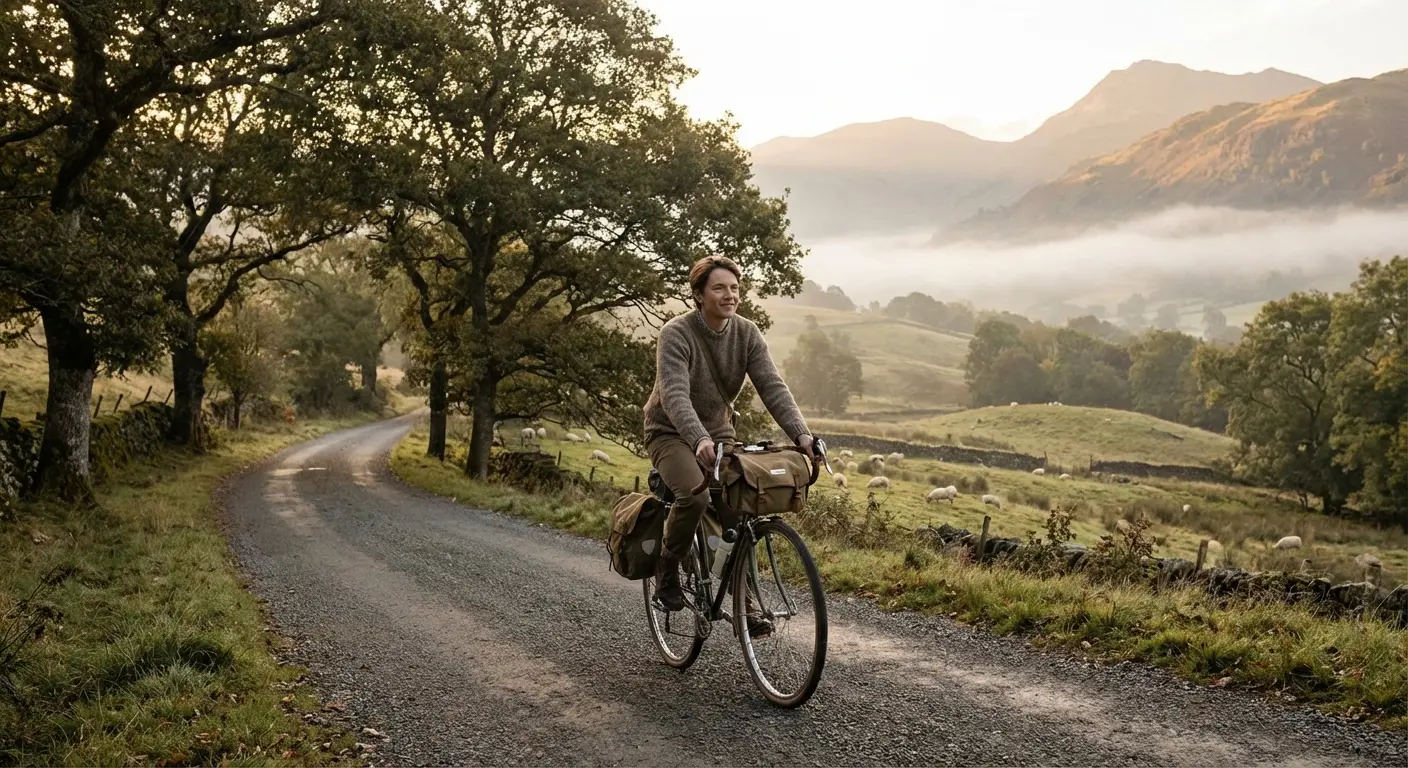
You may actually be able to get most of the benefits of meditation, specifically mindfulness meditation, while you're pedaling. Riding a bike might actually be better than yoga as a medium for practicing meditation.
Most meditation instructions tell you to sit still, close your eyes, and focus on your breath. For many cyclists, this sounds like torture—we ride bikes precisely because we don't want to sit still.
Here's good news: cycling can be meditation. The rhythmic nature of pedaling, the constant sensory engagement, the flow of changing scenery—these create natural conditions for meditative awareness. When practiced intentionally, riding becomes not just physical training but mental training, building the focus and emotional regulation that make hard bikepacking trips manageable.
This guide covers how to transform ordinary rides into mindfulness practice, the mental benefits that flow from this approach, and practical techniques you can use starting today. For the broader mental framework, see the Complete Mental Resilience Guide.
Why Cycling Works for Mindfulness
The Built-In Attention Anchor
The fundamental challenge of meditation is attention management. Your mind wanders; you notice; you bring it back; it wanders again. Sitting still makes this endlessly repetitive because there's little to hold attention in place.
Cycling provides what sitting lacks: a built-in attention anchor. You must pay attention to:
- Balance and steering
- Cadence and effort
- Road surface and obstacles
- Traffic and safety
- Navigation (sometimes)
This attention demand prevents the kind of total mind-wandering that makes sitting meditation frustrating for many people. Your mind still wanders—but there's always something to bring it back to.
Movement as Mindfulness Medium
Research confirms that mindfulness during physical activity provides similar benefits to seated meditation:
"A 2023 study found that mindfulness-based interventions improved mood and reduced stress levels in athletes. Specifically, mindfulness helped enhance focus and endurance, allowing athletes to perform better while lowering anxiety."
The combination of movement and awareness creates synergy—each enhances the other.
Cycling's Unique Advantages
Sensory richness: Wind, temperature, sound, visual flow—cycling floods your senses with real-time information that grounds attention in the present.
Effort variation: Hills, headwinds, and terrain changes provide built-in attention challenges that prevent the monotony that undermines seated practice.
Environmental connection: Moving through landscapes creates a changing field of experience rather than the static environment of seated practice.
Time availability: Most cyclists already spend hours on their bikes. Converting this time to mindful practice requires no additional time investment.
The Benefits
Mental Health Effects
"Cycling's immediate mental health benefit is stress and anxiety reduction. The combination of fresh air, changing scenery, and rhythmic pedaling calms the mind. Physical activity triggers endorphin release, naturally alleviating stress."
Regular mindful cycling practitioners report:
- Reduced anxiety between rides
- Better emotional regulation
- Improved stress response
- Greater overall well-being
- Enhanced enjoyment of riding
Performance Benefits
"As we practice and improve our mindfulness skills, we can experience benefits like: Balanced parasympathetic nervous system, which can help you relax, decrease stress, and even boost cycling performance. Reduced anxiety and blood pressure. Improved mental clarity, longer attention span, and improved focus."
Mindfulness practice improves:
- Focus during challenging efforts
- Decision-making under pressure
- Pain tolerance
- Recovery between hard efforts
- Overall training consistency
A cycling computer with heart rate monitoring can help you track how mindfulness affects your physiological stress response over time.
Bikepacking-Specific Benefits
For multi-day trips, mindfulness practice develops:
- Distress tolerance for hard moments
- Present-moment focus that counters rumination
- Loneliness management through engaged presence
- Fear regulation for challenging situations
- Decision clarity when fatigued
These skills build through practice on training rides and deploy when needed on expedition.
Core Practices
Breath Awareness While Riding
Basic practice:
- Notice your breathing without trying to change it
- Observe: Is it fast or slow? Deep or shallow? Even or irregular?
- Notice how breath changes with effort level
- When your mind wanders, return attention to breath
Advanced practice:
Synchronize breathing with pedaling:
- 3 pedal strokes inhale, 3 pedal strokes exhale
- Adjust ratio based on effort level
- The synchronization creates a rhythmic anchor for attention
When to practice:
- Warm-up periods (low effort, easy to maintain attention)
- Recovery sections between intervals
- Long steady climbs
- Easy spinning on flat terrain
Body Scanning on the Bike
Practice:
Move attention systematically through your body while riding:
- Start at your feet—notice sensations in toes, arches, heels
- Move to lower legs—calves working, shins relaxing
- Continue to thighs—quads engaging, hamstrings stretching
- Notice your seat—pressure, comfort, position
- Move to core—stability, posture, breathing
- Scan arms—grip tension, elbow position
- Check shoulders—often holding unnecessary tension
- Notice neck and head—position, relaxation
What you're building:
- Awareness of holding patterns (grip too tight, shoulders raised)
- Earlier detection of discomfort issues
- Mind-body connection that improves overall riding
Sensory Grounding
Practice:
Periodically, do a full sensory sweep:
- See: What colors are present? What's moving? What's far vs. near?
- Hear: What sounds exist right now? Road noise, birds, wind?
- Feel: Temperature on skin, wind direction, sun's warmth?
- Smell: Fresh air, vegetation, earth after rain?
This practice pulls attention forcefully into present-moment reality, interrupting anxious thinking or future-focused rumination.
When to use:
- When anxiety spikes
- When boredom sets in on monotonous terrain
- When you notice your mind spinning on problems
- During hard mental moments
Thought Observation
Practice:
- Notice thoughts as they arise
- Don't engage—just observe them passing
- Label them lightly: "planning," "worrying," "remembering"
- Return attention to pedaling
Thoughts are not problems to solve or truths to accept. They're mental events that arise and pass. Developing the ability to observe them without engagement is one of mindfulness's core skills.
Application: When fear arises, notice: "There's fear." Don't fight it or believe it unconditionally. Observe it as a passing experience.
Flow States
What Flow Is
"Flow is a cognitive state where one is completely immersed in an activity. It involves intense focus, creative engagement, and the loss of awareness of time and self."
In flow states:
- Action and awareness merge
- Sense of time distorts
- Self-consciousness disappears
- Performance feels effortless
- The experience is intrinsically rewarding
Cycling as Flow Generator
Cycling naturally creates flow conditions because it presents continuous challenge requiring continuous response. The balance, navigation, and effort decisions provide just enough complexity to engage attention without overwhelming it.
Engineering Flow
Match challenge to skill: Flow happens when challenge appropriately matches capability. Too easy creates boredom; too hard creates anxiety. Choose terrain and pace that keep you engaged but not overwhelmed.
Remove distractions:
- Phone in bag, not pocket
- No planned interruptions
- No artificial time constraints
Set clear proximal goals: "Make it to that tree" rather than "finish the ride." Immediate challenges create immediate engagement.
Embrace novelty: New routes engage attention more than familiar ones. Variation—different food, different music, different timing—provides freshness.
Flow and Hard Moments
Flow isn't guaranteed, but its possibility makes hard moments more bearable. Knowing that absorption and ease might arrive keeps you moving through the difficult periods that precede them.
Some of bikepacking's most profound experiences happen in flow states that emerge from hard beginnings. The suffering transitions into something qualitatively different—and this transition is more likely when you've practiced the mental skills that support it.
Practical Integration
The Training Ride Protocol
Phase 1: Warm-up (first 15 minutes)
- Breath awareness practice
- Body scan
- Setting intention for the ride
Phase 2: Main ride
- Alternate between focused practice and natural riding
- Return to practice when mind wanders significantly
- Use sensory grounding when anxiety or discomfort arises
Phase 3: Cool-down (final 10 minutes)
- Gratitude practice (what went well?)
- Body awareness (how do I feel?)
- Transition preparation (what's coming next?)
Brief Practices for Any Ride
The three-breath reset: At any moment, take three conscious breaths. Fully feel each one. Return to riding with refreshed attention.
The one-minute scan: Move attention feet to head in one minute. Notice without changing. Resume normal riding.
The five-senses check: One observation per sense: see, hear, feel, smell, taste. Takes 30 seconds. Grounds you completely.
Dealing with Resistance
You will resist practice. Your mind prefers distraction to awareness.
When you don't want to practice:
- Practice anyway for 60 seconds
- If still resistant, try a different technique
- If still resistant, let it go for now
- Return to practice when ready
Forced practice is counterproductive. Gentle persistence builds habits.
Common Challenges
"I Can't Stop Thinking"
You're not supposed to stop thinking. Thoughts will continue to arise. The practice is noticing them and returning to your chosen focus, not achieving a thought-free state.
Every time you notice you've wandered and return—that's the practice working. It's not failure; it's the exercise.
"It Feels Pointless"
Benefits are subtle and cumulative. One mindful ride doesn't transform you. Hundreds of mindful rides do.
Track your practice and periodically assess: Am I less reactive? More focused? Better at handling difficulty? Changes often become apparent only in retrospect.
"I Need Music/Podcasts"
Audio content isn't incompatible with mindfulness—but it is a different mode. Consider:
- Some rides with audio (entertainment, learning)
- Some rides without (mindfulness practice)
- Occasional quiet sections within audio rides
You don't have to practice mindfulness on every ride. But if you never practice, you don't develop the skills.
"My Rides Are for Training"
Mindfulness practice doesn't replace physical training—it enhances it. You can practice mindfulness during recovery sections of interval workouts, during warm-ups and cool-downs, and during steady endurance rides.
Mental training is training. It improves performance, recovery, and consistency.
Off-the-Bike Support
Seated Meditation
Brief seated practice supports on-bike mindfulness:
5-minute daily practice:
- Sit comfortably, eyes closed or softly focused
- Breathe naturally
- When mind wanders, return to breath
- Continue for 5 minutes
This simple practice builds the attention muscle that deploys while riding. Apps like Headspace, Calm, or Insight Timer can guide you. Quality bone conduction headphones allow you to listen to guided meditations while maintaining awareness of your surroundings on the bike.
Body Awareness Practice
Before rides, take 2 minutes:
- Stand quietly
- Scan through your body
- Notice any tension, discomfort, or holding
- Breathe into tight areas
This practice improves body awareness that continues into your ride.
Post-Ride Reflection
After rides, take 1 minute:
- How was my mind during the ride?
- When was I most present?
- When did I struggle with attention?
- What would I do differently?
This reflection extracts learning from experience.
The Deeper Practice
Beyond Technique
As mindfulness matures, it becomes less about specific techniques and more about a quality of attention you bring to all experience.
You stop needing to "do" a practice and start simply being present. The bike becomes a tool for experiencing reality directly rather than through the filter of constant mental commentary.
Cycling as Metaphor
What you learn on the bike applies everywhere:
- Managing discomfort without being controlled by it
- Staying present despite difficulty
- Returning from distraction again and again
- Finding ease within challenge
These capacities, built on the bike, transfer to all of life's demands.
The Invitation
Bikepacking already offers extraordinary experiences: beautiful landscapes, physical challenge, adventure, and freedom. Mindfulness practice adds a dimension that makes all these experiences richer.
You're already spending time on the bike. The question is: how will you spend it mentally?
For the broader mental framework, see the Complete Mental Resilience Guide.