The Best Dynamo USB Chargers and Regulators for Bikepacking
20+ years testing gear in Colorado backcountry
The Best Dynamo USB Charger for Bikepacking: The Short Answer
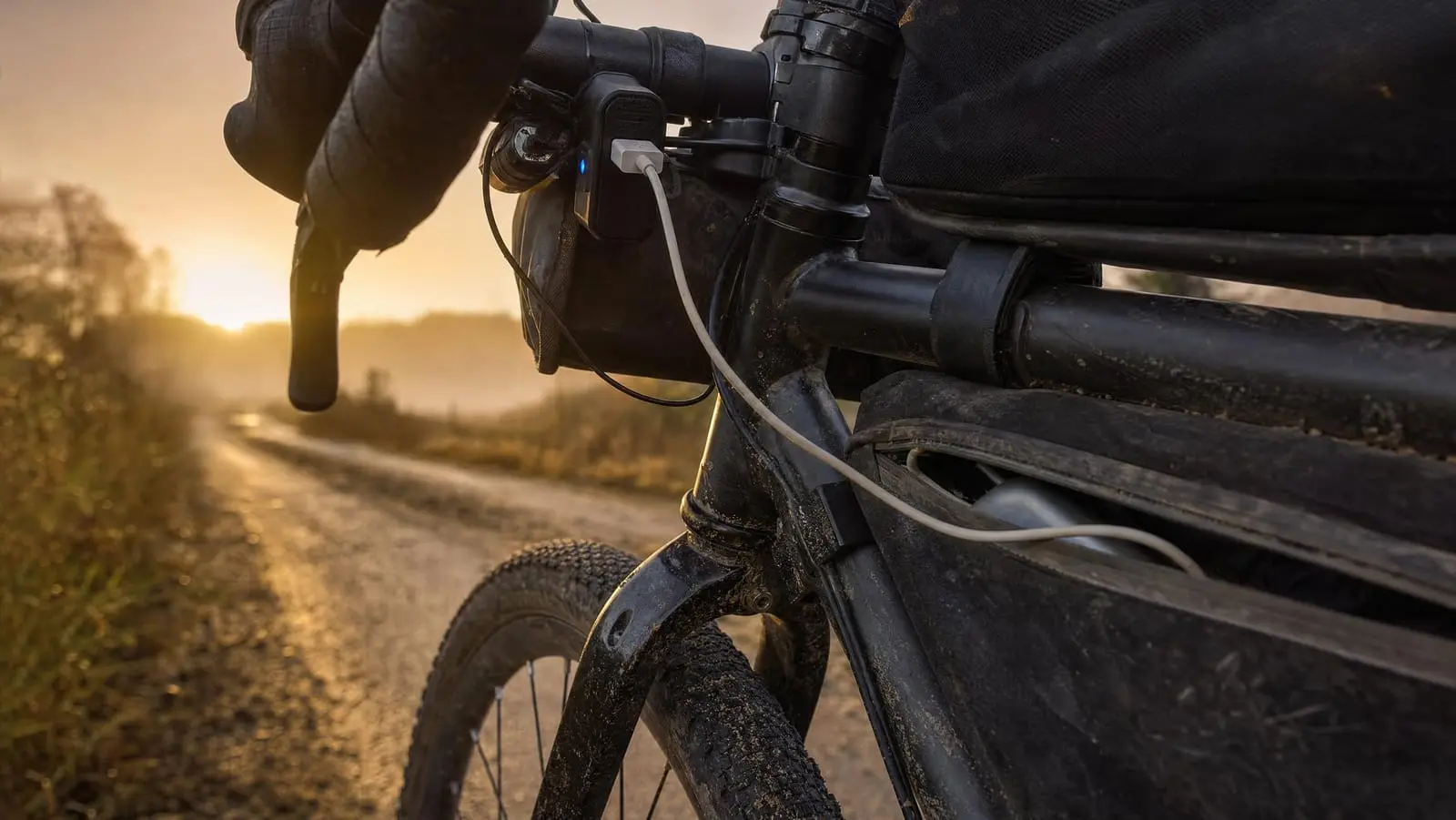
The best dynamo USB charger for bikepacking is the one that starts working at the speed you actually ride. For most riders that is the Sinewave Revolution, which Sinewave lists at 37 grams and rates to start charging at 3.5 mph. Want light and power from one box? The Sinewave Beacon 2. Ride slowly, stop often, or need to feed a phone? Buy a unit with a buffer battery, such as the Tout Terrain Cinq Plug Plus 7 or a Forumslader.
This article contains affiliate links. We may earn a commission if you make a purchase through our links, at no extra cost to you.
Before anything else, the thing nobody tells you: you cannot buy a good dynamo charger on Amazon. We checked. A search for dynamo hub USB chargers returns friction and bottle dynamos, and the brands that matter here return nothing at all. Every charger below is sold direct by its maker or through a handful of specialist shops. That is annoying, but it is also the most useful fact in the category, as we explain in our guide to bikepacking power and charging.
How a Dynamo USB Regulator Works, and the Three Numbers That Matter
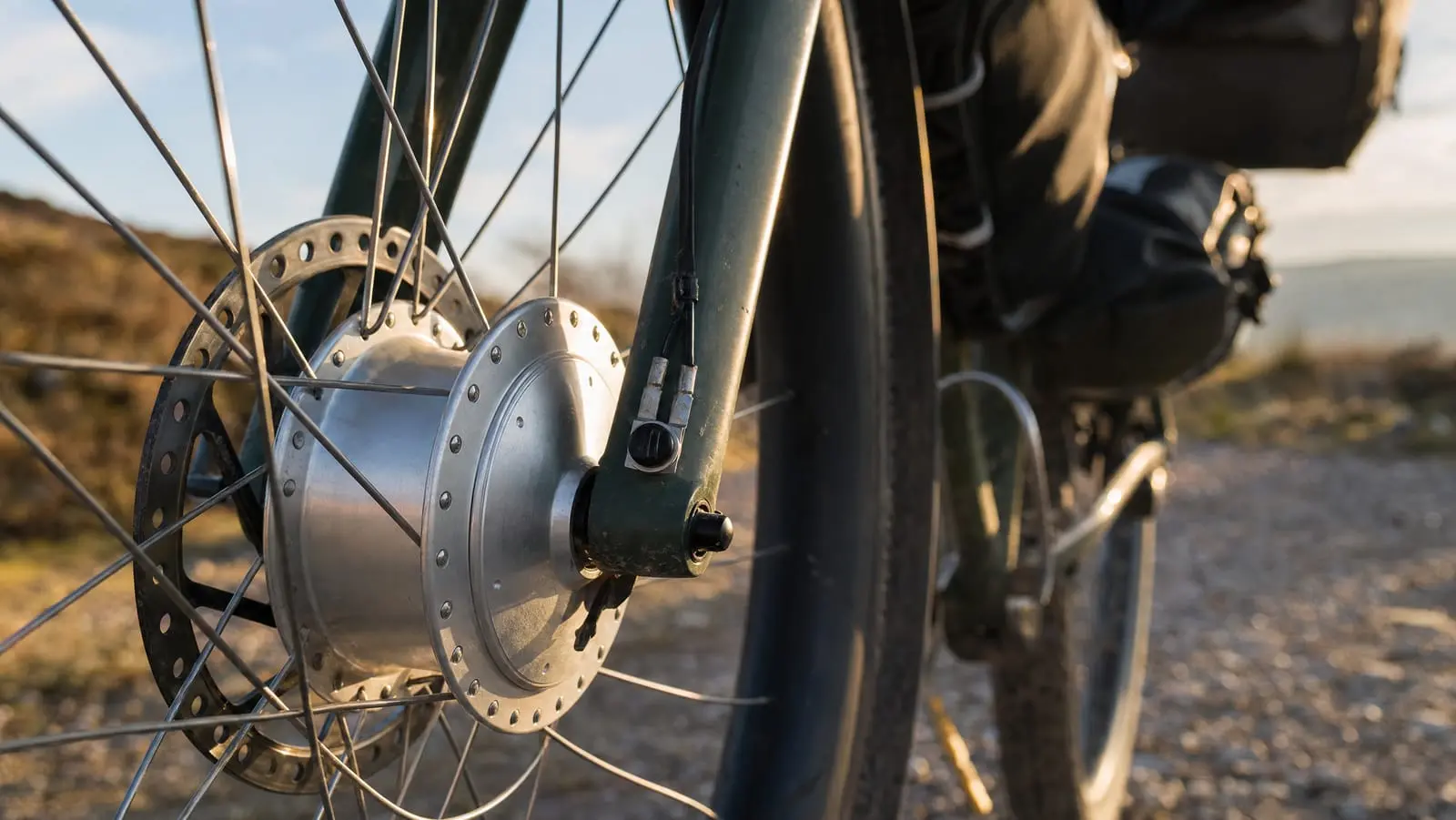
A hub dynamo is a small alternator. It puts out alternating current at a voltage that climbs with wheel speed, which is why a dynamo headlight gets brighter as you pedal harder. A dynamo USB regulator rectifies that AC, smooths it, and holds it at the 5 V that USB expects, shedding the excess at high speed so your GPS does not cook.
Judge one on three numbers.
Start-up speed. The speed at which the charger first delivers usable power. Sinewave publishes 3.5 mph for the Revolution, and kLite says its Micro charger works "from low speed riding (8km/hr)".
Current at realistic touring speeds. This is the one that decides whether your evening ends with a charged phone. CyclingAbout, summarizing bench tests, writes that "most chargers will hit 1w between 7-10kph" and that "2-watts can be reached by the best dynamo USB chargers at speeds between 11-13kph". Loaded bikepacking on gravel at 15 kph is a very different electrical proposition from a road tourer at 25 kph.
Buffer battery. A small internal cell that absorbs surplus power above your cruising speed and releases it below. Busch + Müller, Tout Terrain and Forumslader build one in. Sinewave, kLite, Igaro and Cycle2Charge expect you to supply an external one.
If you are still deciding whether to go dynamo at all rather than just carrying cells, start with our comparison of a dynamo system against a big power bank.
Why Charging a Phone Directly Off a Dynamo Is a Bad Idea
Plug a phone into a dynamo charger and ride a rolling route and you get a loop: the phone wakes, announces it is charging, the current sags on a climb, the phone decides the charger has gone away, and the screen lights up again at the next junction. Each of those wake cycles costs battery. On a bad day the phone finishes the ride emptier than it started.
The makers themselves say this out loud. Cycle2Charge's own product page recommends a power bank rather than a direct connection for some phones.
For some mobiles (some iPhones and modern Android) the usage of a PowerBank is recommended as otherwise the mobile might not draw the maximum available current from the Cycle2Charge.
Bikepacking.com reached the same conclusion testing the kLite Micro, noting that "the output power straight from the charger isn't the smoothest" and that "in most cases, it's best to charge a dynamo-optimized power bank instead of going directly into a device."
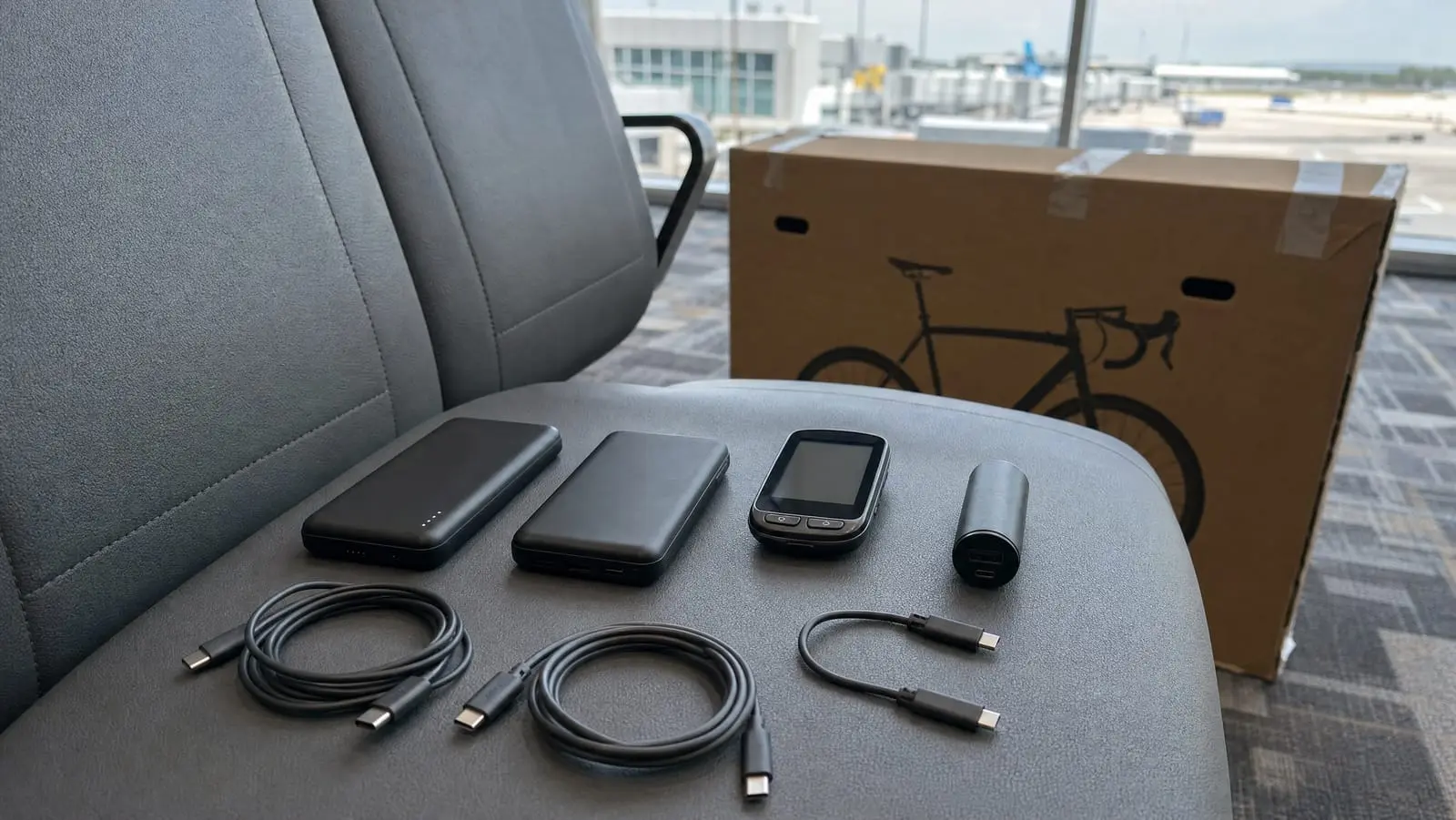
So the standard setup is: dynamo, charger, cache battery, device. The battery does the buffering, takes whatever trickle arrives at 11 kph, and hands the phone a clean, steady 5 V later. Buy the cache battery before you upgrade the charger. It fixes more problems for less money.
Also worth knowing: a dynamo will not keep up with heavy phone navigation. If you ride with the screen on, read our notes on finding wall sockets on route and treat the dynamo as a top-up, not a mains replacement.
Our Picks: Integrated Light-Plus-Charger Units
One wire, one box, light and power. The compromise is always the same: when the headlight is on, the light gets the watts.
Sinewave Beacon 2
The Beacon 2 is the unit we see most often on long-distance bikepacking bikes, and Sinewave lists it at 350 US dollars as of November 2026.
What it is. A 750-lumen dynamo headlight with a USB charger built in, 115 g including the 36-inch dynamo wire, 58 x 42 x 42 mm, made in the USA.
Who it is for. Riders who want strong light at slow speeds. Sinewave publishes an unusually detailed low-speed curve: 100 lumens at 5 mph, 375 at 8 mph, 600 at 10 mph, and the full 750 at 13 mph, with flicker-free output claimed down to 3-4 mph. An external USB battery pack can be plugged in to hold the beam steady when you stop.
What it gives up. Sinewave does not publish a USB current figure for the Beacon 2, and there is a hard ceiling on total watts. According to Sinewave's Beacon 2 FAQ, the USB charger is enabled when the light is off or in its reduced-brightness mode and disabled on high brightness, with roughly 50 to 60 percent of the available power going to the charger in the low setting. On the earlier Beacon, CyclingAbout reported "a constant USB charge from the relatively low speed of 12 km/h (7 mph)".
kLite Ultra V2 with the Micro Charger
kLite's Ultra V2 system is the ultra-racing answer, developed around events like the Tour Divide and the Silk Road Mountain Race.
What it is. A 1300-lumen light using two flood optics and one spot, 135 g, plus the kLite Micro charger, which kLite lists as a waterproof 5 V USB output with 1400 mA maximum power output, charging from 8 kph. Retailer spec sheets add a typical output of around 500 mA; kLite does not publish an average figure itself.
Who it is for. Off-road riders who need usable light at walking pace and are happy to wire a system rather than bolt on a gadget. kLite says the kit is field repairable, which matters a long way from a bike shop.
What it gives up. Power sharing is explicit rather than hidden. kLite's FAQ explains that because "the max output of the dynamo hub is only 3w", the system enters a power-share mode at the limit and gives preference to USB, so the center LED stops lighting. Their advice is blunt: charge during the day with the light off. For how that trade-off compares with battery lights, see our roundup of lights for overnight riding.
Our Picks: Charger-Only Units
Nothing but the converter. Cheaper, lighter, and they do not argue with your headlight.
Sinewave Revolution
The Revolution is the default recommendation, and Sinewave's own specification page is unusually frank about speeds.
What it is. A 37-gram potted converter, 54 x 35 x 14 mm, with a 91 cm stripped-wire lead, listed at 120 US dollars as of November 2026, with a one-year warranty.
Who it is for. Almost everyone. Sinewave states that it starts charging at 3.5 mph (5.5 kph) and reaches full charging at 9 mph (14.4 kph), with a maximum current of 1 amp. It also accepts DC input up to 52 V, so it works off an e-bike supply.
What it gives up. That 1 amp cap is roughly 5 watts, so it will never be the fastest unit at speed. In CyclingAbout's collated bench data it sits mid-pack rather than top.
Igaro D1
Igaro builds in the UK and sells direct, and the D1 earned a following among riders who break things.
What it is. A sealed converter that road.cc's review lists at 93 g and prices at 144.55 pounds, with Igaro quoting what the reviewer called "an outstanding 88% end-to-end efficiency rating" and offering a five-year international warranty.
Who it is for. Riders in genuinely foul weather. The same review reports the D1 as "IP69 rated", which it calls "about as good as it gets", and notes the output is "very stable once you're over about 12-13km/h".
What it gives up. Igaro has since moved on to the D2, so the D1 is the harder of the two to buy new. The review also notes that "the USB takes a short while to kick in from the off", a deliberate design choice so the supply does not cycle on and off as the wheel spins up. That is the right behavior, but it means no instant power when you roll away.
Cycle2Charge V3
Cycle2Charge replaces the top cap of a 1 1/8-inch threadless headset, so nothing takes up bar space.
What it is. A headset-cap charger with a rotating outer cover that shields the USB port from water and grit in an impact-resistant plastic shell. Cycle2Charge states a 5 V output with a maximum charge current of 1000 mA, 500 mA from 12 kph and the full 1000 mA from 21 kph.
Who it is for. Tidy builds, and anyone who wants the charger out of the weather when it is not in use. Cycling UK's review puts it at 79.99 pounds.
What it gives up. Independent testing is less flattering than the spec sheet. Cycling UK measured "0.5W at around 8mph" and a maximum of "1W at 13mph (21km/h)", and concluded that the 1 W maximum "may not put out enough power to charge some devices reliably". Treat it as a power-bank charger, not a phone charger.
Busch + Müller USB-Werk
The USB-Werk is the old German workhorse, and the cheapest way to get a cache battery built in.
What it is. A 47-gram, 30 x 35 x 15 mm plastic unit with an integrated cache battery and a 5 V DC output, which Busch + Müller list at 119.90 euros MSRP as of November 2026 and describe as spray- and rainwater-proof.
Who it is for. Low-power devices on a touring bike. The buffer means a GPS keeps running through town stops.
What it gives up. Output, and harmony with your headlight. Busch + Müller warn on their own page that the USB-Werk "is only compatible with the IQ-X to a limited extent", that "the internal battery of the USB-Werk discharges even if no end device is connected", and that recharging it "can lead to light fluctuations on the IQ-X". That is a lot of candor from a manufacturer, and we would believe it.
Our Picks: Steerer-Tube Chargers With a Buffer Battery
Hide the electronics and the battery inside the fork. These are the ones that genuinely solve the stop-start problem, and they cost the most.
Tout Terrain Cinq Plug Plus 7
The Plug Plus 7 is the current generation of the Plug series, listed by Tout Terrain at 299 euros including VAT as of November 2026.
What it is. A USB-C charging port in the headset cap with a 2200 mAh LiFePO4 power module down the steerer, about 160 g for all components, IP65, with an operating range Tout Terrain specifies as minus 20 to plus 65 degrees C. It fits 1 1/8-inch forks with an upper headset cup.
Who it is for. Riders who stop a lot and want USB-C rather than a legacy port. Tout Terrain's intelligent device management is quoted at up to 1100 mA charging current, and an auto-light-switch gives priority to the headlight when the lights are on, which is the power-sharing decision made for you.
What it gives up. Price, and a fork requirement. Earlier generations tested well on output: CyclingAbout's collated data puts the Plug5 Plus among the strongest in its set.
Forumslader Aheadlader V6
Forumslader is a German small-scale builder selling a kit rather than a finished consumer product, and on published figures it is the strongest unit here.
What it is. The V6 electronics plus three LiMn cells inside the steerer, 19 cm long with 1.2 Ah cells at about 120 g, or 29 cm with 2.9 Ah cells at about 210 g, needing a minimum steerer diameter of 24 mm. Forumslader publishes a 5 V 3 A short-circuit-proof USB output, a separate 12 V output rated to 4 A, and about 13 Wh of effective buffer energy with the small cells, which it says is enough for one complete smartphone charge.
Who it is for. Riders feeding hungry devices. Forumslader claims the highest charging power of any hub dynamo charger at normal cycling speeds, and CyclingAbout's collated data puts the earlier V5 near the top of its set.
What it gives up. Convenience. It is a kit, the site is German, and Forumslader states plainly that charging in parallel with the lights on does not work, because almost all the current goes to the headlight; your devices then run off the buffer. Getting it into the bike is a real job, which is where our guide to installing and wiring a dynamo hub earns its keep.
Dynamo Charger Comparison
First, what each maker or reviewer publishes. These come from different test rigs and are not directly comparable.
| Charger | Format | Buffer battery | Headline published figure |
|---|---|---|---|
| Sinewave Beacon 2 | Light plus charger | No, external pack can be connected | 750 lumens; 100 lm at 5 mph, 750 lm at 13 mph |
| kLite Ultra V2 and Micro | Light plus charger | No, works with USB cache batteries | 1400 mA max per kLite, from 8 kph; about 500 mA typical per retailers |
| Sinewave Revolution | Charger only | No | 1 A max; starts 3.5 mph, full charge 9 mph |
| Igaro D1 | Charger only | No | 88 percent efficiency claimed by Igaro, via road.cc |
| Cycle2Charge V3 | Charger only, headset cap | No, power bank recommended | 1000 mA max; 500 mA at 12 kph, 1000 mA at 21 kph |
| Busch + Müller USB-Werk | Charger only | Yes, integrated cache battery | 5 V DC output, 47 g |
| Tout Terrain Cinq Plug Plus 7 | Steerer-tube charger | Yes, 2200 mAh LiFePO4 | Up to 1100 mA, USB-C |
| Forumslader Aheadlader V6 | Steerer-tube charger kit | Yes, 3 cells, about 13 Wh | 5 V 3 A USB, plus 12 V 4 A output |
Second, the closest thing to like-for-like numbers. CyclingAbout collates figures converted to watts at a given speed, for the generations tested rather than the newest versions. Read them with one caveat: the Cinq and Forumslader rows come from independent Fahrrad Zukunft bench testing, while the Igaro D1, kLite, Sinewave and E-Werk rows are Igaro's own published data converted by CyclingAbout, which notes that the Sinewave figures land within 10 percent of the independent results.
| Charger tested | Watts at 15 kph | Watts at 20 kph |
|---|---|---|
| Cinq Plug5 Plus | 3.5 W | 4.5 W |
| Forumslader V5 | 3 W | 4.75 W |
| Igaro D1 | 2 W | 3 W |
| kLite | 1.75 W | 2.75 W |
| Sinewave Revolution | 1.75 W | 2.75 W |
| Busch + Müller E-Werk (not the USB-Werk) | 1.75 W | 2.75 W |
What You Also Need
Two small things that stop a dynamo system from being annoying, and these two are on Amazon.
A very short USB-C cable. A long cable flaps, snags and eventually fails at the strain relief. The UGREEN 100W USB-C to USB-C Cable is 1.6 ft, which is about right for a charger on the bars to a cache battery in a top tube bag, and it is 6.99 US dollars as of November 2026. UGREEN rates it for 20,000-plus plug cycles and specifies a built-in E-marker chip with over-current, over-heating and over-voltage protection, plus a nylon braid over laser-welded aluminum alloy connector shells.
A watertight box for the battery and adapters. Given kLite's warning about USB sockets rusting, the connection wants to live somewhere dry. The Pelican 1010 Micro Case is a watertight hard shell with a rubber liner and an included lanyard, 21.95 US dollars as of November 2026, with package dimensions of 14.2 x 9.6 x 5.2 cm. It holds a cache battery, a stub cable and the one adapter you always forget.
Add a dynamo-friendly pass-through cache battery and the system is complete. Pick the cells first, the charger second.
What We Would Actually Buy
Buy the Sinewave Revolution if you want one small part that works at the speeds you really ride, and pair it with a pass-through cache battery. Buy the Beacon 2 or the kLite Ultra V2 if light matters more than charging rate. Buy the Cinq Plug Plus 7 or a Forumslader if you stop constantly, ride slowly, or need to keep a phone alive. Skip the Cycle2Charge V3 unless you only ever charge a power bank, because 1 W measured is 1 W.
The charger is one component in a system, and the hub, the wiring, the cache battery and your actual device load matter at least as much. For how those pieces fit together, and what to buy first, read our full bikepacking power and charging guide.